
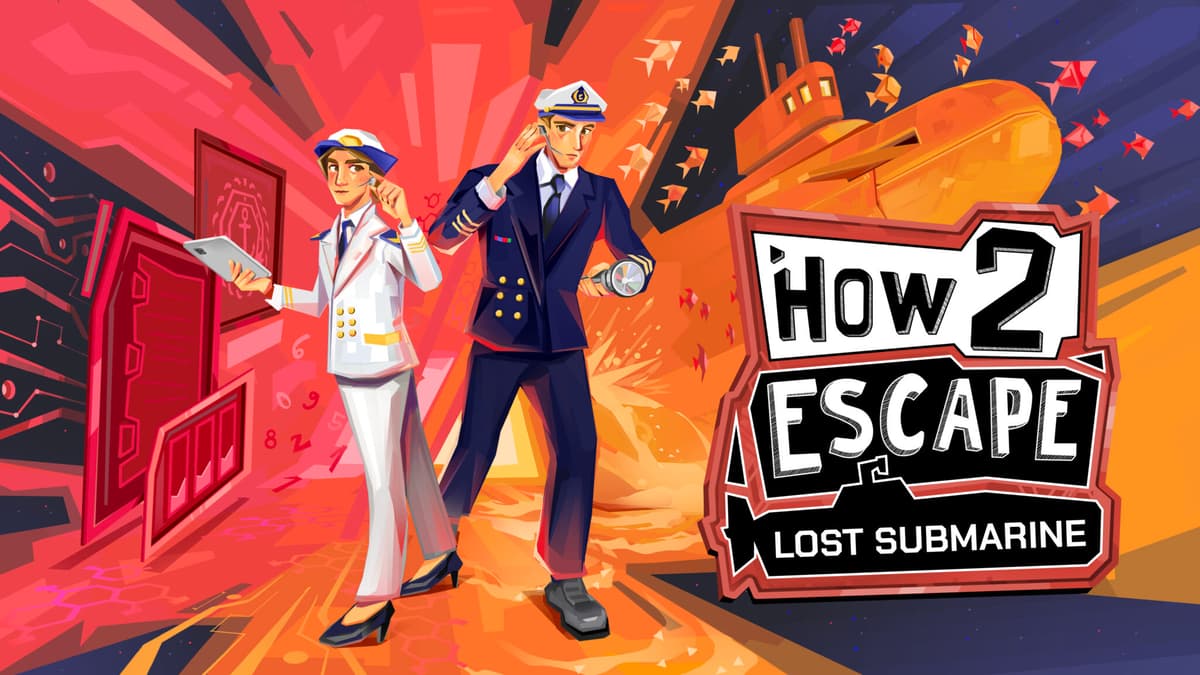
Cross-Device Co-Op in How 2 Escape: Lost Submarine
Game intel
How 2 Escape: Lost Submarine
Team up with a friend to reach a lost submarine and prevent the outbreak of war. Work together on two devices to solve increasingly challenging puzzles, where…
How 2 Escape: Lost Submarine Puts a New Spin on Co-Op Puzzling
When I first heard that How 2 Escape: Lost Submarine pairs a console or PC with a free companion app, I was immediately intrigued. My game-night history is littered with shouted instructions, half-remembered clues and bruised egos from “one more puzzle” sessions. This title promises genuine interplay: one player navigates a crumbling submarine in 3D, while the other pores over schematics and hint screens on their phone or tablet. But is this cross-device approach a meaningful evolution of co-op puzzles, or just a slick marketing angle?
Defining the Hook: Cross-Device, Asymmetrical Gameplay
Cross-device gameplay means two people use different hardware—console or PC for the “solver,” and mobile or secondary PC for the “clue-bearer.” This is a type of asymmetrical gameplay, where each player’s view and tools differ. Instead of both sitting on the couch with split screens, Lost Submarine demands real-time collaboration. One partner deciphers engine schematics and sonar readings on the app, while the other physically interacts with levers, locks and ventilation shafts in the 3D world.
By dividing roles, the game forces communication skills to the forefront. Terms like “lateral thinking” and “pattern recognition” suddenly require precise language—“rotate the blue valve two clicks clockwise,” not “turn that thing over there.” For escape-room veterans, this is familiar territory. For newcomers, it’s a crash course in team dynamics.
Developer Background and Genre Context
Breakfirst, known for approachable sports and family titles such as the INSTANT SPORTS series, steps tentatively into AA-style puzzle design. Their pedigree in lowering barriers to entry—clear tutorials, forgiving difficulty curves—suggests Lost Submarine will avoid punishing gatekeeping. However, past efforts rarely demanded split-second coordination under stress, which is the essence of an escape-room scenario.
Comparisons naturally land on Keep Talking and Nobody Explodes (bomb disposal via instructions) and the “shouty friend” classics like We Were Here or Operation: Tango. Those titles balance tension, time pressure and information asymmetry to build thrills. Lost Submarine’s unique setting—flooding compartments, dwindling oxygen meters—adds urgency, but the real test is whether its puzzles hold up beyond novelty.
Digging into Gameplay Mechanics
A core question: are the puzzles clever and surprising, or do they lean on the flashy dual-screen gimmick? Early hands-on reports note three main puzzle types:
- Logic Grids – Decipher grid-based codes by cross-referencing sonar blips and power-routing diagrams.
- Spatial Challenges – Reassemble 3D pipe networks in the app, then flip physical switches to match flow patterns in the console view.
- Timed Sequences – Coordinate timed button presses: the clue-bearer counts down while the solver hits panel keys before an alarm sounds.
Each category tests different skills: abstract reasoning, hand-eye coordination and stress tolerance. What really makes or breaks the experience is puzzle looping—if you can brute-force a logic grid, or if the timed sequences feel unfair rather than thrilling. At launch, reviewers will need to examine challenge-to-frustration ratio and puzzle variety to see if the game maintains momentum across its six-hour campaign.
FinalBoss // Gear
Level up your setup
01Top-rated gaming headsetson Amazon→02High-refresh gaming monitorson Amazon→03Gaming chairson Amazon→04Discounted game keyson Kinguin→Affiliate links · As an Amazon Associate, FinalBoss earns from qualifying purchases.
Want to Level Up Your Gaming?
Get access to exclusive strategies, hidden tips, and pro-level insights that we don't share publicly.
Ultimate Gaming Strategy Guide + Weekly Pro Tips
Accessibility and User Interface
One clear win: the companion app is entirely free on iOS, Android and Windows. There are no hidden paywalls or DLC gates to block you from essential clues. Cross-platform play is seamless—no account linking or subscription hassles—and that keeps the entry barrier low. For those unfamiliar with cross-buy complications, this is refreshing.
On the flip side, simplifying an app interface to serve a broad audience risks losing depth. If menus are too streamlined, you might sacrifice nuance in puzzle information. Early impressions indicate the app UI is clean but occasionally hides critical details behind submenus. That’s an area where Breakfirst should consider post-launch updates based on player feedback.
Communication Overhead and Replayability
Asymmetrical co-op shines when each session feels unpredictable. But once you memorize a sequence or internalize a puzzle type, the replay value hinges on randomization or alternate solutions. Lost Submarine offers three difficulty tiers—casual, standard and expert—to adjust puzzle complexity and time limits. This flexibility could extend playtime, but only if the game dynamically swaps challenge parameters rather than simply adding more button prompts.
In my experience with similar titles, the sweet spot is mid-range difficulty: enough room for teammates to make honest mistakes, but not so easy that the tension evaporates. If Breakfirst implements a robust hint system—unlocked by solving mini-tasks—and rotates puzzle layouts between runs, this could become a staple for group sessions.
What to Watch for at Launch
- Player Feedback Loop: Will community‐reported UI quirks and puzzle bottlenecks be patched quickly?
- Puzzle Diversity: Do the six chapters introduce enough new mechanics, or will you spot repeats?
- Latency and Sync: Are clues delivered in real time, or will network lag turn frantic instructions into gibberish?
- Endgame Satisfaction: Does the final sequence reward both players equally, or does one role feel sidelined?
We’ll need to watch early player reviews and perhaps dive into developer interviews post-release for hard data on completion times, drop-off rates and community‐created walkthroughs.