
Table of Contents (19)
Battlefield 6’s Most Underrated Innovation: Treating Gunplay Like Choreography
The thing that finally clicked for me about Battlefield 6 wasn’t a map, a weapon, or even a mode. It was a sentence from one of the game’s designers: a lifelong professional dancer who now works on 3C and game feel at DICE, talking about combat as choreography.
Once you hear “we approached this like choreographing movement,” you can’t unsee it. Suddenly the way your soldier leans into turns, how the weapon kicks, how the world reacts when a tank shell lands – it all feels less like isolated systems and more like a deliberately sequenced performance.
Not performance in a “cinematic trailer” sense. Performance as in: every frame, every camera nudge, every muzzle flash is placed to line up what your fingers do with what your brain feels. That’s the choreography piece. And for Battlefield 6, it wasn’t garnish – it was a core design tool.
I’ve sunk embarrassing hours into shooters over the years – from Counter-Strike and Halo to Doom Eternal and Titanfall 2 – and whenever a game’s gunplay feels “off,” it’s almost never one big bug. It’s death by a thousand tiny misalignments: recoil that doesn’t match spread, audio that lies about distance, animation that lags just behind input. Battlefield 6 is one of the first big-budget shooters that feels like it attacked those micro-misalignments as a single choreographic problem.
So let’s pull the curtain back a bit. Not just on what Battlefield 6 did, but how treating combat as choreography actually shapes game feel – and what other AAA shooters (or ambitious indies) can steal from that playbook.
Quick Battlefield 6 Snapshot: What We’re Actually Talking About
Before diving into systems, it helps to anchor what Battlefield 6 is trying to be: a modern, large-scale, combined-arms shooter on PC and current-gen consoles – not a tight 5v5 arena, not a pure mil-sim, and not a single-player set-piece machine. That context matters, because the choreography problem here is “make chaos readable” rather than “make duels surgical.”
Specifications
Battlefield has always been about “Battlefield moments” – the helicopter threading between collapsing towers, the jeep C4-jumpscare into a tank, the 128-player chaos. Battlefield 6 doubles down on that, but with a twist: those big unscripted moments depend on the smallest scripted details landing perfectly. That’s where choreography comes in.
What Does “Choreography” Even Mean in a Shooter?
When a dancer or fight choreographer talks about movement, they obsess over sequence, rhythm, and intention. It’s not just “punch, kick, block.” It’s “this punch overextends so the next move naturally flows into a spin, which sets up a fall that reads clearly to the audience.” Every move is about what the spectator feels as much as what the performer does.
Translate that to an FPS, and choreography starts to look like this:
- The exact frame your weapon fires relative to your click.
- How the camera tilts or rolls when you sprint, slide, or get suppressed.
- The delay between a tank shell impact and the shockwave kicking dust and bodies.
- How the environment reacts – flickering lights, rattling debris, foliage sway – when rounds crack nearby.
- When hitmarkers, sound cues, and enemy flinch line up during a kill.
Individually, those look like animation polish, VFX, or audio. Battlefield 6’s shift is treating them as one choreographed sequence aimed at a design goal the team calls “alignment of perception”: your senses, your inputs, and the game’s reactions all telling the same story at the same time.
It’s an aggressively function over form philosophy. Nothing gets to look cool unless it helps your brain track what’s happening. That means sometimes choosing the “uglier” solution if it’s clearer or more responsive – a theme that runs through almost every system in the game.
3C and Game Feel: Where the Choreography Starts
The Battlefield 6 designer with a dance background sits in a very specific seat: 3C and game feel. For anyone outside dev circles, 3C stands for Character, Controls, Camera – basically the holy trinity of “how it feels to exist as a player in this game.”
In Battlefield 6, that meant starting not from how a soldier should look in a trailer, but how a soldier should react in your hands:
- What does it feel like when you jerk the stick or flick the mouse 90 degrees?
- How quickly does the weapon settle after a burst before you trust your crosshair again?
- When you vault a barrier, what’s the minimum animation that still lets you keep aiming and responding?
Think of it like blocking out a dance routine. The team first establishes the big beats – aim, fire, hit, move, take cover – and then worries about how to tie them together in a rhythm that keeps you in control. Only after that do they worry about extra flair like cape physics or a fancy reload flourish.
This is also where Battlefield 6’s obsession with input latency and response shines through. The designers have talked about their “responsibility” to make shooters intuitive, and you can feel that in how ruthlessly the game protects the “click-to-bang” pipeline. If something adds delay or muddies that sensation, it’s either cut or re-choreographed until it behaves.
Kinesthetic Combat: When Your Body Joins the Feedback Loop
The most explicitly choreographic system in Battlefield 6 is what DICE calls Kinesthetic Combat. That’s not just a marketing term – it’s the idea of grounding combat in the body’s instinctive engagement with motion and force.
Instead of treating players as disembodied floating cameras, Battlefield 6 leans hard into the idea that your on-screen soldier is your body in the space. And that body responds in ways your real-world instincts recognize:
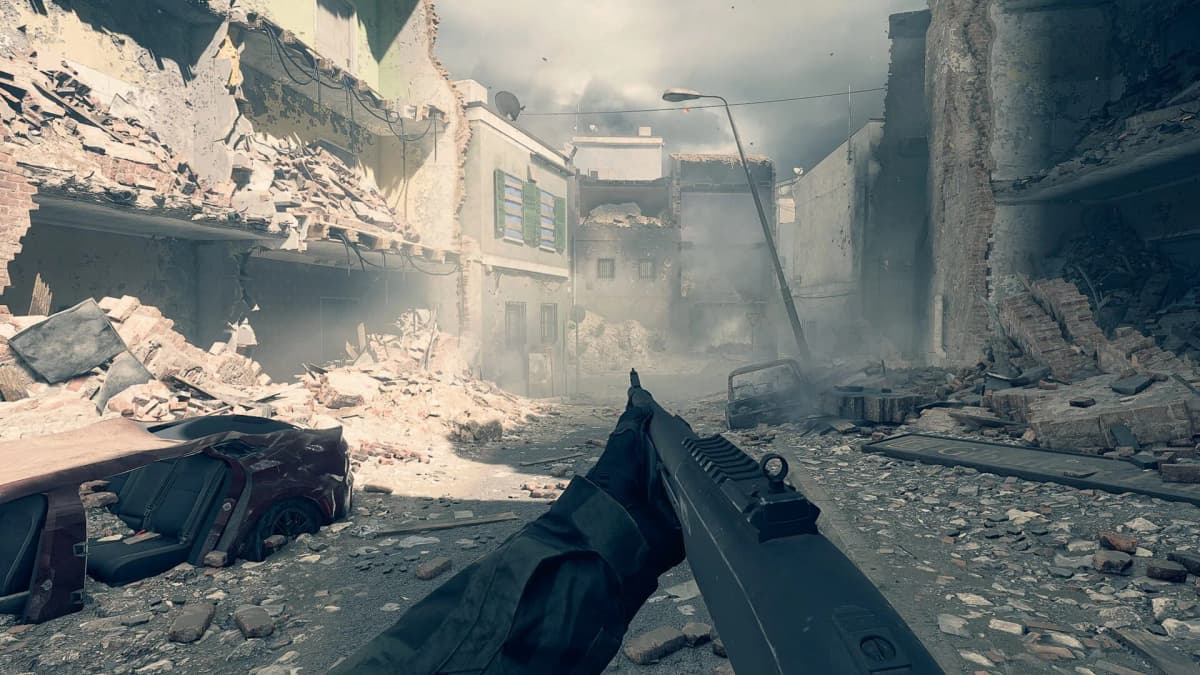
- You lean into sharp turns and sprints instead of gliding like a hovercam.
- Explosions don’t just tint the screen; they nudge, shake, and tilt your view as if you actually weathered a blast.
- ADS transitions, slides, and mantles are tuned so they feel like continuous motion you can anticipate, not canned cinematics you wait through.
The choreography here is about rhythm. The designers basically ask: “If a human performed these moves on a stage – sprint, dive, roll, aim, fire – what tempo would make that flow look powerful and intentional, not clumsy?” Then they map those beats onto animation curves, camera easing, and acceleration values.
This is why Battlefield 6’s movement feels both chunkier and more grounded than the hyper-snappy parkour of something like Apex Legends, but still more responsive than older Battlefield entries that sometimes trapped you in long, heavy animations. It borrows from dance: commitment to motion, but enough control to improvise.
Recoil as an Embodied Mechanic, Not a Visual Effect
One of the smartest decisions in Battlefield 6’s choreography is rethinking recoil. In a lot of shooters, recoil is essentially a camera script and some visual kick – it looks wild, but under the hood your bullets follow a spreadsheet pattern you learn regardless of what you see.
Battlefield 6 aims to weld those together. Recoil is treated as an embodied system: the way the weapon model, camera, and bullet spread behave are all tightly linked. When the muzzle climbs in a specific pattern, the actual projectile distribution mirrors that movement as closely as networking and simulation allow.
The result, when it works, is a kind of physical learning. You’re not just memorizing a random recoil chart; you’re learning how to “dance” with that gun’s rhythm. Your arm pulls down in time with the visual climb, you start anticipating the second and third shots in a burst, and your brain stops having to consciously think about it.
This is where Battlefield 6’s “alignment of perception” really shows. If your hand motion, on-screen animation, and hit feedback line up, the gun becomes an instrument. When they don’t, it becomes a toy piano with sticky keys. The team clearly spent cycles re-choreographing weapon behavior until that loop felt right.
There’s a trade-off, of course. Tighter coupling between visual recoil and gameplay means any networking hiccup, animation bug, or frame hitch is more noticeable. If your recoil feels perfect but your bullets are secretly landing elsewhere because of latency, the illusion breaks hard. Battlefield 6’s ongoing netcode and hit registration patches show how fragile this dance can be in a 100+ player sandbox.
Procedural Animation: The Glue Between Design and Feel
Underpinning a lot of this is procedural animation – not just hand-authored keyframes, but runtime systems that adjust movement on the fly based on terrain, velocity, and context. In a game with Battlefield 6’s scale and verticality, you simply can’t keyframe every possible interaction. You need systems that compose motion like a choreographer, in real time.
DICE’s Combat Experience team essentially sits at the intersection of design, tech, and audio-visual direction. Their job is to make sure a decision like “soldiers should feel heavy when landing from a height” turns into:
- An animation blend that slightly crouches the character and plants the feet.
- A camera jolt with just enough downward punch to sell impact without inducing nausea.
- An audio layer – gear rattle, grunt, crunch of dirt or concrete.
- Controller vibration tuned to the fall distance.
- Network-safe movement that doesn’t desync your position relative to others.
Procedural systems take those ingredients and remix them per situation. Sprinting downhill into a slide on gravel shouldn’t look or feel identical to dropping off a railing indoors. The animation graphs, IK solvers, and physics reactions adjust poses, foot placement, and timing dynamically – all while honoring the designer’s constraints around timing and responsiveness.
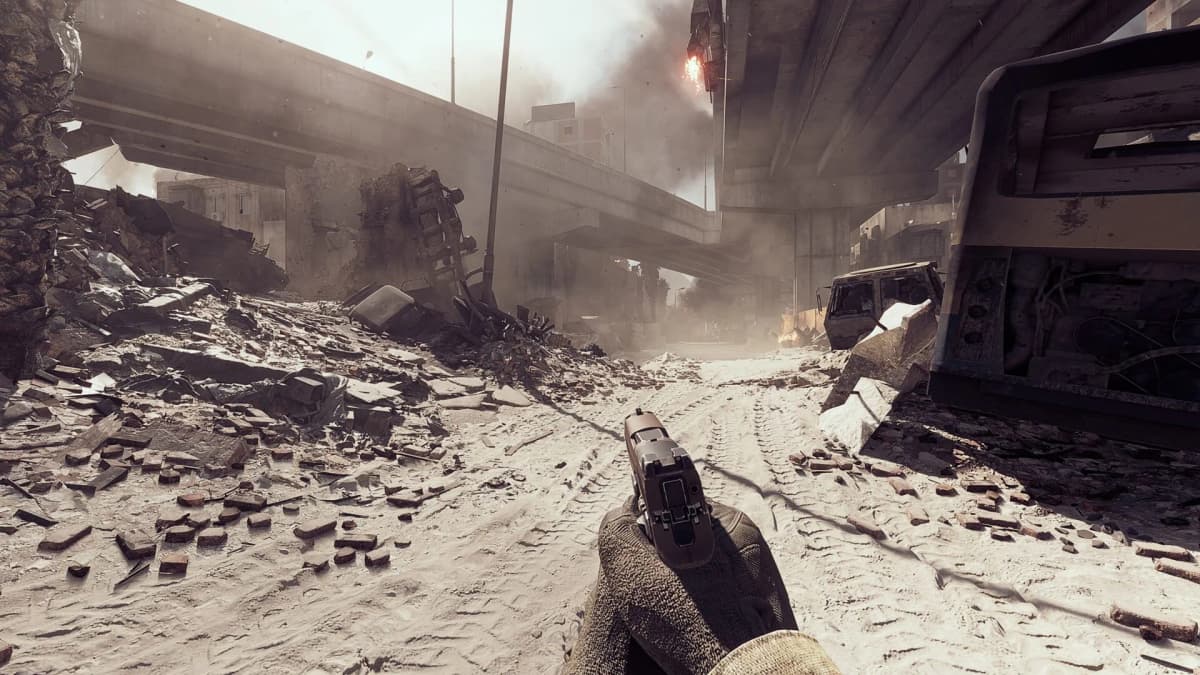
This is choreography at the system level: you’re not scripting exact steps, you’re defining how the dancer is allowed to move, and then trusting them to improvise within that frame. The “dancer,” in this case, is a pile of runtime animation code.
Rhythm and Momentum: How Movement Expresses Emotion
One of the cooler ideas DICE’s 3C designer talks about is the “qualitative behavior of response” – not just how fast the game responds, but how it behaves while doing so. That’s a very choreographer way of looking at timing.
Rhythm and Momentum: How Movement Expresses Emotion
One of the cooler ideas DICE’s 3C designer talks about is the “qualitative behavior of response” – not just how fast the game responds, but how it behaves while doing so. That’s a very choreographer way of looking at timing.
🎮 Get This Game at the Best Price
Compare prices instantly and save up to 80% on Steam keys with Kinguin — trusted by 15+ million gamers worldwide.
FinalBoss // Gear
Level up your setup
01Top-rated gaming headsetson Amazon→02High-refresh gaming monitorson Amazon→03Gaming chairson Amazon→04Discounted game keyson Kinguin→Affiliate links · As an Amazon Associate, FinalBoss earns from qualifying purchases.
*Affiliate link — supports our independent coverage at no extra cost to you
In Battlefield 6, that shows up in how different movement modes embody different energies:
- Standard sprint has a clear forward lean and camera bob that says “committing to a lane.”
- Tactical sprint or bursts feel more explosive, with snappier camera acceleration, selling urgency.
- Slides and mantles are sequenced so you can chain them into gun-ready states without awkward dead time.
That sequencing is everything. If the slide takes even 100ms too long to transition back into ADS, it stops feeling like a slick evasive maneuver and starts feeling like you tripped on the map. If the mantle locks aim for too long, you don’t feel like a trained soldier clearing an obstacle, you feel like you’re fighting the animation system.
Battlefield 6 clearly iterated on these timings until you could almost “hear” the rhythm of a good push: sprint-beat-slide-beat-aim-beat-fire. That internal metronome is what lets you sequence emotions as a player – the rising tension of an approach, the snap of the first shot, the scramble into cover when it goes wrong.
This is also where Battlefield 6 feels like a correction from Battlefield 2042’s more floaty, sometimes disconnected movement. You can tell there was a conscious effort to add weight and commitment back into the soldier’s body without going all the way to mil-sim sluggishness.
Making Chaos Readable: Sensory Clarity in Large-Scale Battles
Battlefield’s eternal design headache: how do you make a 64v64 firefight with jets, tanks, infantry, and orbital strikes readable to a single human brain on a 27-inch screen?
Battlefield 6’s answer leans heavily on choreography of sensory input. The team made it a priority to convey the sensory reality of modern conflict – the concussive booms, the whizzing rounds, the dust clouds – but always tethered to gameplay clarity.
- Audio prioritizes nearby threats and your own gun’s report, with distant chaos pushed back in the mix so it feels loud without drowning you.
- Visual effects like tracers, muzzle flashes, and impact sparks are tuned to emphasize direction and threat level over raw spectacle.
- Hit feedback – from subtle camera kick to hitmarkers and enemy flinch – is timed to sell contact the instant the game confirms it.
- Exposure and visibility are constantly being tuned so that lighting and darkness look dramatic but don’t hide everything important.
You can see this philosophy stress-tested in Battlefield 6’s Nightfall content, which pushes low-visibility conditions. Darkness and underground spaces are always risky for readability, and a lot of games lean on cheap tricks like glowing outlines to compensate. Battlefield 6 tries to keep things grounded: using muzzle flashes, dust, and directional audio to let you piece the scene together in your head. It doesn’t always stick the landing perfectly, but you can see the choreographic intent: guide the eye, don’t blind it.
When it works, you get that incredible Battlefield feeling of firefights that are chaotic from the outside but make sense from your soldier’s POV. You know when to push, when to fall back, and when to risk a revive – not because a UI arrow tells you, but because the choreography of sound, motion, and effects gives you a gut read on the battle’s rhythm.
Map Design as a Stage for Emergent “Cinema Moments”
Choreography doesn’t stop at the player. You also have to choreograph the stage. Battlefield’s design directors have been clear: these maps are built to support unscripted “cinema moments” – those clips people upload of dirt bikes weaving under helicopter fire or a tank shell dropping a radio tower onto an objective.
To make that happen, Battlefield 6 maps lean into:
- Spacious layouts with multiple approach vectors and ample vehicle lanes, so you can set up stunts the designers never specifically blocked out.
- Strategic destructibles that serve both spectacle and gameplay: towers that change sightlines when destroyed, cover that degrades under fire, walls that funnel or release players.
- Vertical staging that lets jets, helis, infantry, and armor all play in layered spaces without trampling each other’s fun constantly.
The key is that these aren’t static movie sets. The choreography is emergent: the systems are arranged so that when players collide – literally and figuratively – cool stuff tends to happen. The Combat Experience team’s job is to ensure that when those emergent moments happen, the animation, destruction, camera, and sound all join in the performance convincingly.
Think about shooting down a tower with a tank. In a lesser game, the tower would just vanish or cut to a canned collapse animation. In Battlefield 6, the destruction is designed to feel like a responsive partner: dust waves roll across the street, physics-driven debris crushes vehicles, the audio mixes into a heavy, chesty rumble. It’s spectacle, sure, but it’s spectacle that preserves agency – you did this, and the game is just dancing with you.
Function Over Form: Saying No to “Pretty but Useless”
Choreography as a design tool only works if you’re ruthless about your priorities. One of the most refreshing things in the Battlefield 6 talks is how often the devs emphasize cutting or toning down “cool” ideas that hurt readability or responsiveness.
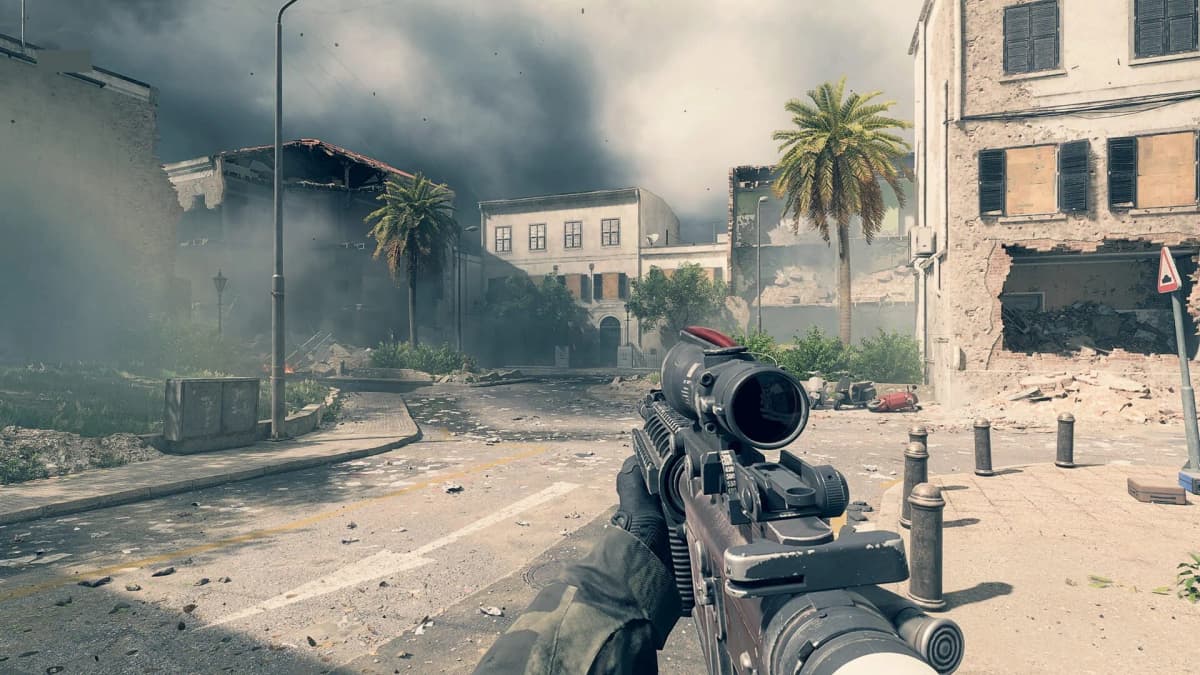
Examples of where function wins over form in a shooter like this:
- Dialing back lens flares and bloom so you can still see tracers and silhouettes.
- Shortening certain reload flourishes if they drift too long past the functional reload point.
- Reducing camera shake in situations where it looks dramatic but wrecks aim tracking.
- Preferring slightly “stiffer” third-person animations if they improve networking and hit registration.
This is where that dance perspective really pays off. A choreographer knows when a move is self-indulgent, when it’s just movement for movement’s sake. Battlefield 6 applies that same discipline to animation and effects. Does this camera roll help the player understand, or is it just a flex? If it’s the latter, it goes.
The Interdisciplinary Combat Experience Team: Who Actually Owns “Game Feel”
One subtle but important detail: Battlefield 6’s “game feel” doesn’t live only in animation or design. The Combat Experience team crosses disciplines – design, engineering, animation, audio, VFX – and treats feel as a systems-level concern.
That’s huge. In a lot of studios, you still get siloed workflows:
- Designers own the numbers (recoil values, spread, movement speeds).
- Animators own how things look.
- Audio does their pass later once behavior “locks.”
Battlefield 6 flips that. You can’t choreograph effectively if everyone is dancing to a different metronome. By pulling those people into a single Combat Experience vertical, DICE creates a feedback loop: a recoil tweak might trigger an animation adjustment, which might trigger an audio timing shift, which loops back into design. Game feel becomes a shared language instead of a tug-of-war.
For other AAA teams (or even mid-size ones), that’s one of the biggest takeaways: if you want your shooter to feel cohesive, someone has to own feel at the intersection of disciplines, not off in a corner.
Who Actually Benefits From This Choreography-Driven Approach?
From a player’s perspective, most of this should be invisible. You shouldn’t be thinking about animation curves or “kinesthetic combat” mid-fight; you should just feel like Battlefield 6 “gets” what you’re trying to do with your mouse or controller.
But if you’re a designer, animator, or systems programmer, there are some very practical lessons sitting inside Battlefield 6’s approach:
- Smaller teams / indies can still borrow the philosophy even without Battlefield-level tech. You might not have full-body IK or destructible towers, but you can absolutely line up click timing, muzzle flashes, hitmarkers, and sound into a tight loop.
- Competitive shooters can study the “alignment of perception” idea. If your bullets don’t go where your recoil suggests, or latency routinely lies to players about outcomes, you’re fighting your own choreography.
- Animation-heavy games (soulslikes, action RPGs) can look at how Battlefield 6 trims or reshapes animations when they hurt responsiveness. Not everything needs a four-second flourish.
There are also real trade-offs. Choreography at this level is expensive in both time and tech. It demands:
- More iteration, because every change reverberates across multiple systems.
- More cross-discipline communication, which not every studio culture supports.
- More maintenance, especially in a live-service game where patches keep adjusting balance and behavior.
And if you get it wrong – if you over-choreograph to the point of locking players into overlong animations, or overdo camera motion – you can actually hurt accessibility and long-term comfort. Motion sickness, visual overload, and “why won’t it just let me shoot” frustration are all real risks.
Battlefield 6’s Choreography: Where It Shines and Where It Stumbles
After a lot of hours with the game – across PC and PS5, both mouse and controller – Battlefield 6’s choreography-first philosophy mostly pays off, but it’s not flawless. As with any ambitious system, the edges are where you feel the strain.
When it shines:
- Assault rifles and LMGs feel genuinely “learnable” through your hands, not just spreadsheets.
- Movement chains – sprint > slide > ADS > fire – have a tangible rhythm you start to internalize.
- Destruction and vehicle interactions produce some of the best unscripted set pieces in any current FPS.
Where it stumbles:
- Network inconsistencies can break the illusion when your eyes and hit markers disagree, especially in high-pop servers.
- Some players find the added weight and camera motion harder to adapt to, especially coming from super-snappy arena shooters.
- Low-visibility scenarios (like some Nightfall content) skate the line between tension and frustration, depending on tuning and player preference.
But that’s the thing about choreography: it’s always a negotiation between expression and control. Battlefield 6 leans further into expression than a pure esport might, but not so far that you feel like you’re on rails. For a franchise built on chaos, that’s a gutsy but sensible place to land.
Pros and Cons of Battlefield 6’s Choreography-Driven Design
What Other Shooters Can Steal From Battlefield 6
If you strip away the Frostbite engine, the massive budgets, and the jet flyovers, Battlefield 6’s choreography lessons boil down to a handful of principles almost any FPS can apply.
- Decide what “alignment of perception” means for your game. Is it about surgical accuracy? Brutal impact? Arcade responsiveness? Pick a feel and let that guide animation, audio, and camera decisions.
- Prototype with ugly visuals if necessary. Nail click-to-shot timing, movement chains, and hit feedback before you let artists go wild. Pretty can come later.
- Treat recoil as embodied, not decorative. Make sure your visual recoil, camera movement, and actual bullet spread tell the same story.
- Build a cross-discipline “feel crew.” Even if it’s two people, someone in design and someone in animation/audio should own the holistic feel together.
- Choreograph chaos, don’t just spawn it. In big battles, use audio, light, and motion to guide the player’s attention instead of letting noise pile up.
None of that requires being Battlefield-sized. It requires thinking like a choreographer instead of a content factory.