
Table of Contents (8)
From Denny’s diners to data-center dominance: what really changed
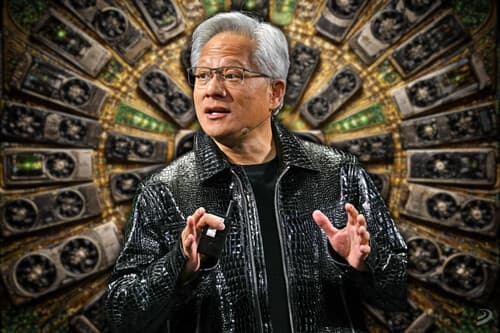
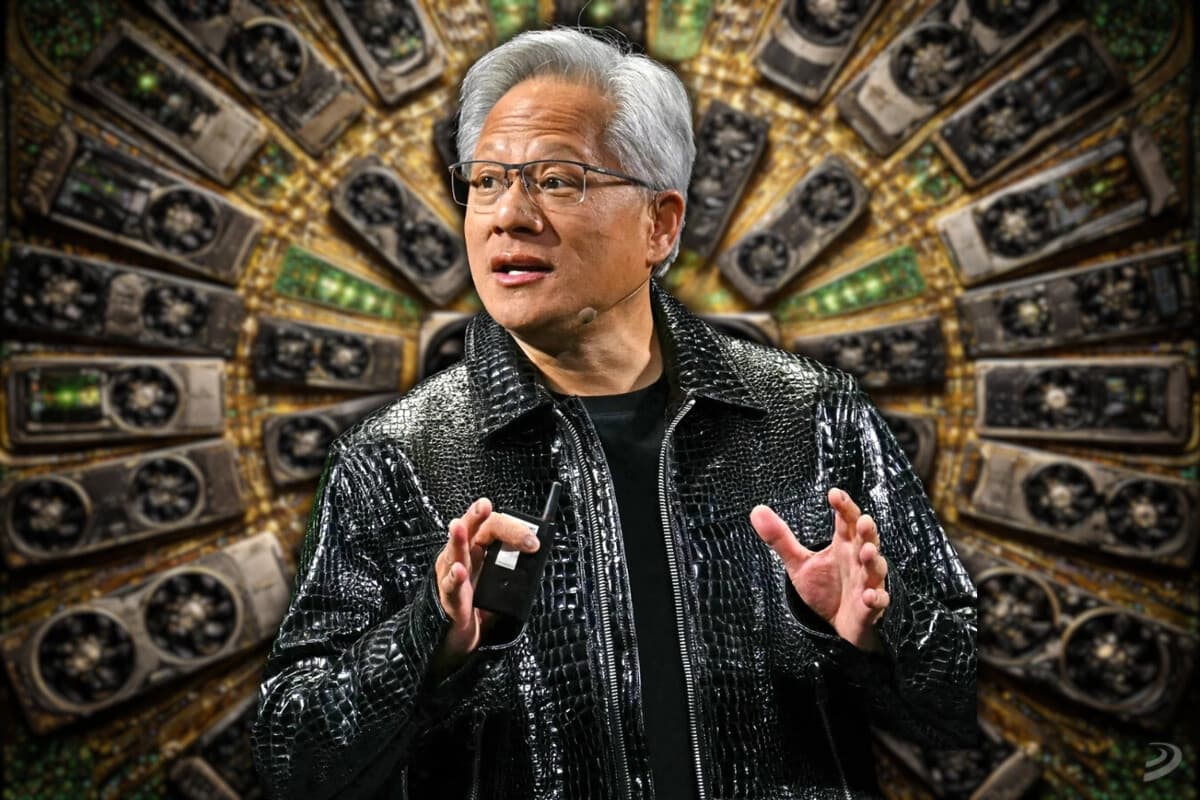
What matters is not that Nvidia makes fast chips – it’s that Jensen Huang convinced the world those chips are indispensable. That message turned a company born to push pixels into the near-monopoly supplying the compute that runs modern AI. The consequence: record revenue and capex, customers scrambling to diversify, and a regulatory spotlight that comes with owning infrastructure.
Key takeaways
- Nvidia’s latest quarter – $68B revenue, $62B from data centers – proves GPUs are now the core AI currency, not just gaming hardware (TechCrunch).
- Customers are hedging: Meta’s up-to-$100B deal for AMD GPUs and CPUs signals a serious diversification effort away from Nvidia dependence (TechCrunch).
- Nvidia built this position by turning GPUs into general-purpose compute with CUDA and bolstering data-center networking with Mellanox; the failed Arm bid shows regulators won’t let infrastructure consolidation go unexamined.
- Market power brings risk: pricing power and export limits (notably China) create both leverage and fragility for Nvidia’s model.
How a gaming trick became the world’s AI back end
The technical pivot that changed everything was CUDA in 2006. Nvidia didn’t invent parallel processing, but it packaged GPU acceleration as a software platform developers could actually use beyond graphics. That’s the crucial difference between selling parts and selling a platform.
From there, Huang’s playbook was steady: build a developer lock-in (CUDA), expand the product set (high-performance GPUs and networking), and make the company essential to the economics of training and running large models. Buying Mellanox in 2019 wasn’t glamorous, but it was necessary — fast interconnects are what let thousands of GPUs act like one machine. Today Nvidia breaks its data-center revenue into compute and networking for a reason: it sells both the engines and the transmission lines.

The cracks everyone’s watching
Dominance breeds countermoves. Meta’s multiyear agreement to spend up to $100 billion on AMD chips and CPUs is the clearest customer-level response: if your business depends on huge, recurring compute bills, you don’t want a single supplier calling the shots on price or architecture. CPUs have re-emerged as a practical pillar for inference workloads, and AMD’s MI540 and CPU roadmap are intended to offer companies an alternative stack.
Meanwhile, Nvidia’s own results show both power and limits. CEO Jensen Huang described exponential demand for “tokens,” and the company reported record capex and massive data-center revenue, but it still reported no meaningful revenue from China despite some approvals for H200 parts. Export rules, local competitors (Moore Threads), and customer diversification mean Nvidia’s monopoly isn’t permanent.
Regulation: the price of infrastructure
When your product becomes infrastructure, you inherit a regulator’s toolkit. Nvidia’s failed Arm acquisition is the most obvious example: Washington, Brussels and Beijing saw the risks of consolidating too much control over compute stacks. That same scrutiny will follow any massive bet on exclusivity — and it’s worth noting that other sectors see the same pattern. Recent blockbuster M&A elsewhere, like the Paramount Skydance bid for Warner Bros. Discovery that forced a shareholder vote and regulatory reviews, is a reminder that big deals invite long, public oversight.
The question I’d ask Jensen on stage
“If a top customer signs a decade-long agreement with a rival supplier, how does Nvidia protect its long-term pricing and roadmap influence?” That’s the uncomfortable question the company skirts when it touts growth. Short answer: via technical lead, expanding into networking and software, and heavy capex — but none of those are foolproof as customers get savvier.
What to watch next — concrete signals
- Nvidia’s next quarterly split of compute vs. networking revenue — any stabilizing or shrinking compute share will matter.
- Meta’s public deployment milestones for AMD hardware and whether those workloads hit production at scale (Meta and AMD have public schedules tied to the agreement).
- Regulatory filings and approvals around key customer contracts and any fresh export approvals for China; small revenue from China today could change if approvals materialize.
- OpenAI/Nvidia partnership moves and any equity or strategic deals the company announces — these would be structural defenses of market share.
- Product cadence from AMD and others: if MI540s and AMD CPUs start matching Nvidia on efficiency per dollar for common AI workloads, customer behavior will follow.
TL;DR
Jensen Huang converted a graphics company into the backbone of modern AI by selling GPUs as a platform, not just hardware. That strategy is paying off in record revenue and capex, but major customers are actively diversifying and regulators are paying attention. Watch revenue splits, big customer deployments (Meta/AMD), and export/regulatory moves to see whether Nvidia’s position holds or erodes.
FinalBoss // Gear
Level up your setup
01Top-rated gaming headsetson Amazon→02High-refresh gaming monitorson Amazon→03Gaming chairson Amazon→04Discounted game keyson Kinguin→Affiliate links · As an Amazon Associate, FinalBoss earns from qualifying purchases.
Want to Level Up Your Gaming?
Get access to exclusive strategies, hidden tips, and pro-level insights that we don't share publicly.
Ultimate Gaming Strategy Guide + Weekly Pro Tips