
Table of Contents (15)
Why Screenshot Quizzes Hit Open-World Gamers So Hard
PC Gamer recently dropped a timed quiz that absolutely ate my lunch: 15 screenshots of open-world landscapes, four minutes on the clock, no HUD, no characters, just pure scenery. It’s brutal in the best way. You realise really fast which games you’ve genuinely lived in, and which ones you just fast‑traveled across.
I love that format because it celebrates something we don’t talk about enough: how specific and memorable great world design can be. The whole “You see that mountain? You can go there!” cliché only works when that mountain – and the land around it – has a personality. Take away the protagonist swaggering across the screen and the minimap spam, and you’re left with the real star of the show: the landscape itself.
After stumbling through that quiz, I started thinking about the worlds I’d recognise instantly, even cropped down to a single frame. Not just because they’re popular, but because they’ve burned themselves into my brain: a skyline, a tree, a weird colour grade, a single ruined tower on a distant hill.
This isn’t a “best open-worlds ever” ranking. It’s a tribute to the locations that are so distinct you could drop almost any open‑world fan into a screenshot and they’d go, “Oh yeah, I know exactly where that is.” Some picks are obvious, some will probably start arguments, and that’s half the fun.
So here are 12 open-world game locations I’d recognise in a heartbeat from one screenshot – the kind of places that make those timed quizzes both infuriating and strangely nostalgic.
1. The Elder Scrolls V: Skyrim
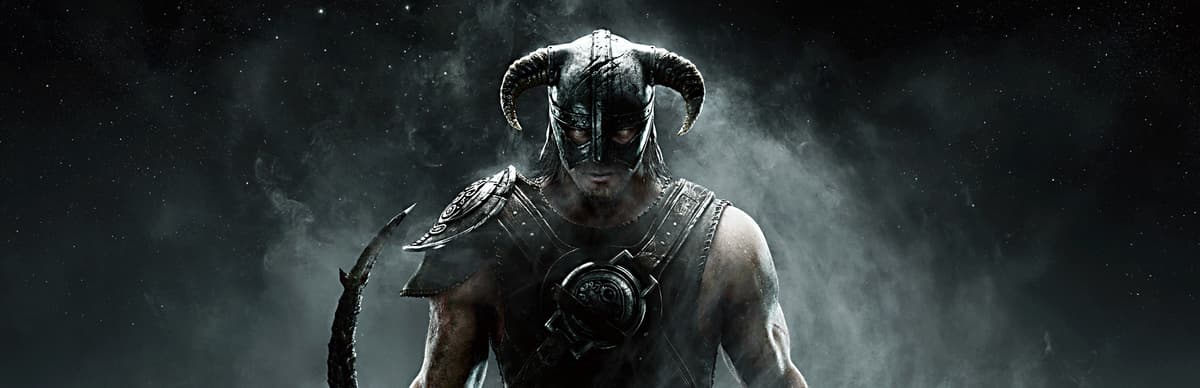
There’s a specific shot that lives rent‑free in my head: standing on the road outside Whiterun, yellow tundra grass swaying, the city perched on its rocky outcrop with Dragonsreach jutting out like a ship’s prow, the Throat of the World looming in the background. Blur it, crop it, desaturate it – it still screams Skyrim.
Part of what makes Skyrim so instantly recognisable is how committed it is to that cold, Nordic, slightly washed‑out look. The sky is this pale, almost milky blue; the stonework has a very particular chunkiness; even the pine trees have a silhouette you can clock from a mile off. I remember my first time leaving Helgen: cresting that ridge near Riverwood and realising, “Okay, this whole grey‑green sprawl is mine to ruin with quicksaves.”
And then there’s the way its landmarks anchor the whole map. The College of Winterhold clinging to a cliff, Solitude’s arch bridge, the jagged serration of the mountains cutting into the clouds – you only need a corner of one of those in frame to know exactly where you are. In screenshot quizzes, Skyrim is usually a gimme, but honestly? It’s earned that status. When a world is this iconic, it deserves to be the easy one.
2. The Witcher 3: Wild Hunt
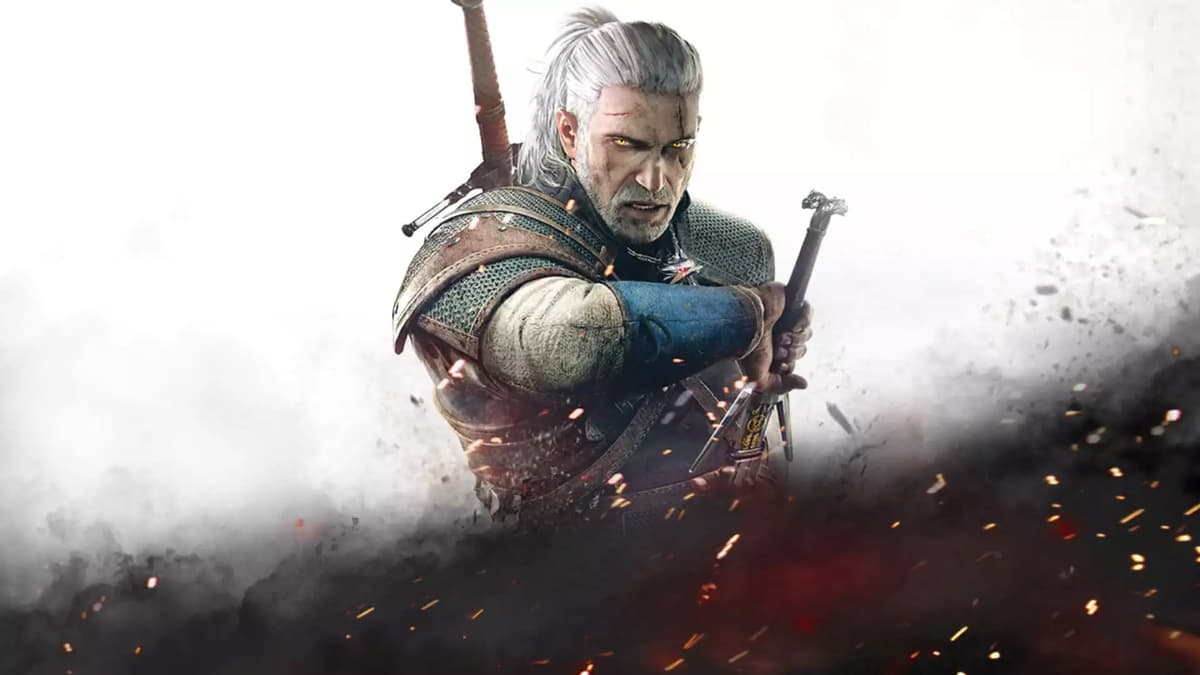
If Skyrim is the king of muted fantasy, The Witcher 3 is its grimy cousin, drenched in mud, wine, and fog. What gives it away in a single screenshot isn’t just the medieval villages or the armour styles – it’s the mess. Velen’s half‑drowned fields, crooked trees, half‑collapsed huts leaning into the wind; you can practically smell the rot from a still image.
My own “oh yeah, that’s Witcher 3” moment always comes from Novigrad and Skellige. Novigrad’s red‑tiled roofs stacked tightly along the river, the big cathedral dominating the skyline, smoke and chimneys everywhere – it has this dense, almost claustrophobic verticality. Skellige flips that completely with jagged cliffs, longhouses, and that icy, slapped‑by‑the‑sea lighting. One look at a windswept cliff with a wooden watchtower barely hanging on and I know exactly which archipelago Geralt is grumbling around.
What CD Projekt nailed is texture. Muddy tracks carved through fields, tattered banners, that particular overcast sky they use in the war‑torn regions – no other fantasy RPG quite layers its wilderness like this. When a quiz crops out Geralt and the HUD but leaves you with a crooked roadside shrine and a distant, war‑scarred tree line, you don’t need more clues. That’s the Continent, and Geralt’s probably ten seconds away from getting dragged into someone else’s disaster.
3. The Legend of Zelda: Breath of the Wild
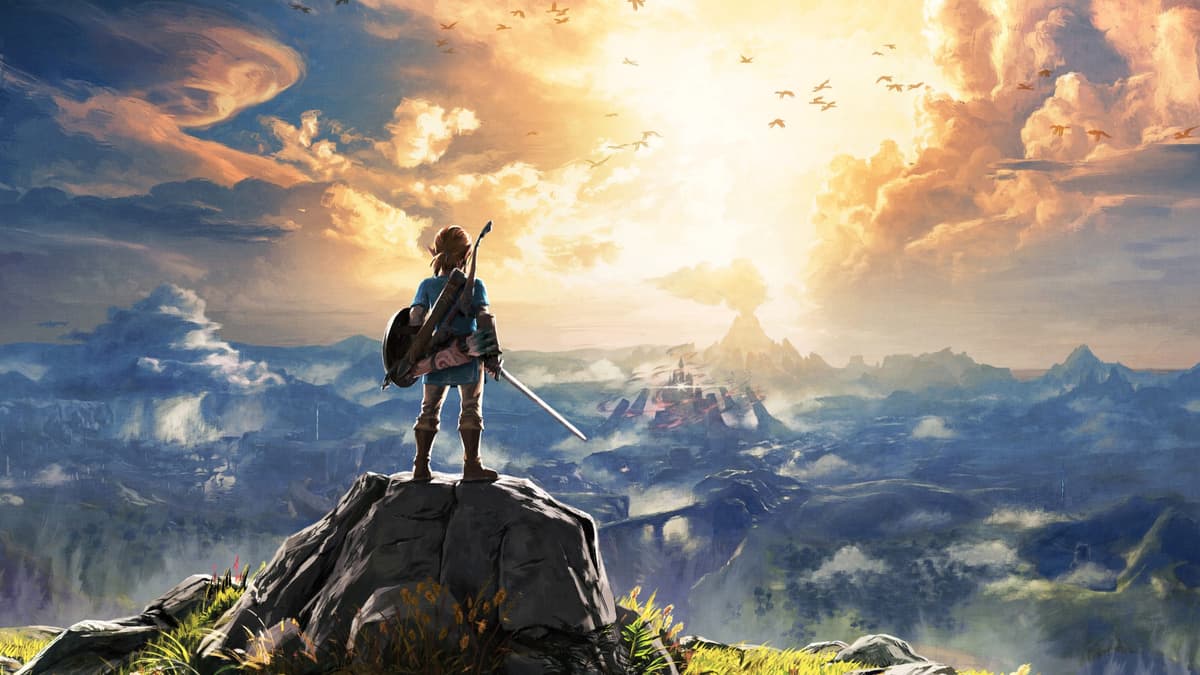
Breath of the Wild is one of those games where even a totally random hillside looks like concept art. Soft, painterly colours; exaggerated, almost toy‑like rock formations; that clean blue sky with stylised clouds. But there are a few dead giveaways that make Nintendo’s Hyrule impossible to confuse with anything else.
The big one is the Sheikah tech. A tower glowing faintly orange against the horizon, a shrine with that telltale blue‑lit doorway, or the sinister aura wrapped around Hyrule Castle – those shapes are so distinct that you can spot them even if they’re a tiny sliver in the distance. I still remember standing on the edge of the Great Plateau for the first time, looking out at the castle wrapped in Calamity Ganon’s swirling malice, thinking, “That’s my final exam right there.” A single screenshot of that skyline is basically a thesis on “adventure awaits.”
Then there’s Nintendo’s obsession with clear silhouettes. The Dueling Peaks split by a river, Death Mountain’s smoking cone, even the way trees cluster in little storybook groves – it’s all incredibly readable. Remove Link, the hearts, the stamina wheel, and you’re still left with a world that announces itself instantly. In any quiz line‑up, a slice of that plateau grass and a weirdly perfect cliffside is all you need to whisper, “Yep, that’s Hyrule.”
4. Elden Ring
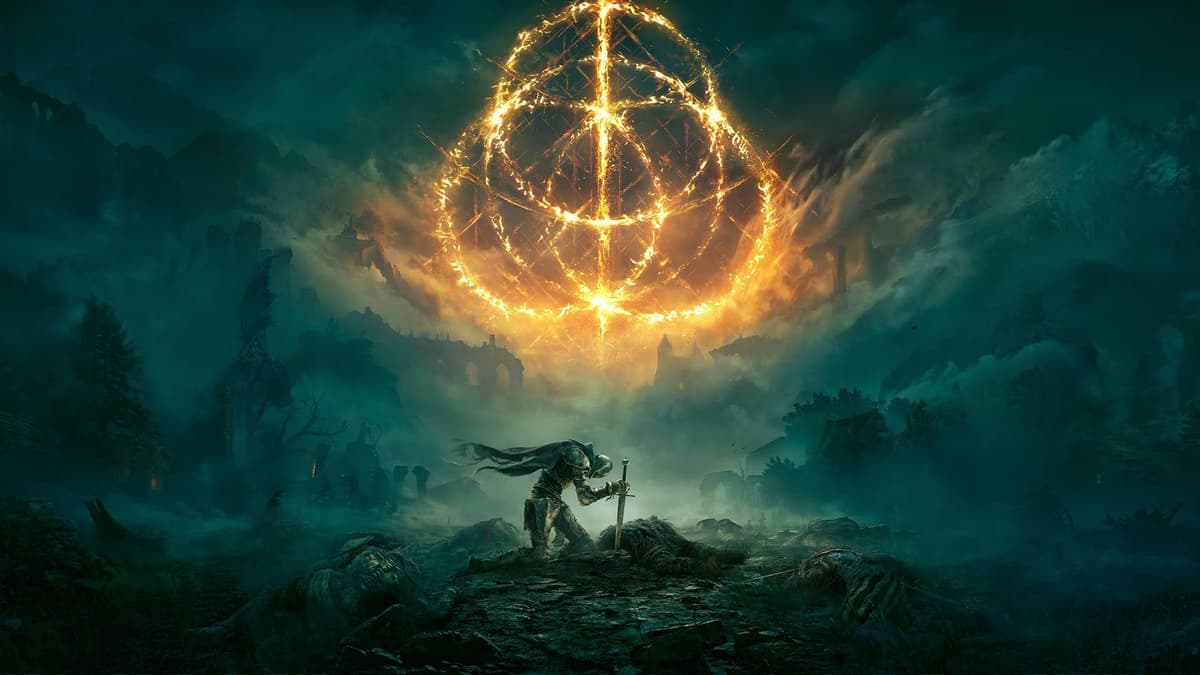
There are dozens of gorgeous open worlds, but Elden Ring does something borderline unfair for screenshot quizzes: it sticks a gigantic, glowing golden tree in the sky and dares anyone else to copy it. If the Erdtree is visible, the game might as well be signing its name in the corner of the frame.
My first steps into Limgrave are burned into my brain: hazy sunlight, ruined church off to one side, the Erdtree dominating everything, its branches bleeding light across the clouds. Later areas push it even harder – Liurnia’s flooded plains with Raya Lucaria poking out of the mist, Caelid’s red‑rot sky where the air itself looks sick. Even if you cropped all of that down to a sliver of diseased horizon or a shard of golden glow, FromSoftware’s vibe is so specific that it’s almost comical.
What really sells it, though, is the way Elden Ring layers weirdness into familiar shapes. A crumbling medieval tower is nothing special until you notice it’s leaning at an impossible angle over a bottomless fog chasm. A forest becomes uniquely Elden Ring the second you catch those twisted, corpse‑like trunks and the wrong‑colour sky. In a lineup of fantasy screenshots, the one that looks like a beautiful landscape infected by cosmic horror? That’s the Lands Between, no question.
5. Red Dead Redemption 2
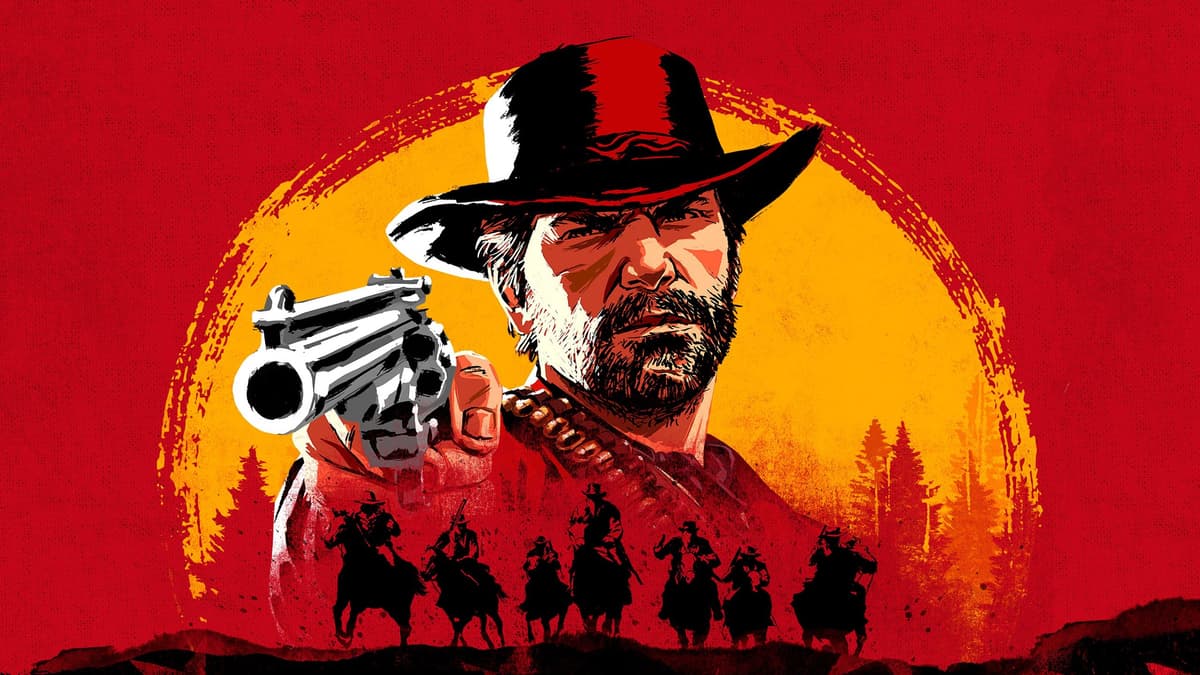
Red Dead Redemption 2 is the only game where I’ve genuinely stopped mid‑mission, set my controller down, and just watched the sunrise move across the plains. It’s not just “generic cowboy land”; Rockstar’s take on the dying American frontier has this almost film‑stock quality that makes it instantly recognisable in stills.
The giveaway for me is the way the light hits the landscape. Golden hours are golden – warm, hazy, dust filtered through long grass and cigarette smoke. Valentine’s muddy main street, with its wooden facades and that slight tilt to the layout, is impossible to mistake. So are the wide shots of the Heartlands: a lonely tree, a rail line carving across the frame, a patchwork of meadows and dusty trails under a huge sky. I still remember riding through there in cinematic camera mode, half paying attention to the minimap because the composition on screen looked better than half the Westerns I’ve seen.
Even when RDR2 wanders into snowy mountains or southern swamps, the art direction keeps everything cohesive. The mist in the bayou, the way snow clumps on Arthur’s coat, the particular shade of blue in the night sky – it all reads as “Rockstar West.” In a quiz, one look at that colour grading and those lovingly over‑detailed trees, and I know I’m back on my weary horse, probably about to be ambushed again.
6. Grand Theft Auto V
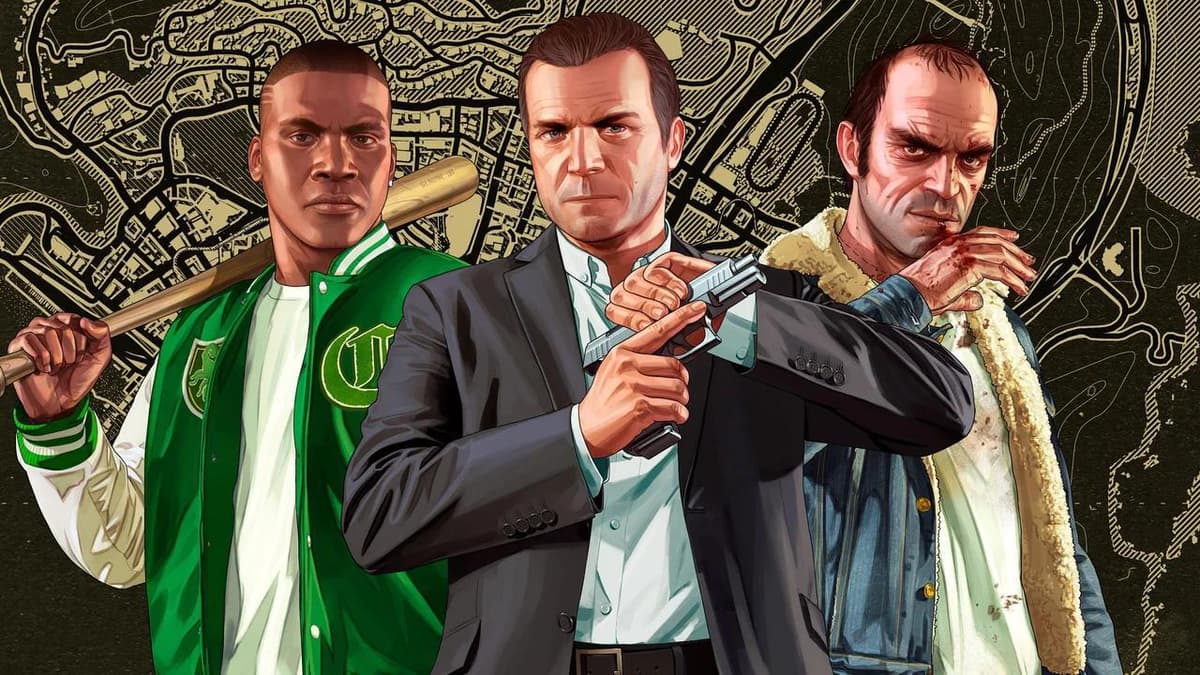
Los Santos isn’t just “fake Los Angeles”; it’s the internet’s default mental image of modern open‑world cities. Even if a quiz never shows you the full Vinewood sign or Del Perro Pier, there are so many tiny tells in GTA V’s skyline that it borders on cheating.
Think of the downtown cluster: glass high‑rises packed tight with that one absurdly tall central tower, freeways looping around each other in tangled knots, low‑rise sprawl radiating outward with palm trees poking through. I remember the first time I flew a stolen helicopter up over the city on PC, just to see how far the draw distance would go – from that height, the whole map feels like a parody postcard. Even a cropped shot of the hills with the observatory dome and a sliver of the sign on the ridge is enough to give it away.
Think of the downtown cluster: glass high‑rises packed tight with that one absurdly tall central tower, freeways looping around each other in tangled knots, low‑rise sprawl radiating outward with palm trees poking through. I remember the first time I flew a stolen helicopter up over the city on PC, just to see how far the draw distance would go – from that height, the whole map feels like a parody postcard. Even a cropped shot of the hills with the observatory dome and a sliver of the sign on the ridge is enough to give it away.
🎮 Get This Game at the Best Price
Compare prices instantly and save up to 80% on Steam keys with Kinguin — trusted by 15+ million gamers worldwide.
*Affiliate link — supports our independent coverage at no extra cost to you
GTA V also has a very specific Californian haze to its lighting. Sunsets are smoggy orange, midday is harsh and overexposed, and the beaches hit that exact mix of beautiful and slightly seedy. You could strip out cars, NPCs, even the UI, and one glance at those freeways snaking past stucco apartment blocks tells you where you are. No other open‑world city looks quite this much like a sitcom set you can carjack your way through.
7. Cyberpunk 2077

Where GTA V is all sun‑bleached satire, Cyberpunk 2077 is pure neon density. Night City is one of the few game locations where you can recognise the world just from a cluster of billboards and a slice of sky. It’s vertical, it’s loud, and it has zero chill.
The strongest tell is that layered city structure. Elevated highways threading behind colossal holo‑ads, monorails snaking between megabuildings, streets choked with signs in a dozen languages – it’s chaos, but it’s curated chaos. I still remember stepping out onto V’s apartment balcony for the first time, looking down into that courtyard bathed in sickly pink and blue light, rain streaking off every surface. You crop 90% of that away and leave just a corner of a chrome statue and a sliver of luminescent smog, and my brain still goes, “Yep, that’s Night City.”
The colour palette is another giveaway. A lot of cyberpunk games go heavy on blues, but 2077 adds this punch of toxic magenta and pale yellow that makes every shot feel like a music video frame. Then there’s the architecture: those hulking megablocks with stacked balconies and exposed piping, the Arasaka tower looming like a monolith, the sprawl of the Badlands just beyond the city lights. Even if a quiz only shows you a dusty freeway with a neon skyline bleeding through the smog in the distance, there’s nothing else it could be.
8. Ghost of Tsushima
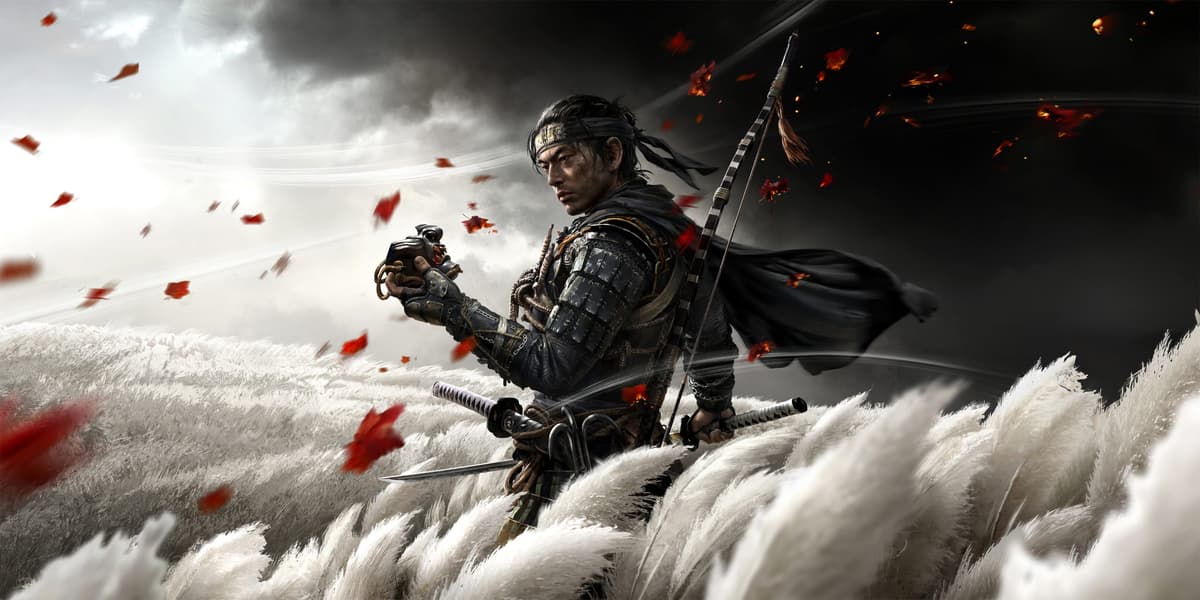
Ghost of Tsushima is the game that turns every random detour into a desktop wallpaper. If a screenshot quiz ever throws up a shot of a hillside buried in waist‑high grass, thousands of blades all leaning in the same wind direction under a sky full of drifting leaves? That’s Sucker Punch, no contest.
The colour is what makes Tsushima stand out. The Golden Forest is almost offensively saturated – trees burning yellow, leaves tumbling through the air like confetti. Later, you get crimson maple groves so vivid they look unrendered. I remember spending an embarrassing amount of time in photo mode, panning the camera around as Jin rode through a storm of pedals, the wind whipping cloth and foliage in unison. Strip Jin and the UI away and you still have this hypnotic blend of motion and colour that nobody else has quite matched.
You also get those iconic silhouettes: lone Torii gates on cliff edges, Shinto shrines perched above waterfalls, the outline of a samurai helmet statue on a hill. The way fog hugs the lower ground while peaks stab through into clear air is very specific to the game’s composition. In any line‑up of “pretty nature” screenshots, the one that looks like an impossible mix of Akira Kurosawa and a tourism brochure – that’s Tsushima.
9. Horizon Zero Dawn
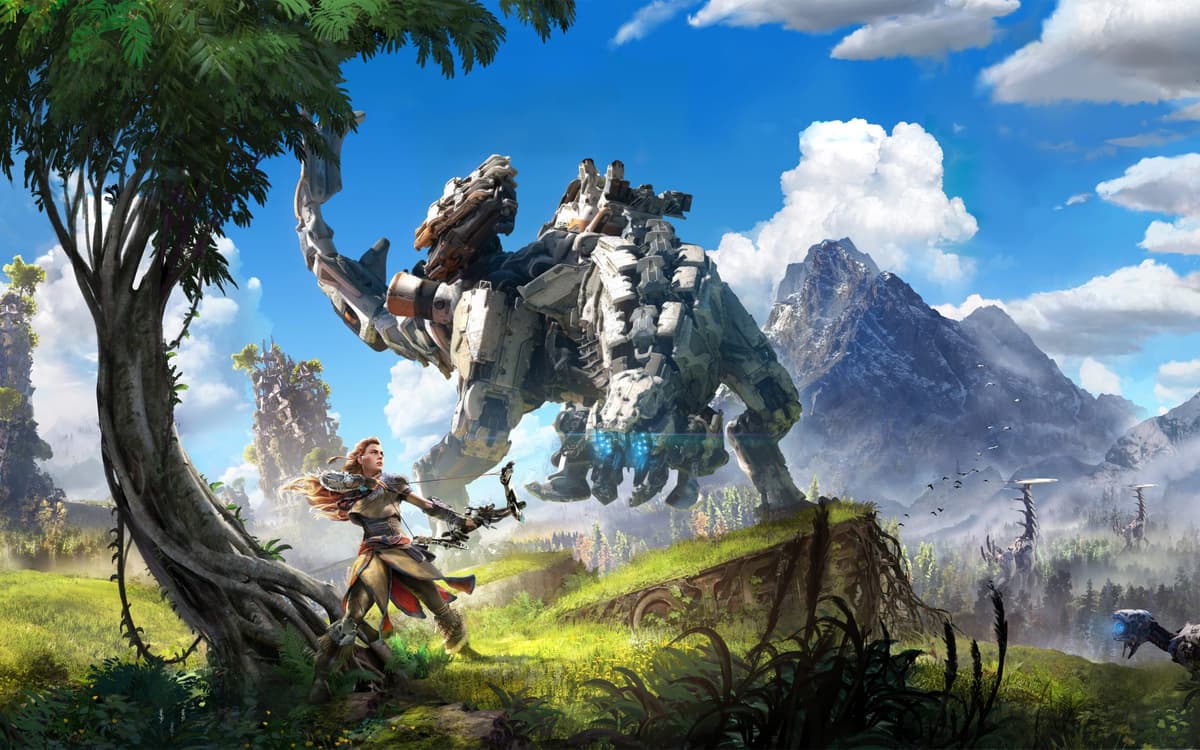
Few games sell their premise in the environment as cleanly as Horizon Zero Dawn: lush nature reclaiming the world, with robot dinosaurs just casually existing among the ruins. You can recognise it even when the machines are off‑screen, because the landscape constantly reminds you of that collision between past and future.
My personal tell is the Tallneck. A single frame of that giraffe‑like silhouette marching across a valley, its disc head cutting a perfect curve against the sky, and there’s zero ambiguity. But even when a quiz crops the robo‑fauna out, you’ve got those overgrown skyscrapers half‑buried in hills, rusted highways hanging in mid‑collapse, and that slightly stylised lighting that makes Colorado look almost alien. I remember climbing my first Tallneck, pausing at the top and spinning the camera just to drink in how the ancient world’s skeleton threaded through all that greenery.
Horizon’s rock formations are also surprisingly distinct: lots of layered, striated cliffs and arches, with red earth giving way to bright grass and snow‑capped peaks in the distance. The colours lean warm and clean, almost HDR‑postcard in places. Put a screenshot of a ruined overpass jutting out over a forested valley next to, say, Skyrim’s more grounded stonework or The Witcher 3’s mud‑heavy roads, and Horizon’s “nature vs. metal” identity practically glows.
10. Assassin’s Creed Odyssey
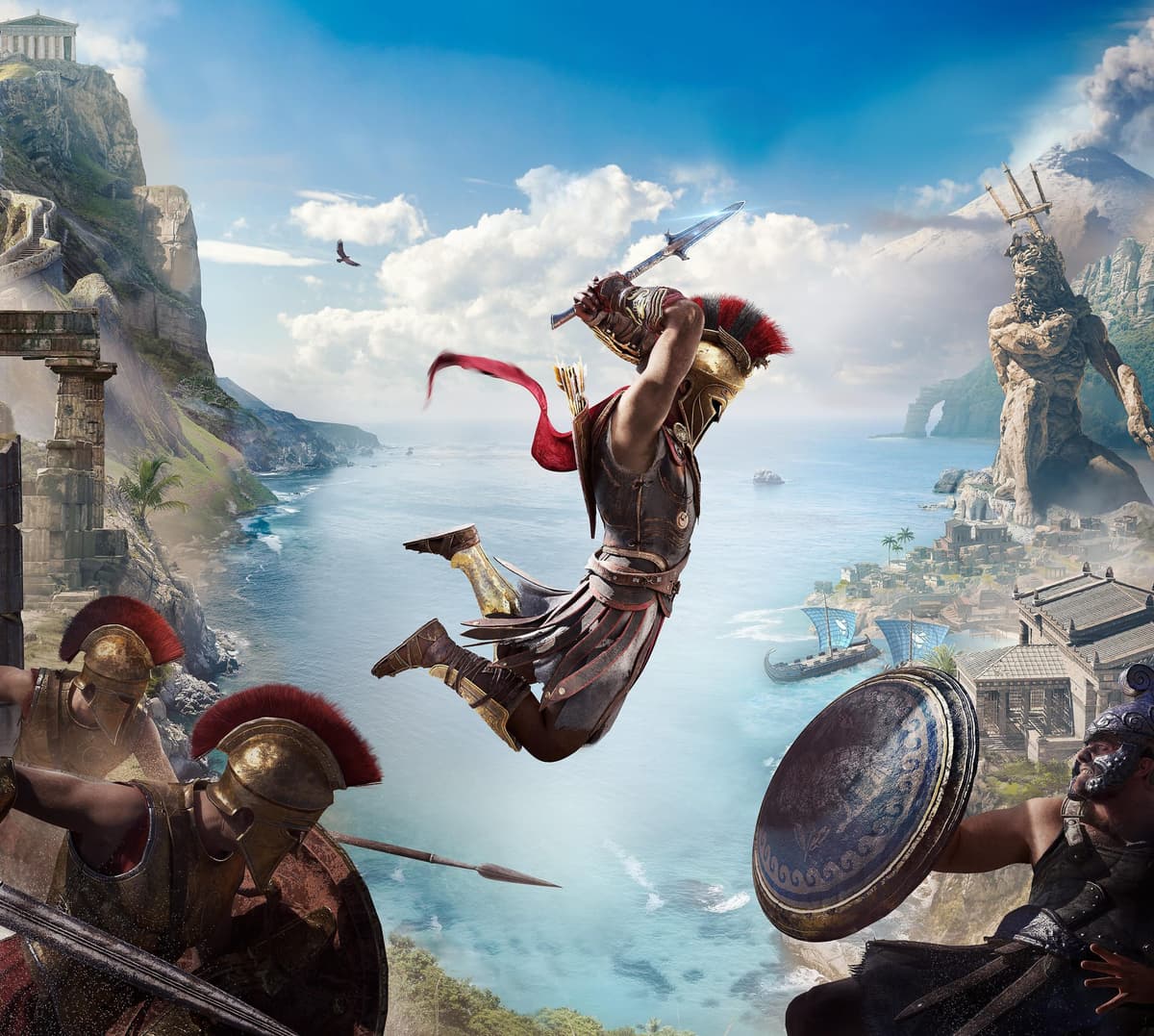
The Assassin’s Creed series has jumped around so many eras that some of its cities blur together, but Odyssey’s take on ancient Greece lives in a league of its own. One glance at shimmering turquoise water dotted with islands, whitewashed buildings stacked up a hillside, and a ludicrously big statue staring out over the sea, and it’s an instant, “Ah, I’ve accidentally spent 80 hours here.”
What makes Odyssey so recognisable is how it leans into classical drama. Colossal marble statues straddling harbours, temples perched high with glaringly bright columns, dusty olive groves rolling down to perfect beaches – it’s like someone mashed together every tourist poster for the Greek isles and then sprinkled in myth. I remember sailing into a new region at dawn, the water this ridiculous shade of blue, orchestral score swelling, and a monumental Zeus looming over the bay. Even cropped to a chunk of shoreline and a bit of sculpted ankle, that kind of excess is extremely Odyssey.
The light is another giveaway: harsh Mediterranean sun that makes whites almost glow and shadows look razor sharp. Compared to the heavier palettes of other AC games, Odyssey is brighter, hotter, more saturated. In a screenshot line‑up, if you see terracotta roofs, perfect teal water, and an enormous statue doing something wildly impractical with a spear, you’re not in Valhalla anymore.
11. Death Stranding
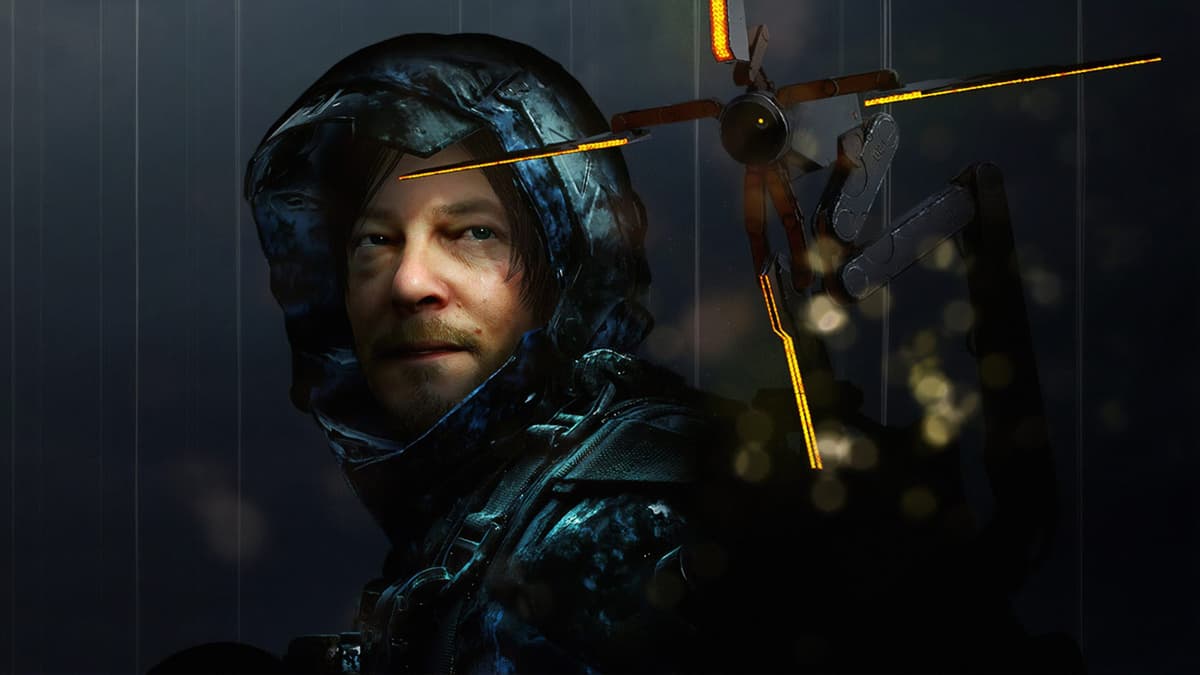
There’s “nice scenery,” and then there’s “this looks like I’m about to hike across a melancholy album cover.” Death Stranding is so visually specific that even people who bounced off the gameplay can usually recognise it from a single landscape shot.
The world is all about stark contrasts: black volcanic rock, vivid green moss, slate‑grey skies, and rivers cutting harsh white veins through it all. It looks closer to Iceland than “America,” which is part of the unsettling charm. I remember my first serious cargo run: no enemies in sight, just me, a stack of boxes, and this endless stretch of broken terrain under low, sulking clouds. Even without Sam, the UI, or the little holographic structures, that combination of rocky outcrops and wet, reflective ground is unmistakable.
Then you’ve got the weirder flourishes: the unnatural double rainbows, tar‑black beaches strewn with whale corpses, highways levitating uneasily over emptiness. No other triple‑A game swings between pristine natural beauty and abstract apocalyptic horror quite like this. In a quiz, if you see a valley that looks both stunning and slightly wrong – like the world is half‑finished and grieving – chances are you’re looking at Kojima’s strand sandbox.
12. Minecraft
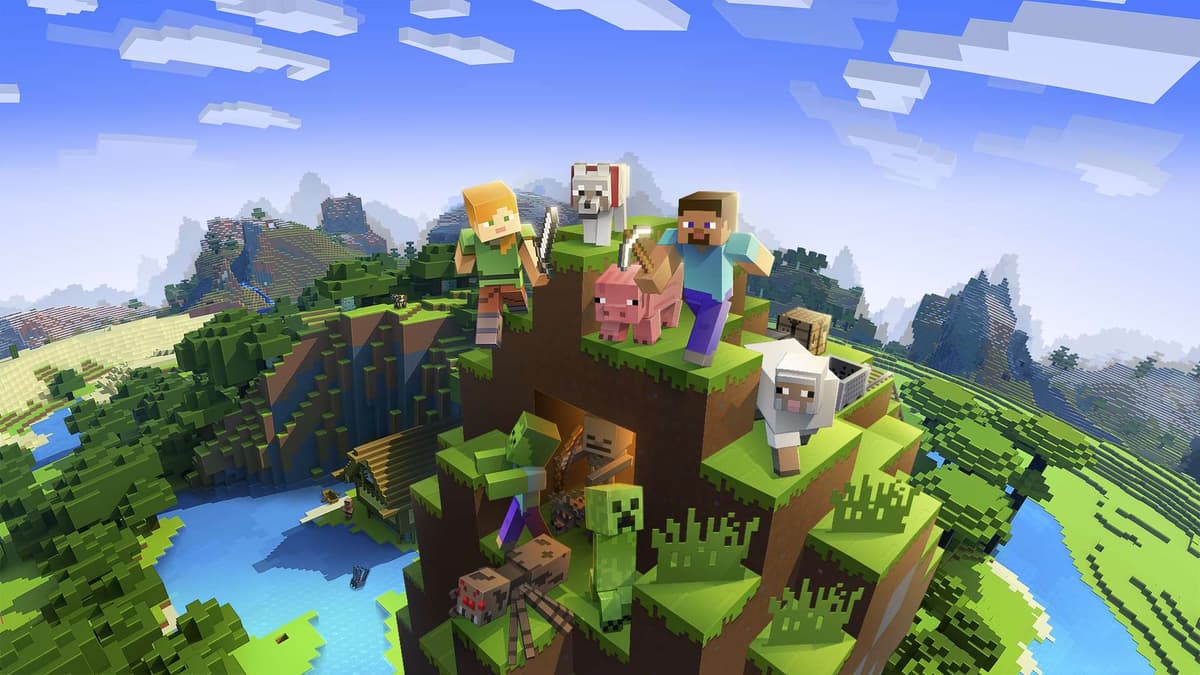
Honestly, ending on Minecraft feels almost unfair, because this is the one game on the list where a five‑second‑old could nail the screenshot. But that’s exactly why it belongs here: it’s proof that distinctive visuals don’t have to mean hyper‑realism or huge budgets. Sometimes all you need is a world made of unapologetic cubes.
Every inch of Minecraft’s landscape is iconic: the chunky trees with their perfect leaf boxes, the jagged stair‑step mountains, the square sun and moon trundling across a pixel‑sky. I still remember my very first night, frantically digging into a hillside to make a dirt bunker as the blocky sunset dipped behind a forest. Even now, years and mods later, a completely random seed screenshot – couple of biomes meeting, some exposed coal, maybe a waterfall made of Lego – is instantly, unmistakably Minecraft.
What’s wild is how expressive it manages to be within that rigid format. Snowy taiga, desert temples, jungle canopies, mushroom islands – all one visual language, instantly readable. In those timed quizzes that strip away UI and characters, most games rely on careful lighting or famous landmarks. Minecraft doesn’t need any of that. One blocky hillside and a few floating sand blocks defying gravity, and you already know exactly what kind of trouble you’re about to dig yourself into.
Screenshot Quizzes as a Love Letter to World Design
Running through PC Gamer’s 15‑image open‑world quiz felt less like trivia and more like a roll call of places I’ve actually lived in, digitally speaking. That’s the cool part: these challenges don’t care how good you are at combat or how many story beats you remember. They reward the quiet stuff – the hours you spent wandering off the path, watching weather roll in, or climbing somewhere pointless just to see what the horizon looked like from the top.
The worlds on this list all share that superpower. You can strip away protagonists, quests, even the HUD clutter, and what’s left is still unmistakably them. A single tree line, a colour grade, a weirdly placed statue – enough to trigger that instant recognition. In a landscape of open worlds that often blur together into the same forests, fields, and tower climbs, being instantly readable from one screenshot is a quiet kind of greatness.
As more quizzes like this pop up, especially with new heavyweights on the horizon, I’m weirdly excited. Not just to test my own memory, but to see which new worlds earn that same “I’d know you anywhere” status. Because when a game’s vista can beat the clock in a four‑minute trivia sprint, it’s done something right far beyond just ticking the open‑world box.
FinalBoss // Gear
Level up your setup
01Top-rated gaming headsetson Amazon→02High-refresh gaming monitorson Amazon→03Gaming chairson Amazon→04Discounted game keyson Kinguin→Affiliate links · As an Amazon Associate, FinalBoss earns from qualifying purchases.
Want to Level Up Your Gaming?
Get access to exclusive strategies, hidden tips, and pro-level insights that we don't share publicly.
Ultimate Editor's Pick Strategy Guide + Weekly Pro Tips