
I’ve long been a fan of Huntdown’s loud synths, hand-painted 16-bit visuals and musclebound, over-the-top action – so the idea of an origin story that leans into roguelite systems caught my attention immediately. Turning John Sawyer’s transformation into a cyborg bounty hunter into replayable, upgrade-driven runs is an interesting directional pivot for the series.
Table of Contents (5)
Huntdown: Overtime – A Roguelite Prequel That Plays Like an ’80s Action Movie
- New angle: Huntdown: Overtime is a prequel roguelite that follows John Sawyer’s path to becoming a cyborg bounty hunter.
- Gameplay loop: Procedurally generated runs with meta-progression through cybernetic upgrades between deaths.
- Style: Handcrafted 16‑bit pixel art, fast run-and-gun combat and an ‘80s-action tone with a lighter mood than the original.
- Platforms & timing: Announced for Steam, launching later this year; further platform plans not yet confirmed.
{{INFO_TABLE_START}}
Publisher|Coffee Stain Publishing
Release Date|Later this year (Steam)
Category|Roguelite prequel / run-and-gun
Platform|Steam
{{INFO_TABLE_END}}
What I’m Watching For
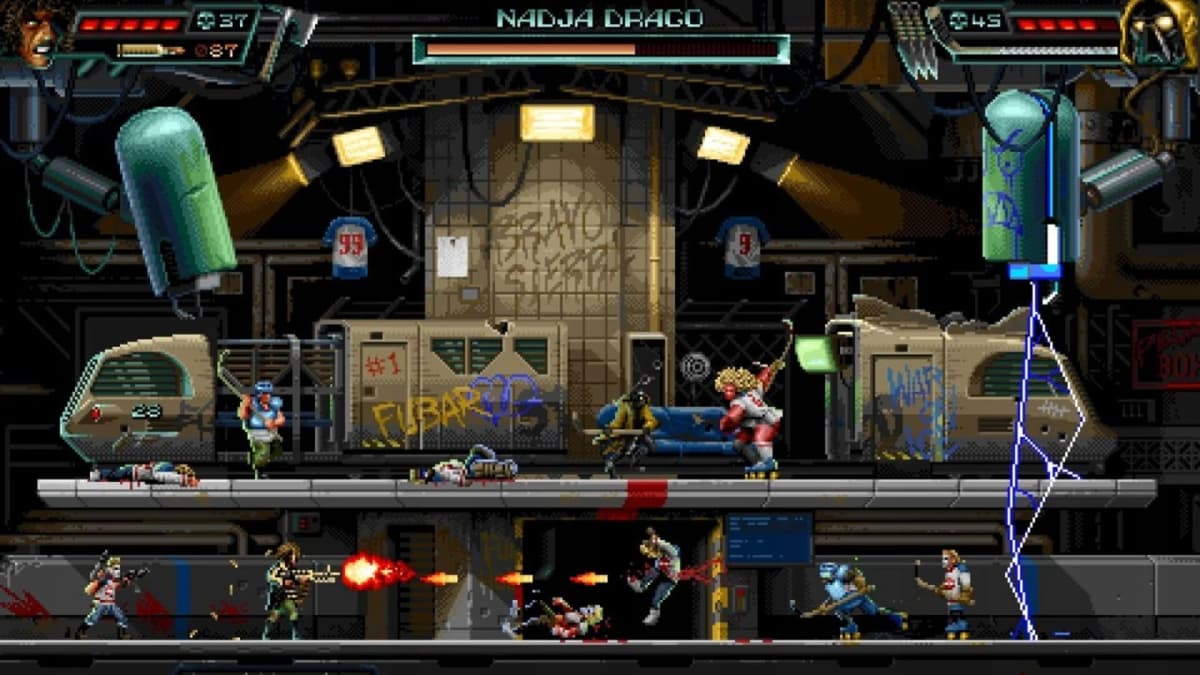
The original Huntdown (2020) earned attention for its hand-painted pixel visuals, tight run-and-gun gameplay and a synth-heavy soundtrack – qualities that gave it a clear ’80s action pastiche. Overtime has to do two things at once: retain that cinematic punch while grafting on roguelite mechanics that favor procedural variety and meta-progression. That’s a tricky balance.
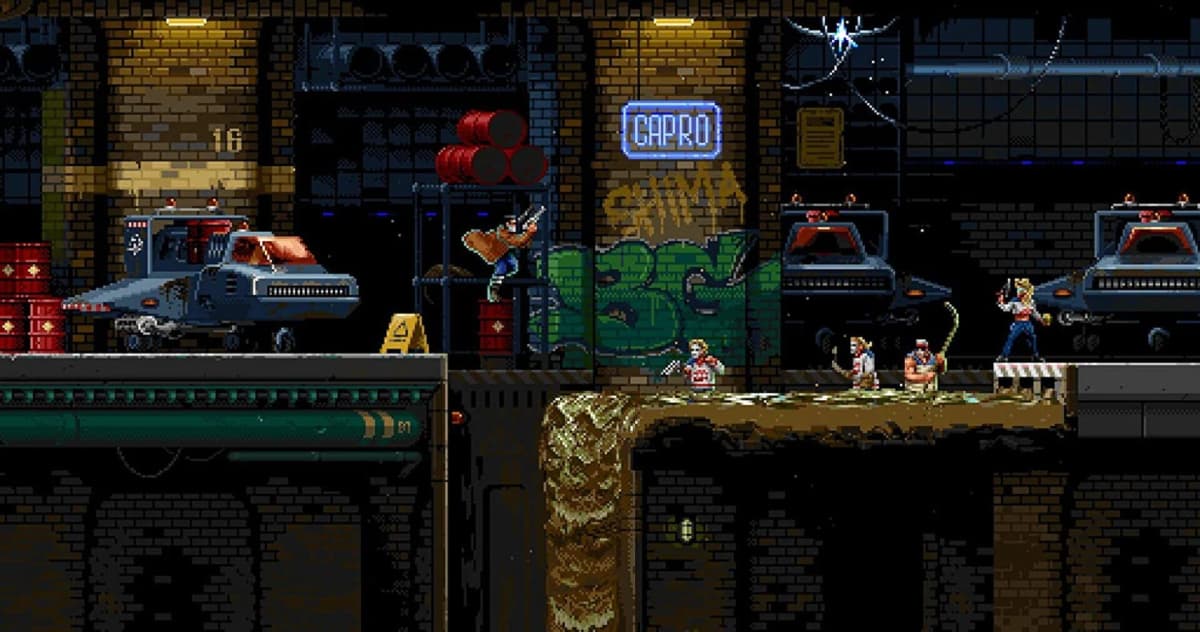
There are promising signs. The announcement leans into “handcrafted 16-bit pixel art” even as it promises procedural runs, which suggests the team plans to stitch together carefully made rooms and encounters into randomized sequences rather than relying on cheap, generic tiles. If Easy Trigger can preserve the visual and animation fidelity of the original while making each run feel distinct, Overtime could offer the best of both worlds — cinematic set pieces inside a replayable loop.
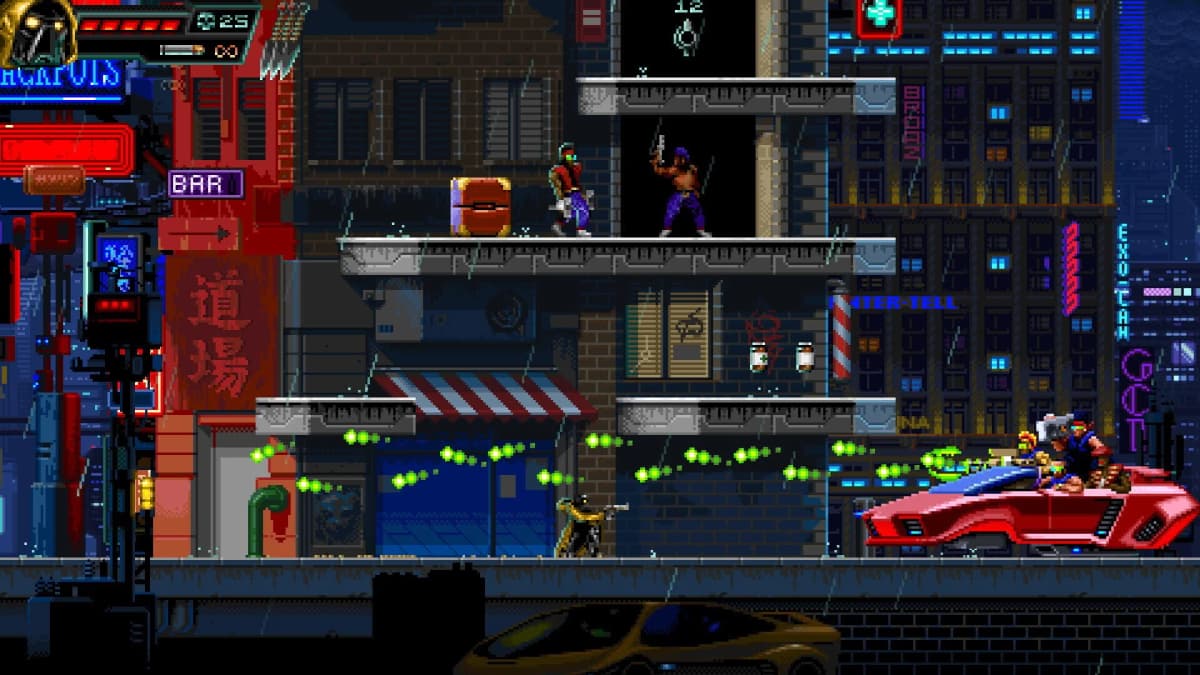
The cybernetic upgrade system is the logical meta for a prequel about transformation: upgrades between deaths create a narrative rhythm (get stronger, die, come back changed) that fits John Sawyer’s descent into augmentation. The risk is balance — roguelite progression needs to avoid becoming a grind of incremental buffs or, conversely, a luck-driven slog where a single bad procedural seed ruins a run.
Also notable is the tonal shift: the announcement teases a “lighter mood.” That could be welcome if it keeps the tongue-in-cheek ’80s movie vibe intact without dulling the combat’s edge. But if the change softens the stakes too much, it might alienate fans who loved the hard-hitting arcade feel of the original.
How This Fits Into Current Trends
’80s nostalgia, synth aesthetics and pixel-art design continue to be fertile ground for indie developers. Where Huntdown originally traded on handcrafted presentation and linear level design, Overtime follows a larger trend of established action games exploring roguelite systems to extend replayability and introduce new progression hooks. This move makes commercial sense: roguelites keep players engaged longer and fit well with repeated Steam updates and seasonal content.
For Coffee Stain Publishing — now described as newly independent — partnering again with Easy Trigger Games on this pivot shows a willingness to evolve the brand rather than replicate the 2020 game. That’s a good bet for players who enjoy both retro presentation and modern meta loops.
What This Means for Players
- Fans of the original who want more John Sawyer lore should be intrigued: Overtime promises a narrative throughline built around his transformation.
- If you like roguelites with meaningful progression and handcrafted combat encounters, this could be a strong fit — provided the procedural systems don’t dilute the series’ fast, polished combat.
- Players who preferred the original’s handcrafted levels might be wary; watch for previews that show how handcrafted art and procedural layout are combined.
- Steam launch later this year means expect early-access chatter and user feedback before judging long-term balance and variety.
Personally, I’m excited but cautiously optimistic. Huntdown’s visual identity and combat feel are unique selling points; Overtime will succeed if it keeps that identity while making every run feel like a compact, explosive action scene rather than a repetitive grind.
TL;DR
Huntdown: Overtime transforms the series into a roguelite prequel that looks to combine handcrafted 16‑bit visuals with procedural runs and cybernetic meta-progression. It’s a smart evolution for replayability, but the core challenge will be preserving the tight, cinematic combat and ’80s-action tone fans loved. Steam release later this year — promising, but wait for hands-on previews to see if the procedural design matches the original’s punch.
FinalBoss // Gear
Level up your setup
01Top-rated gaming headsetson Amazon→02High-refresh gaming monitorson Amazon→03Gaming chairson Amazon→04Discounted game keyson Kinguin→Affiliate links · As an Amazon Associate, FinalBoss earns from qualifying purchases.