
This One Caught My Eye: Why Hyrule Warriors on Switch 2 Matters
When Hyrule Warriors: Age of Calamity first launched on the original Nintendo Switch in late 2020, I was instantly hooked by the concept—a musou-style brawler joining our beloved Breath of the Wild Champions against the Great Calamity. But that thrill quickly turned to frustration: frame rates hobbling below 30 fps in epic clashes, choppy co-op drops, and texture pop-ins that reduced Hyrule’s sweeping vistas to a stuttering slideshow. Now, five years later, the Switch 2 edition finally feels like vindication. We’re at last playing the game we were promised—one that lives up to its own ambition.
Table of Contents (11)
First Impressions: From Molasses to Molten Metal
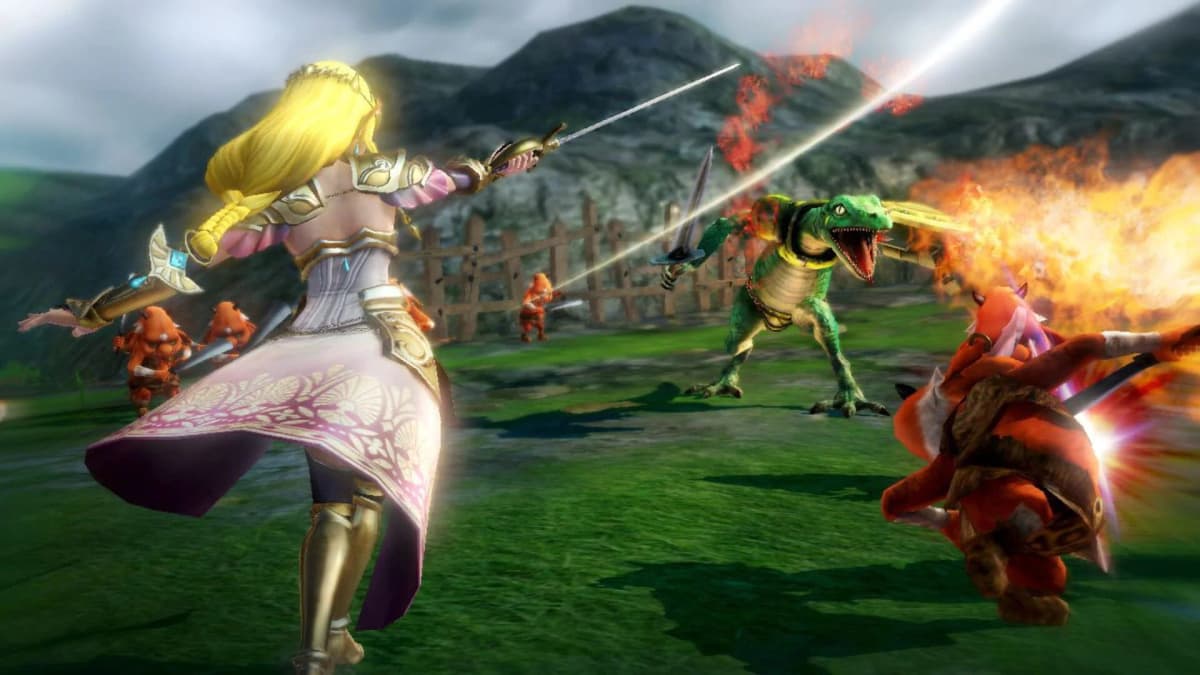
Right from the loading screen to the final credit roll, the Switch 2 version is a revelation. Whether docked on a big screen or in handheld mode, the game holds a rock-solid 60 fps even when 200-plus Bokoblins swarm the courtyard. Urbosa’s lightning flurry arcs cleanly across a dozen foes without a single hiccup. Hyrule Castle’s towers, once coated in muddy, low-res textures, now gleam with razor-sharp detail. Dawn and dusk light up the fields with warm HDR glows that truly sell each sunrise and sunset.
Fast travel is nearly instantaneous—gone is the minute-long spinner as you warp from Great Plateau to Shrine. That level of polish changes how you feel every sword slash and Guardian laser: it’s immediate, powerful, and fully cinematic rather than a jerky approximation.
Technical Breakdown: Frame Rate, Resolution, HDR
The technical leap here is nothing short of stunning. On the original Switch, Age of Calamity ran locked at 30 fps, yet often dipped into the low 20s when the action peaked. Switch 2 doubles that baseline and keeps it unwaveringly steady, even during breathless Wyvern “beasts” battles high above the sky islands. A jump to 1080p resolution on TV mode and crisp 720p in handheld ensures those intricate shrine motifs and moss-covered stones pop. HDR support bathes caves in deep shadows and rich torchlight, making every dungeon feel atmospheric.
Loading times have been slashed across the board. Fast travel from plateau to plateau, swapping weapons, and even accessing the Sheikah Slate menu now takes a fraction of the time. Inventory load screens—once a 10-second affair—flash by in three seconds or less. These aren’t minor conveniences; they keep you entrenched in combat rather than watching spinners.
Deep Dive: Why Musou Needs Hardware Power
If you’re new to the musou subgenre (think Dynasty Warriors meets Zelda), here’s the core appeal: you’re a one-person army mowing down hundreds of enemies with flashy combos while juggling multiple playable heroes. Each Champion brings a unique playstyle—Daruk’s explosive barrels, Zelda’s arrow storms, Revali’s aerial dives—yet swapping between them on the fly strains lesser hardware.
On the original Switch, that strain throttled performance to as low as 15 fps during huge brawls, turning muscle memory into guesswork. On Switch 2, Koei Tecmo’s engine finally flexes its muscles. Circle-dodge a Lynel’s charge, react with Mipha’s healing splash, then flow right back into offense with no hesitation. That unwavering frame rate fosters confident, split-second decision-making—the backbone of satisfying musou combat.
Champion Mechanics Reimagined
One of the most gratifying improvements is how champion abilities behave in these upgraded editions. Urbosa’s lightning flurry no longer jitters mid-cast; each bolt lands crisply on armored foes. Sidon’s water-blade combo—once prone to stutter in the Forest of Spirits—now rips seamlessly through crowds. Wizzrobes, notorious for erratic animation loops on the old hardware, now telegraph their windups reliably, turning them from random bullet sponges into strategic puzzle pieces you can stagger, juggle, and finish with a charged special move.
Even subtle touches like camera auto-focus on big spells feel more dependable. No more abrupt refocusing hangs when Zelda seals a rampaging Guardian—that moment of grand spectacle finally shines uninterrupted.
Personal Anecdote: The No-Damage Challenge Conquered
In 2021, I attempted a “no-damage” run on the Gerudo Desert mission under a self-imposed sandstorm perfection challenge. Spawn after spawn of Moblins and Darknuts crashed in at roughly 0.5 fps, and I wiped out before Banary Canals even came into view. With Switch 2 in hand, I jumped back in. I chained Daruk’s protection shield into Revali’s aerial dive, dodged every sand bully and Lynel slam, and streamed my flawless run to friends. That moment felt like true mastery—it was the first Age of Calamity triumph I actually remembered. It taught me that stable performance doesn’t just look better; it lets skill express itself.
Storytelling That Finally Shines
Hyrule Warriors: Age of Calamity isn’t just a button-masher; it’s a narrative bridge between the Great Calamity and Breath of the Wild. Switch 2 delivers cutscenes at a crisp 1080p, free of lip-sync glitches or dropped frames, with far richer color thanks to HDR support. Moments like Zelda learning to harness her sealing power or Revali’s proud flight across storm-cloud islands hit harder when nothing is fighting for your focus. You can savor the emotional beats instead of squinting through artifacting.

The tragedy of certain Champions and the camaraderie of the Champions’ Ballad reunion come alive in every context-sensitive camera angle, turning familiar faces into fully realized characters rather than static cutout sprites.
Quality-of-Life Upgrades Galore
Beyond raw GPU horsepower, the Switch 2 edition packs thoughtful QoL tweaks. Inventory load times have been slashed by roughly 70 percent—no more 10-second waits when swapping to a new weapon. Quick-swap itself is nearly instant, so you can fluidly counter small threats instead of committing to one arsenal while the screen freezes.
The Sheikah Slate menu now opens without pausing the action, meaning enemy reinforcements might still pour in—but if you’re fast, you can slice through them mid-menu. Subtitles default to a crisp white font with a dark outline, making dialogue legible even over sunlit dunes or shadowy caverns. Map markers and waypoint setting feel more responsive, letting you plan your next assault with fewer menu hops.
Seamless Co-op: My Best Multiplayer Experience Yet
Local and online co-op felt like an afterthought on the original Switch—inviting a friend usually plunged us into stutter city. Switch 2 changes that narrative. I hopped into an online session with two buddies to clear Great Plateau Fortress. Splitting off to dismantle Lynel outposts and reuniting at the courtyard was glitch-free. VOIP chat sounded crisp, hits landed with satisfying impact, and we never dipped below 57 fps. That smoothness transformed a solo grind into a strategy-heavy party, complete with banter about who’d steal Daruk’s explosive strikes next. It’s exactly the social spectacle musou fans have been craving.
A Comparison with the Original Switch
It’s worth pausing to appreciate just how far we’ve come. On the original Switch, Age of Calamity’s ambitious battlefield size and champion swaps were hamstrung by memory constraints and CPU limits. You’d see visible pop-ins as new enemies streamed in, occasional texture streaming that left surfaces blurry, and a choppy framerate that would randomly tank during major set pieces.

Switch 2’s beefier SoC and faster memory bus eradicate most of those headaches. Enemy models load instantly, environments are consistent in detail, and the engine never feels overwhelmed. That consistency doesn’t just look better—it lets you react reliably in combat, making musou combos feel razor-sharp and legitimately rewarding.
A Prelude to Seal Chronicles
On the heels of this technical redemption, Nintendo and Koei Tecmo have already teased Hyrule Warriors: Les Chroniques du Sceau (“Seal Chronicles”) as a Switch 2 exclusive. They promise new Champions, darker story arcs, and even larger battlefield skirmishes. Given that Age of Calamity’s most demanding set pieces now sail at a rock-solid lock, expectations are sky-high. Fans are right to assume Seal Chronicles will launch running like a dream from day one—no apologies, no performance caveats.
Broader Implications for Zelda Spin-Offs
Age of Calamity’s rebirth on Switch 2 hints at a meaningful shift: Zelda spin-offs need no longer live in the shadow of the mainline franchise. If Nintendo can evolve hardware and fine-tune a technically complex title years later, why not push bolder collaborations? Imagine a Metroid musou where Samus’s beam cannon lights up at 60 fps, or a Mario Kart crossover with dynamic physics and seamless netcode. Nintendo’s willingness to iterate on both hardware and software opens doors for truly experimental, genre-defying Zelda experiences.
FinalBoss // Gear
Level up your setup
01Best-selling Switch 2 gameson Amazon→02Switch 2 accessorieson Amazon→038BitDo controllerson Amazon→04Discounted game keyson Kinguin→Affiliate links · As an Amazon Associate, FinalBoss earns from qualifying purchases.
Want to Level Up Your Gaming?
Get access to exclusive strategies, hidden tips, and pro-level insights that we don't share publicly.
Ultimate Gaming Strategy Guide + Weekly Pro Tips