
Table of Contents (14)
I went in for Zelda lore; I stayed up way too late for the fights
I started Test Hyrule Warriors-officially “Hyrule Warriors: Chronicles of the Seal”-with the wrong expectations. I wanted answers. I wanted a codex on the Imprisoning War, a thread that stitched every stray memory from Tears of the Kingdom into something you could pin on a wall. What I got was a military chronicle with a light dusting of context and a whole lot of fighting. And, after the first night, I realized that was okay. By hour 10, the rhythm had its hooks in me. By hour 22, I was coaxing a friend into couch co-op “just for a couple missions.” By hour 35, I’d unlocked enough character murmurs to finally appreciate just how intentionally this combat loop is tuned to keep you bouncing from one match to the next.
For context, I played docked on a 65″ OLED with a Pro-style pad. Most of my solo time was in Performance mode (it’s capped at 30fps, which I’ll get to), and I did about 8 hours in local co-op. I’ve finished Age of Calamity, put 200+ hours into Breath of the Wild and Tears of the Kingdom, and I bounce between Musou titles every couple of years when the mood to mow through a thousand goblins hits. That’s the headspace I brought in. And yeah-the lore’s thin. But the combat? It’s the best kind of repeatable: easy to read, surprisingly timing-based, and fun to learn across different heroes.
Where it sits in the Zelda timeline (and why that actually matters in play)
Nintendo positions this as a straight prequel to Tears of the Kingdom. You’re largely seeing Zelda’s perspective after the subterranean event that wakes Ganondorf—she’s with Rauru and Sonia, feeling the long shadow of a threat that’s technically ages away but culturally immediate. It intertwines with scenes you’ve already lived, but it presents them as dispatches from the warfront rather than full-blown lore drops. The story is coherent, almost spare: a handful of good lines, a loop-closing ending that lands without fireworks, and just enough connective tissue to justify why you’re storming another outpost.
That framing helps the missions feel like entries in a wartime journal. It also sets you up to not expect a revelation every 20 minutes. Once I adjusted my bar—“this isn’t a Zelda dungeon story; this is a battlefield log”—I stopped waiting for cutscenes to hit some mythical lore quota and let the game be the kinetic thing it wants to be.
A loop built to whisper “one more mission”
Every session begins the same way: scan the world map, scoop up a couple of five-minute side ops to earn a missing resource, then dive into a longer story chapter. Your wins pay out XP and materials you spend directly on the map—open a training drill here, unlock a new ability there, chip away at a character-specific requirement. The magic trick is how the game keeps the next upgrade exactly one mission away. When the map lights up with a new murmur challenge for a character I hadn’t touched in hours, it nudged me out of my comfort zone, and those little nudges add up. By the time I realized I’d fully kitted out three mains and half a bench, I’d played four “quick” missions past bedtime.
It feels a lot like a playlist: headline tracks are the story battles, then you slide into a run of B-sides that are short, punchy, and targeted—break guards within a time limit, defeat elites with elemental counters, guard an allied unit that’s hilariously underprepared. Importantly, the game never pretends this isn’t rinse-and-repeat. It just layers systems so you’re rinsing and repeating while making progress somewhere that matters to you.
Combat is readable, timing-first, and more about elites than fodder
The best moments aren’t in the crowd-clearing (fun as it is to ping entire platoons into the sky). They’re in the duels against elite units—Lynels, Moblins, Gleeok variants—who telegraph with big, generous tells. You wait for the shoulder flare, the elemental spin-up, the half-second window where their posture breaks. That’s your green light to push the advantage, gnaw through the stun shield, and expose the weak point gauge. It’s less “mash A until fireworks” and more “watch, slip in, detonate.”
The trick that quietly governs your tempo is the shared cooldown across your three abilities. It’s one bar for all of them. That means you can’t brainlessly spam your strongest move; you need to rotate by intent. It also makes swapping characters meaningful, not cosmetic. On one late-map bridge skirmish, I was juggling a thunder-infused Lynel and a frost Moblin while dodging pebbles from a Bokoblin encampment. I opened with Sidon’s wave to prime the Lynel, swapped instantly to a Soneau artifact fan to stagger the Moblin, then snapped back to Zelda for a precision burst to crack the Lynel’s guard. It felt like I was conducting, not just pressing buttons faster.
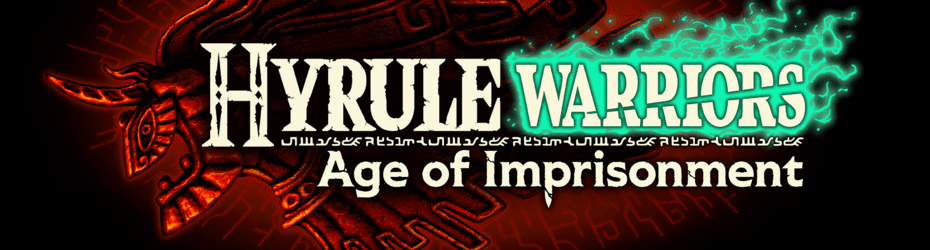
Soneau artifacts and the “Amalgam” twist make the flow snappier
Artifacts are the gel in all these sandwiches. You unlock Soneau tools as you go—think tactical gadgets with short effects designed to make enemies vulnerable faster or create small openings. Slotted right before an elite winds up, they turn a minute-long chip fight into a tight 20-second sting. What I appreciated is how they don’t break the cadence; they boost it. Pair a stagger artifact with an elemental weakness, and you can bust a shield in two clean beats and be into the finisher before the crowd even realizes their commander is toast.
Then there’s the Amalgam/Fuse mechanic, which lets you burn monster materials into signature attacks for goofy but effective wrinkles. Early on, I dismissed it as a novelty. Three hours later, I was hoarding Lizalfos tails because they gave my aerial launch a lingering whip effect that kept an elite’s guard from regaining. It’s that sort of tiny optimization—noticed only after a few failed attempts—that made me buy into the system. Fuse isn’t a crafting menu to babysit; it’s seasoning, and you learn to sprinkle it at exactly the right moment.
Sync Actions are the crowd-pleaser, especially in couch co-op
Here’s the star. Any two allied characters fighting side by side build a shared Sync gauge. Help each other—interrupt a swing, peel a mob off your partner, time a dodge so the boss whiffs through both—and the bar jumps. Trigger it at full, and you get a duo attack that not only looks great but reliably stuns bosses, opening a generous damage window. Each pairing has different flair, and some duos get special combinations you’ll want to test just to see the animation.
In solo, it’s flashy and strong. In local co-op, it’s a fist-pump machine. I had a session where my co-op partner called “Three… two… one… now!” as a Gleeok did its triple-head breath. We popped Sync mid-telegraph, canceled the attack, and staggered the thing so hard that its weak point gauge evaporated in a single cycle. We laughed at the screen like gremlins who’d gotten away with something. That’s what I mean by readable: you can feel what the game wants from you—watch the tells, build the bar, line up the hit—and it rewards that coordination without piling on control complexity.
Better: no character blurs into another. Everyone has a distinct groove. Sidon flows like a surfer slicing lanes; Zelda is precise, almost surgical; Rito options are about vertical control and drift; Goron heavies are comet hits with slow starts and fireworks at the end. The murmurs are tailored to these identities, nudging you to change mains and test duos instead of sleepwalking through the map with the same comfort pick.

It’s repetitive—and somehow, that’s the point
Let’s not pretend the loop isn’t A to B to C back to A again. Capture an outpost, snipe an elite, escort the precious cargo that moves like a toddler in a museum, repeat. The bestiary is tight—too tight. By hour 15 I’d seen every boss silhouette, and the variants are largely elemental spins. Normally that would be a death knell for me. Here, the clarity of objectives and the density of the crowds keep the repetition from feeling like drudgery. The elites are the real puzzle, and even a reskinned fight feels new if it asks you to pivot your rhythm.
There are occasional palate cleansers—rare shooting sequences that, when they appear, break the cadence in just the right way. One of them kicked off with zero preamble during a mid-campaign siege; I genuinely sat up straighter and muttered “oh that’s sick” to an empty room. They’re not frequent, but I wanted a couple more sprinkled deep into the late game to break up the marathon of ground fights.
Performance, camera quirks, and audio: the good, the not-so-good
I spent most of my time docked. There’s a 30fps cap, and docked it held well even when the screen looked like an ant farm. Texture resolve and effects are sharper than the last Warriors outing on Switch, and there’s a crispness to outlines that helps with readability. Local co-op introduces more judder during big particle spam, but it stayed playable all the way; the engine smartly sands off some background detail before it lets input lag creep in. Handheld play is fine most of the time, but I could feel frame dips when the map went full chaos. Not unplayable—just enough to notice on boss spawns if you’re sensitive.
The camera is still the series’ recurring headache. It’s better than Age of Calamity, but tight arenas and wall corners can briefly block your read on a telegraph. I adapted by nudging the lock-on off mid-combo, but it’s a Band-Aid. I also had three or four “where am I?” moments when the crowd pushed me to a ledge and the camera hesitated to follow. Minor, survivable, but present.
Audio is easy to praise. The reorchestrated themes are familiar without being lazy—Rito and Zora flavors with a healthy war-drum spine—and the French VO (I sampled it before swapping back to English subs) is polished in the mainline scenes. It’s a bit of a shame the campaign isn’t thicker with quiet story beats to let that work shine more. Haptics are understated but punch when a Sync hit lands, and load times are quick enough that failing an elite check never feels punitive.
Progression that respects your time (and pokes your curiosity)
I never once felt trapped in a grind. If I needed a rare material, there was always a side mission or a murmur that targeted it within two hops on the map. Character growth hits a sweet spot where new abilities genuinely change your approach instead of just bumping numbers. The shared cooldown I mentioned earlier expands into some clever decision-making when you unlock cross-character synergies—stack a short stagger on one hero to set up a precision burst on another, or flip the order to minimize exposure in a crowded arena. If you’re the kind of player who starts scribbling tiny combo notes on your phone (guilty), there’s enough tech to sink your teeth into without breaking the approachable surface.
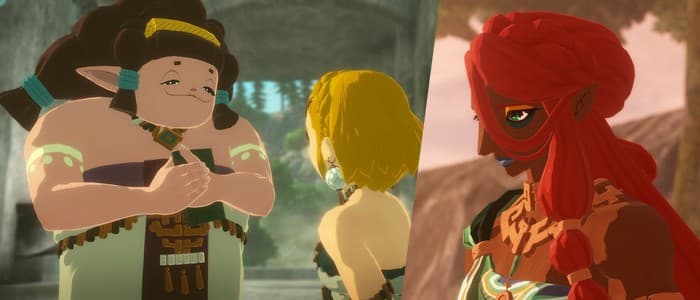
The murmurs system might be the MVP outside of Sync. They’re personal objectives—win with X condition, score Y launches, finish an elite under Z seconds—that reward extra resources and, more importantly, push you to rotate heroes. Those little challenges stopped me from getting bored. They also produced some of my favorite emergent moments, like discovering that a certain Goron’s third-string ability, which I’d ignored for hours, perfectly countered a lightning-variant elite because it has armor frames baked into the windup. The game never lectures you into that discovery; it just nudges and celebrates when you notice.
What tripped me up (and what I wished was deeper)
Lore-hunters: temper those expectations. This is canon, sure, and it sits cleanly alongside Tears of the Kingdom with a tasteful ending that closes the loop. But the story is essentially a series of dispatches. It doesn’t contradict anything; it just rarely surprises. I missed the smaller character beats, the quiet moments around a campfire, the side stories that add warmth. There aren’t many optional narrative vignettes to dig into, and the world doesn’t offer a codex-like layer for people who want to read every dusty page of history.
On the mechanics side, the 1v1 depth tops out faster than I hoped. Once you internalize the guard-break rhythm—telegraph, stagger, crack, unload—you can apply that to almost every elite. Artifacts and Amalgam spice the flow, but the underlying recipe doesn’t change much. It’s not shallow; it’s just homogenous. A few more enemy archetypes that asked wildly different answers would go a long way. And while I’m asking, a couple of late-game shooting set pieces wouldn’t hurt to punctuate the back third.
Who should play this
- If you love Musou cadence but crave cleaner telegraphs and a more timing-forward combat read, this is a sweet spot.
- If Tears of the Kingdom’s world still lives rent-free in your brain and you want an excuse to swing swords there with a friend, co-op here rules.
- If you need a lore banquet, not a snack, you’ll feel underfed. This is a wartime chronicle, not a diary.
- If you bounce off 30fps caps or get itchy when cameras bump into geometry, calibrate your expectations—playable, but not spotless.
- If you enjoy systems that reward small optimizations (murmurs, artifacts, Fuse synergies), you’ll find satisfying edges to file down.
My bottom line after 35 hours
Chronicles of the Seal doesn’t reinvent Warriors. It tightens it where it counts, folds in Tears of the Kingdom flavor without feeling like a knockoff, and centers fights around readable elites, shared-cooldown tension, and an undeniably grin-inducing Sync mechanic. The bestiary could use reinforcements, the camera still throws little tantrums in tight spaces, and the story skimps on the chewy bits. But I kept playing, not because the map told me there was so much to do, but because the next mission felt less like work and more like a chance to try a new pairing, chase a murmur, or land a perfect guard break into a gleeful duo finisher.
That’s the final tell for me. When a game gets me saying “okay, last one” five times in a row—and I’m still thinking about how to shave ten seconds off an elite the next morning—it’s doing something right. Chronicles of the Seal is that kind of game: a satisfying, confident brawler that invites you to settle into its rhythm and keeps finding small reasons to keep your sword out.
TL;DR
- Crisp, readable combat that focuses on elite duels over pure fodder-clearing
- Murmurs and Soneau artifacts push you to rotate heroes and speed up guard breaks
- Sync Actions in co-op are a riot—timing them together never gets old
- Story is canon but sparse; satisfying ending, little in the way of new lore
- 30fps cap holds docked; handheld and co-op see dips during chaos; camera still fussy near walls
- Bestiary is limited and 1v1 depth tops out early, but the loop stays addictive
- Great fit for Musou fans and Zelda players who want action-forward co-op in that world
⚡ Related articles ⚡
FinalBoss // Gear
Level up your setup
01Top-rated gaming headsetson Amazon→02High-refresh gaming monitorson Amazon→03Gaming chairson Amazon→04Discounted game keyson Kinguin→Affiliate links · As an Amazon Associate, FinalBoss earns from qualifying purchases.
Want to Level Up Your Gaming?
Get access to exclusive strategies, hidden tips, and pro-level insights that we don't share publicly.
Ultimate Reviews Strategy Guide + Weekly Pro Tips