
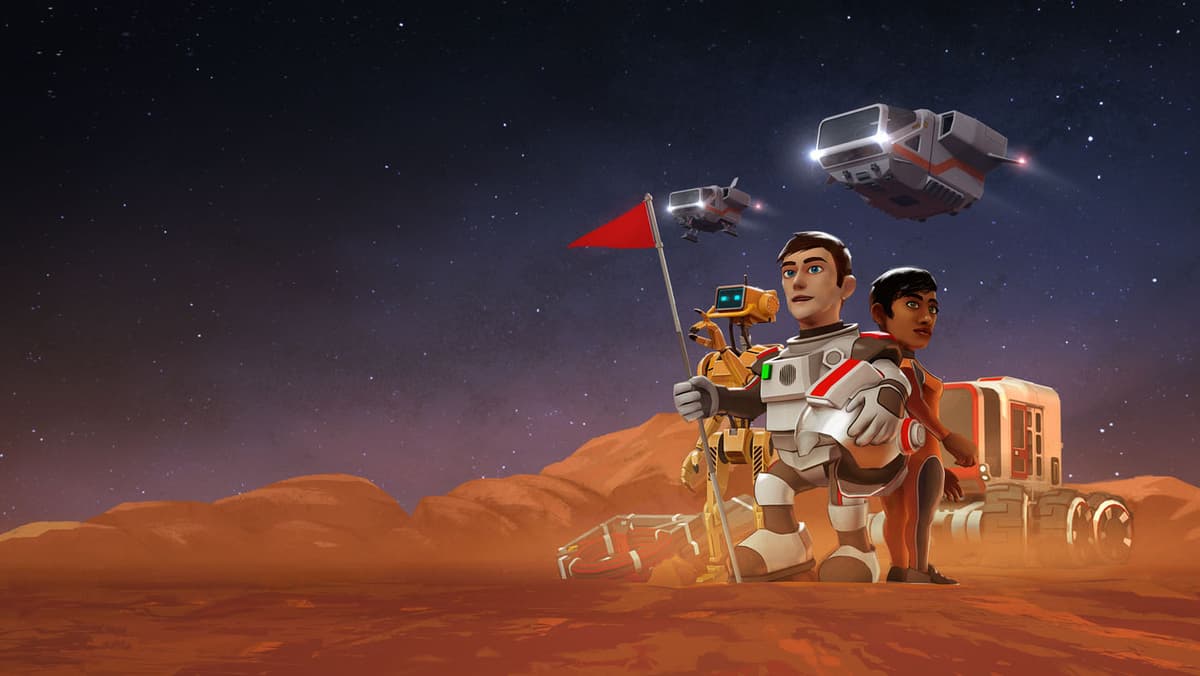
I didn’t expect RocketWerkz to drop a free KSP successor—dev tools unlocked in pre‑alpha
Game intel
Kitten Space Agency
Kitten Space Agency is a mission to create the spaceflight game that inspires the next generation of space explorers.
Why This Caught My Eye
Free, playable, and openly moddable from day one-that’s not how space sims usually launch. Yet that’s exactly what Kitten Space Agency (KSA) just did. Built by Dean Hall’s RocketWerkz with several ex-Kerbal Space Program developers, this public pre‑alpha isn’t just a teaser. You can grab it on PC, boot into a simplified real‑world solar system, move prebuilt vehicles, poke at internal debug tools, and start modding. It’s “much more than a tech demo, but less than a game,” the studio says-and that framing is refreshingly honest.
Key Takeaways
- KSA is a free public pre‑alpha on PC with preconstructed vehicles and a simplified solar system.
- Internal debug tools are accessible, and basic mod support is live from day one.
- Ex‑KSP talent is involved-including Felipe “Harvester” Falanghe and Ghassen “Blackrack” Lahmar.
- RocketWerkz says it plans to keep KSA free, with optional donations, and a community‑driven roadmap.
What You Can Actually Play Today
Tempting as it is to slap “KSP successor” on the box and call it a day, KSA’s current build is deliberately scoped. You’re moving prebuilt craft around a “sketch” of the solar system. Only some planets are textured. The goal is to showcase the backbone—orbital motion, controls, camera, UI scaffolding—without pretending this is a complete sandbox yet. That’s important because space sims collapse when they fake the fundamentals. If the math, stability, and time‑warp feel off, players feel it immediately.
Two things stood out to me. First, RocketWerkz is letting players into its internal debug tools. That’s rare, and it signals confidence in the underlying systems—and a willingness to let tinkerers break things. Second, there’s basic mod support from the start. The KSP community proved that mods like MechJeb, Realism Overhaul, and Blackrack’s own visual work could elevate a good sim into something legendary. Giving modders a foothold now could pay off massively later.
Why This Matters Now
Let’s be honest: Kerbal Space Program 2’s situation created a vacuum. With Intercept Games shut down and the game stuck in limbo with long stretches of silence, fans have been drifting. RocketWerkz even says it was among the top three bids to make KSP2 before that went elsewhere. Instead of moving on, Hall and company recruited veteran talent—Felipe “Harvester” Falanghe (the original KSP creator) and Ghassen “Blackrack” Lahmar among them—to build their own path. That immediately gives KSA credibility among space‑sim diehards who’ve been burned by big promises.
This also fits RocketWerkz’s playbook. Stationeers is a dense, systems‑driven sandbox that’s quietly earned a hardcore following, and Icarus shipped with a relentless update cadence. The studio knows how to iterate in public. If they keep that energy here—and resist chasing headline features before the physics bedrock is locked—KSA could become the place KSP refugees park their hopes.
Free Forever—Bold Promise or Beautiful Risk?
RocketWerkz says KSA will remain free, backed by donations, because games like this “play an important role in fostering trust and interest in science.” I love the sentiment. I also have questions. Space sims chew through time and money, especially if you’re aiming for “the depth and realism of true space exploration” with modern production values. Will donations keep pace once the honeymoon fades? Will optional cosmetics appear? Toolset DLC? The studio says it wants to “reject some of our old ways of selling and marketing games,” and I hope they’ve modeled the runway. Free lowers the barrier to entry for future scientists and modders—that part rules—but sustainability will matter when the project moves beyond pre‑alpha experiments into full‑fat features like construction, re‑entry, and progression.
Want to Level Up Your Gaming?
Get access to exclusive strategies, hidden tips, and pro-level insights that we don't share publicly.
Ultimate Gaming Strategy Guide + Weekly Pro Tips
Modding First Is the Smartest Move Here
KSP’s soul was its community. The best ideas—automation, realistic atmospheres, visual overhauls, scripting—often came from modders. KSA baking in basic mod support and shipping with debug visibility is a strong signal: this is a platform, not just a product. With Blackrack now on the inside, I’m already thinking about how volumetric clouds, scattering, and lighting could be designed as first‑class citizens instead of duct‑taped on. If RocketWerkz builds stable APIs early and keeps save‑breaking patches to a minimum, modders will meet them halfway.
The Real Questions I Need Answered
- Construction: When do we get a proper vehicle editor? Prebuilt craft are fine for testing, but building and failing upward is the Kerbal magic.
- Orbital model: Patched conics or n‑body? “Depth and realism” implies ambition, but accessibility matters, too.
- Performance and stability: Can the sim handle large part counts without turning into a slideshow?
- Progression: Is there a science/career loop, or is this pure sandbox? The audience will want both.
- Multiplayer: Not essential at pre‑alpha, but if it’s on the table, designing for it early avoids pain later.
Also note: you’ll need to create an account on the Ahwoo page to download the build. That’s a small hoop, but it’s there.
My Read on RocketWerkz’s Intent
The studio calls this a “safe scaffold to build all that we want to on top.” Translation: they’re laying track fast and inviting us to ride along. That’s how you rebuild trust in a genre that’s had a few rough early‑access rides lately. Dean Hall says the last year has been his favorite of his career, and you can feel the enthusiasm—there’s a confidence to giving players the keys to the debug drawer. If the team continues to ship frequent, transparent updates and lets the community steer priorities, KSA could become the new standard‑bearer for approachable, serious spaceflight.
TL;DR
KSA’s pre‑alpha is free, playable, and already friendly to tinkerers—a promising foundation with real industry vets behind it. Just don’t expect a full sandbox yet. If RocketWerkz nails construction, stability, and a thoughtful progression loop, this could be the true heir to Kerbal—built in the open, for everyone.