
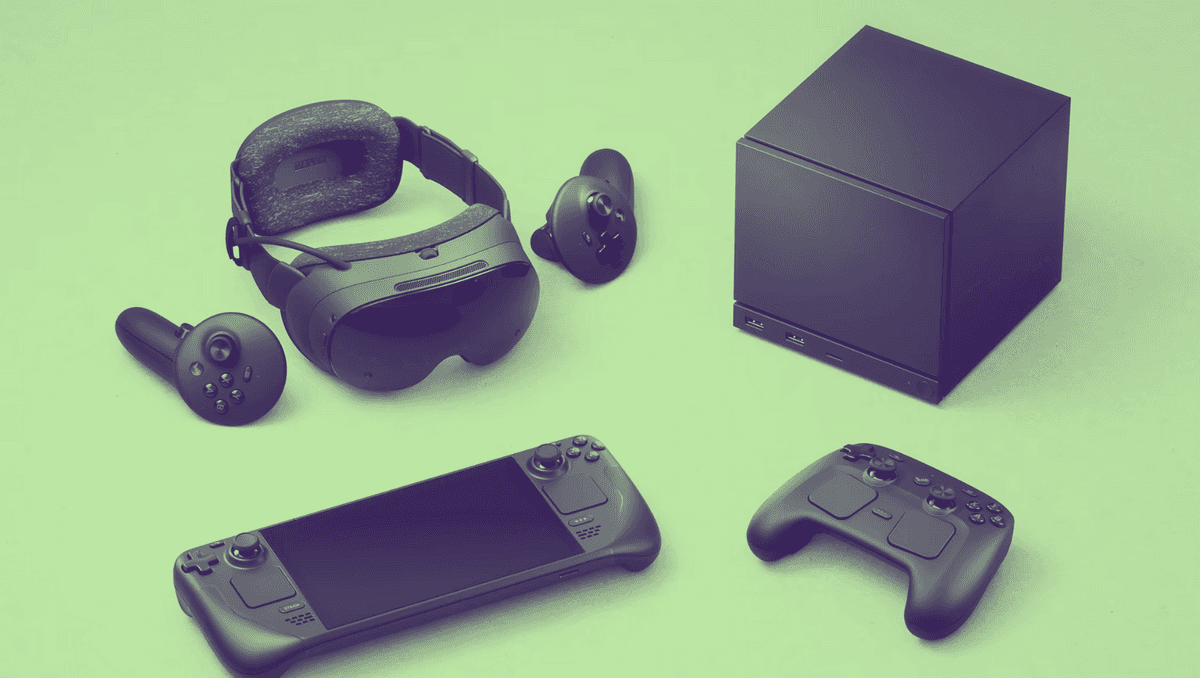
Valve just crashed the console party again. A compact “Steam Machine” running SteamOS promises to play your existing Steam library natively at up to 4K/60 on your TV, paired with a redesigned Steam Controller and a standalone VR headset called the Steam Frame. If you’ve wanted console simplicity without giving up your PC library (or your tinkering habit), this could be the most interesting living‑room box since the Deck. But there are catches-and a couple of specs that make me raise an eyebrow.
Valve tried the “Steam Machine” idea in the mid‑2010s and it fizzled—too many OEMs, too many configs, not enough Linux game support. Since then, Proton matured on the Deck, anti‑cheat support improved, and Steam Input became a monster feature. That’s why this caught my attention: the ecosystem is finally ready for a single spec Valve-branded living-room box that behaves like a console but doesn’t lock you down.
The specs scream mid‑range PC in a compact body: a partially custom AMD Zen 4 chip with 6 cores/12 threads (up to 4.8 GHz, 30 W envelope) and an RDNA 3 GPU with 28 CUs (110 W). Valve’s talking up 4K/60 with FSR, which is realistic for a lot of games if you’re okay with upscaling from 1440p or even 1080p in heavier titles. Esports stuff? Expect very high frame rates at 1440p or 1080p; “native 4K everything” is still fantasy territory at this power level.
Ports and I/O look solid for a lounge setup: DisplayPort 1.4 (they list up to 4K/240 or 8K/60 with compression), HDMI 2.0, multiple USB‑A, a rear USB‑C 3.2 Gen 2, Gigabit Ethernet, and Wi‑Fi 6E. One spec clash: the sheet claims 4K/120 via HDMI 2.0, which isn’t a standard HDMI 2.0 capability. My hunch is DP does the 4K/120 heavy lifting, or we’ll see a spec correction to HDMI 2.1 later. Internal PSU (110-240 V) is a welcome no-brick choice. The cube chassis (roughly 15-16 cm per side, 2.6 kg) should fit media centers without drama, and yes, there’s a customizable RGB light bar for status.
Storage is where reality bites: 512 GB is gone in two AAA installs; the 2 TB tier feels like the “real” option. The microSD slot is handy for indies and emulation, but most PC blockbusters want NVMe speeds. The good news: Valve says you can install another OS. If a handful of must‑play titles still refuse Proton or certain anti‑cheat configs, a Windows install keeps the dream intact—at the cost of the pure console experience.
I was one of the weirdos who learned to love the original Steam Controller’s trackpads—after hours of fiddling. This revision keeps the trackpads (great for strategy, sims, and old CRPGs) and adds the things modern players demand: magnetic sticks using TMR sensors to prevent drift, high‑def haptics, a gyro you can engage by squeezing the grips, and four rear buttons. It connects via Bluetooth, USB, or a low‑latency 2.4 GHz link baked into the console. Battery is listed at 8.39 Wh for up to ~35 hours, which sounds almost too good but makes sense if the controller sips power when haptics aren’t blasting. At 292 g, it’s closer to an Xbox pad than a featherweight Switch Pro, so we’ll see how it feels in long sessions.
The real win is software: Steam Input has matured into a per‑game binding powerhouse. If Valve ships sane defaults for living‑room play, this controller could finally bridge the gap between “PC game that assumes a mouse” and “couch-friendly.”
The Steam Frame is the wildcard. On paper it’s competitive with today’s best standalone headsets: Snapdragon 8 Gen 3, 16 GB LPDDR5X, 256 GB or 1 TB UFS with microSD, 2160×2160 per‑eye LCDs behind pancake lenses, 72-120 Hz refresh (144 Hz experimental), inside‑out tracking with four external monochrome cameras, eye tracking for foveated rendering, and Wi‑Fi 7. Weight is 440 g for the unit (with a strap-mounted speaker system), and the battery is 21.6 Wh. Valve also includes a Wi‑Fi 6E dongle for low‑latency PC streaming—smart, because that’s the pathway to your existing SteamVR library without a cable.
Valve says you can enjoy your entire Steam library “even non‑VR.” That likely means a virtual theater mode and heavy reliance on PC streaming for x86 titles. The headset runs SteamOS 3 on ARM, which is intriguing but raises a big question: unless Valve unveils an x86‑to‑ARM translation layer for Proton, native ARM support for your average PC game is a non‑starter. Streaming fills that gap—and honestly, with Wi‑Fi 7 and eye-tracked foveation, that might be fine for most people.
This matters because Valve finally looks ready to ship a single, curated living‑room spec backed by a software stack that’s battle‑tested on Deck. If the Steam Machine delivers console‑like UX—quick resume, consistent controller profiles, painless updates—while letting enthusiasts dual‑boot or mod, it could become the default “console” for PC gamers who are over juggling a tower in the lounge.
But there are unknowns. Pricing will make or break it against discounted PS5/Series X hardware in 2026. The 4K/60 promise hinges on upscaling, which is fine, but expect some settings massaging in tougher blockbusters. Heat and noise in a small cube with a 110 W GPU TDP need excellent cooling. And while Proton support is strong, a few high‑profile multiplayer games still trip on anti‑cheat under Linux—Windows dual‑boot is the safety valve, but it undercuts the “console simplicity” pitch.
Valve’s Steam Machine aims to bring your PC library to the TV with console‑like simplicity, backed by a smarter Steam Controller and a surprisingly ambitious standalone Steam Frame headset. I’m excited—cautiously. Without price and with a 2026 window, the hardware race won’t stand still. If Valve nails UX, thermals, and pricing, this could finally make “PC console” more than a cool idea.
Get access to exclusive strategies, hidden tips, and pro-level insights that we don't share publicly.
Ultimate Gaming Strategy Guide + Weekly Pro Tips