
Table of Contents (12)
My Zelda Breaking Point Happened 200 Hours In, Underground
I realised Zelda had changed for good somewhere I technically wasn’t meant to be.
It was 3am, I was deep in the Depths in Tears of the Kingdom, and I’d just burned through my last brightbloom seed because I’d decided – for absolutely no sensible reason – to surf a rocket-powered shield off a cliff into pitch-black nothingness. I landed on a rock the game clearly didn’t expect me to reach that way, stumbled into a miniboss I wasn’t prepared for, and somehow scraped through by fusing random junk to a stick like a panicked goblin interior designer.
Nothing about that encounter was “authored” in the classic Zelda sense. No key. No lock. No elegant dungeon layout showing me the exact item I’d need two rooms later. It was messy, improvised, physics-driven chaos that somehow felt more “Zelda” than pushing a single perfect block onto a specific switch ever did.
Now, with The Legend of Zelda hitting 40 years, I keep thinking about how wild that shift really is. I grew up on the clockwork puzzle-box Zeldas. A Link to the Past and Ocarina of Time basically wired my brain as a player. But Breath of the Wild and Tears of the Kingdom? They rewrote the series’ DNA. Zelda used to be about finding the right key for the designer’s lock. Modern Zelda hands you a physics engine, shrugs, and says: “Figure out what a key even is.”
The Old Zeldas Were Perfect Little Machines – And That Was the Problem
I’m not here to dunk on the classics. I worshipped those games. A Link to the Past is still seared into my brain as pure design elegance. Every item was basically a contract: “Use me exactly like this in exactly these situations.” Hookshot for distant targets. Bombs for cracked walls. Bow for eye switches. Beautiful, satisfying, predictable.
Ocarina of Time blew my mind the first time I stepped into Hyrule Field. It felt open, even though – looking back – it wasn’t really. You might have had a big grassy bowl to gallop around, but the game quietly shepherded you from dungeon to dungeon. Each temple was a pristine mechanical box, each small key another confirmed step in the correct direction. You were exploring, sure, but only inside a meticulously curated logic puzzle.
As a kid, that structure was comforting. I always knew there was one correct solution, and if I just stared at that water-level switch or bombable wall long enough, I’d be rewarded with the little “I solved it exactly how the devs intended” dopamine hit.
But that “one right answer” mindset is also a cage. These games pretended to be about freedom and adventure, but the truth is they were about obedience. You were there to decode what the designer wanted from you. Once you see that clearly, it’s hard to unsee it.
Breath of the Wild Broke the Lock, Then Made Me Feel Stupid for a Week
When I first stepped out of the Shrine of Resurrection in Breath of the Wild, I tried to play it like a classic Zelda. I hoarded weapons like rare collectibles. I followed the main quest markers. I treated Magnesis, Stasis, Cryonis, and Remote Bombs as shrine-only mini-game powers, not something I should be hurling at every tree, rock, and Bokoblin camp in sight.
Honest confession: it took me an embarrassing amount of time to realise the runes were the actual keys to the game – not for doors, but for the whole damn world. That metal crate near the campfire? I walked past it three times before my brain went, “Hang on, you’re a moron, that’s not scenery, that’s ammo.”
The “click” moment for me was a storm. I got caught halfway up a cliff, low stamina, enemies above and below, lightning screaming overhead. I’d seen the loading screen tip about metal attracting strikes, but it never registered as more than flavour text. Out of sheer desperation, I dropped a metal weapon near a Moblin. Lightning nailed it and him in one obscene flash. Suddenly the whole world snapped into focus. This wasn’t just environment art. It was a system, and I’d been playing it like a museum exhibit instead of a physics sandbox.
From that point, those “puzzle-box” expectations felt small. Why would I ever go back to pushing the one block the designer wants when I can parachute over the entire problem, set the floor on fire, or yeet half the room into space with Stasis and a club?
Shrines Turned ‘Puzzles’ Into Conversations With the Designers
People love to complain that shrines are just “bite-sized dungeon scraps”. I get that emotionally – I miss the grand theatricality of walking into the Forest Temple or Stone Tower too. But mechanically? Shrines are some of the smartest design Nintendo has ever pulled off.
Each shrine is basically a little diorama built around a question: “Do you understand how this system really works?” Not “can you find the one arcane trick we hid,” but “can you take this small, consistent ruleset and bend it until it sings?”
In the old games, if you jury-rigged some unintended solution, you’d either get punished or softly locked. In BotW and Tears of the Kingdom, the devs practically high-five you for breaking their toys. You use stasis to launch yourself instead of the intended platform? Cool. You fuse a plank to a spear to cheese a shrine meant to be about timing? Also cool.
As someone who grew up labbing combos in fighting games, it hits the same part of my brain. You’re not just solving a puzzle; you’re stress-testing the system, finding tech, optimising routes, doing weird lab rat experiments with bombs, fire, and rain. The shrine completion jingle isn’t just “you passed”. It’s “you understood.” Big difference.
Tears of the Kingdom Takes the Systemic Chaos and Launches It Vertically
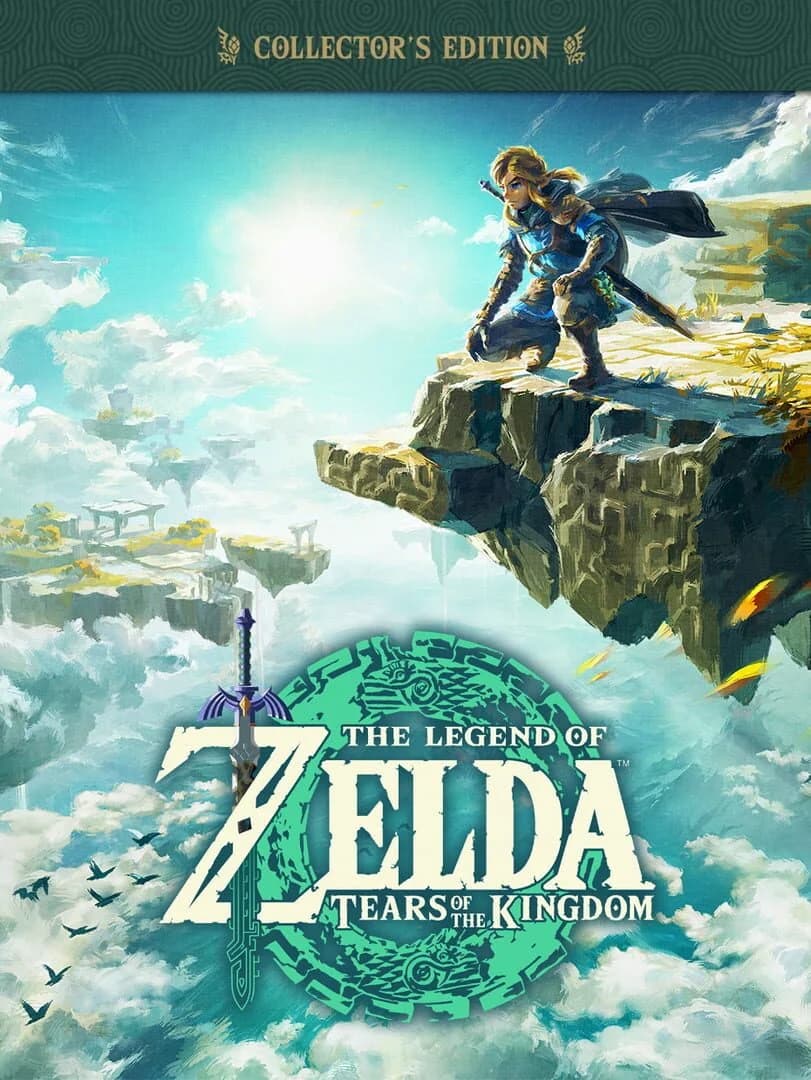
Then Tears of the Kingdom shows up like, “Oh, you thought you understood our toybox?” and just hurls three more dimensions at you.
Ultrahand, Fuse, Ascend, Recall – those aren’t just new tools; they’re meta-tools. They don’t just interact with the world, they rewrite your relationship to the world. Suddenly every plank, fan, wheel, and Zonai device is both potential solution and potential disaster. The game quietly gives you a CAD program and a physics lab, then refuses to tell you what you’re “supposed” to build.
And it’s not just horizontal. The moment I realised Hyrule was literally layered – sky islands above, the Depths mirroring the surface below – the whole thing stopped feeling like a “map” and started feeling like a machine. The surface is your baseline. The sky is your experimental playground of rails, wind, and weird rock puzzles. The Depths are the negative space, the shadow of every decision you make up top.
I’ve had some of my favourite gaming moments falling between those layers. Gliding down from a sky island, diving through a chasm, and landing in a red-lit horror zone with half my hearts gone because I got greedy with a rocket shield? That’s not content I “unlocked.” That’s an emergent story written entirely by my own curiosity and stupidity colliding with consistent rules.
Hyrule’s Melancholy Beauty Makes the Systems Hit Harder
The wild thing is how gentle these worlds feel while they’re tearing up the rulebook.
Both BotW and Tears have that washed-out, almost watercolour look – soft skies, hazy horizons, grass that flickers in the wind instead of screaming “next-gen texture pass”. It’s not just an art choice; it’s a mood. The world looks like a fading memory of itself. Ruins everywhere. Half-buried Guardians, broken bridges, empty fields that clearly used to be something else.
Pair that with the soundtrack – all those quiet pianos, lonely motifs, and then suddenly this jazz freak-out when a battle kicks in – and you get this weird cocktail of sadness and playfulness. It’s a ruined world that somehow feels deeply alive, constantly inviting you to mess with it. There’s genuine melancholy baked into the landscape, but the physics systems are like a kid tugging at your sleeve saying, “Yeah, everything’s broken, but look what we can do with the pieces.”
That contrast is what sticks with me years later. I don’t just remember story beats about Calamity Ganon or the Demon King. I remember standing on a cliff at sunrise, watching a dragon lazily thread the sky while my half-busted, stupidly constructed hover-bike sputtered beside me. That’s not cutscene drama. That’s the aesthetics and systems holding hands.
The “Not Real Zelda Anymore” Crowd Is Full of It
I’m just going to say it: the whole “Breath of the Wild and Tears of the Kingdom aren’t real Zelda” argument is nonsense.
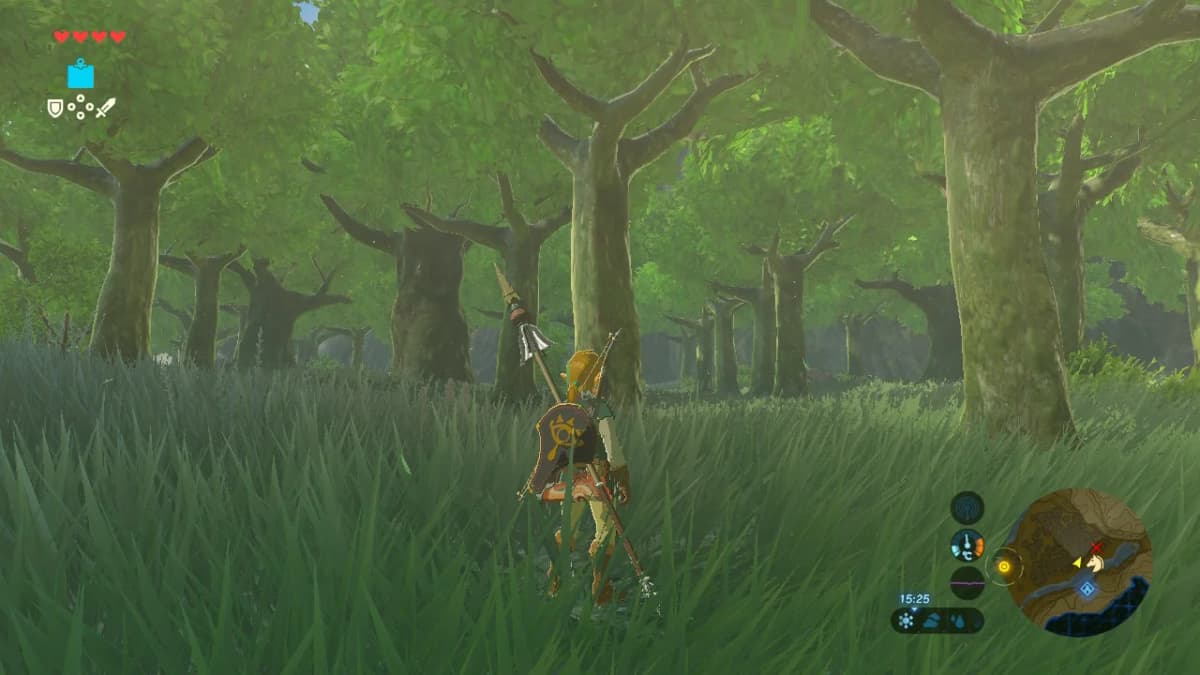
Every generation of this series has pissed someone off. The original NES Zelda was a brutal, opaque open-world maze. A Link to the Past cleaned that up into something more guided. Ocarina made it cinematic and 3D. Wind Waker got slammed for the art style before everyone collectively realised it was gorgeous. Skyward Sword turned the dungeons into linear gauntlets with motion controls. Reinvention is the whole point. “Zelda” has never been one fixed template; it’s a moving target defined by curiosity and experimentation.
What BotW and Tears did was rip away the illusion that “Zelda” meant big themed dungeons with one-item solutions. They replaced that with something more honest: exploration and improvisation as the true core of the series. You’re no longer cosplaying the clever hero solving the one puzzle some designer wrote in 2010. You’re actually being the clever hero, doing ridiculous things with the tools at hand because the world will let you.
If your definition of “real Zelda” can’t stretch to include that, the problem isn’t the games. It’s your nostalgia strangling the thing you claim to love.
Yes, Tears of the Kingdom Has Rough Edges – And I’ll Take Them
None of this means BotW or Tears are sacred, flawless objects. They’re not.
The building interface in Tears is jank. Scrolling through your entire pantry of Zonai gear one fan at a time feels like rummaging through a bottomless junk drawer with boxing gloves on. Weapon durability still annoys people, and I don’t blame anyone who bounces off the idea of their favourite sword shattering mid-fight. And yeah, Tears reuses the same basic Hyrule map, which on paper sounds like the laziest possible sequel move.
But here’s where I plant my flag: those rough edges are the price of genuine systemic freedom. If you want a world where anything can be a weapon, a vehicle, or a puzzle solution, you’re going to get friction. You’re going to get weird repetition. You’re going to get awkward UIs desperately trying to keep up with how deranged your builds have become.
I’ll take that any day over another sleek, focus-tested open-world checklist where nothing truly interacts with anything else and the coolest thing you can do is shoot an exploding barrel in the one spot it’s been placed.
Modern Zelda’s Story Is Written in Physics, Not Cutscenes
I barely think about the plot of Tears of the Kingdom now. I remember vibes, not bullet points. What I do remember, in crystal detail, are moments where systems crashed together and wrote their own stories.
The time I tried to cross a chasm with a perfectly engineered flying machine, only to realise mid-air I’d attached the fans backwards. The makeshift minecart cannon that overshot the shrine door and dumped me straight into a lake. The horse I lost for hours because I panicked during a thunderstorm and bailed off a cliff, then later found it calmly grazing like nothing had happened.
That’s narrative-through-systems. It’s what a lot of open-world games claim to offer but rarely deliver, because their worlds are too static or too scared of letting players break anything. Zelda finally commits. The physics aren’t just a gimmick; they’re the spine. Your story is how you chose to navigate a world that actually reacts.
As someone who fell in love with games because of slow, moody experiences like Shenmue, this is the direction that excites me. Not more lore. Not more exposition. More space for players to express themselves inside the rules.
Zelda vs. the Map Checklist Industrial Complex
It’s impossible not to see how violently BotW and Tears reject the modern open-world formula that dragged the genre into content-warehouse hell.
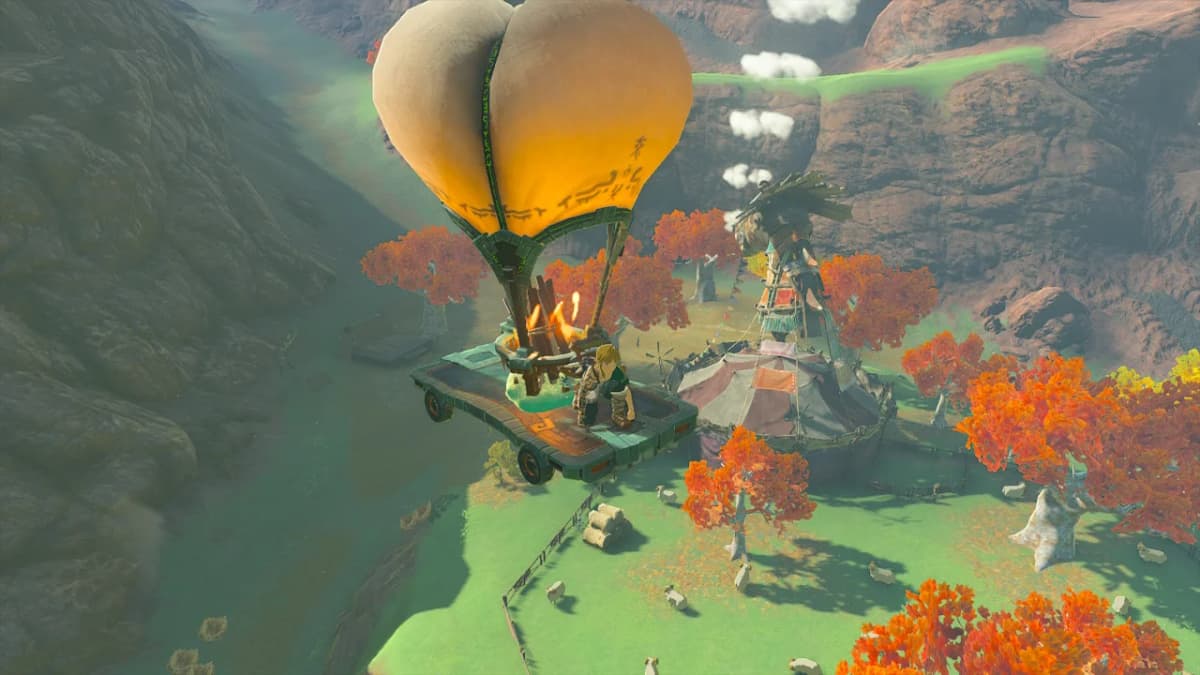
No minimap vomit of icons. No “go here, do this exact thing” objectives consuming half your screen. Towers don’t fill the map with checkboxes; they just give you a vantage point and say, “Use your eyes.” That’s not just cleaner UI; that’s a fundamentally different philosophy.
When I climb something in Tears, it’s because I saw a weird rock formation in the distance or a suspiciously tall tree and wanted to know what the hell was going on over there. Not because my quest log told me I needed 3/10 glowing feathers. The systems create curiosity, and curiosity drives the narrative. That’s the loop. Not content → marker → reward. It’s world → question → experiment.
Every big open-world studio is watching this, even if they’re not ready to admit it. Zelda basically walked into the genre, tossed the spreadsheet of icons into a fire, and said, “What if players actually discovered things again?” The answer is on every clip of some player building a deeply cursed robot that accidentally solves a shrine in a way no one predicted.
For Zelda’s 40th, I Don’t Want a Return to the Old Way
Here’s the part that might annoy the purists the most: I don’t want the next Zelda to “go back” to classic dungeon design as the main dish.
Do I want more big, thematic spaces like Tears’ temples? Absolutely. Those were a step in the right direction, finally marrying the systemic freedom of the shrines with bigger stakes. But if Nintendo announced tomorrow that they were ditching the open world and returning to a sequence of tightly designed, linear dungeons? I’d be gutted.
Because for the first time in my life as a Zelda fan, I’m not in love with the puzzles. I’m in love with the possibility. With the idea that whatever I think of next, the game will at least try to meet me halfway. That my weird solutions aren’t bugs; they’re the point.
Zelda Isn’t an Adventure Anymore. It Is Adventure.
Forty years in, “Zelda” doesn’t mean the same thing it did when I was a kid fumbling through a Super Nintendo cartridge. And thank god for that.
The old games taught me the pleasure of solving someone else’s perfect puzzle. Breath of the Wild and Tears of the Kingdom taught me something tougher and more interesting: the joy of solving problems nobody explicitly posed, in ways nobody explicitly planned, in a world that feels like it keeps going whether I’m there or not.
Modern Zelda’s real key isn’t a big ornate boss key at the end of a dungeon. It’s the physics engine, the open-ended systems, the vertical world design, the quiet confidence to say, “We don’t need to script your fun. We just need to give you enough tools to find it yourself.”
After hundreds of hours across both games, that’s what sticks. Not the final boss. Not the last memory. But the feeling that whenever I step into Hyrule, I’m not following a story – I’m co-writing one. Zelda isn’t just an adventure anymore. It is adventure, distilled. And for a series hitting 40 years, there’s no better birthday present than that.
FinalBoss // Gear
Level up your setup
01Best-selling Switch 2 gameson Amazon→02Switch 2 accessorieson Amazon→038BitDo controllerson Amazon→04Discounted game keyson Kinguin→Affiliate links · As an Amazon Associate, FinalBoss earns from qualifying purchases.
Want to Level Up Your Gaming?
Get access to exclusive strategies, hidden tips, and pro-level insights that we don't share publicly.
Ultimate Gaming Strategy Guide + Weekly Pro Tips