
I felt my shoulders unclench the moment Kiln’s pottery wheel showed up in Xbox’s Developer Direct. In the middle of a very safe, very predictable parade of “big bets” and franchise comfort food, there was this absolutely deranged little party game about hand-crafted vases, water-jogging relays, and sabotaging your friends’ kilns. It looked like a game that slipped through the cracks of corporate logic-then I saw the logo and laughed. Of course it was Double Fine.
Coming so soon after Keeper, that quiet, introspective gem that snuck into my brain and set up permanent residence, Kiln feels like the other half of the same argument: proof that Double Fine is still being allowed to be Double Fine under Microsoft. And I love that. I also don’t trust it for a second.
Table of Contents (10)
Double Fine Is The Best Thing Xbox Has Going-And Its Biggest Test
If you want to know whether a mega-publisher actually cares about creative risk, you don’t look at its biggest shooter or the live-service forever-game. You look at the oddballs that shouldn’t exist on a spreadsheet. Right now, for Xbox, that’s Double Fine. Keeper and Kiln are the sort of deeply personal, aggressively niche, mid-sized projects that are supposed to get trimmed in “strategic realignments,” not greenlit and given a splashy showcase segment.
I’m thrilled Kiln exists. I’m ecstatic Keeper exists. I’m also genuinely afraid that both are relics from a brief window when Game Pass still felt like a playground instead of a product line item.
Key Takeaways
- Double Fine’s Kiln and Keeper are wildly different games that share a single throughline: unapologetically personal, mechanically odd ideas that would never survive a focus group.
- Microsoft’s acquisition gave Double Fine oxygen and stability, but rising layoffs, studio closures, and Game Pass uncertainty make this creative freedom feel fragile.
- Games like Kiln and Keeper don’t fit the “blockbuster or indie” binary; they’re mid-sized weirdos, the exact tier the industry keeps quietly killing off.
- If Xbox lets studios like Double Fine shrink, “optimize,” or vanish, it will lose the one thing subscriptions can’t buy back: cultural trust with creators and players.
Why I’m So Invested In This One Studio’s Fate
I’ve grown up alongside Double Fine, which is probably why I take all of this personally. I still remember picking up the original Psychonauts because the box art looked weird in a way that felt deliberate, not edgy-for-marketing’s-sake. It became one of those games for me-the ones you turn into an evangelist for, forcing friends to play, shoving discs into people’s hands.
Then came Brutal Legend, which blindsided me with its RTS twist. Costume Quest ate my October for multiple years. I backed the Broken Age Kickstarter because, frankly, if Tim Schafer asked me for bus fare to keep making games, I’d probably hand it over. Psychonauts 2 ended up being one of the few “big” games of the last decade that felt like it was made by actual human beings with weird senses of humor and lingering childhood scars, not a committee of brand managers.
The PsychOdyssey documentary cemented that connection even further. Watching the studio’s internal Amnesia Fortnight jams, watching ideas get born in cramped rooms with whiteboards and nervous laughter, you get a sense that Double Fine isn’t just a logo. It’s a culture. A fragile, specific, lived-in culture that could very easily be smoothed over the moment a parent company decides “efficiency” matters more than personality.
So when I see Kiln—a party game about custom pottery and tactical sabotage—that I literally watched originate as a scrappy Amnesia Fortnight prototype years ago, now polished and front-and-center in an Xbox showcase, I don’t see just another Game Pass curiosity. I see evidence that this studio I’ve emotionally invested in for years hasn’t been sanded down yet.
Keeper And Kiln: Two Totally Different Games, One Shared Soul
On paper, Keeper and Kiln could not be more different.
Keeper is small, quiet, and internal. It’s the kind of single-player game that feels like you’ve stumbled into someone’s personal sketchbook. It isn’t trying to hook you for 500 hours, or sell you a battle pass, or position itself as “the next big thing.” It’s intimate, beautifully paced, and strangely self-assured for something so modest in scope. I finished it feeling like I’d just read a very good novella written by someone who had something specific to work through.
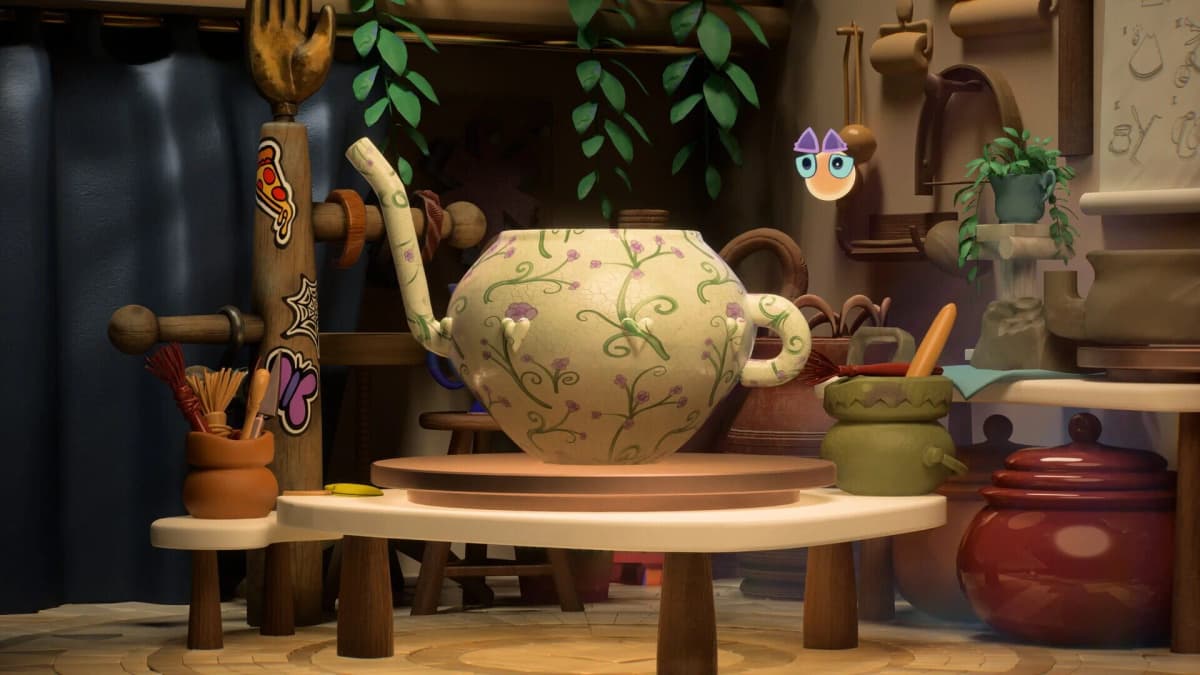
Kiln, by contrast, is loud and chaotic. It’s a couch-screaming, session-destroying party game about making pots, carrying water, and gleefully smashing the fragile creations your friends are lugging across the map. It’s creative in the most literal sense: you shape your own ceramic vessel in a surprisingly deep editor, and that physical design has mechanical consequences. Build something tall and thin and it might hold more water but shatter under pressure; go squat and sturdy to survive hits but sacrifice capacity.
What ties them together is exactly what I’m terrified of losing: that stubborn Double Fine belief that mechanics and metaphor should bleed into each other. Keeper used its systems to talk about memory, responsibility, and the weight we carry. Kiln turns pottery into a personality test, then weaponizes it. Both feel like ideas that emerged from actual designers riffing and tinkering, not market research trends about “user engagement funnels.”
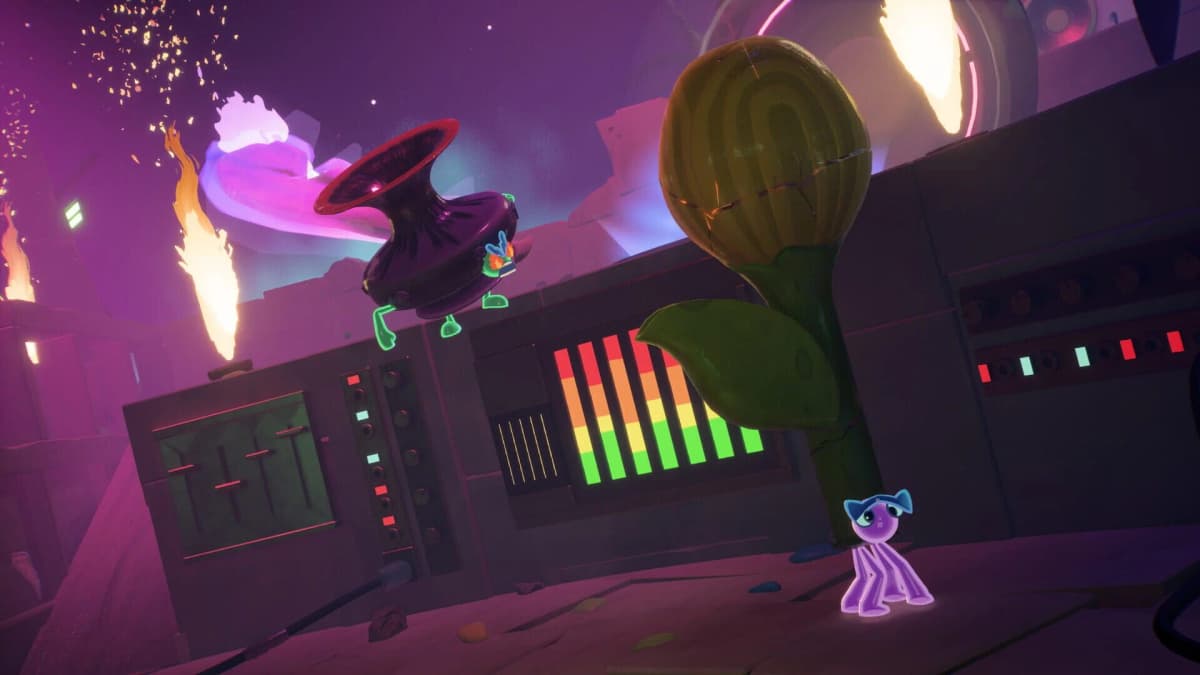
These are not projects that exist because someone in a boardroom said, “We need a Q2 tentpole and a Q3 live-service beat.” They exist because somebody at Double Fine fell in love with a strange mechanic and a specific emotional tone—and they were allowed to chase it.
Microsoft Gave Double Fine A Lifeline—But At What Half-Life?
When Microsoft bought Double Fine, I called it a “necessary evil” to a friend. The studio’s own documentaries make it crystal clear how exhausting it was for Tim Schafer and company to constantly pitch, scramble for funding, and juggle multiple publishing partnerships just to survive. Government grants here, license work there, crowdfunding over on the side—this is not how you build a stable environment for creative weirdos to do their best work.
The acquisition changed that. Suddenly there was a runway. Salaries didn’t depend on chasing the next deal. Schafer could spend more time inside games and less time in boardrooms. Psychonauts 2 benefitted enormously from that stability, and the existence of things like Keeper and Kiln is, frankly, the dream version of what the “games as content for a subscription” model was supposed to enable.
But the longer this generation goes on, the more fragile that dream feels. Microsoft has been on a tear of layoffs and studio closures. On paper, the company keeps saying the right words—supporting creativity, long-term bets, diverse portfolios—but every time another team gets shuttered or folded into a “strategic realignment,” those words ring a little more hollow.
That’s the backdrop Keeper arrived in: a gorgeous, deeply personal game dropped right as Game Pass got more expensive and Microsoft’s commitment to weird mid-tier projects started to feel less like a mission statement and more like a historical footnote. I love that Keeper exists. I also can’t shake the feeling that it might be exactly the kind of project a more ruthless spreadsheet would mark with a red line.
Kiln being given space in a big, highly marketed showcase is therefore both encouraging and unnerving. Encouraging because clearly somebody at Xbox still believes Double Fine’s brand of strangeness is worth spotlighting. Unnerving because it raises the question: is this a new chapter, or is it the last hurrah of a more generous era of Game Pass funding?
The Mid-Sized Weirdo Is The Most Endangered Species In Gaming
Everyone keeps talking about the “indie vs. AAA” split, but that’s not where the real bloodbath is happening. The real casualties are the mid-sized, auteur-driven, mechanically risky games that cost too much to be hobby projects and too little to dominate a fiscal year. Keeper and Kiln sit squarely in that zone.
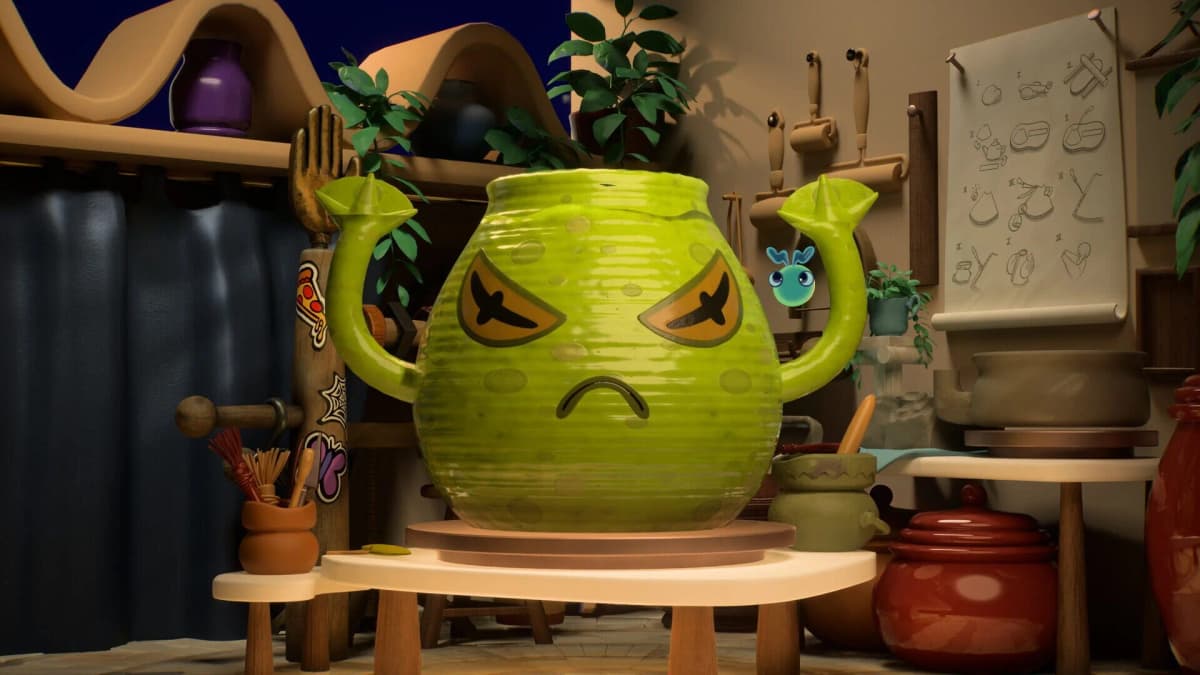
Historically, this tier is where the wild stuff came from: games that were too strange to be four-quadrant blockbusters but too ambitious to be made by three friends in a living room. That’s where Double Fine has always lived. Psychonauts, Brutal Legend, Stacking, Headlander—these are not safe bets. They’re creative swings that only make sense if you care about being interesting more than being dominant.
But in a landscape where publishers either want billion-dollar franchises or super-cheap indies they can scoop up for a song, that space in the middle keeps shrinking. Subscription models were supposed to protect it: “Let the weird stuff thrive, it all adds value to the library.” That pitch sold me on Game Pass in the first place.
Now, as growth slows and investors start asking harder questions about margins, the risk is obvious. Weird little mid-budget projects become “nice to haves” instead of “proof this ecosystem is alive.” The temptation is to chase safer bets—co-op, live ops, sequels, licensed IP. Everything that makes Double Fine special becomes a liability instead of a selling point.
If Double Fine can’t keep doing its thing inside Xbox, I honestly don’t know who can. That’s why I’m so fixated on Kiln and Keeper—they’re canaries in a coal mine, except the coal mine is a trillion-dollar company and the canaries are hand-crafted ceramic birds with eyes drawn just slightly too big.
What Double Fine Gives Xbox That No Spreadsheet Can Measure
There’s a hard business case for Double Fine, if Microsoft is willing to see it.
First, there’s cultural capital. Psychonauts 2 didn’t just review well; it became a shorthand for “this is what a first-party game can look like when you aren’t suffocating designers with committee-think.” Keeper quietly slid onto a lot of people’s game-of-the-year lists. If Kiln lands, you can already imagine the clips bouncing around social feeds: custom pots shattering at the finish line, streams full of cackling disaster.
Second, Double Fine games age absurdly well. Tell someone to go back to a random “pretty good” shooter from five years ago and you’ll get a shrug. Tell them to go play Psychonauts or Costume Quest and you’ll get nostalgia, curiosity, and usually, a sale or a download. These are catalogue anchors—the exact type of evergreen, distinct titles you want living on a subscription platform.
Most importantly, Double Fine sends a signal to other creators. It says: “If you bring your passion project here, we might actually let you make it.” That matters more than one quarter’s revenue bump. Studios pay attention to who gets shuttered, who gets supported, and who gets to keep making deeply personal work. Double Fine being allowed to stay weird is recruitment marketing you cannot fake.
Strip all that away, and Game Pass becomes just another content buffet: lots of food, very little flavor, everything optimized to be inoffensive and bingeable. With Double Fine in the mix, Xbox looks like it still understands that games are an art form, not just a product category.
What I Want From Xbox: Protect The Freaks
I don’t need Microsoft to turn every studio into Double Fine. That would be its own kind of disaster. But I do need it to recognize that a healthy ecosystem requires space for weird, singular voices—not just teams that can execute on giant cross-platform roadmaps.
For Double Fine, that means a few concrete things:
- Give them a protected lane in the portfolio. Don’t measure their success purely in raw engagement hours or monetization potential.
- Keep funding experiments like Amnesia Fortnight, and keep letting the results actually turn into games, not just “R&D learnings.” Kiln is proof that this pipeline works.
- Resist the urge to bloat every idea into a “service.” A game like Keeper works because it ends. Kiln works because it’s silly and immediate, not a platform for cosmetic economies.
- Be transparent about expectations. Surprises are great in marketing, not in studio management. If the runway is changing, say so early.
And for the love of everything, don’t quietly starve them. A mercifully quick cancellation is one thing. Forcing a studio to slowly contort itself into someone else’s idea of “value” is worse. The moment Double Fine’s games start feeling generic, we’ll know exactly what happened.
What This Means For Players Who Love The Weird Stuff
As players, we don’t control corporate budgets, but we’re not powerless bystanders either. I’ve changed my own habits because of studios like Double Fine. When Keeper hit, I didn’t just play it through Game Pass and move on; I talked about it constantly, recommended it to friends, and made sure my social feeds were basically a one-person street team. I’ll do the same for Kiln if it sticks the landing.
That’s the other half of this equation: if we say we want experimental, personal, mid-sized games, we have to show up when they arrive. Not just in quiet, private play sessions, but loudly—through word of mouth, through GOTY lists, through pointing at a kiln-smashing pottery brawl and saying, “This is why Game Pass is worth paying for.”
We also need to stop letting “content” language anesthetize us. Double Fine isn’t content. Keeper isn’t content. Kiln is not content. They are specific expressions from a specific group of people who have somehow held onto a distinct creative voice inside a machine that usually eats those voices alive.
If studios like Double Fine disappear, or if they survive only by sanding off all the edges that make them special, we don’t just lose a few quirky games. We lose a whole stratum of the medium—the space where a lot of the actual innovation happens before it gets copied, diluted, and fed back to us in safer, more expensive packaging.
TL;DR: I Want Double Fine To Stay The Exception—Not Become The Eulogy
Keeper and Kiln are exactly what I wanted to see when Microsoft started buying up studios: a team with a fiercely weird identity getting the time, money, and backing to make games that could only have come from them. The painful truth is that this kind of freedom looks less and less guaranteed in a climate of layoffs, closures, and subscription anxiety.
Right now, Double Fine is the best argument for Xbox as a place where creativity can thrive at scale. If they can keep releasing games as strange, personal, and mechanically thoughtful as Keeper and Kiln, I’ll keep paying for Game Pass, and I’ll keep telling people that this ecosystem is worth believing in.
But if a few years from now we look back at these two games as the last gasp of a briefly kinder era—if Double Fine stops getting to be itself—then the message will be just as clear. In that scenario, it won’t just be a loss for one studio’s fans. It’ll be one more confirmation that the mid-sized weirdo is truly dead, and that would make this hobby a lot less worth caring about.
FinalBoss // Gear
Level up your setup
01Best-selling Xbox Series X|S gameson Amazon→02Xbox controllerson Amazon→03Top-rated gaming headsetson Amazon→04Discounted game keyson Kinguin→Affiliate links · As an Amazon Associate, FinalBoss earns from qualifying purchases.
Want to Level Up Your Gaming?
Get access to exclusive strategies, hidden tips, and pro-level insights that we don't share publicly.
Ultimate Gaming Strategy Guide + Weekly Pro Tips