
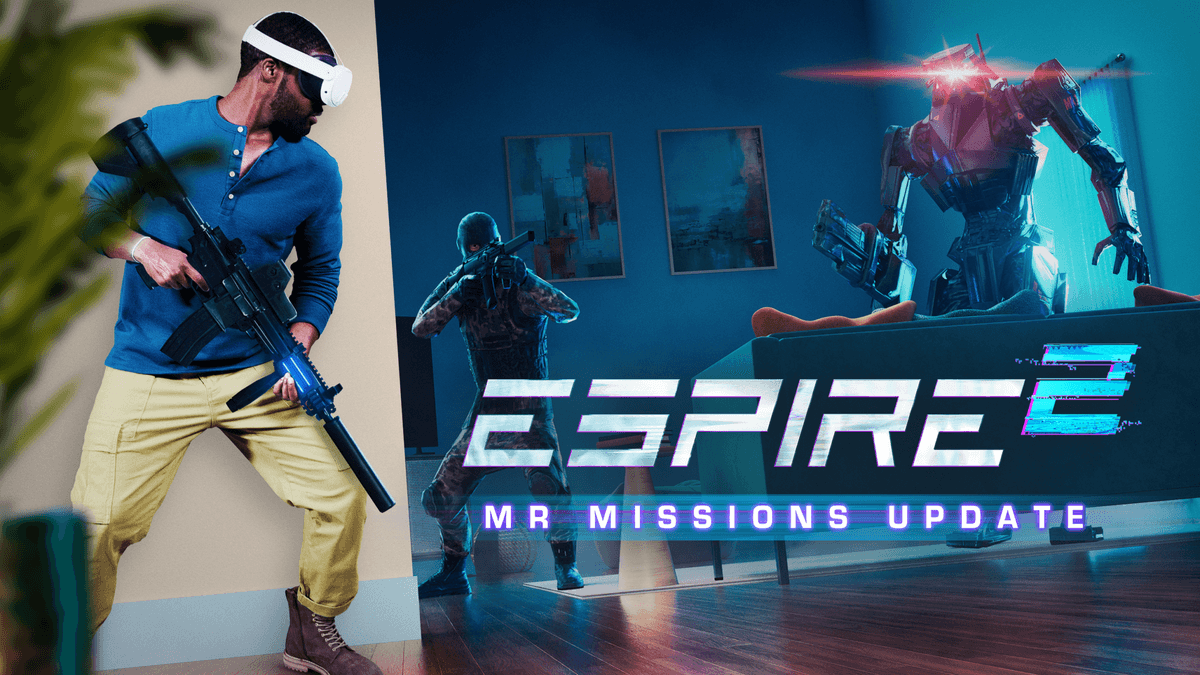
I just saw Espire turn my living room into a stealth arena on Quest—I’m excited, but can MR really
Game intel
Espire: MR Missions
Why this caught my eye
Espire: MR Missions wants to do the thing we all imagined the first time we tried passthrough on Quest: turn your actual living room into a tactical stealth arena. No sticks, no snap turning-if you want to move, you literally move. Launching in Early Access on December 16 for Meta Quest 2, 3, 3s, and Pro, it spins Espire 2’s mixed reality experiment into a full standalone with 29 missions and a progression loop. If you already own Espire 2 before launch, you get this as a free upgrade, which is refreshingly consumer-friendly in a VR market that loves to resell iterations.
Key takeaways
- Room-scale, body-driven stealth-your walls and furniture become cover and sightlines, not obstacles to avoid with teleport.
- 29 MR-specific missions (21 single-room, 8 multi-room) with leaderboards, star ratings, and unlockable modifiers.
- Free for existing Espire 2 owners; Early Access launch gives the team space to tune MR design with community feedback.
- Big questions remain: tracking reliability across different homes, safety, Quest 2’s grainy passthrough, and leaderboard fairness when every room is unique.
What this changes for VR stealth
Espire has always pitched “stealth you can feel,” from Espire 1’s memorable voice-command “Freeze!” to Espire 2’s more grounded body presence and co-op. Mixed reality is the logical next step: instead of faking cover, you actually hug your doorframe and crouch behind your couch as OPHIS patrols sweep by. Digital Lode says the Espire Spatial Adaptation System auto-drops patrol routes, objectives, hazards, and cover into your scanned space so every layout plays differently. That matters because room-scale stealth can feel stale if it’s just “your couch, but again.”
The toolset sounds on-brand: a wrist-mounted tranquilizer for quiet takedowns, Espire Vision to tag threats through walls, Instinct slow-mo for clutch moments, plus on-body inventory for primaries and sidearms. The enemy and hazard mix-drones, tripmines, laser grids, retinal scanners, hacking pulses—suggests missions that demand both patience and physicality. I’m picturing those motion scanner sweeps forcing you to hold perfectly still behind a coffee table while your legs scream. That’s the kind of tension good stealth thrives on.
Breakthrough or gimmick? The MR reality check
MR’s magic lives and dies on tracking quality and smart safety design. On Quest 3 and Pro, scene understanding is solid enough to sell the illusion that a roller door just opened onto a desert outpost or a silo yawns beneath your floor. On Quest 2, passthrough is grainy and depth cues are fuzzier; it’ll run, but I’m skeptical the fantasy lands the same. That’s not a dealbreaker, but it’s good to calibrate expectations by headset.
Then there’s space. The pitch of “no sticks, just walk” is excellent for comfort, but it assumes you can actually move. Digital Lode includes 21 small-scale missions built for single rooms, which is a smart concession to apartment life. The eight multi-room missions sound great if you’ve got an open floor plan; for the rest of us, coffee tables and pets are the real bosses. I want to see robust safeguards: clear boundaries, dynamic obstacle handling if someone walks in, and sane defaults for low-light conditions. MR can be thrilling, but no one wants to shoulder-check a bookshelf mid-sweep.
I’m also curious about leaderboards. Global times and scores are awesome for replay value, but if my living room is a cramped shoebox and yours is a runway, can we really compare? The Spatial Adaptation System might normalize objective placement, but the geometry and traversal time are inherently different. Maybe segmented boards—small vs large, single-room vs multi-room—are the answer.
Design choices that actually make sense
The mission structure reads like a stealth training gym: Elimination, Stealth, Intel, Target Shooting, and Dexterity challenges that build toward full-frame mastery. Five-star ratings and unlockable “cheats” for high-skill players are exactly the kind of repeatable carrot MR needs, because you don’t binge four-hour sessions when you’re physically ducking and weaving. Short, score-chasing runs you can learn and optimize? That’s how Superhot VR and Pistol Whip found their groove—and stealth can benefit from that rhythm even more.
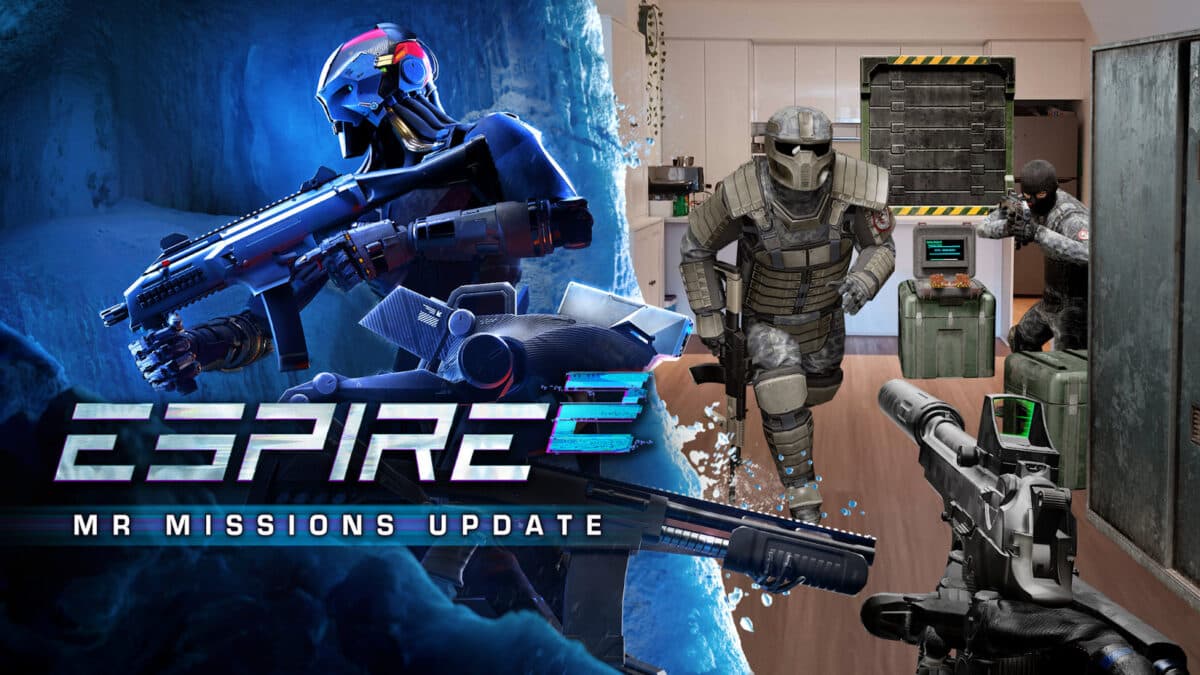
Physical interaction is another smart emphasis. Climbing into lockers placed against your real wall, dragging bodies to avoid alarms, flicking a breaker box that appears exactly where you can reach—that tactile layer is where MR can beat traditional VR. If the haptics and audio hit right when you press against a “cold” metal door that’s actually your laundry cupboard, your brain will fill in the rest.
Early Access: the right call here
Launching in Early Access feels pragmatic. MR design is still evolving as Meta iterates on room scanning and anchoring, and every home is a new edge case. Rolling this out with community feedback should surface the weird stuff fast: sloped ceilings, glass tables, tight hallways, kids’ toys underfoot. The free upgrade for Espire 2 owners is the best part of the announcement to me—it seeds a player base day one without double-dipping, and it acknowledges that MR Missions grew out of the Espire 2 mode players already supported.
What I still want to know
- Accessibility: Are there seated or minimal-movement options for folks who can’t crouch or pivot constantly?
- Persistence: Do room scans persist reliably between sessions, or do we rescan every time furniture moves?
- Safety: How aggressive are collision warnings, and do missions adapt if the room becomes temporarily smaller?
- Quest 2 parity: Are visual and tracking concessions clearly labeled so players pick the right expectations per headset?
- Leaderboard fairness: Will there be categories for room size/layout to keep competition meaningful?
TL;DR
Espire: MR Missions is the most convincing pitch yet for mixed reality stealth: your real room as the level, your body as the controller, and mission design that embraces bite-sized, replayable ops. I’m genuinely excited—and cautiously watching how it handles space, safety, and tracking across wildly different homes. If Digital Lode nails those details, this could be the moment MR stops being a novelty and starts feeling essential.