
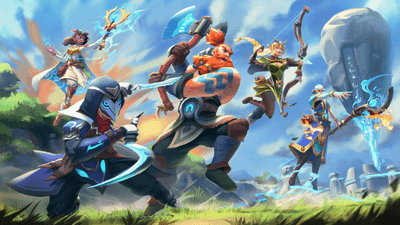
I just discovered a MOBA that lets you deck-build mid-match—wild!
Game intel
StoneHold
Stonehold is a 2D rogue-lite tower defense. Survive waves of enemies, upgrade your power in real time, and grow stronger after every run.
Why StoneHold Actually Matters for Players
MOBA veterans bored of rigid skill paths might want to lean in: StoneHold is a fresh 5v5 third-person hero battler from Little Orbit that blends collectible card game (CCG) deck-building with real-time action. You load into a roughly 20-minute match, destroy towers to draw skill cards from your custom 30-card deck, then sprint back to base to swap abilities based on what you just picked up. On paper, that loop rewards map play—secure an outer turret, unlock a late-game combo card, and pivot your team’s strategy on the fly—instead of defaulting to stale meta picks. I love that idea, because if it works, every teamfight becomes a tactical puzzle and comebacks feel earned, not handed out by random crits.
Key Takeaways
- StoneHold fuses third-person MOBA combat with CCG deck-building—5v5 matches, over-the-shoulder action, and 30-card champion decks you tweak mid-game.
- You draw cards by destroying turrets or leveling up—then return to base to swap in new Skill Cards, creating risk-reward on rotating loadouts.
- Free-to-play progression uses “Shards” from duplicate cards to upgrade favorites—potential for sidegrades or power creep depending on balance.
- Launching on PC (Steam, Epic, GamersFirst) with Xbox and PlayStation versions planned; Unreal Engine 5 promises sharp visuals but netcode and tick rate will decide the grind.
- Early snowball risks exist if turret draws roll hot; comeback tools like bounty resets or guaranteed utility draws could be critical.
- Watch cross-play, ranked normalization, and transparent progression paths to avoid pay-to-win traps in a competitive live service.
The Hybrid Made for Comebacks
StoneHold’s core loop is delightfully simple: build a 30-card deck tailored to your chosen Warden hero, smash towers to draw cards, then rotate back to swap out your loadout. That choice—do I stick in lane with a suboptimal kit or fall back and give my team a chance at a game-changing card—injects tension every time you see an enemy turret collapse. It nudges players to focus on objectives instead of mindlessly chasing kills.
This isn’t just a Paladins deck mod or a Paragon-style card shop; the entire economy is tied to map progress. On level-up, you bank extra draw chances, which can soften runaway leads if the developers tune XP rewards smartly. It feels like a built-in comeback lever, as long as turret gold and XP curves remain balanced. I’m already imagining clutch tower dives where a mage snatches an execute card at 11th hour and turns the tide.
Deck Archetypes and Swingy Moments
Let’s talk real examples. Take a classic Barbarian build: you might slot “Berserker’s Roar” (damage amp), “Charge Smash” (stun), and “Stone’s Fortitude” (shield) early, then pivot to “Avalanche Crush” (area knock-up) once you draw it from a tier-two turret. That surprise AoE can break a five-man push or secure a base siege. On the flipside, a Rogue could lean into “Shadowstep Ambush” plus “Bleed Trap” for high burst, then snap in “Smoke Screen” for an off-lane escape.
These mid-match swaps create high-variance plays—good variance, I hope. If your deck only has flat stat boosters, the novelty vanishes. But if each card brings new utility—wall-climb, invisibility, instant slow—you get movie-moment comebacks. I’m especially curious how late-game epic cards are gated: do you need three turret kills to draw that sky-shattering meteor, or is there a guaranteed chance on level 15? Those odds will shape how swingy matches become.
Balancing Snowball vs. Clutch Plays
Card-draw by turret destruction is genius for objective focus, but snowball alert lights are blaring. One team grabs first tower, draws three cards, wipes you in the next fight, then rakes in another draw—I can see a blunder spiral. The press materials mention leveling up also yields cards, which could smooth things out if XP gaps shrink over time.
Comeback mechanics will need to be more than wishful thinking. I’d like to see tower backdoors that reduce draw rewards on consecutive demolitions, bounty resets on kills to boost gold for trailing teams, or minimum utility draws guaranteed to a team down two or more turrets. Without these levers, you risk matches ending at 10 minutes instead of a thrilling 20-minute back-and-forth.
Want to Level Up Your Gaming?
Get access to exclusive strategies, hidden tips, and pro-level insights that we don't share publicly.
Ultimate Gaming Strategy Guide + Weekly Pro Tips
Monetization Under the Microscope
Let’s be real: “Salvage duplicates into Shards to upgrade your favorites” sounds fine until you learn what those upgrades actually do. In a well-balanced system, upgrades are sidegrades—maybe a longer stun paired with slower cooldown—so cosmetics and accelerator packs can fund servers without debt-financing power spikes. But if epics push raw DPS 10-15% higher, we’re back in pay-to-win hell.
I want clear acquisition paths: daily bounties for free card packs, a battle pass track that yields Shards without paywalls, and a ranked mode with normalized decks so you face everyone on equal footing. Founder’s Packs should unlock cosmetics, early access, and quality-of-life perks—never guaranteed access to high-tier cards. If Shard drop rates and upgrade power curves are transparent, I’ll be much more comfortable opening my wallet on cosmetics and boosters that skip a grind, not bend a meta.
Technical Foundations: Netcode, VFX, and Competitive Integrity
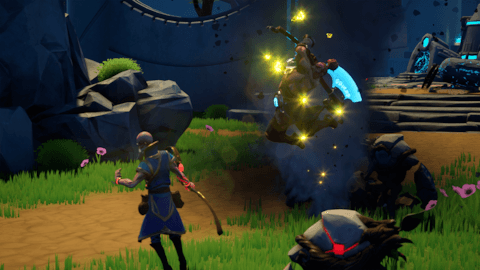
Visually, Unreal Engine 5 can deliver crisp ability telegraphs and bold silhouettes—essential when ten players fling spells in a tight jungle path. But pretty graphics don’t win pro circuits; server tick rate, input latency, and regional server distribution do. I’m watching for 60-plus server ticks per second, reliable cross-region matchmaking, and anti-cheat that isn’t a resource hog.
Audio cues matter too. When an enemy mid-laner swaps in that surprise “Arcane Overload” card, I need a distinct sound to react. Clarity on VFX and sound design will be competitive advantages. If ability telegraphs aren’t legible or cards feel silent, you’ll blame lag instead of your own misplay.
What’s Next: Watchpoints Before Launch
- Cross-play and cross-progression across PC, Xbox, and PlayStation—no stranded decks per platform.
- Ranked, role queue, and anti-cheat at launch to support a healthy competitive ecosystem.
- Clear Shard and card drop tables, plus hard limits on shard accelerators per week.
- Beta stress tests focused on netcode and server load during peak hours.
- Developer updates on balance patches and meta reports with transparent patch notes.
TL;DR
StoneHold’s mix of MOBA combat and mid-match deck-building is a bold experiment. If turret draws, level-up cards, and Shard upgrades avoid runaway snowballs and pay-to-win spikes—and the netcode holds up—this could be the hybrid we’ve been dreaming of.
Conclusion
StoneHold’s blend of objective-driven card draws and real-time 5v5 action could shake up the hero battler scene—if the developers nail comeback mechanics and keep monetization fair. The potential for clutch plays and strategic depth is huge, but it hinges on transparent drop rates, ranked deck normalization, and rock-solid netcode. I’m cautiously optimistic that Little Orbit will learn from past live-service missteps and deliver a MOBA-CCG fusion that truly works: one where skill and strategy, not your wallet, decide the outcome.