
Game intel
Pokémon Pokopia
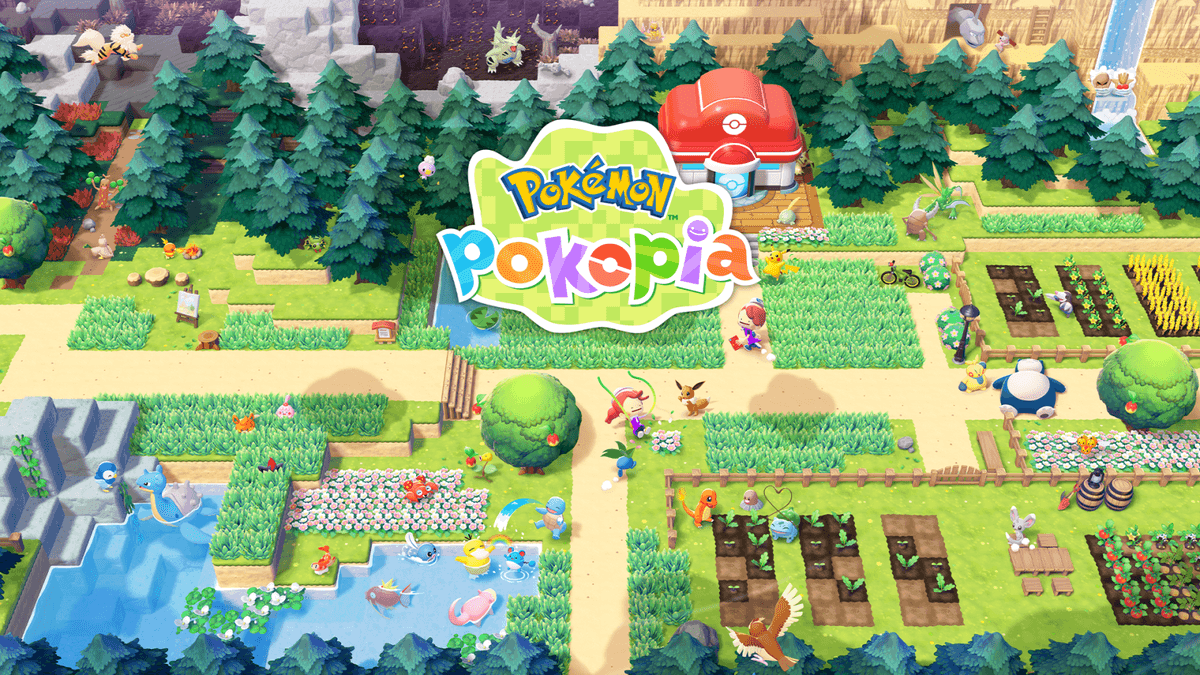
Pokémon Pokopia is the first Pokémon built exclusively for Nintendo’s Switch 2, out March 5, 2026, and it’s not the RPG grind you’re used to. It’s a life sim meets builder where you (somehow) play as a Ditto in human form, gathering resources, shaping the land, and creating habitats for Pokémon. That premise grabbed me immediately-then I saw the physical edition is a “Game Key Card,” basically a code in a box. Cue the community backlash, and honestly, I get it.
Pokopia pitches a living world with day/night cycles, weather, and playful interactions—think jumping rope with vine-wielding Pokémon and building bespoke shelters so different species can thrive. It’s a proper pivot from turn-based battling to creative problem-solving. The trailer shows resource gathering (berries, ore, wood), farming plots, and crafting furniture and structures. It looks closer to Dragon Quest Builders meets Pokémon than Animal Crossing with Pikachu wallpaper—and that’s a good thing.
The hook that could make this sing: leveraging Pokémon abilities as your toolset. If I can use a fire type to clear brambles, a water type to irrigate new fields, and a psychic type to rearrange terrain, you’ve got an emergent sandbox that actually needs Pokémon to function—not just as cute villagers. The reveal teases at least four new species/variants unique to this setting, which suggests Game Freak isn’t just re-skinning familiar loops.
On the tech side, file size is listed at roughly 10 GB, which tracks with a stylized sim rather than a sprawling open-world RPG. After Scarlet/Violet’s rough performance on the original Switch, I’m cautiously optimistic here: Switch 2’s hardware should finally give Pokémon room to breathe, and Koei Tecmo’s involvement matters. Gust (a KT studio) has shipped a decade of craft-and-gather loops with Atelier; Koei Tecmo also co-developed Fire Emblem: Three Houses for Nintendo. If anyone can help Game Freak build a stable systems-heavy sim, it’s them.
Let’s call it what it is: a “Game Key Card” is a download code with extra plastic. For a marquee Pokémon release, that stings. Collectors lose the archival value and resale; parents and gift-buyers get confused; preservationists see a future where your game dies with a server. And the justification about “portability and management” reads like spin—Switch cartridges were already portable and easy to manage. If this is a cost-saving test balloon for the Switch 2 era, it’s a tone-deaf one.
Practically speaking, a code-only package means no playing without redeeming online, no lending the game, and no second-hand market. For a series that built its identity on trading and community, that’s a weird message. I don’t blame players threatening to skip the “physical” version entirely. If you care about owning what you buy, digital direct is ironically the more honest option here.
Pokémon spin-offs have always been a mixed bag: Mystery Dungeon has fans, Café Mix is fine for a commute, Legends: Arceus showed real ambition but stumbled technically. Pokopia arrives in a moment where “cozy” games aren’t a novelty—they’re a saturated market. If Pokémon can fuse that comfort-food loop with meaningful systems and Pokémon-driven problem solving, it’ll stand out. If it leans into repetitive chores and shallow crafting, the novelty won’t carry it past launch week.
The good news is that Pokopia isn’t shackled to the old hardware. Being Switch 2-only means Game Freak and Koei Tecmo can target one platform with modern-ish specs. I’ll be watching for smooth 60 fps targets in social hubs, responsive building tools, and smart UI—things sim veterans care about and Pokémon hasn’t always nailed.
Price-wise, €69.99 for the digital version is steep but in line with Nintendo’s first-party Switch 2 pricing. If Pokopia lands the “build to care for your Pokémon” fantasy with real mechanical bite—and not just checklist busywork—I can see this becoming the chill counterpoint to the next mainline entry.
Pokémon Pokopia could be the rare spin-off that actually rethinks what a Pokémon game can be, powered by Switch 2 and Koei Tecmo’s sim know-how. But the code-in-a-box “physical” edition is a genuinely bad look. I’m cautiously excited for the Ditto-driven builder—just don’t expect me to pretend a download key is a cartridge.
Get access to exclusive strategies, hidden tips, and pro-level insights that we don't share publicly.
Ultimate Gaming Strategy Guide + Weekly Pro Tips