

I just saw Stardock’s 5-part GalCiv 4 roadmap—why a 2027 plan has me excited and wary
Game intel
Galactic Civilizations 4
The Species Pack for Galactic Civilizations IV expands the game into the entire Milky Way via Subspace Streams. Featuring over a dozen unique species with new…
Why This Matters For 4X Fans Right Now
Galactic Civilizations 4 just mapped out its future all the way to 2027, and that’s a big deal if, like me, you split your time between turn-based star empires and Paradox’s endless Stellaris runs. Stardock’s five-part Expansion Pass 2 kicks off December 4 with Tales of the Terran Alliance, then rolls into major systemic changes-overhauled governments and elections, genetic modification, client states, a returning United Planets, and a criminal underworld. That’s basically a promise to meaningfully deepen the mid- and late-game, which is exactly where many 4X campaigns fizzle out. But a multi-year roadmap also raises the obvious question: how much of the core evolution will sit behind DLC, and how long will we have to wait for the most transformative bits?
Key Takeaways
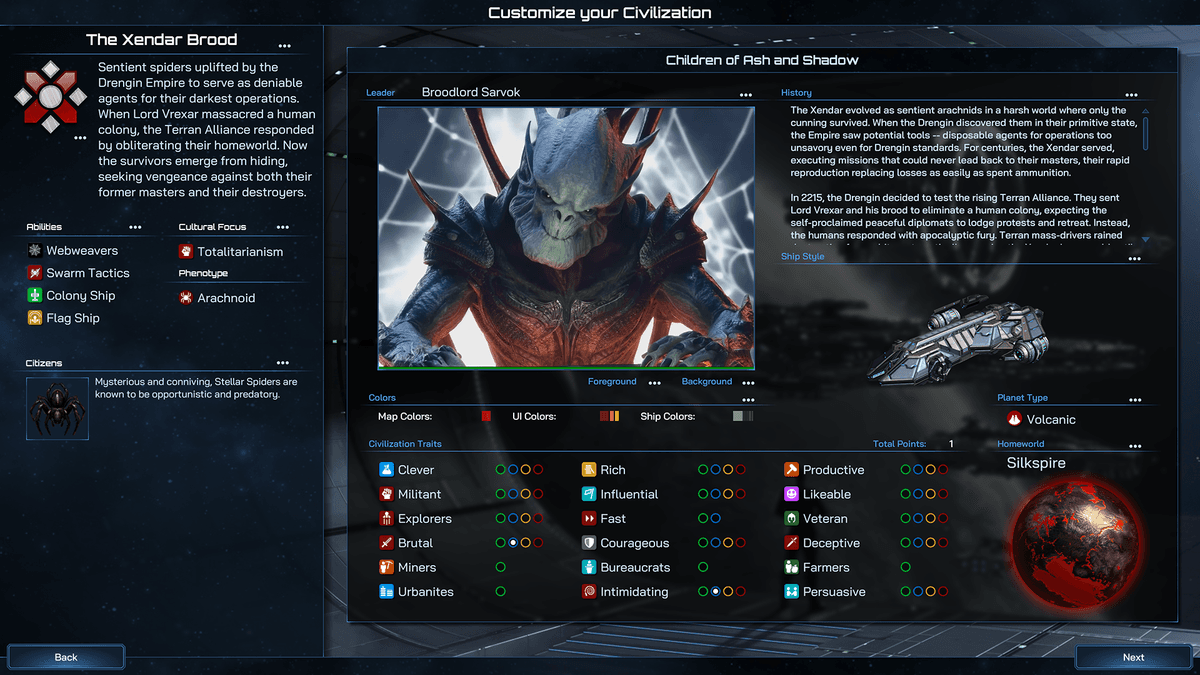
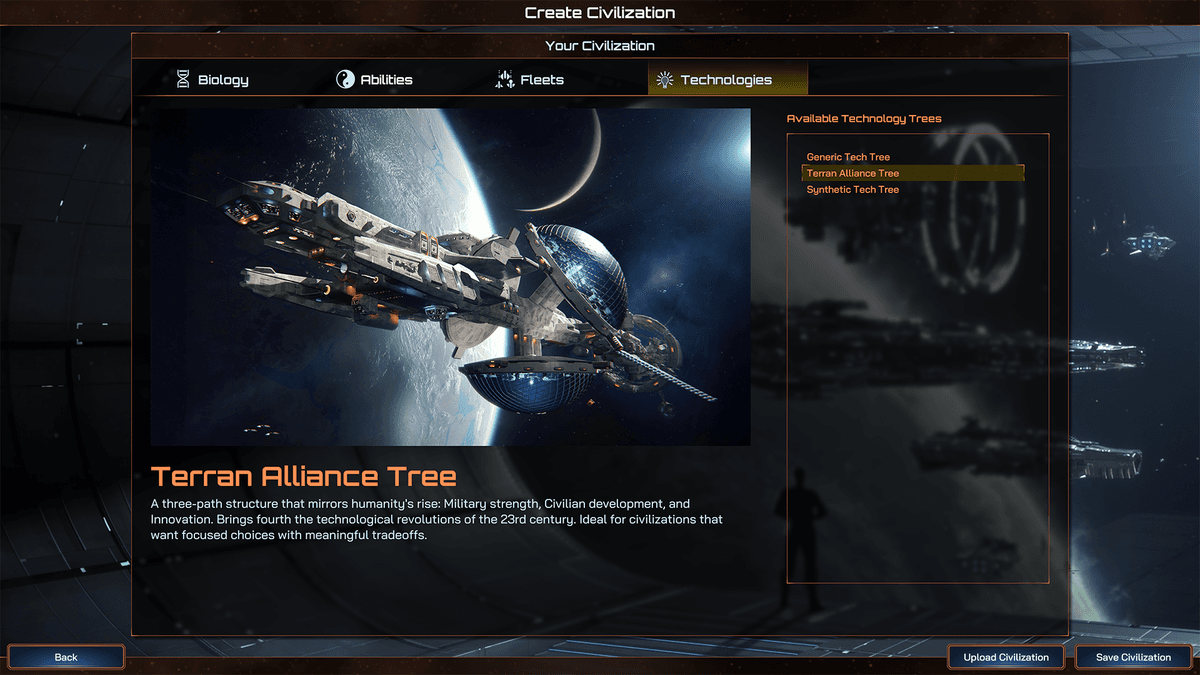
- Tales of the Terran Alliance lands December 4 for $14.99 on Steam and Epic-story-heavy, a new Terran tech tree, fresh events and parts, plus the playable Xendar Brood.
- The heavy-hitter systems arrive later: governments/elections and agents (2026), genetic modification and uplifting minors (2026), client states and the United Planets (2027), and a crime-focused Underworld (2027).
- Each DLC is standalone or bundled via Expansion Pass 2 at a discount-good flexibility, but expect a long runway before the full vision is playable.
- Huge potential to rival Stellaris’s systemic depth, with the usual risks: feature bloat, UI strain, and splitting foundational mechanics across paid packs.
Breaking Down The Roadmap
First up, Tales of the Terran Alliance revisits humanity’s formative Xendar War—the franchise’s “how Earth became a galactic player” moment. Stardock’s Brad Wardell calls it “a love letter to Galactic Civilizations fans who have been asking for deeper human lore,” and the DLC anchors that with a Terran-specific tech tree, new narrative events, and added weapons and ship components. The curveball is that you can play the Xendar Brood themselves—sentient arachnids uplifted and used by the Drengin Empire. As someone who enjoyed GalCiv 3’s Rise of the Terrans, this feels like a spiritual follow-up: lore-first, with enough mechanical hooks (tech tree, parts) to make a Terran campaign feel distinct.
In 2026, Federations and Empires promises to rebuild how governments and elections work, and folds in agents and broader population management. This is the one I’m watching most closely. Elections in past GalCiv entries were often a checkbox rather than a pressure system that could actually steer your empire. If this expansion adds meaningful policy trade-offs, party dynamics, or consequences for losing political control, it could change how we plan growth, taxation, and wars across an entire run. Agents, if they echo the best bits from GalCiv 3’s Intrigue/Crusade era, could bring welcome strategic levers rather than just busywork.
Also in 2026, Ascension introduces genetic modification and breeding programs, with the ability to uplift some minor civilizations into fuller powers. Stellaris players will immediately clock the template this resembles, but GalCiv’s turn-based ethos could put more emphasis on deliberate colony specialization—e.g., gene-tuning worlds for manufactories vs. research hubs, then building policies to exploit those traits. The risk is micromanagement hell; the opportunity is a new layer of long-horizon planning that rewards tight empire design.
Jump to 2027, and Hegemon brings client states and resurrects the United Planets. Client states are the diplomatic power tool GalCiv has flirted with forever: vassals you can shape and leverage, from tribute economies to proxy wars. If done right, they’ll make diplomacy matter between wars, not just during them. The United Planets, meanwhile, used to be a quirky galactic senate—fun flavor, limited bite. I’m hoping for agenda-setting laws with teeth: sanctions, defense pacts, ideological blocs, the kind of stuff that reshapes maps without another doomstack battle.
Finally, Underworld delves into criminal syndicates and black markets. That can go one of two ways in 4X: a nuisance meter you ignore, or a genuine shadow economy with smuggling routes, covert investments, and destabilization ops that let peaceful players pressure rivals without open wars. Give me laundering mechanics, contraband trade, and meaningful counterintelligence—and I’ll happily pivot an empire into a mafia state.
What This Changes For Your Next Run
If you love narrative framing and want a reason to return to a Terran playthrough, Tales of the Terran Alliance is a clean entry point. New events and a focused tech tree should make an Earth-first campaign feel curated rather than generic. Min-maxers, though, might eye 2026-2027: elections that actually threaten your strategy, client states that reshape borders, and genetic tuning that enables hyper-specialized colonies are the changes that can rewrite optimal play. As someone who frequently bounces off the late-game doldrums, this roadmap reads like a direct strike at pacing and player agency.
Want to Level Up Your Gaming?
Get access to exclusive strategies, hidden tips, and pro-level insights that we don't share publicly.
Ultimate Gaming Strategy Guide + Weekly Pro Tips
Value Check: Buy Now, Wait, Or Pass?
Tales of the Terran Alliance is $14.99, and Expansion Pass 2 bundles all five DLCs at a discount. I appreciate the modular approach—only grab what fits your style—but there’s a trade-off: the most ambitious systemic overhauls land later. If your interest is primarily the deep mechanics (governments, genetics, vassals), waiting for details and early impressions in 2026 makes sense. If you’re here for story and a distinct Terran arc, December 4 looks like an easy yes.
Stardock has a track record of long-tail support and meaningful expansions—GalCiv 3’s Crusade and Intrigue genuinely reshaped that game—but the line between “robust evolution” and “feature sprawl” is thin. The key will be UI clarity, AI that understands the new toys, and free patch support that keeps the base game coherent even if you don’t buy everything.
The Gamer’s Perspective
This caught my attention because it targets exactly what GalCiv 4 needed: higher-stakes internal politics, more interesting diplomacy, and alternative economic pressure beyond pure fleet spam. I’m genuinely excited to try the Xendar Brood and to see United Planets debates actually decide something. I’m also wary of a timeline that stretches to 2027 and a pack literally named Federations and Empires that invites comparison to Stellaris’s best DLC. If Stardock delivers distinctive twists instead of chasing trends, GalCiv 4 could become the go-to for turn-based empire builders again.
TL;DR
GalCiv 4 is getting five DLCs through 2027. December’s Tales of the Terran Alliance is a lore-first starter; the game-changers (elections, genetics, client states, Underworld) arrive later. I’m cautiously hyped—this could fix the mid-game slump, as long as Stardock avoids feature bloat and gives the AI the brains to use the new systems.