
Table of Contents (8)
The moment Breath of the Wild broke my Zelda brain
My first “real” Zelda wasn’t Breath of the Wild. It was Ocarina of Time on N64, sitting way too close to a fat CRT, sweating my way through the Forest Temple while those damn Wallmasters clicked overhead. That dungeon wasn’t just a level; it felt like a haunted house designed to mess with me personally. One intended path, one intended solution, one emotional arc: confusion, dread, then that rush when you finally figure out what the hell the twisted corridors are doing.
Fast-forward to 2017. I walk off the Great Plateau in Breath of the Wild, paraglider in hand, and it’s like Nintendo takes that carefully authored Forest Temple feeling and chucks it straight off a cliff. There’s no “go here next” arrow, no obvious first dungeon. The game basically shrugs and says: “See that volcano? That weird skull cave? The dragon in the distance? Go. Deal with it.”
That contrast has been living rent-free in my head ever since. I’ve put well over a hundred hours into Breath of the Wild and then did it again with Tears of the Kingdom. I’ve also replayed Link’s Awakening more times than is probably healthy and still think Wind Waker’s dungeons are underrated. So when I watched IGN’s NVC crew reading listener emails – one person saying they’d basically rather play any Zelda, even Link’s Crossbow Training, than the “open air” games, and another saying the classic formula is completely tapped out – it hit way too close to home.
Because here’s where I’m at: Breath of the Wild and Tears of the Kingdom are two of the best games ever made… and I absolutely do not want them to become the one true Zelda template forever.
The email that blew the debate wide open
One NVC listener basically dropped the bomb: they preferred any Zelda over the “open air” ones – including Link’s Crossbow Training. Their gripe was simple and honestly pretty fair:
- Shrines aren’t as good as classic dungeons.
- Open-ended puzzles with 50 solutions feel less satisfying than a tightly designed one-solution puzzle.
- Chronological, linear storytelling hits harder than scattered memories you can watch in random order.
Then another listener came in swinging from the opposite direction: the “20 traditional Zeldas” already did everything you can do with that formula. We’ve got Train Conductor Link. It’s over. Traditional Zelda is a solved problem. The future is open-world Hyrule; swallow the pill.
That’s the split I see all over my group chats and socials: shrine kids vs. dungeon kids, emergent systems vs. authored puzzles, “let me wander” people vs. “point me at a masterpiece of level design” people. And yeah, this divide isn’t going away — we’re almost a decade past Breath of the Wild and folks are still arguing about whether it was a betrayal or the purest expression of what Zelda always wanted to be.
Both extremes are talking nonsense, but they’re also both touching something true. That’s why this debate refuses to die.
Why open-world Zelda actually feels more “Zelda” than people admit
Let me get this out of the way: I love the open-world Zeldas. If you put a Korok seed gun to my head and made me pick one game to represent the series to non-gamers, I’d probably pick Breath of the Wild. Not Ocarina. Not Link to the Past. Breath of the Wild.
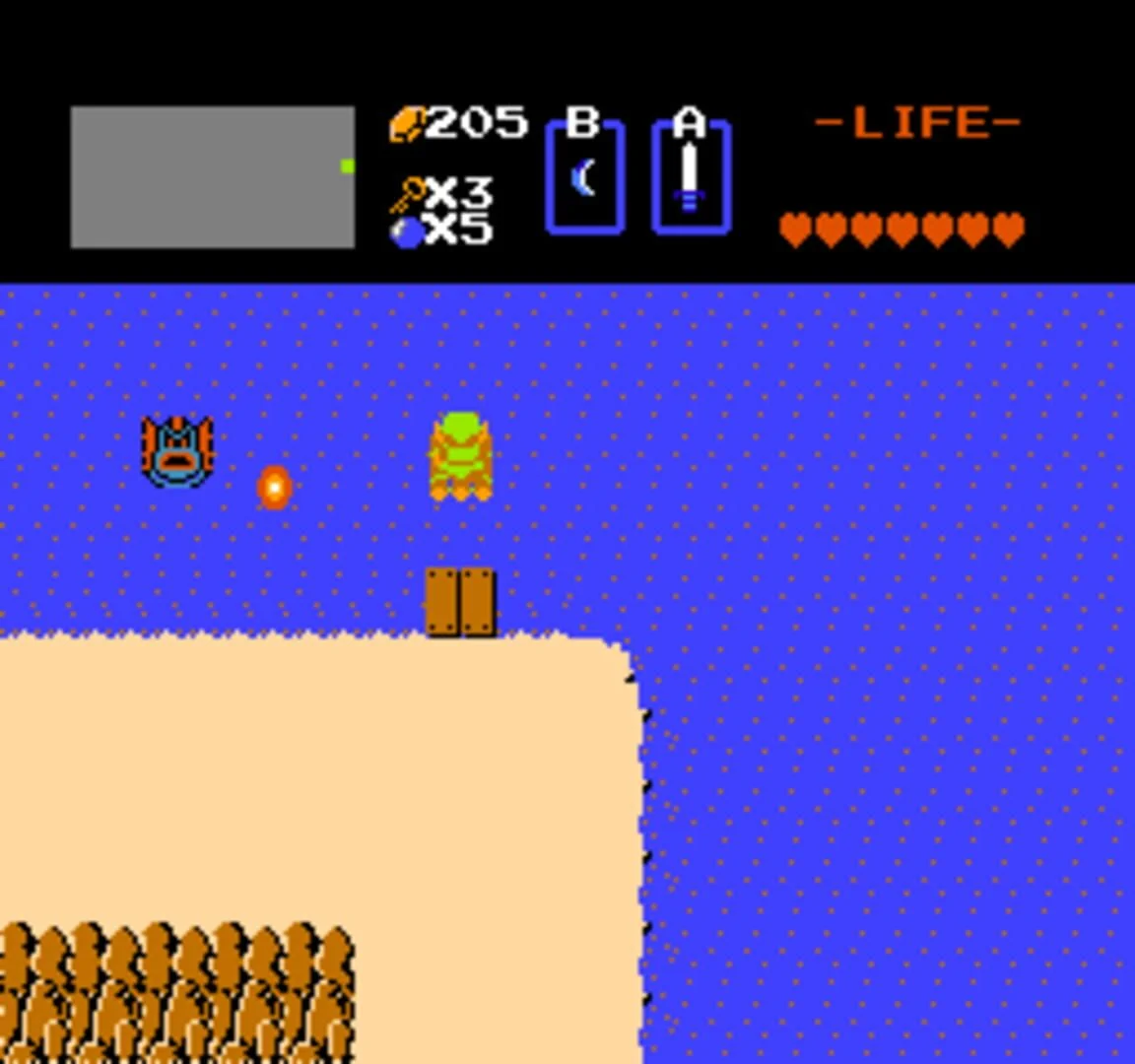
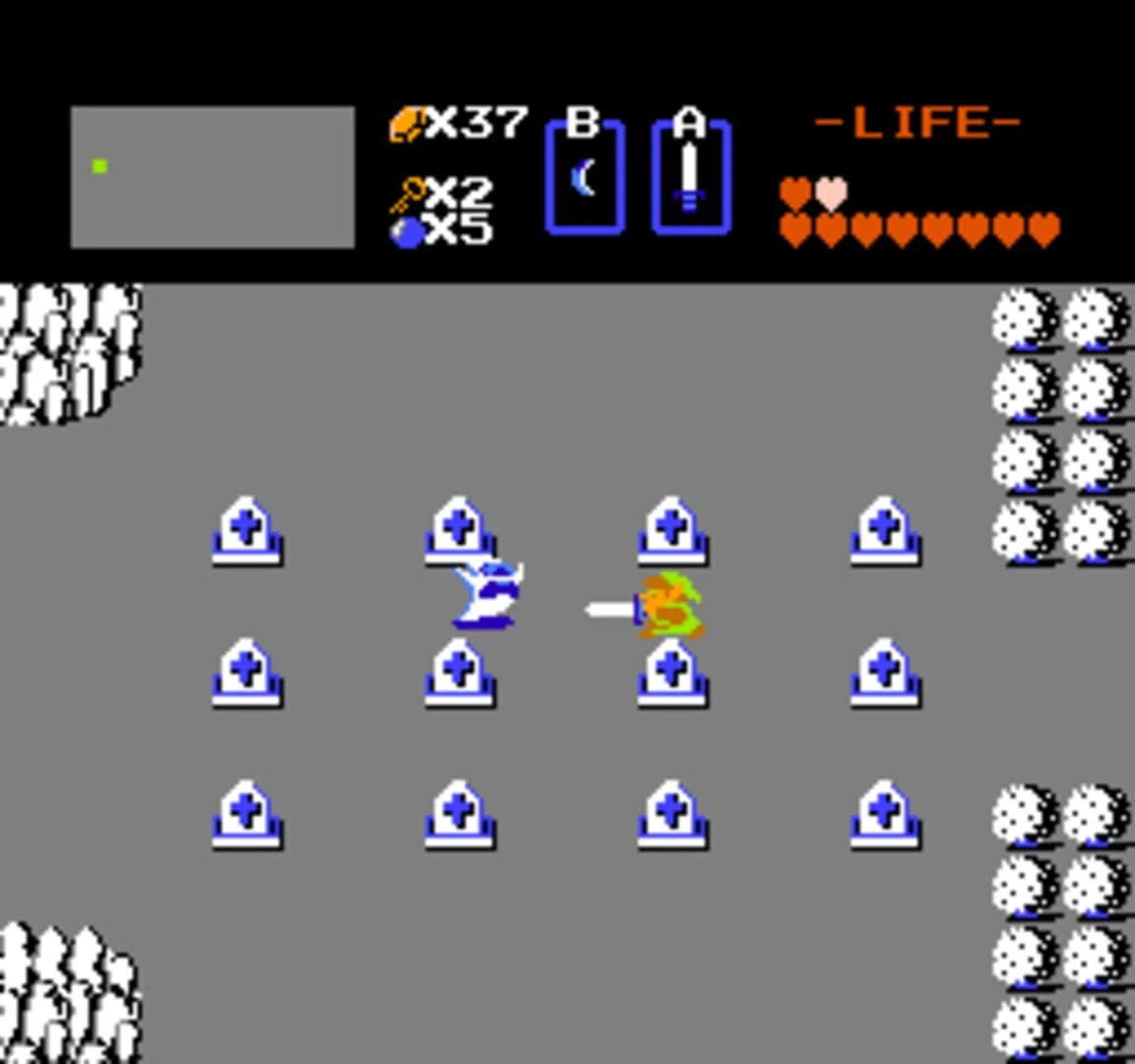
Because if you strip away the nostalgia, what was the original Legend of Zelda on NES really about? You’re tossed into a world with almost no guidance, poking at caves, burning bushes that might do nothing, getting absolutely wrecked by enemies you have no business fighting yet. That’s not some hyper-curated dungeon crawl. It’s chaos, discovery, and the sense that you’re trespassing into places you aren’t ready for.
All those stories you’ve heard about Shigeru Miyamoto exploring the countryside as a kid, being scared to go deeper into a cave until he came back later “with better gear” — that’s the seed. And Breath of the Wild captures that feeling better than anything since.

Those 120 shrines? Yeah, they’re bite-sized, but they’re also a steady drip-feed of that Zelda hit: see a weird structure, figure out the rules of this little pocket universe, exploit the hell out of a physics system that’s just generous enough to let you be clever without completely breaking. Tears of the Kingdom doubles down with Ultrahand monstrosities, rocket nonsense, and the kind of player expression you normally get in immersive sims, not Nintendo franchises.
When I’m shield-surfing down a snowy hill into a camp I decided to raid just because the music sounded like trouble, that is Zelda to me. When lightning hits a metal weapon I dropped on purpose to fry a whole Bokoblin squad, that is Zelda to me. It’s the childhood adventure fantasy Nintendo’s been chasing for 40 years, finally uncaged.
So when someone says these “open air” games aren’t “real Zelda”? I call bullshit. They are absolutely in the lineage. They just put the emphasis back on world-first, dungeon-second — exactly like the NES original did.
But shrines are not dungeons — and pretending they are is dishonest
Here’s where I start nodding along with the Crossbow Training guy against my better instincts: shrines don’t replace dungeons, and Nintendo knows it. You can feel the gap.
Think about a classic dungeon like the Stone Tower Temple in Majora’s Mask or the Arbiter’s Grounds in Twilight Princess. It’s not just a collection of puzzles. It’s a single, escalating idea. You enter clueless, start noticing visual language (that locked door, that suspicious cracked wall), get a new item that suddenly recontextualizes everything, then spend the back half of the dungeon feeling like an absolute genius because you understand its grammar.
It’s curated. It’s paced. It’s closer to a stage play than a puzzle box.
Shrines, on the other hand, are more like a season of experimental short films. Some are brilliant, some are filler, a few are straight-up combat tutorials with a fancy hat on. You get a hit of satisfaction, teleport out, and immediately forget half of them.
Breath of the Wild tried to stitch together the Divine Beasts as “the real dungeons”, and Tears of the Kingdom gives us proper temples again, but let’s be honest: they’re still nowhere near as intricate or long as the best from the N64/GameCube/Wii era. The open-world philosophy bleeds into the dungeon design: more flexible, more approachable, but also less devious and less structurally bold.
That NVC emailer who said “designing a puzzle with one intended solution is better than open-ended puzzles you can solve 50 ways”? I don’t fully agree — some of my favourite Zelda moments are when I jury-rig a stupid solution with Zonai rockets and it somehow works — but I get what they’re chasing. There’s a particular satisfaction in figuring out the solution the designer laid down for you, and open-world Zelda absolutely sacrifices some of that dense, knotted design.
The “classic Zelda is tapped out” take is lazy as hell
On the other side, you’ve got people insisting that the “20 traditional Zeldas” already explored every possible version of linear, dungeon-driven design. We had wolf Link, train Link, shrinking Link, sky-island Link, motion-control sword Link — therefore it’s over. Time to move on.
I don’t buy that for a second. Saying traditional Zelda is “tapped out” is admitting you think Nintendo’s imagination peaked sometime around 2011.
Zelda has never been about one formula anyway. The series has reinvented itself constantly:
- The original NES game was a wild, mostly unguided exploration sandbox.
- A Link to the Past locked in the dual-world, item-gated dungeon structure everyone thinks of as “classic” now.
- Ocarina of Time basically wrote the rulebook for 3D action adventures with Z-targeting and cinematic dungeon design.
- Wind Waker leaned into stylization and sea exploration when realism was the trend.
- Skyward Sword turned overworld zones into giant dungeons and tried to make every inch of space authored.
- Breath of the Wild then nuked most of that structure in favor of systems and freedom.
If there’s any “core formula” of Zelda, it’s reinvention itself. The idea that Nintendo, with modern hardware and nearly 40 years of design history, has absolutely nothing left to do with a more linear, dungeon-heavy structure is just… wrong. Give that mandate to a team like Monolith Soft or even partner studios Nintendo’s already used on Zelda projects, and tell me they couldn’t build a mind-blowing, modern take on a traditional 3D Zelda.
When people say “that format is tapped”, what they usually mean is “I personally am tired of it.” And that’s fine. But let’s not pretend that’s some objective design truth carved into the Master Sword.
Zelda fatigue isn’t just about open worlds — it’s about repetition
Another NVC letter that stuck with me came from someone who adored Breath of the Wild — top 10 game of all time, hundreds of hours, the whole thing — and still found Tears of the Kingdom deeply disappointing. Their point wasn’t “open-world Zelda is bad.” It was “don’t make me do the same damn hike again.” Same Hyrule, same general flow, new powers that didn’t radically change how they played.
I felt a weird version of that myself. I loved Tears, but there were moments where my brain went, “Oh. It’s this valley again.” The sky islands and the Depths were fascinating at first, but a lot of that late-game loop started to blur into familiar patterns. Not bad — never bad — but less surprising.
That’s the trap if Nintendo decides “this is it, this is Zelda for the next 20 years”: even a brilliant, flexible formula will calcify if you just keep pouring slightly different content into the same shape. You can feel it already. Two games in the same world and people are talking about “Hyrule fatigue” rather than “open-world fatigue”. That distinction matters.
And if the next mainline Zelda hits Switch 2 looking like a shinier Tears of the Kingdom with a new set of physics toys, I will absolutely play it for 150 hours — and I’ll still feel that twinge of disappointment the NVC hosts were talking about. That “oh, we really are doing this structure again, huh?” moment.
The future I want: Zelda as a rotating anthology, not a single template
So what should Nintendo actually do? If I were somehow put in charge of this 40-year-old monster of a franchise, here’s the rough blueprint I’d push for.
- Keep the open-world line going – BotW/TotK proved that physics-driven, exploration-first Zelda is lightning in a bottle. Don’t throw that away. But change the setting next time. New land, new tone, maybe even a different era of Hyrule’s history instead of yet another slow apocalypse.
- Bring back a big, unapologetically linear 3D Zelda – New world, new art style, full-fat dungeons built around one or two themed items, tighter story with a clear beginning, middle, and end. Not as a “downgrade” side project — as a full-budget mainline entry.
- Let top-down and weirder spin-offs live alongside – 2D Zeldas, experimental projects, even something as off-the-wall as a smaller-scale character-driven game focusing on Zelda herself. The series has room for that, especially with modern hardware.
- Try a true hybrid once, then reassess – A game that actually commits to both: sprawling overworld, but also six to eight dense, old-school dungeons that are mandatory and intricately designed, not just themed set pieces. If it turns into a muddled compromise, fine, pivot away. But at least try.
In other words: Zelda shouldn’t pick a single lane; it should be a rotating anthology of design philosophies that all feel like Zelda for different reasons. If you love the lonely, systemic sandbox, you get your fix. If you crave that suffocating, authored dungeon experience, you get yours too — not just by replaying 20-year-old games on an emulator.
And frankly, that’s the only way this franchise doesn’t quietly stagnate. If we lock it into the BotW/TotK mold, it will eventually become the new “formula” people get sick of. We’ve already seen what happens when Nintendo leans too hard on one structure for too long; the late pre-BotW era was full of “another one of these, huh?” fatigue. I don’t want to watch that happen again from a different angle.
The ugly truth: Zelda can’t make all of us happy at once
Here’s the part I keep circling back to whenever I argue about this with friends: no matter which direction Nintendo chooses next, some part of me is going to be disappointed.
If the next game is another massive open-world Hyrule-style adventure, I’ll be there day one, grinning like an idiot as I fuse boulders to sticks for the hundredth time. But I’ll feel that nagging loss of the tightly wound dungeon epics I grew up on — the feeling of finally cracking a temple that’s been taunting me for hours.
If Nintendo swings the pendulum fully back to linear, story-first, tool-gated design, part of me will be thrilled. Bring on the nightmare temples and locked door puzzles. But another part of me will miss that first paraglide off the Great Plateau — that pure, unrestricted “go anywhere” high that Breath of the Wild nailed like almost nothing else in gaming.
And if they try to split the difference, there’s a real risk we end up with a game that feels like a checklist of obligations: a little bit open-world, a little bit dungeon, not quite committing to either. That’s the fear lurking under all these arguments — not just about what Zelda is, but what it might become if Nintendo overcorrects too hard in any direction.
I’ve been playing this series long enough to know one thing: the best Zelda games are the ones that feel slightly wrong when you first see them. Too cartoony. Too open. Too constrained. Too weird. Then you actually play them and realize the series just rewrote its own rules again.
So I don’t want a safe answer to the “open-world vs. classic” debate. I want Nintendo to keep making bold choices — even if that means the next Zelda makes half the fanbase furious on announcement day. Because underneath all the shouting about shrines, dungeons, and timelines, that’s the real tension: we want Zelda to stay familiar enough to feel like home, but strange enough to surprise us. And there’s no comfortable formula that can guarantee both.
FinalBoss // Gear
Level up your setup
01Best-selling Switch 2 gameson Amazon→02Switch 2 accessorieson Amazon→038BitDo controllerson Amazon→04Discounted game keyson Kinguin→Affiliate links · As an Amazon Associate, FinalBoss earns from qualifying purchases.
Want to Level Up Your Gaming?
Get access to exclusive strategies, hidden tips, and pro-level insights that we don't share publicly.
Ultimate Gaming Strategy Guide + Weekly Pro Tips