
Table of Contents (6)
Middle-earth on PC feels empty, and I’m tired of pretending it doesn’t
At some point last year, I had that itch only The Lord of the Rings can scratch. You know the one: Howard Shore playlist on, fingers hovering over the keyboard, brain suddenly convinced it absolutely needs to ride out with Théoden at dawn or sneak through Cirith Ungol with a flickering torch and a half-broken sword.
I opened my PC library, typed “Lord of the Rings,” and just stared. An old MMO that feels its age. A couple of solid-but-dated action games that require workarounds to even run. A stealth-action duology that peaked a decade ago. And then, beyond that? A string of disappointing or tiny side projects, capped off by one of the most embarrassing licensed games in recent memory.
So I did what every Tolkien fan with a PC seems to do in 2026: I sighed, closed the launcher, and booted something else instead. Usually Star Wars.
This is the part that actually stings. I’m a Tolkien guy first. I grew up reading those books until the spines disintegrated. I can quote the Council of Elrond scene from memory, which is not something I’m proud of socially but here we are. And yet when I want to live in a big, expensive fantasy universe on PC right now, it’s the galaxy far, far away that gives me more to do, more to replay, and more hope for the future.
Middle-earth is one of the strongest IPs on the planet, and PC gaming is supposedly in its “cinematic universe” era. So why does it feel like the best Lord of the Rings experiences on PC are still either running on janky launchers, stuck in licensing hell, or coasting on nostalgia from 2003?
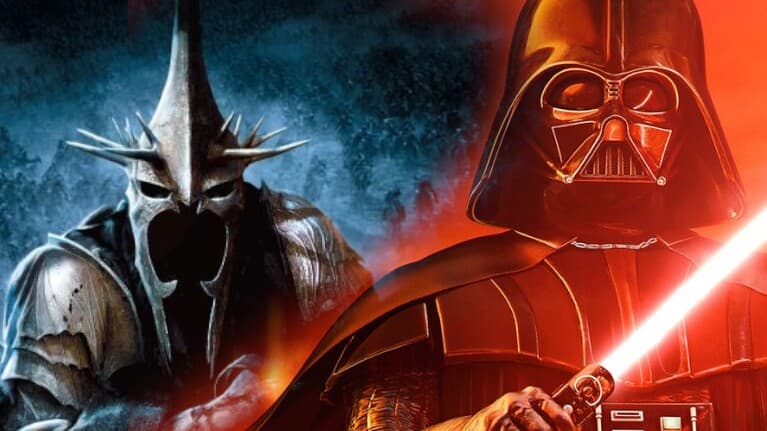
It doesn’t have to be like this. In fact, we already have a blueprint for how to do it right. It’s called Star Wars.
I remember when Lord of the Rings games actually swung for the fences
Let me date myself for a second: the first time I realised Middle-earth could work as a video game, I was sat in front of a beige PC tower wrestling with The Lord of the Rings: The Fellowship of the Ring from Universal Interactive. The one based on the books, not the films. It was clunky as hell, the combat was stiff, and the puzzles were hardly Larian-level design. But as a kid who just wanted to walk through the Shire with Frodo, it felt like a miracle.
Then EA hit its stride. The Return of the King on PC, released in 2003, was the moment it all snapped together for me. Co-op, sprawling levels from the films, that deliciously over-the-top hack-and-slash energy. It wasn’t “faithful” in the academic sense, but it didn’t matter. It understood that swinging a sword in Minas Tirith needed to feel massive, crunchy, and theatrical.
We got The Battle for Middle-earth RTS games – still some of the best fantasy strategy ever made – and eventually The Lord of the Rings Online, which quietly built a huge, detailed version of Tolkien’s world and just… stayed alive. For a while, it felt like Middle-earth on PC had momentum. Different genres, different takes, but all trying to actually do something with the license.
Fast-forward, and what are the modern “high points” we’re meant to cling to?
Shadow of Mordor in 2014 and Shadow of War in 2017 gave us the Nemesis system – the last time a Middle-earth game genuinely pushed the medium. And of course, that innovation immediately got fenced off by patents and monetised into oblivion with aggressive microtransactions in Shadow of War’s original release. Great. Our one big contribution to systemic design in the AAA space became a cautionary tale in corporate greed instead of a foundation to build on.
Since then? Noise. A survivalesque co-op title here, a cosy life sim there, the disaster that was The Lord of the Rings: Gollum proving that slapping Tolkien on the box doesn’t magically produce quality. None of those are inherently bad ideas – Middle-earth absolutely has room for chill, small-scale stories – but they’re side dishes. We’re missing the main course.
What makes it worse is knowing that ambitious ideas were floating around. There have been rumours for years that Pandemic – the studio behind the original Star Wars: Battlefront – once considered a similar, class-based multiplayer game set in Middle-earth. Imagine Pelennor Fields or Helm’s Deep with that tech and design philosophy. Instead, that potential lives on in forum posts and “what if” threads, not in my Steam library.
Meanwhile, Star Wars quietly figured out how to treat games like part of the canon
Here’s the thing that Middle-earth’s current stewards – Embracer Group, Warner Bros., and whoever else is juggling pieces of the rights – don’t seem to get: Star Wars already fought this war. It had its own dark age of rushed tie-ins, forgettable one-offs, and missed opportunities. But then, over time, the strategy shifted.
Take Star Wars: The Old Republic. It launched on December 20, 2011. On paper, it should have been another “WoW-killer” casualty. Instead of yanking the plug the minute the hype dipped, EA and BioWare committed. Content updates, expansions, story arcs spanning years. When it hit its 10-year anniversary in November 2021, they celebrated by remastering those gorgeous CGI cinematics in 4K and pushing them back into the spotlight. They treated a decade-old MMO like something worth honouring, not a relic to be quietly buried.
In 2023, BioWare officially handed SWTOR development to another studio instead of killing it, basically saying, “We’re moving on, but the galaxy isn’t.” That’s stewardship. That’s long-term thinking.
And SWTOR is just one prong. The modern Star Wars gamescape covers:
- Story-driven single-player bangers like Jedi: Fallen Order and Jedi: Survivor
- Big-budget multiplayer sandboxes like the rebooted Battlefront series (rocky, sure, but huge in scope)
- Strategy titles, space sims, smaller projects, even VR experiments
Not all of them are good. Several are deeply flawed. But there’s a plan there. A consistent drumbeat of releases. A willingness to revisit the past, buff up the nostalgia, and keep the lights on in old worlds while building new ones.
The German GameStar columnist who kicked off this whole conversation warned, “HdR darf nicht das neue Star Wars werden” – “Lord of the Rings must not become the new Star Wars.” I get the fear: nobody wants Middle-earth milked into oblivion with annual shovelware. But in the same piece, they also hit the real point: “HdR muss endlich verstehen, was Star Wars schon längst gelernt hat.” Lord of the Rings has to finally understand what Star Wars figured out years ago.
What Star Wars learned is that games aren’t just merch. They’re pillars. They hold up the whole franchise. And right now, Middle-earth on PC is missing that pillar almost entirely.
The MMO and multiplayer-shaped hole in Middle-earth
Yes, I know The Lord of the Rings Online still exists. It launched in 2007 and it’s quietly kept chugging along for nearly two decades. The devs have been adding content, revamping systems, and keeping a community alive long after most people assumed it would be gone.
But compare how it’s treated versus SWTOR. When Star Wars hit that 10-year mark, we got 4K-remastered cinematics pushed to the front of YouTube, fresh marketing beats, and a sense that, hey, this thing still matters. LOTRO, by contrast, feels like an old inn off the main road that you have to already know about to even find. If you do, there’s a warm fire and friendly regulars, but nobody’s repainting the sign or fixing the roof.
Where is Middle-earth’s big “we’re still here, and we’re worth rediscovering” moment? Where are the modern PC showcases, the anniversary events that actually break out of the existing fan bubble? Where’s the bold message that if you invest in this world, it will still be worth logging into five years from now?
And outside the MMO space, the gap is honestly embarrassing. There is no equivalent to Battlefront’s large-scale battle fantasy. No dedicated, modern co-op game that lets a squad of friends tackle Minas Tirith or the siege of Gondolin with tight, replayable missions. No ambitious, big-budget PC ARPG that says, “You know Path of Exile and Diablo? Now imagine that polish and depth in Middle-earth.”
What we do get, more often than not, are smaller, safer projects that feel designed to nibble at the license instead of bite into it. Again: nothing wrong with a cosy Hobbit game or a survival crafting side-story in Moria. But when those are the only things on the board, it’s hard not to feel like the people holding the Tolkien rights are afraid of committing.
Meanwhile, I can open a launcher and, within the Star Wars ecosystem alone, hop between an MMO with a decade of story, a slick single-player action game, some janky-but-fun space combat, and at least one big multiplayer shooter. It’s not that Star Wars is perfect – it absolutely isn’t – but as a PC player, it gives me options. Middle-earth gives me relics.
The tech excuse is dead – the will just isn’t there
Every time someone handwaves the state of Lord of the Rings games by muttering about “how hard that world is to adapt,” I think about modern open-world and RPG tech and want to scream.

We live in a world where games like Elden Ring, Baldur’s Gate 3, and the tech showcase that is Crimson Desert exist. Massive, reactive worlds. Complex combat and systemic storytelling. Dialogue choices, moral consequences, physics-based chaos. Whatever technical limitations stopped Middle-earth from getting a full-fat, modern, PC-first RPG or action-adventure a decade ago? They’re gone.
The problem isn’t that Middle-earth is too sacred or too complicated to adapt. The problem is that nobody with the license has decided, “We’re going to make this our flagship for the next decade, and we’re going to fund it, support it, and treat it like the cultural event it should be.”
That’s what Star Wars has in SWTOR. It’s what it tried (clumsily) with the Battlefront relaunch. It’s what Disney and EA have with the Jedi series now: projects that are clearly meant to anchor the franchise in games, not just cash in on it.
What Embracer and company need to steal from Star Wars – right now
If Middle-earth is going to stop sleepwalking on PC and actually compete with Star Wars again, the people holding the rights need to stop thinking in terms of one-off “wins” and start thinking like custodians. That means copying, shamelessly, the things Star Wars has done right.
Here’s the blueprint I’d love to see, as someone who’s been riding this rollercoaster since Fellowship of the Ring on PC:
- Pick a flagship and commit a decade to it. Whether it’s a new MMO, a co-op action platform, or a sprawling single-player RPG with online hooks, Middle-earth needs a crown jewel. Not a middling AA experiment – a properly funded, PC-first title that can grow. Announce up front that this isn’t a one-and-done release. Plan expansions, live events, and technical upgrades from the start.
- Treat LOTRO like SWTOR, not an afterthought. If you’re going to keep The Lord of the Rings Online running, actually celebrate it. Give it a proper modern client upgrade, push 4K remasters of its best story moments, and run anniversary campaigns that make people who bounced off at level 30 want to reinstall. If you’re not going to support it to that degree, then be honest and build its successor.
- Lean into nostalgia with remasters that matter. Battle for Middle-earth, Return of the King, even the book-based Fellowship game – these are part of PC gaming history. Star Wars got 4K cinematics for SWTOR; Middle-earth should be getting cleaned-up, properly licensed re-releases of those classics. Not lazy upscales, but respectful, stable remasters that put them back in front of a new audience.
- Stop wasting the “big battle” fantasy. Get that long-rumoured Battlefront-style idea out of the grave. Design a class-based, large-scale multiplayer game around Middle-earth’s wars that respects both the books and the films. Helm’s Deep, Pelennor Fields, the Last Alliance – these should be staples of PC multiplayer, not just cutscenes we rewatch on YouTube.
- Allow different tones, but anchor them around a core. Cozy Shire life-sims? Great. Survival in Moria? Sure. Smaller narrative adventures about Rangers in the North? Absolutely. But they should orbit something substantial – an MMO, a live RPG, or a Battlefront-scale experience that keeps people rooted in the world long-term.
- Be transparent about the roadmap. Star Wars players know, roughly, what’s coming next. What’s in the works, what era it’s set in, which platforms it’s targeting. Middle-earth fans get rumours, scattered reveals, and the occasional “oh, that’s a thing I guess” trailer. If you want us to invest emotionally and financially, show us the long game.
None of this is impossible. It’s not even radical. It just requires something that has been tragically absent from Lord of the Rings on PC for years: confidence. The willingness to say, “Yes, this world is big enough, beloved enough, and flexible enough to carry a proper PC franchise – and we’re going to treat it with the respect it deserves.”
FinalBoss // Gear
Level up your setup
01Top-rated gaming headsetson Amazon→02High-refresh gaming monitorson Amazon→03Gaming chairson Amazon→04Discounted game keyson Kinguin→Affiliate links · As an Amazon Associate, FinalBoss earns from qualifying purchases.
Want to Level Up Your Gaming?
Get access to exclusive strategies, hidden tips, and pro-level insights that we don't share publicly.
Ultimate Gaming Strategy Guide + Weekly Pro Tips