
Table of Contents (9)
My Setup, My History with Budokai Tenkaichi, and Why This Port Mattered
I went into Dragon Ball Sparking Zero on Switch 2 with a weird mix of hype and paranoia. Hype, because I basically grew up melting my PS2 with Budokai Tenkaichi 2 and 3 couch sessions. Paranoia, because I’ve seen too many “miracle” Switch ports turn into blurry, chuggy compromises that feel like ghost versions of the real game.
For context: I’d already played Sparking Zero on PC for a couple of weeks when it launched. I knew what the game felt like running at a clean 60 FPS, with all the particles and explosions cranked up. So when I got the Switch 2 version, I wasn’t just checking if it ran; I was checking if it still felt like the same game, not a diet version for people who don’t have a PS5 or a high-end rig.
I played mostly docked on a 55” 4K TV with the Switch 2 set to output 1080p, plus a good chunk of portable time on the couch and in bed. Over roughly 20 hours, I knocked out a big slice of the Episode of Combat story mode, messed around with the “what if” routes (including the much-talked-about Gohan one), did a lot of local versus, some motion-control experiments, and a few evenings of online play to see how the port held up under pressure.
The short version? This is absolutely the full-fat Sparking Zero experience… but capped at 30 FPS, with a few annoying quirks that make it less appealing if you have another platform available and care about competitiveness. If the Switch 2 is your only console, though, it’s a surprisingly solid way to go Super Saiyan on the go.
First Hours on Switch 2: Same Wild Spectacle, Smaller Box
My first 30 minutes were exactly what I wanted: Goku vs Vegeta on a fully destructible wasteland, rocks flying everywhere, ki blasts carving trenches into the ground. The thing that hit me right away was how familiar it all felt compared to the PC version. The Stage intros, the Episode of Combat cutscenes, the giant roster where you scroll forever – it’s all here. Switch 2 isn’t getting some “lite” edition. You’ve got the full 180+ playable characters, crazy transformations mid-fight, and both main modes: Episode of Combat and Custom Battles.
Episode of Combat is still the star if you’re any kind of Dragon Ball fan. It lets you replay the iconic fights from Z, Super, movies, and a few newer anime arcs, but the real surprise is how many alternate branches and “what if” scenarios you can fall into. Early on, I took a path where Gohan stops holding back way earlier than in the original story, and the fight pattern changes completely. Even after seeing this stuff on PC, replaying it handheld in bed on Switch 2 still scratched that “just one more episode” itch.
That fan-service energy is everywhere. Fights open with short voiced interactions, transformations carry over between rounds in some episodes, and the game does a good job of letting you inhabit the big bad guys too: Freeza, Cell, Goku Black, even some of the newer movie villains if you’ve grabbed the DLC. If you’re buying Sparking Zero mainly to relive the anime, the Switch 2 port doesn’t shortchange you on content at all.
Combat: Still the Closest Thing to Playing the Anime
Mechanically, Sparking Zero on Switch 2 plays like the Sparking/Budokai Tenkaichi revival it’s supposed to be. You’re flying freely around big 3D arenas, juggling between melee strings, vanish dodges, teleports, and explosive supers that swallow half the screen. It’s fast, but not incomprehensible once you’ve internalized the rhythm.
The big systems from the other versions are intact: Dragon Rush clashes where you both commit to a direction like old-school Budokai, dynamic counters that reward timing over memorizing long combos, and mid-match transformations that actually change the flow of a fight rather than just bumping numbers. Going from base Goku to Super Saiyan Blue mid-combo on Switch 2 feels just as satisfying as it does on a higher-end machine – the animation, the aura flare, the sound design, it’s all there.
On the control side, I stuck mostly with the Switch 2 Pro-style pad, and it felt fine. The inputs are simple enough – this isn’t Guilty Gear – but there’s enough nuance with cancels, spacing, and resource management that fights between experienced players become more about reads than mashing. I played a long mirror-match session with a friend (both of us on Vegeta) where we were basically trying to out-vanish and out-bait each other’s Dragon Rush. The 30 FPS cap did slightly affect how easily I could react compared to PC, but in casual play it didn’t ruin anything.
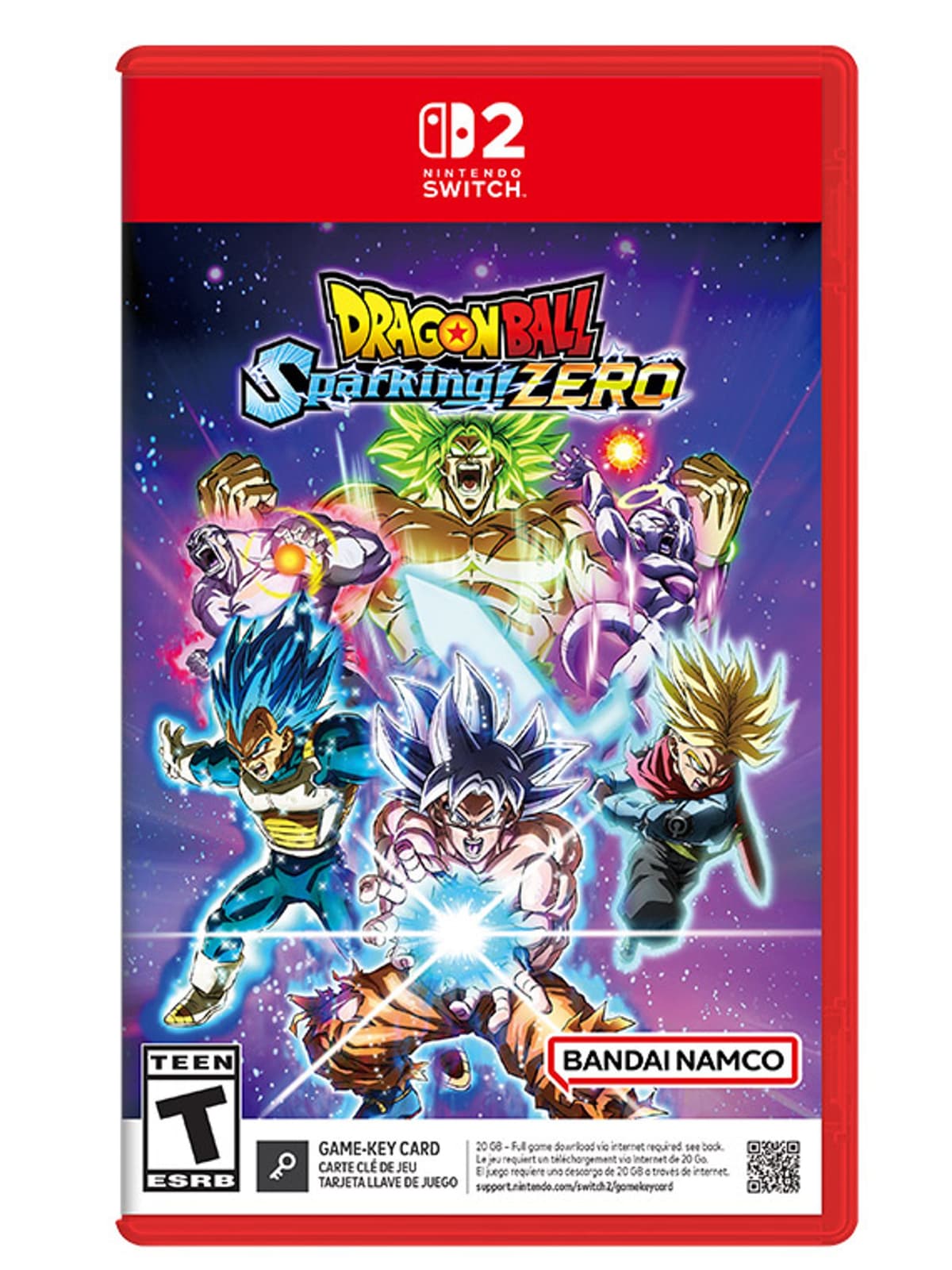
Then there’s motion controls. Yes, you can throw Kamehameha-style beams by actually miming the motion with the Joy-Con-style controllers, and yes, the first time you do it, it’s impossible not to grin like an idiot. But after that? Precision goes out the window. Inputs occasionally don’t register, or the game misreads your tilt when you’re trying to adjust in mid-air. It’s a fun party trick for one night, not a serious way to play. You’ll switch back to normal controls quickly if you actually care about winning.
Balance, Roster Bloat, and the DLC Situation
The flip side of having such a massive roster is that balancing it is basically impossible, and that hasn’t magically improved on Switch 2. The same issues from other platforms are here: certain late-stage transformations and “final form” versions of characters dominate most serious matches. If you let players pick anything, lobbies gravitate toward the same handful of top-tier monsters.
In casual couch play with friends who just want to see cool supers, that imbalance barely matters. One of my favorite evenings with the Switch 2 version was handing the console to someone who hadn’t touched a Dragon Ball game since Tenkaichi 3 and watching them pick random forms of Goku and Broly just to see who looked more ridiculous. It was chaotic, unfair… and hilarious.
But the more I tried to take things seriously online – actually learning a smaller pool of characters, labbing options, trying to whiff-punish instead of just trading beams – the more obvious it became that the tier list is lopsided. On PC or PS5 where you have 60 FPS and likely a healthier competitive community, you can almost shrug and say, “That’s arena fighters.” On Switch 2, where you’re already playing at 30 FPS with no crossplay (outside Switch 1 to Switch 2 compatibility), those balance issues sting a bit more. You’re in a smaller pond, with fewer strong players, in a game where a few characters are simply better picks.
Then there’s the DLC. On Switch 2, you get the same base content as PS5/Xbox/PC, but there’s no “complete” bundle that neatly includes all DLC packs at launch. Extra characters from the latest movies and Dragon Ball Daima are locked behind paid packs that mostly add fighters and not much else – no new stages, no meaningful costume variety. After a while, it starts to feel like a glorified character vending machine. If you’re a hardcore fan of a specific new form or villain, you’ll probably shrug and pay; everyone else will just see a fragmented roster and wish a few stages and alt outfits were part of the deal.
Docked vs Portable: Where the Switch 2 Port Shines (and Stumbles)
The technical question every Switch 2 owner is quietly asking: how bad is the downgrade compared to PS5 or PC? The answer is: noticeable, but honestly not disastrous, especially in docked mode.
Docked, the game runs at 1080p with a firm 30 FPS cap. The key word here is “firm”: during fights, I never saw it buckle. Even with big ultimates, giant beams colliding, and a ton of debris exploding across the screen, the frame rate stayed stable. Coming from 60 FPS on PC, I absolutely felt the drop – the game is less crisp and responsive – but it’s still playable, and more importantly, it still looks like Dragon Ball. The art style, the thick outlines, the auras, and the explosive impact frames all survive the trip.
Portable is where the compromises show harder. Resolution dips, there’s more visible aliasing around character outlines and environmental geometry, and fine details like hair strands or far-off landscape features blur together. The upside is that the smaller screen hides some of this, so mid-fight it doesn’t bother as much as you’d think. I played a ton of Episode of Combat chapters in bed and didn’t feel like I was wrestling the hardware; it still felt “clean enough” to enjoy the spectacle.
The real technical sore spot isn’t the matches – it’s the menus. Navigating the Episode of Combat world map on Switch 2 is noticeably sluggish. Input lag in the UI, little hitches when the game loads a new path or route, and a general sense that the menus are pushing against the hardware more than the actual fights. It’s not game-breaking, but when you’re bouncing between routes or just trying to quickly re-run a mission, it gets annoying faster than it should.
Load times sit in the “acceptable but not amazing” zone. You’re not waiting forever, but you’re definitely not getting next-gen snappiness either. The good news is that once a fight starts, the Switch 2 port behaves surprisingly well. If you’re okay with 30 FPS and a bit of visual softness in handheld mode, the actual in-battle experience is much better than I feared going in.
Online, Local Play, and the Save-Transfer Oddities
Feature-wise, Switch 2 gets the full modern package: online matches, access to community-created battles, and local multiplayer. There’s also some platform-specific stuff that’s actually pretty handy if you’re already in the Nintendo ecosystem.
Let’s start with the good: local play is excellent. Being able to link multiple Switch 2 consoles together (or mix Switch 1 and Switch 2) and run local matches without fighting over one TV is exactly the kind of low-key killer feature that makes Nintendo hardware shine. I had one evening where three of us loaded our own profiles, picked our favorites, and rotated winner-stays-on with barely any hassle. In that context, the 30 FPS limit mattered less than the simple joy of having Sparking Zero “everywhere” in the room.
The save transfer from Switch 1 to Switch 2 is also a thoughtful touch. If you started on the original Switch, you can bring over your progression and unlocked characters, so you’re not grinding everything again. The catch: your replays and custom battle setups do not make the journey. If you’re the kind of player who spends an hour crafting elaborate custom scenarios or who likes to rewatch your clutch wins, that limitation stings more than it should.
Online is where the port feels the most compromised, and not just because of the 30 FPS cap. There’s no broad crossplay: you’re basically limited to the Nintendo player pool (with Switch 1 and 2 sharing a slice). That means fewer high-level players, longer matchmaking at off-hours, and a general sense that the competitive ecosystem is going to live somewhere else – probably PC and PS5. I got mostly playable matches, but also enough spotty connections to remind me this isn’t where the sweaty Sparking Zero community is likely to gather.
Who Dragon Ball Sparking Zero on Switch 2 Is Actually For
After a couple of weeks bouncing between platforms, I kept coming back to one simple question: if someone asked me where to play Sparking Zero, when would I actually recommend the Switch 2 version?

If the Switch 2 is your only console, and you’re mostly in it for the fan-service, story episodes, and chaotic local matches with friends, this port is a very easy recommendation. You’re getting all the content from the PS5/Xbox/PC versions, the full roster, the destructible arenas, the what-if scenarios, and the over-the-top visuals – just with a 30 FPS ceiling and slightly blurrier edges. In return, you gain the flexibility to grind Episode of Combat on the bus or set up local matches without lugging around a full home console.
If you’re a competitive-minded player with access to a more powerful platform, though, I’d hesitate. The combination of 30 FPS, a smaller online community, some notable balance issues, and no broad crossplay makes the Switch 2 version feel like the “fun side version,” not the main stage. You can still enjoy labbing characters and playing seriously with local friends, but if your dream is ranked-climbing or tournament play, this probably shouldn’t be your primary copy.
There’s also the DLC angle. On any platform, the way Sparking Zero handles add-on content is a bit underwhelming – mostly character packs with very little in the way of new arenas or costumes. On Switch 2, where players may already feel like they’re getting the technically weaker version, the nickel-and-diming stings even more. It doesn’t ruin the game, but it definitely makes the ecosystem feel more fragmented than it needed to be.
Bottom Line and Score
By the time I wrapped my time with Dragon Ball Sparking Zero on Switch 2, my feelings had settled into a weird but honest place: this is both better and worse than I expected.
Better, because the actual in-fight experience is stable, good-looking, and absolutely captures the anime chaos, even at 30 FPS. The entire content package is intact, from the huge roster and destructible arenas to the fun “what if” story routes. Local play and hybrid portability genuinely add value you can’t get on a fixed box.
Worse, because some of the rough spots – the sluggish menus, the lack of a proper DLC bundle, the lopsided roster balance, the absence of broad crossplay – feel like problems that will matter more over time, not less. If Sparking Zero ends up being your forever fighting game, you’d probably rather be on a platform where the frame rate is higher, the player base is deeper, and the competitive scene has room to grow.
As a Dragon Ball fan who wants the full spectacle on a portable system, though? I can’t deny how often I found myself saying, “Okay, just one more episode,” at 2 AM with the Switch 2 an inch from my face. For a lot of Nintendo-only players, that’s going to be more than enough.
TL;DR
- Content parity: All modes, 180+ characters, destructible arenas, and story content from PS5/Xbox/PC are present on Switch 2.
- Performance: 1080p docked, lower resolution portable, locked at 30 FPS but very stable in combat; menus (especially Episode of Combat world map) feel sluggish.
- Visuals: Faithful anime look with big ki effects and cinematic supers; some aliasing and softness, more noticeable in handheld.
- Gameplay: Same fast, accessible-yet-deep arena combat with Dragon Rush, dynamic counters, and mid-fight transformations intact.
- Balance: Huge roster but lopsided; advanced forms and top-tier characters dominate serious matches.
- DLC: Extra characters from recent movies/Daima, but mostly just fighters – few stages or costumes, no all-in-one bundle on Switch 2.
- Features: Local multiplayer across multiple consoles is great; motion controls are a fun gimmick but too imprecise for real play.
- Online: No broad crossplay (only within Switch 1 & 2); smaller, less competitive player pool than other platforms.
- Who it’s for: Excellent choice if Switch 2 is your main console and you love Dragon Ball; not ideal as a primary version for competitive players with access to PS5/PC.
- Overall: A strong, genuinely enjoyable port that keeps the heart of Sparking Zero intact, but with technical and ecosystem limits you should know before you buy.
FinalBoss // Gear
Level up your setup
01Best-selling Switch 2 gameson Amazon→02Switch 2 accessorieson Amazon→038BitDo controllerson Amazon→04Discounted game keyson Kinguin→Affiliate links · As an Amazon Associate, FinalBoss earns from qualifying purchases.
Want to Level Up Your Gaming?
Get access to exclusive strategies, hidden tips, and pro-level insights that we don't share publicly.
Ultimate Reviews Strategy Guide + Weekly Pro Tips