
Table of Contents (9)
The 99¢ Mars RPG that hijacked my Steam Deck
My breaking point with “serious” gaming didn’t come from some broken AAA launch. It came one night on the couch, Steam Deck in hand, watching my library stare back at me like a Netflix queue from hell. Baldur’s Gate 3, Elden Ring, a dozen 60+ hour monsters all begging for a run I knew I didn’t have the time or mental energy for.
Instead, I did what any responsible adult gamer does during a sale: I scrolled straight to the “Under £1” section and started trawling through the digital bargain bin. That’s where I ran into Mars: War Logs again – a name I vaguely remembered from 2013 as “that janky French RPG on Mars” – sitting there for 99¢ in the Spring Sale.
At that price, my expectations were basically: “runs, doesn’t crash, vaguely RPG-shaped.” What I got was way more interesting: a scrappy, grimy AA action RPG with clumsy-but-fun combat, a properly grimy Mars setting, and actual meaningful mid-game choices… all in a package that’s over in about 10-15 hours and runs beautifully on Steam Deck.
Is it dated? Absolutely. Is the writing uneven? Oh yeah. Are some systems half-baked? Without question. But after finishing a run on my Deck, here’s the thing I keep coming back to: I felt like I got more honest value out of this 99¢ AA relic than from a lot of full-price “cinematic” RPGs I’ve dragged myself through recently.
Spiders, Eurojank, and why I cut this game more slack than I should
I’ve got history with Spiders. I put serious hours into The Technomancer and GreedFall, and I’ve got a soft spot for what they try to do: mid-budget RPGs that punch above their weight with worldbuilding and choice, even if their budgets scream “AA” from orbit.
Mars: War Logs is basically ground zero for that formula. Released back in 2013, it runs on their old Silk engine and looks like it crawled out of the Mass Effect 2 era: stiff animations, slightly plasticky faces, and environments that lean heavily on browns, reds, and “the art team had three shaders and a dream.”
But beneath that bargain-store exterior, there’s something I really respect: intent. This isn’t some half-hearted knockoff. It’s a fully-formed world: post-cataclysm Mars, water as currency, corporate wars instead of nations, religious weirdos, prison camps, and a low-tech, high-desperation vibe that feels closer to old-school pulp sci-fi than sleek modern space operas.
Spiders has always been “Eurojank Bioware” in my head – wonky execution, smart ambition. Mars: War Logs is that philosophy stripped down to the studs. And if you’re going to judge it, you have to judge it on those terms: a AA experiment from a studio still figuring its identity, not a budget Mass Effect clone that “fails” to be AAA.
Why Mars: War Logs rules on Steam Deck specifically
This is the part that really matters to me now: how it feels on the Deck. I game on PC, consoles, all that – but the Deck has quietly become the place where I actually finish games. And Mars: War Logs is almost the perfect AA Deck game.
Performance-wise, it’s a dream. It’s Steam Deck Verified, and for once that badge isn’t lying. With stock Proton and factory settings, I was bouncing between 30–60 FPS without a single tweak. No Proton experiments, no launch options voodoo, no “turn shadows to something that looks like 2004.” It just runs.
Because it’s a tight 10–15 hour campaign, it slots into real life in a way the current open-world RPG arms race simply doesn’t. I’d knock out a quest hub on the train, slam through a combat encounter on the couch, make a big story choice in bed and actually see the consequences two sessions later instead of 40 hours down the line.
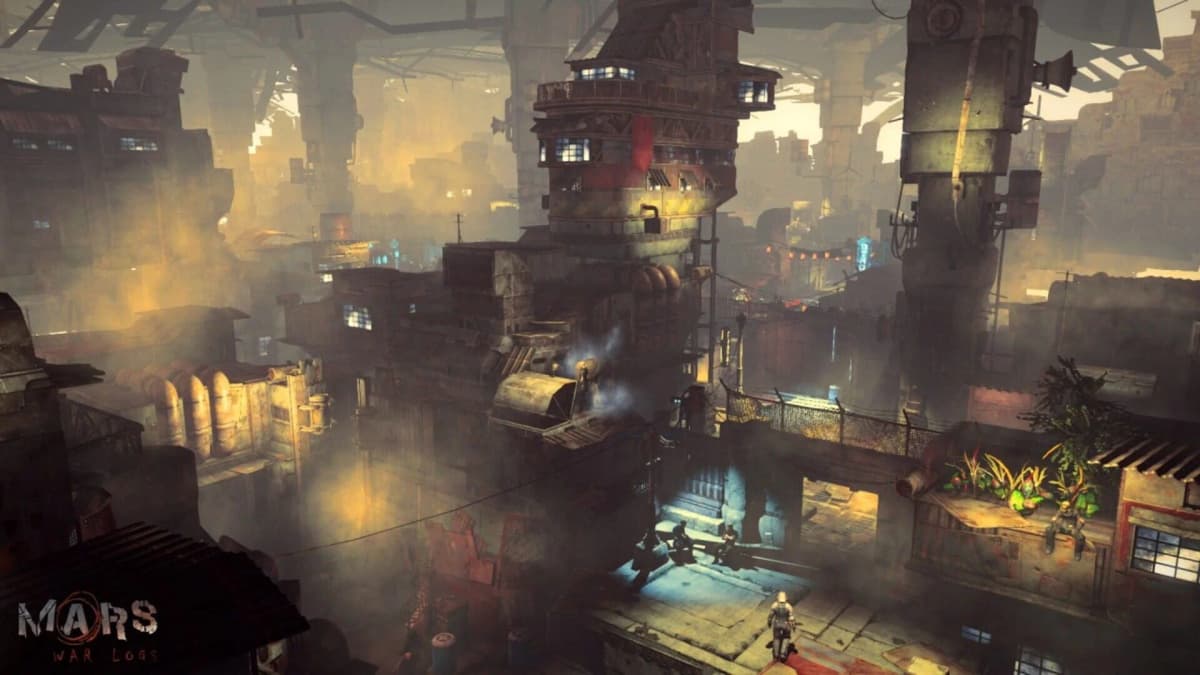
The jank actually feels better on a handheld. Sitting at a desk, you notice every stiff animation and slightly off lip sync. On a 7-inch screen with headphones on, it just reads as “old but charming.” It’s like the difference between watching a trashy B-movie on a massive OLED versus catching it on late-night TV in your bedroom. The smaller, more intimate setup is kinder to flaws.
And there’s something psychologically nice about knowing, from the jump, that this is a short, self-contained experience. I wasn’t committing to another lifestyle game. I was committing to a weird little Mars story I could bulldoze through in a week of casual Deck sessions. That matters when you’ve got a backlog taller than Olympus Mons.
Combat: clumsy, scrappy, and unexpectedly satisfying
Let’s not sugarcoat this: if your baseline for third-person combat is Devil May Cry or modern God of War, Mars: War Logs is going to feel like someone welded together a combat system out of spare parts they found in a bin behind the studio.
But here’s the twist: once I stopped trying to play it like some fluid character-action game and started treating it like a janky prison yard brawl, it clicked.
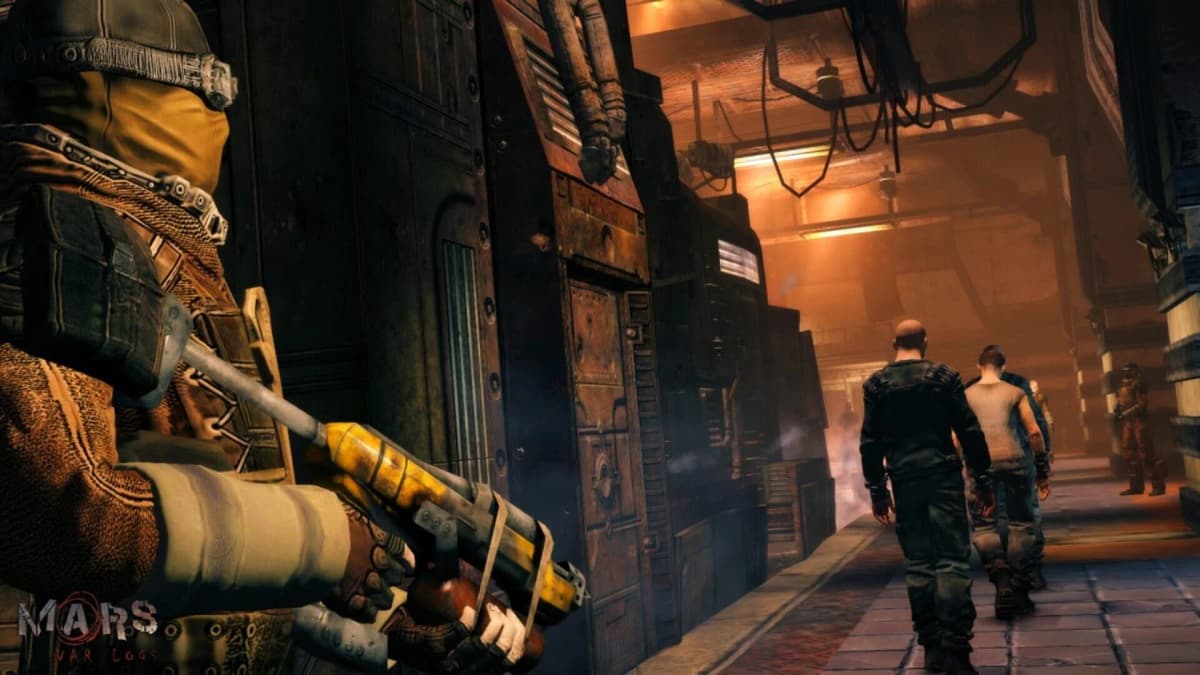
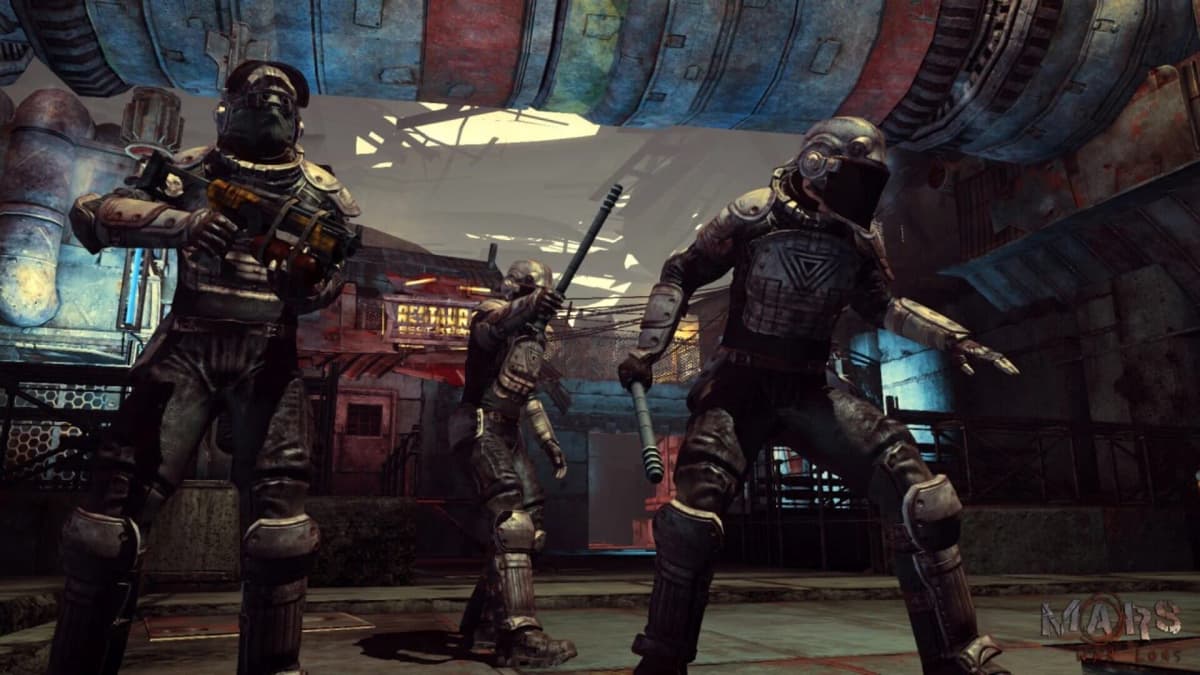
The basics: you’re mostly dealing with melee combat – improvised clubs, pipes, and blades that actually feel weighty when they connect. There’s a crude nailgun with limited ammo that pushes you to fight up close instead of cheesing everything from range. You’ve got grenades and traps for chaos and crowd control. Then there’s Technomancy, the game’s electricity-based “magic,” which is honestly more style than substance until you really invest in it.
The move that sold me is embarrassingly simple: throwing sand in a guy’s face. You literally blind enemies by flinging sand, then pile in with heavy melee while they stumble. It’s crude, dirty, and feels exactly right in a world where water is currency and everyone’s wearing scrap metal instead of armor. That one move crystallises why I ended up liking this combat: it’s not graceful, it’s desperate.
Enemies hit hard, especially early on. You’ll get deleted in a couple of swings if you play like a hero. The game quietly pushes you to figure out two things:
Enemies hit hard, especially early on. You’ll get deleted in a couple of swings if you play like a hero. The game quietly pushes you to figure out two things:
🎮 Get This Game at the Best Price
Compare prices instantly and save up to 80% on Steam keys with Kinguin — trusted by 15+ million gamers worldwide.
*Affiliate link — supports our independent coverage at no extra cost to you
- Armor and gear upgrades matter way more than you think.
- Positioning and dirty tricks beat pure skill spam every time.
Once I accepted that I wasn’t some space knight but a pissed-off inmate with a pipe and a handful of gadgets, the combat went from “ugh, this sucks” to “okay, this is rough but kind of fun.” It’s not deep, but it is engaging in that AA way where every fight feels a bit like it might go horribly wrong if you zone out.
Stealth, to be blunt, is basically a joke. The tree might as well be labelled “Do Not Respec Here.” And Technomancy is divisive as hell – early on it feels weak and fiddly, later it’s more viable, but it never becomes the flashy space wizard toolkit you might hope for. This is a melee-first game with some spice on top, not a power fantasy.
The real surprise: a short RPG that actually respects your choices
What really pulled me through Mars: War Logs wasn’t the combat. It was the moment I realised the game was actually committed to letting me break its story.
At first, it looks like a pretty straightforward, linear AA RPG: three main “chapters,” a fairly focused critical path, side quests that mostly sit close to hub areas. You’re not wandering across an entire planet, you’re grinding through districts, sewers, encampments – very contained spaces.
Then, in the mid-game, the faction choice hits. I won’t spoil details, but the gist is: you’re forced to pick a side in the power struggle, and that decision doesn’t just change some dialogue lines or give you a different colour ending slide. It reshapes a huge chunk of the back half of the game – different allies, different enemies, different bosses, and recontextualised events.
For a 10–15 hour AA game, that’s ambitious. This isn’t 100 hours of content with a binary flag. It’s a lean campaign where about half of what you do from that point on will differ on another run. On Steam Deck, it’s actually feasible to see both paths without dedicating your life to it.
The writing is… uneven. You can feel the budget constraints in the stiff dialogue, awkward turns of phrase, and voice acting that ranges from decent to “this sounds like a first take.” But there are moments – a companion loyalty conversation here, a morally ugly quest payoff there – where the game punches well above its weight and reminded me why I liked Spiders’ later work in the first place.
And compared to the illusion of choice in a lot of modern AAA RPGs – where your giant “world-shaping” decisions amount to different coloured particle effects and a few altered lines – it’s honestly refreshing seeing a cheap, dusty 2013 game actually change structure based on what you do.
Let’s talk flaws, because there are a lot
I’m not going to sit here and pretend Mars: War Logs is secretly some misunderstood masterpiece. You will absolutely bounce off this if you come in with the wrong expectations.
- It looks old. Not “PS2 disaster” old, but it’s firmly 360/PS3-era in its visuals. Animations are stiff, character faces land somewhere between “serviceable” and “wax museum,” and some environments blur together into a muddy sci-fi soup.
- The stealth tree is borderline useless. It feels bolted on for marketing bullet points rather than designed for the encounters they actually built.
- Technomancy is underwhelming for a long time. If you’re coming in hot because “I want to be a techno-mage,” temper those expectations. You’re still a guy with a pipe who occasionally zaps people.
- The writing is all over the place. Tone shifts, clunky lines, some quest logic that feels like it lost a few steps in translation – it’s absolutely not Bioware-level storytelling polish.
- Backtracking is real. You’ll see some of the same areas a few times with slight remixing. It’s not unbearable, but you will notice.
If any one of those is a hard dealbreaker for you, then yeah, this probably isn’t going to miraculously convert you. This is a game where you have to meet it halfway. It asks you to look past its very visible seams and see the structure underneath.
Why a janky 2013 AA RPG hit harder than most modern “epics”
Here’s where I plant my flag: I’d rather play something like Mars: War Logs on Steam Deck right now than another bloated, checkbox-driven open-world RPG that promises the universe and delivers 50 hours of map markers and side quests written by committee.
This game knows it’s not competing on production values. So it competes on focus. Three skill trees (even if one’s busted). A handful of combat tools that matter. One core setting: Mars as a dying, corporate-controlled rock where water is everything. A small cast of characters they actually try to do something with, instead of thirty companions who each get one notable quest and then fade into banter.
Because it’s short, every hour counts more. When you only have 10–15 hours, a mid-game faction split is a big swing. Giving you substantially different late-game experiences for each path is bold. And on Deck, where my sessions are often 30–60 minutes, that scale feels just right. I’m making real narrative progress every time I boot it up instead of slowly inching a progress bar forward in a live-service treadmill.
I’ve also spent an embarrassing amount of money over the years on big-budget RPGs that released in a half-broken state or buried anything interesting under ten layers of pointless busywork. In that context, dropping 99¢ on a fully offline, self-contained, choice-driven campaign that runs smoothly on handheld hardware feels almost rebellious.
So, should you drop 99¢ on Mars: War Logs?
For me, the answer is easy: yes, absolutely – but with some clear caveats. This isn’t a hidden AAA gem. It’s a rough, earnest AA RPG from 2013 that just happens to line up perfectly with what I want from my Steam Deck right now: focused scope, scrappy combat, meaningful choices, and a runtime that respects my life.
If any of this sounds appealing, here’s the practical breakdown:
- Buy it if: you have a soft spot for Eurojank, you liked GreedFall or The Technomancer, you want a short RPG for Deck that you can actually finish, and you’re okay with dated visuals and some jank in exchange for interesting ideas and real choices.
- Skip it if: you need ultra-polished combat, can’t stand awkward dialogue delivery, or expect modern production values from everything you play, no matter the price.
If you do jump in, a few quick tips to make your life easier:
- Lean into melee and armor early. Survive first, experiment later. Don’t sink into stealth; it’s not worth it.
- Use the sand-throw constantly. It’s not cheesy, it’s the intended flow. Blind, punish, reposition.
- Think of Technomancy as support, not your main identity. It gets better later, but you’re not a lightning god.
- Accept the jank. Once you stop expecting smooth AAA action and start embracing the scrappy bar-fight energy, it feels way better.
For less than the price of a vending machine drink, I got a weird, flawed, surprisingly engaging sci-fi RPG that ran flawlessly on my Deck and actually respected my time. If you’re tired of 100-hour checkbox epics and you’ve got room in your heart for some honest AA jank, Mars: War Logs is absolutely worth snagging in the sale and taking to bed with your Steam Deck for a few grimy Martian nights.
FinalBoss // Gear
Level up your setup
01Graphics cardson Amazon→02Gaming laptopson Amazon→03High-refresh gaming monitorson Amazon→04Discounted game keyson Kinguin→Affiliate links · As an Amazon Associate, FinalBoss earns from qualifying purchases.
Want to Level Up Your Gaming?
Get access to exclusive strategies, hidden tips, and pro-level insights that we don't share publicly.
Ultimate Gaming Strategy Guide + Weekly Pro Tips