
Table of Contents (9)
The uncomfortable truth: my heart says Dark Souls 2, my hands say Dark Souls 3
I’ve lost count of how many times I’ve said, out loud, “Dark Souls 2 is my favourite Souls game.” I mean it. I love that messy, ambitious weirdo with all my heart. But if you actually track my hours, my late-night “just one more run” sessions, and the game I keep reinstalling every few years, a different winner quietly emerges: Dark Souls 3.
That’s the bit that stings a little. On paper, Dark Souls 3 is the safe choice. It’s the refined greatest-hits album after the raw debut and the wild, inconsistent experimental record. It’s the one that plays nicest, that makes the most immediate sense, that sandpapers off the jank. And yet, ten years after its 2016 release, when I get the itch to return to Lordran/Drangleic/whatever-the-flame’s-doing-this-week, it’s Lothric I boot up.
This anniversary forced me to admit something I’ve resisted for a decade: Dark Souls 3 might not be the boldest Souls game, but it’s the one that actually respects my time the most. It’s the one that still feels sharp, responsive, and weirdly modern in a way most 2026 action RPGs only pretend to be. I’ll still die on the hill that Dark Souls 2 is more interesting, but after ten years of coming back to the cycle, DS3 is the one I actually live in.
Lothric shouldn’t work, but it absolutely does
Let’s be honest: if you describe Lothric on paper, it sounds like a step backward after Dark Souls 1’s intricate world. A mostly linear chain of zones, stitched together with the thinnest excuse of collapsing timelines and converging worlds. No “oh my god, this elevator connects to there” moment like the first time you link Firelink and Undead Parish. No Majula-style hub that casts a melancholic shadow across dozens of routes.
And yet, standing on the High Wall of Lothric for the first time in 2016, I remember having that same “this is bigger than I thought” gut punch. The castle spires fading into toxic skies. The dead wyverns. The sense of a place that’s not just decaying, but collapsing in on itself. FromSoftware was clearly drunk on its new high-fidelity tech after Bloodborne, and Dark Souls 3 is where that obsession with texture and detail fully fuses with their old-school level design brain.
Lothric works because every individual space is ridiculously considered. The Cathedral of the Deep isn’t just a big church zone; it’s a spiralling panic attack, full of buttress walkways, giant enemies wedged into cramped spaces, and vertical shortcuts that feel like you’re untying a knot. Farron Keep isn’t just “poison swamp #57”; it’s a drowning, directionless mire that forces you to navigate by landmarks and paranoia. The Grand Archives are basically a thesis statement on From’s love of verticality and loops: you go up, out, around, across roofs, and somehow back inside again, and the whole thing feels like a real, collapsed institution rather than a videogame level.
Is it as spatially perfect as Lordran? No. Does it pretend to be? Also no. That’s why I respect it. The end-of-the-world framing – worlds smashed together, time fraying – gives From the excuse to go full collage. It’s a museum of ruin, with every exhibit polished to a sick shine. Dark Souls 3 doesn’t try to reclaim Dark Souls 1’s crown; it weaponises nostalgia instead, and it does it with enough craft that I keep forgiving how blatant the fan service can be.
Combat that still embarrasses most 2026 action RPGs
Here’s where Dark Souls 3 silently crushes its own predecessors and a frightening number of modern pretenders: it just feels better to play.
I still love the deliberate, heavy rhythm of Dark Souls 1 and 2, but going back now, you can feel the dead frames between intent and execution. There’s a difference between “animation priority” and “this secretly has half a second of lag baked into it because we hadn’t nailed our engine yet.” Dark Souls 3 is the game where From finally figured out how to marry weight and responsiveness without drifting into pure character-action territory.
Rolls snap the instant you hit the button, but they still commit you. Weapon swings land with meat, but they’re not sludge. Even basic movement feels more precise, less floaty than Elden Ring later turned out to be at launch. I’ve put time into pretty much every Soulslike worth mentioning – the Niohs, the Lies of P, the “what if we did Dark Souls, but with X gimmick” brigade — and I keep circling back to DS3’s baseline: no stances, no posture bars, no elaborate gimmicks, just rock-solid footsies, stamina management, and weapon movesets that give you options without drowning you in cruft.
People love to call it “Soulsborne on fast-forward”, and that’s not entirely wrong. You can feel Bloodborne’s aggression bleeding in, especially in how enemies pressure you. But crucially, the game never forgets it’s still Dark Souls. You can’t parry your way out of everything, you can’t spam dodge like an anime protagonist, and if you over-extend, you’re dead. It’s quicker, but it’s not mindless. To this day, I can jump into a fresh DS3 run and instantly feel at home in a way I can’t with most modern ARPGs that think accessibility means input mush.
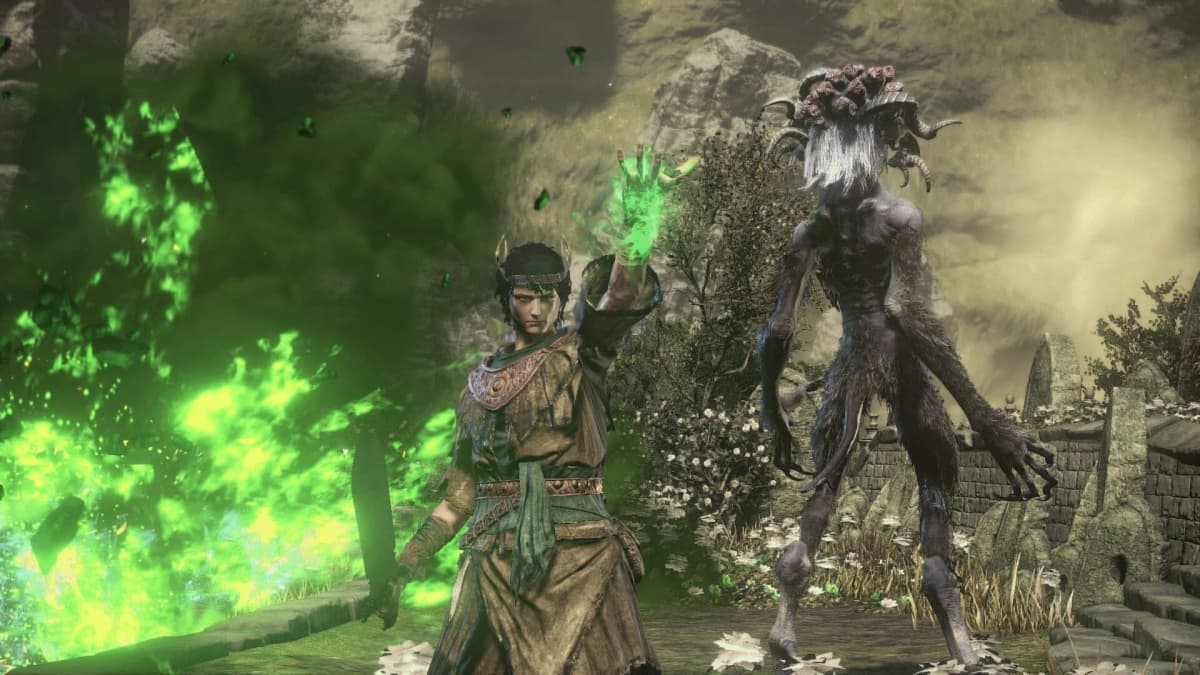
Boss design: Crystal Sage can get in the bin, but look at this lineup
If you want to understand why Dark Souls 3 sticks, you have to look at its bosses as a sequence, not just a list of cool names for tier-ranking YouTubers. Yes, the game has some all-timers individually — but what impresses me ten years on is how consistently it alternates between spectacle, mechanical pressure, and weird little palette cleansers.
The curve from Vordt to Abyss Watchers to Pontiff Sulyvahn is still one of the best “skill ramp” runs From has ever built. Vordt teaches you movement and staying close. Abyss Watchers introduces controlled chaos: reading multiple threats in a shared arena, tracking who’s on your side this second. Pontiff, meanwhile, is where the game calmly asks, “So, did you actually learn how to roll into attacks yet, or were you just winging it?”
Then you’ve got that other flavour of DS3 fight I’ve grown to love on replays: the emotionally loaded, slightly janky theatrical ones. The Twin Princes teleport spam is annoying, sure, but the whole “crippled mage brother dragging his knight sibling back from death mid-fight” thing lands harder each time. The Dancer of the Boreal Valley is all wrong-footing rhythm and visual dissonance: this slow, elegant horror that suddenly snaps into flurries that look almost off-beat. I still remember my first attempt, rolling too early over and over while my brain tried to map meaning onto movements that felt like they should’ve hit two beats later.
And then there’s the pure flexing: Nameless King diving through stormclouds, Sister Friede’s multi-phase ballet of “what if we just never gave you a breather,” Slave Knight Gael’s apocalyptic death march that somehow feels like both an ending and a tiny, bleak epilogue to the whole trilogy’s obsession with cycles. These aren’t just cool boss fights; they’re statements about what this series thinks a climax should look like.
Are there duds? Of course. Crystal Sage is awful. It’s like someone on the team lost a bet and had to ship a prototype. Old Demon King is just there. And a couple of the more gimmicky fights (Deacons of the Deep, I’m looking at you) feel like warm-up acts more than main events. But in 2026, after playing through Elden Ring and its DLC multiple times, I can say this with a straight face: Dark Souls 3’s boss roster is still one of the most consistently strong lineups From has ever put out.
Are there duds? Of course. Crystal Sage is awful. It’s like someone on the team lost a bet and had to ship a prototype. Old Demon King is just there. And a couple of the more gimmicky fights (Deacons of the Deep, I’m looking at you) feel like warm-up acts more than main events. But in 2026, after playing through Elden Ring and its DLC multiple times, I can say this with a straight face: Dark Souls 3’s boss roster is still one of the most consistently strong lineups From has ever put out.
🎮 Get This Game at the Best Price
Compare prices instantly and save up to 80% on Steam keys with Kinguin — trusted by 15+ million gamers worldwide.
*Affiliate link — supports our independent coverage at no extra cost to you
DLC highs, Dreg Heap lows, and why I still come back
The main game would’ve been enough, but DS3’s DLC is where my “this might actually be my favourite to play” feeling hardened into something permanent.
Ashes of Ariandel is underrated as hell. On first release, people whined that it was too short, too self-contained. But over time, that tightness has become a strength. The snowfields and rotting village are claustrophobic in a different way to anything in the base game, and the final boss encounter — that brutal, escalating rumble with Friede and Ariandel — is still one of the nastiest checks in the whole trilogy.
The Ringed City, meanwhile, is just From showboating. A dying world folding in on itself, angel-snipers and crumbling ruins, an end-of-all-things vibe that somehow doesn’t feel like a cheap “the sky is red now” reskin. The final stretch — that long walk across a landscape that feels like time has melted — has lodged in my memory right alongside walking into Anor Londo for the first time.
And then there’s the Dreg Heap, which… yeah. It sucks. It’s the one part of Dark Souls 3 where I feel the designers leaning too hard on hostility for its own sake. Visibility is a mess, enemy placement tips into “gotcha” spam, and the whole area feels like the piece of concept art someone in the office loved so much they refused to cut it even when it stopped serving the game. Every replay, this is the bit where I grit my teeth and push through on autopilot.
But here’s the thing: the fact I can name, in detail, the one chunk of Dark Souls 3 I actively dislike after ten years says a lot about the rest of it. With DS2, I have whole zones I mentally blank out and tolerate. With DS1, there are late-game areas I basically speedrun to spare my sanity. With DS3, there’s one real low — maybe two if you’re being harsh — and then a long, steady climb of “oh right, this part rules.” That’s why, when I’m deciding which Souls to replay, it’s the one that wins the coin toss more often than not.
Ten years on, it still humiliates most “Soulslikes”
We’re drowning in Soulslikes now. Some are great, some are fine, most are forgettable. I’ve played a depressing number of them hoping to chase that high from 2011-2016, when each new From game felt like it was rewriting the rules of action RPGs.
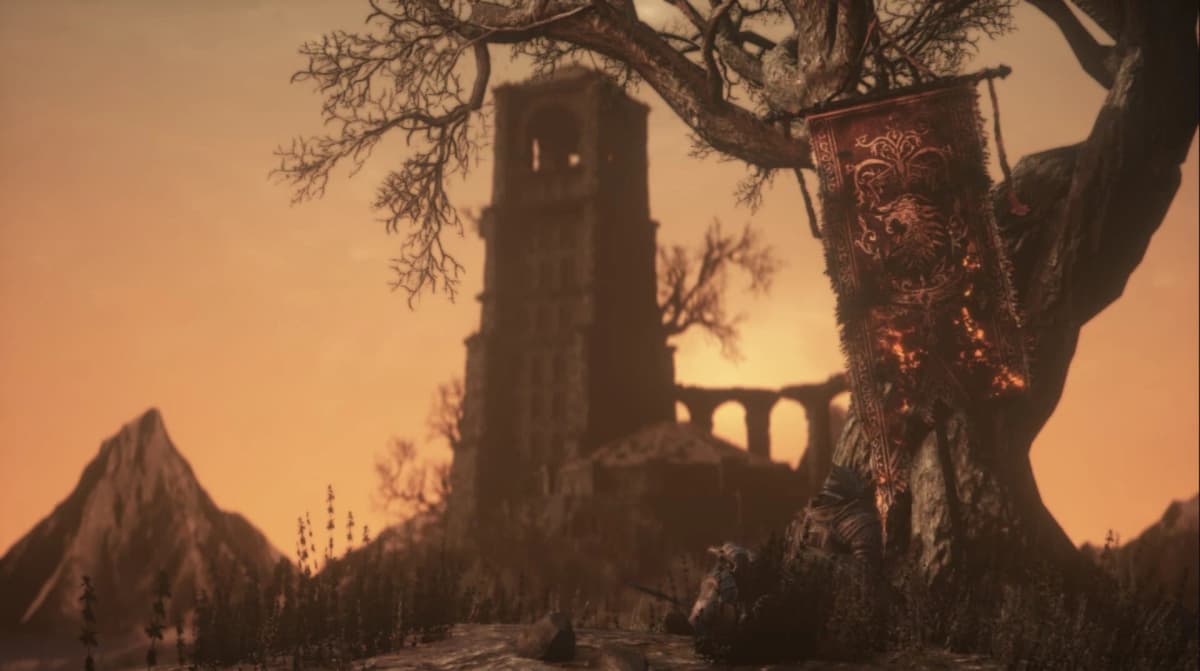
And that’s exactly why replaying Dark Souls 3 in 2026 hits so hard: it exposes how many of these imitators copy the punishment but not the precision. You get stamina bars and dodge rolls and bonfire-likes, but the encounter design isn’t tuned around them. Enemies are HP sponges. Animations don’t communicate intent. Level layouts feel like a team just scribbled “vertical” and “shortcut” on a whiteboard and hoped for the best.
Meanwhile, DS3 quietly sits in its 2016 shell, still feeling crisp, still rewarding mastery instead of build cheese, still letting basic swords and shields carry you through the entire game if you actually learn the timing. Other games give me more builds, more loot, more systems. Dark Souls 3 gives me something rarer: a moveset I can trust.
The remaster rumours and the reality check
Of course, because this is the games industry, the 10th anniversary hasn’t just sparked retrospectives; it’s sparked rumours. Whispers that FromSoftware is “deep into” a Dark Souls 3 remaster have been floating around, carried by the usual suspects and half-verified leaks. Enhanced visuals, better performance on modern hardware, maybe quality-of-life tweaks — the wishlist writes itself.
Would I play it? Absolutely. I’d probably mainline it. But here’s the thing: out of all the Souls games, Dark Souls 3 is the one that least needs a remaster to still feel playable in 2026. It already runs decently on current platforms, it already looks striking enough in motion, and its design is modern enough that you don’t have to make excuses for it the way you do when convincing a newcomer to push past Blighttown’s frame rate or Dark Souls 2’s weird hit detection.
If a remaster happens, great — lock in 60fps everywhere, clean up some texture work, maybe throw the community a bone on matchmaking or invasions, and call it a day. But I don’t need a new version of Dark Souls 3 to justify how often I return to it. That’s the difference between genuine design longevity and a nostalgia product dressed up for modern storefronts.
So where does Dark Souls 3 really sit in 2026?
This is where my brain splits. If you ask me which Souls game I respect most, I still go to Dark Souls 2: the weird systems, the sprawling mess of ideas, the way it’s willing to be ugly and off-kilter. If you ask me which world I find most mythic, it’s still Lordran. If you ask me which game blew my mind most recently, Elden Ring and its DLC probably take that crown.
But if you ask me which Souls game I actually want to play through again right now, ten years after Dark Souls 3 first dropped on PS4, Xbox One, and PC? It’s Lothric. It’s that dying sun, that skeletal skyline, that roll timing that still feels burned into my thumbs. It’s the Abyss Watchers, the Dancer, Friede, Gael. It’s the way the whole thing moves.
Dark Souls 3 isn’t the bravest Souls game, and it’s not the most original. But it is the most refined expression of the classic formula — the point where From hit the ceiling of that specific design style and bounced off it with enough force to fling themselves into Elden Ring’s open world. You can feel them straining against the walls in every late-game area. And yet, somehow, that pressure makes the whole thing sing instead of buckle.
So here’s my verdict, ten years on: Dark Souls 2 is still my favourite to argue about, and Dark Souls 1 is still the legend that started it all. But Dark Souls 3 is the one I trust. The one that’s always worth replaying. The one that, remaster or not, will still feel sharp a decade from now because its fundamentals are just that good.
If you’re going to revisit one classic Souls game in 2026, don’t just chase the discourse. Chase the thing that actually feels good in your hands. For me, that’s Dark Souls 3 — the polished, relentless, beautifully doomed farewell tour I can’t seem to quit, no matter how loudly I swear I like Dark Souls 2 more.
FinalBoss // Gear
Level up your setup
01Top-rated gaming headsetson Amazon→02High-refresh gaming monitorson Amazon→03Gaming chairson Amazon→04Discounted game keyson Kinguin→Affiliate links · As an Amazon Associate, FinalBoss earns from qualifying purchases.
Want to Level Up Your Gaming?
Get access to exclusive strategies, hidden tips, and pro-level insights that we don't share publicly.
Ultimate Gaming Strategy Guide + Weekly Pro Tips