
Table of Contents (16)
Why Black Ops 7 Zombies Clicks (Once You Respect Each Map)
Black Ops 7 Zombies didn’t really “click” for me until I stopped trying to play every map the same way. Ashes of the Damned punished me for camping. Vandorn Farm shredded me when I tried to run big loops. Cursed Survival felt impossible until I treated it like its own mode instead of “Zombies but harder.”
This guide is the breakdown I wish I had from day one: how each map actually wants to be played, where Pack-a-Punch and perks fit into your gameplan, and how to approach Cursed Survival without getting instantly overwhelmed. If you’re stuck around the mid-teens in rounds or keep losing your setup to one dumb mistake, stay with me-this is where it starts to feel controlled instead of chaotic.
Step 1: Understand the Three Flavors of Black Ops 7 Zombies
Round-Based Maps: Ashes of the Damned & Astra Malorum
Round-based maps are the backbone of Black Ops 7 Zombies. You’ve got two main ones right now:
- Ashes of the Damned – one of the largest Zombies maps ever created, built around a moving bus system.
- Astra Malorum – a Dark Aether-infested observatory with a nastier, more atmospheric feel and Shadowsmith enemies.
These are your “set up, explore, solve, and survive” maps. You’ll be juggling objectives, multiple areas, and long-term builds. They reward patience and knowledge of layout more than raw aim.
Survival Maps: Small, Focused, and Unforgiving
Survival maps strip Zombies down to its barest form: one tight arena, escalating rounds, and basic infrastructure like Pack-a-Punch, Mystery Box, and perks. In Black Ops 7 you’ve got four:
- Vandorn Farm – tiny, claustrophobic, and aggressive.
- Exit 115 – a narrow roadside slice of Ashes of the Damned.
- Zarya Cosmodrome – a larger slice with a rectangular main area and underground/aboveground rooms.
- Mars – the ancient temple boss arena from Astra Malorum, retooled as a survival map.
These maps are about reaction time and positioning. There’s much less space to recover from mistakes, so your early-game decisions matter a lot more.
Cursed Survival: High Power, Low Information
Cursed Survival is its own beast, available on all four survival maps. A few key twists change everything:
- You spawn with Golden Armor that reduces incoming damage.
- Weapons can reach Pack-a-Punch IV, so damage scales way higher.
- All guns are ultra rarity – they hit hard out of the box.
- You start with only a pistol, a limited HUD, and a Black Ops 3-style points system.
The trap I fell into early was playing it slow and careful like classic Zombies. That gets you killed here. Cursed Survival is tuned for fast, confident play: you’re strong, but visibility and information are limited, so hesitation is your biggest enemy.
Step 2: Map-by-Map Strategies That Actually Work
Ashes of the Damned – Master the Bus, Don’t Fight the Map
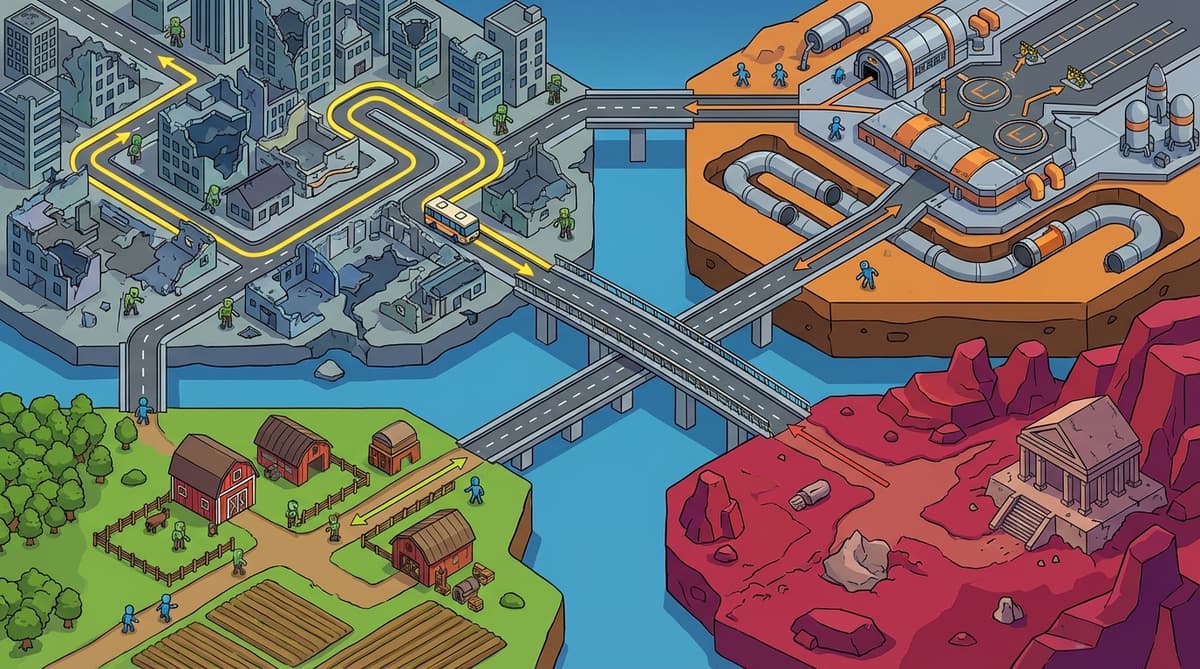
The breakthrough for me on Ashes of the Damned was treating it like several smaller maps glued together by the bus. It’s huge-Tranzit-level huge-so if you try to “hold” the whole thing, you’ll end up spread too thin.
- Early game (Rounds 1–8): Stick to one or two bus stops. Use your pistol and cheap wall buys to farm points. Don’t chase the bus just because it’s moving; only ride it when you’ve got a plan.
- Unlock a core loop: Identify a bus stop that’s close to Pack-a-Punch and at least one perk you rely on (Juggernog or Speed Cola). Your goal is a simple triangle of movement: training area → PaP → perk.
- Use the bus as a panic button: If a horde overwhelms you, hop on the bus to reset aggro and reposition. Don’t camp on it long-term; bus camping falls apart once zombies start sprinting and climbing aggressively.
- One player per role in co-op: On larger rounds, have one player focus on “bus control” (keeping routes unlocked and safe) while others hold training zones at key stops.
Don’t make my early mistake of opening every door as fast as possible. On a map this big, over-opening just creates unpredictable spawns and removes your ability to funnel zombies.
Astra Malorum – Keep the Fight on Your Terms
Astra Malorum is all about an eerie observatory and Dark Aether corruption. Instead of raw size, it pressures you with line-of-sight breaks, tight interiors, and Shadowsmith threats.
- Favor open sightlines: Prioritize playing in courtyards, outer walkways, or any circular balcony-style areas over cramped labs and hallways.
- Clear your escape routes: Before a round ramps up, mentally note two escape paths from wherever you’re standing. The map loves to trap you in corners with sudden spawns.
- Handle Shadowsmiths proactively: When you hear or see their tells, deal with them immediately instead of trying to kite them with the horde. Letting them stack up is how runs collapse.
Once you find one or two comfortable “rings” you can loop around the observatory, the whole map feels less like a horror maze and more like controlled territory.
Vandorn Farm – Survive by Controlling Angles, Not by Running Loops
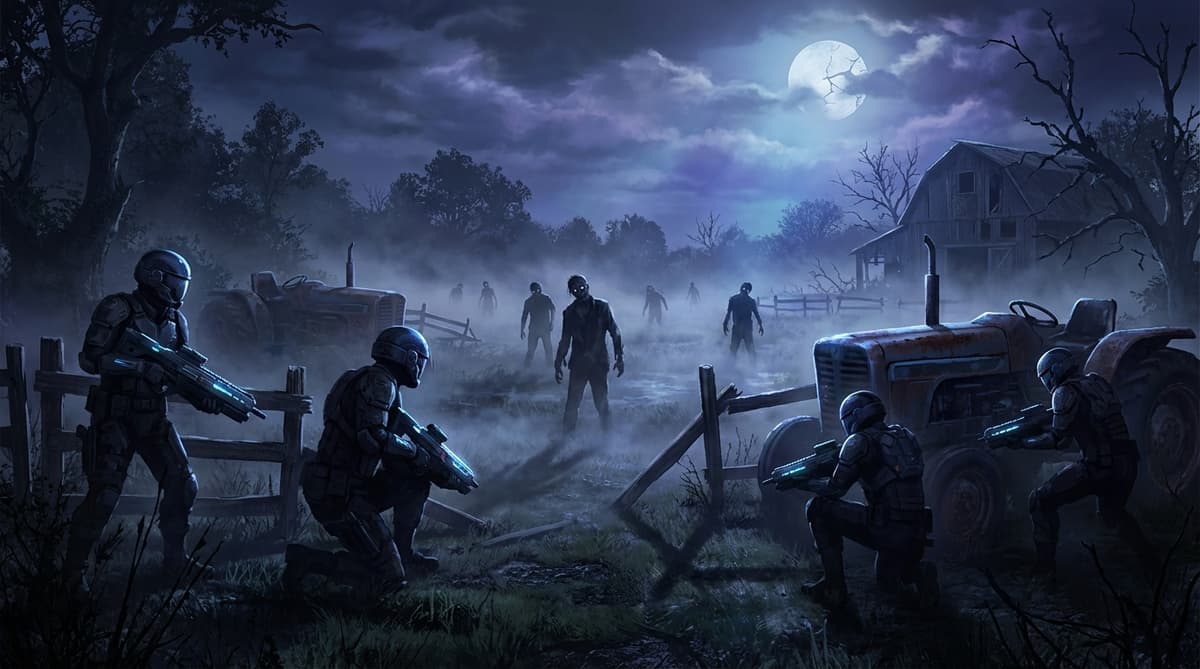
Vandorn Farm is brutal because it looks like a training map, but it’s really a positioning test. There’s barely any space for classic big circles, especially once zombies start sprinting.
- Pick a power corner: Find a spot with two predictable entry lanes (like a doorway plus a window) and fight from there instead of wandering.
- Use short “L” or “U” routes: Instead of big circles, move in short patterns around a couple of obstacles—forward, back, side—just enough to bunch zombies before mowing them down.
- Explosives are your friend: Because space is tight, grenades and explosive weapons have huge value. Just make sure you’ve got PhD-style protection before you lean on them too hard.
If you’re consistently dying here, you’re probably trying to “run away” too much. Think turret, not track runner.
Exit 115 – Treat It Like a Lane Shooter
Exit 115 is basically a narrow road from Ashes of the Damned turned into a standalone arena. The upside is predictable spawns; the downside is almost no lateral escape room.
- Hold the wider end: Anchor your defense where the road opens up even slightly; the extra sidestep space matters a lot at higher rounds.
- Watch both ends constantly: Don’t tunnel-vision on one side. I force myself to “scan left-right-left” any time there’s a gap in shooting.
- High fire-rate weapons shine: SMGs and fast ARs with PaP upgrades handle the straight-line rushers way better than slow, chunky guns.
Zarya Cosmodrome – Use the Rectangle and the Levels
Zarya Cosmodrome feels like the “comfort” survival map once you understand it. The main rectangular area and unlockable under/overground rooms give you breathing room and options.
- Primary loop in the main rectangle: Use the outer edges as your main training path. Hug the walls, cut corners late, and avoid tight interior clutter unless you’re rotating.
- Use vertical rotations to reset: When your loop starts to crumble, drop down or move up to the other level to break line of sight and re-stack the horde.
- Put Pack-a-Punch near your loop: Once you know PaP’s spot, mentally route it into your circle. Being able to upgrade mid-round safely is a huge quality-of-life boost here.
Mars – Respect the Arena and the Boss DNA
Mars reuses the Astra Malorum boss arena—a sunken ancient temple in the Martian sands—so it was never designed as a chill hangout spot. It’s tight, thematic, and focused.
- Learn safe firing lanes first: Spend your first few rounds just walking the arena edges and noting where you can see far without getting side-swarmed.
- Abuse the Mystery Box early: You can snag the LGM-1 Wonder Weapon here, which completely changes how forgiving the map is.
- Plan for Uber Klaus: On higher rounds, Uber Klaus shows up and forces you to move. Keep some space in front of you and don’t let him box you in against temple walls.
- Use infrastructure smartly: Mars has Pack-a-Punch, Der Wunderfizz, and Mystery Box—cluster your fights near at least one of these so you can upgrade or reroll without long, risky runs.
Step 3: Pack-a-Punch, Perks, and Weapons – A Simple Priority List
A lot of my early deaths came from “half builds”—great guns with no survivability perks, or full perk stacks with weak weapons. Here’s the order that’s worked consistently across every map.
- Phase 1 (Rounds 1–8):
- Buy a reliable wall weapon or early Box gun.
- Open just enough doors to reach Pack-a-Punch and 1–2 key perks.
- Save points; don’t PaP a trash gun you’re about to replace.
- Phase 2 (Rounds 9–18):
- Secure core perks: Juggernog, Speed Cola, and either Stamin-Up (for training maps) or Quick Revive (for co-op & cramped maps).
- Pack-a-Punch your main weapon once.
- Lock in a secondary gun for ammo backup.
- Phase 3 (Rounds 19+):
- Upgrade to PaP II/III (or IV in Cursed Survival).
- Fill out perk set with Double Tap, Deadshot, Mule Kick, etc. based on your style.
- Actively cycle Box for wonder weapons on tougher maps like Mars.
The key is never letting both your guns and your perks be “mid” at the same time. If your damage is great, spend next on survivability. If you’re tanky, push weapon power.
Step 4: Playing Cursed Survival the Right Way
Cursed Survival looks terrifying on paper—limited HUD, pistol start—but the Golden Armor, ultra weapons, and PaP IV are there so you can play fast and aggressive. Here’s the rhythm that turned it from “impossible” to “addictive” for me:

- Explode out of spawn: Don’t hang around. Grab an early wall gun or cheap Box hit and start farming points immediately.
- Rush your first PaP: Because weapons scale to PaP IV, the earlier you start that ladder, the better. I always PaP my main gun before over-investing in perks.
- Use Golden Armor as a buffer, not a crutch: Treat it like extra lives that let you take calculated risks—like clutch revives or mid-round PaPs—not an excuse to face-tank.
- Keep mental notes since HUD is limited: Make a habit of reloading at consistent kill counts and topping off ammo between waves so you’re not relying on UI elements that aren’t there.
If standard survival feels like a marathon, think of Cursed Survival as a high-intensity sprint: compact runs, fast setups, and aggressive decision-making.
Step 5: Getting Ready for Paradox Junction
Paradox Junction is slated for early March 2026 and looks like a major reimagining of Nuketown Zombies. The logo’s nuclear hazard symbol, mushroom cloud, and scientific imagery strongly suggest a tight, post-apocalyptic neighborhood with twisted experiment vibes—plus hints that we may be bouncing between two distinct environments.
Based on that, expect:
- Fast spawns and short sightlines like classic Nuketown.
- Little forgiveness for mistakes – one bad corner peek could end a high-round run.
- Heavy emphasis on perk and PaP routing, since small maps punish bad rotations more than bad aim.
If you want to prep, grind Vandorn Farm and Exit 115. Both train you to survive in tiny, punishing spaces—exactly the kind of discipline Paradox Junction is likely to demand.
Wrapping Up: Your New Mental Checklist for Every Match
To make Black Ops 7 Zombies feel less random and more controlled, I boil every run down to this:
- What type of map am I on? (Huge exploration, tight survival, or Cursed Survival twist?)
- Where is my safe loop or power corner? (Find it by round 5–6.)
- What’s my first PaP target? (Decide early, don’t waste points.)
- Which 2–3 perks do I need first? (Health, reload, and either speed or revive.)
- How am I getting out when things go bad? (Bus on Ashes, vertical rotations on Zarya, short “L” routes on Vandorn, etc.)
Once you start asking those questions automatically at the start of each game, Black Ops 7 Zombies stops feeling like a coin flip and starts feeling like a system you’re slowly mastering. And if a map keeps deleting you—Vandorn Farm and Mars are big culprits—go back in with one focused goal (like “survive to round 15 using only one half of the map”) instead of chasing a perfect run right away.
If I can turn these maps from anxiety machines into reliable high-round farms, you can too. Treat each map on its own terms, respect Cursed Survival’s pace, and the whole mode opens up.
FinalBoss // Gear
Level up your setup
01Top-rated gaming headsetson Amazon→02High-refresh gaming monitorson Amazon→03Gaming chairson Amazon→04Discounted game keyson Kinguin→Affiliate links · As an Amazon Associate, FinalBoss earns from qualifying purchases.
Want to Level Up Your Gaming?
Get access to exclusive strategies, hidden tips, and pro-level insights that we don't share publicly.
Ultimate Guide Strategy Guide + Weekly Pro Tips