
Here’s the uncomfortable version first: switching from mouse and keyboard to a controller in Battlefield 6 on PC felt both a little wrong and a little brilliant. Wrong, because decades of PC shooter muscle memory teach you that the mouse is supposed to be the serious option. Brilliant, because once this setup was tuned properly, the controller stopped feeling like a compromise and started feeling like the game was quietly giving me help I wasn’t getting on keyboard and mouse.
This test was done on PC with a high-refresh setup, using a wired SCUF Instinct Pro on an RTX 4080 and i9-13900K rig at 1440p. The short version is not “controller beats mouse in every situation.” It doesn’t. The real takeaway is messier than that. In close-quarters infantry fights, on certain maps, with strong aim assist settings and recoil that feels noticeably calmer than the mouse equivalent, controller can be absurdly effective. In long-range duels, quick 180s, and precision sniping, mouse still reminds you why it owns the genre. That tension never fully goes away.
Table of Contents (6)
Key takeaways from the Battlefield 6 controller test
- A premium controller can work shockingly well in Battlefield 6 on PC, especially for aggressive infantry play and vehicles.
- The biggest surprise was not comfort. It was how sticky aim assist felt and how much easier recoil control became in sustained fire.
- The SCUF Instinct Pro helps with paddles, trigger stops, and consistency, but the real story is that Battlefield 6 itself is friendlier to controller than many PC players will want to admit.
- Untuned controller settings feel mushy and worse than mouse. Proper deadzones, sensitivity, response curve, and frame-time stability matter a lot.
- Mouse and keyboard still wins for flicks, long-range precision, and multi-target correction when aim assist starts fighting your intentions.
The strange part: the controller didn’t just keep up, it changed the way Battlefield 6 felt
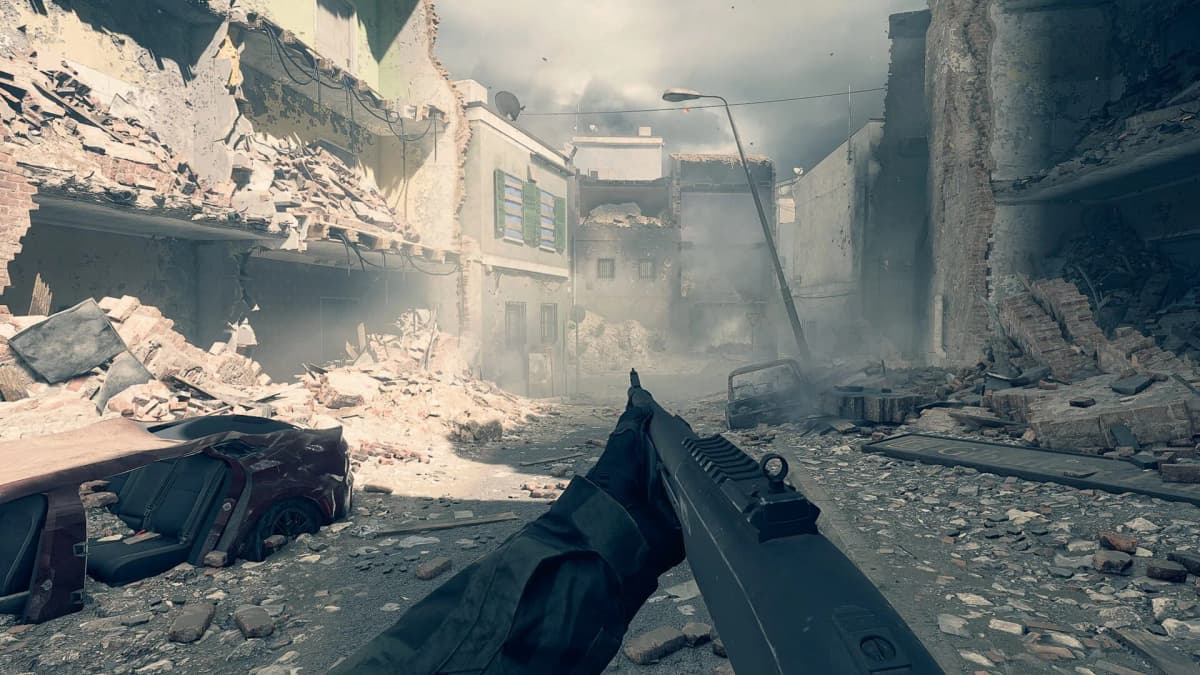
The moment this stopped being a novelty test was in mid-range AR fights where I would normally feather the trigger on mouse out of habit. With the controller, I found myself committing to longer full-auto sprays and getting away with it. The reticle behavior was calmer. Recoil correction demanded less effort. Targets moving across my screen in those chaotic lane fights on maps like Stranded or Reclaimed felt easier to stay attached to than they had any right to be.
That sounds like controller evangelism, but it isn’t. It’s a specific observation: in Battlefield 6 right now, controller recoil and aim assist combine into something that can feel more generous than the traditional PC input model. Community testing has pointed in the same direction, and it lined up with the on-screen feel during this run. Weapons like the M5A3 and SVK were where it became obvious. Bursts stayed tidier. Follow-up shots required less frantic correction. The game seemed more willing to help me keep pressure on a moving body than it ever does when I’m driving everything with the mouse alone.
That does not make controller automatically better. It makes controller more potent than expected. Those are different claims, and the difference matters. In a one-on-one gunfight where the enemy is strafing across a doorway and you are already pre-aimed, controller can feel almost unfairly stable. In a panic situation where two players cross each other and you need to snap from one head to another immediately, mouse still feels cleaner, faster, and more obedient. Battlefield 6 lets both truths exist at once.
The SCUF Instinct Pro earns its keep with paddles and trigger stops, not magic
The hardware choice for this test was the SCUF Instinct Pro, and it’s a good fit for the job for one simple reason: it reduces the usual controller tax on shooter movement. The four back paddles mattered more than the branding. Being able to jump, crouch, reload, or melee without lifting my thumb off the right stick is the kind of advantage that sounds minor in a feature list and feels enormous the second bullets start flying. You stop choosing between movement and aim. That alone makes a premium pad feel more legitimate in a competitive FPS.
Trigger stops helped too. They don’t turn every firefight into a miracle, but they make semi-auto follow-ups and close-range panic shots feel snappier. Wired USB-C was the only way I wanted to use it for this test. Wireless was fine for casual play, but once the goal became keeping input latency tight on a 240Hz display, the cable was the easy call.
The expensive part is where my enthusiasm cools down. The SCUF Instinct Pro is very good, but it is not solely responsible for the performance jump. Battlefield 6’s controller behavior deserves at least half the credit. A cheaper pad with solid sticks and decent back-button options would still pick up a lot of the same systemic advantages. The SCUF makes those advantages easier to access and more comfortable to live with over long sessions. It doesn’t invent them.
That’s the part I keep coming back to. If you buy this controller expecting it to transform every shooter on PC, that’s too generous. If you buy it because Battlefield 6 specifically seems to love controller more than expected, that case is much stronger.
The setup mattered so much that the first hour barely counts
The worst version of this experiment was the lazy version. Plug in controller, leave defaults alone, queue for a match, feel sluggish, go back to mouse, declare victory for PC tradition. That version would have been easy, and it would have been misleading.
The setup that actually worked looked more like this:
- Infantry sensitivity around 70, with ADS closer to 50
- Uniform aiming enabled
- FOV pushed wide at 120
- Very low center deadzones, ideally 0 to 2 if the sticks cooperate
- Aim assist settings pushed high enough to actually test the game’s full controller behavior
- A smoother response curve rather than an overly twitchy one
- Frame cap matched just under the monitor refresh ceiling, with NVIDIA Reflex enabled
Once those pieces were locked in, the whole setup stopped feeling floaty. Small aim corrections became predictable. Tracking in the 20-to-50 meter range felt trustworthy. The most important change was psychological: I stopped fighting the input and started playing the match. That’s when the controller started producing results instead of excuses.
One caveat, though. Maxed aim assist is not a free lunch. In close-range scrambles it can feel wonderfully sticky when you want it, then annoyingly clingy when another target crosses your reticle. There were moments in dense objective fights where I could feel the game trying to help me stay on one body while my brain was already moving to the next. If you’re the kind of player who values total manual control over every micro-adjustment, that stickiness can feel less like support and more like interference.
Where controller genuinely shined: aggressive infantry and vehicles
Close-quarters and medium-range infantry play is where this swap made its strongest argument. SMGs and forgiving assault rifles became easier to bully with than I expected. Holding a lane, pre-aiming a push, or snapping onto someone who had already entered my effective cone all felt excellent. The combination of lower-effort recoil control and generous target adhesion made sustained pressure feel safer than it does on mouse, where the burden of correction is always fully yours.
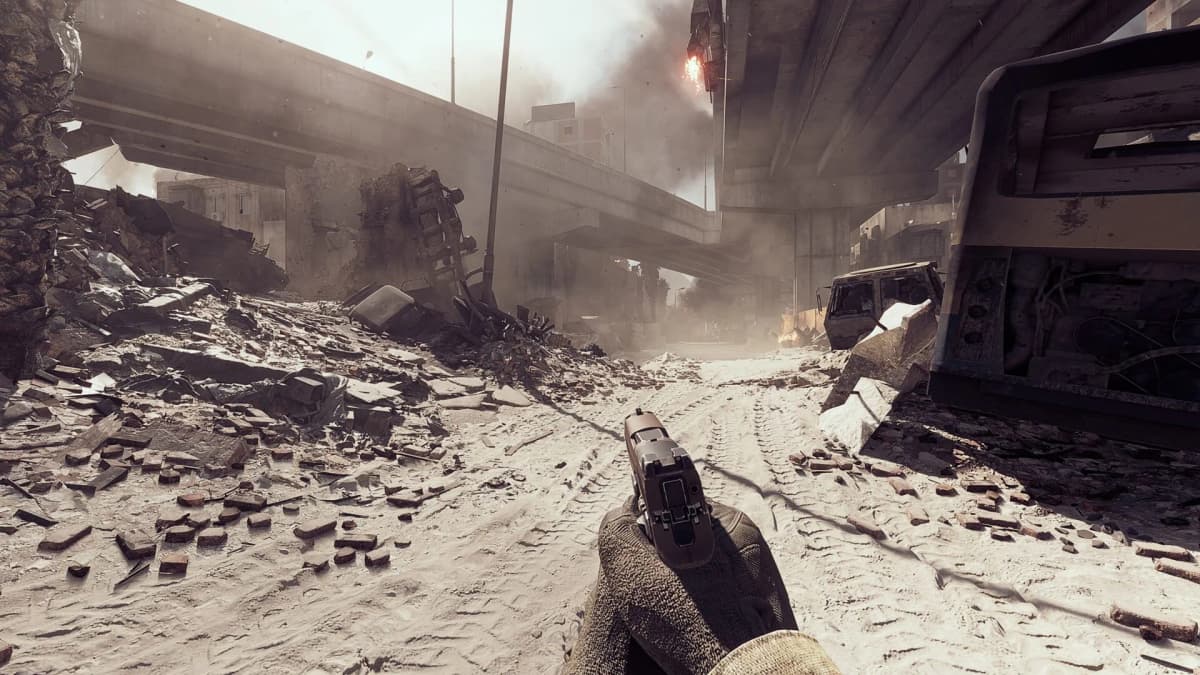
Vehicles were the other standout. Analog movement has always had a natural advantage there, but in Battlefield 6 it felt more useful than I had remembered. Fine steering adjustments and gentle corrections with armor or aircraft came more naturally on sticks than on keys. Mouse still has some advantages depending on the vehicle role, but the controller never felt out of place in the cockpit or the driver’s seat. If anything, it felt like the more relaxed and more intuitive option.
Comfort also matters more than some PC veterans like to admit. Long sessions on controller were easier on the hands and wrists. That doesn’t win gunfights by itself, but staying physically relaxed for hours does affect decision-making, patience, and aim discipline over time. This was one of the few benefits that stayed true even when the match quality dipped.
Where mouse and keyboard still put the whole experiment back in its place
If your Battlefield identity is built around precision sniping, huge mouse-pad sweeps, and lightning-fast target swaps, controller is still not the crown. Long-range engagements exposed the limit quickly. At distances where headshots depend on tiny, deliberate corrections rather than reticle stickiness, mouse remained superior. The controller could participate. It could even feel decent. It just didn’t feel liberated.
Fast 180-degree turns were another reminder. On mouse, those reactions are instinct. On controller, they are a calculation. You can tune sensitivity higher, but then you introduce instability into all the smaller interactions that made the setup appealing in the first place. That trade-off never disappears. It’s one reason I still wouldn’t recommend this swap to the dedicated long-range sweat who treats every life like a montage setup.
The same goes for moments where battlefield chaos stops being a tidy duel and becomes a mess of silhouettes, debris, revives, gadgets, and one player vaulting into the frame from the wrong angle. Mouse stays better at abrupt problem-solving. Controller is better when it can settle into a rhythm. Mouse is better when the rhythm dies.
FinalBoss // Gear
Level up your setup
01Top-rated gaming headsetson Amazon→02High-refresh gaming monitorson Amazon→03Gaming chairson Amazon→04Discounted game keyson Kinguin→Affiliate links · As an Amazon Associate, FinalBoss earns from qualifying purchases.
Want to Level Up Your Gaming?
Get access to exclusive strategies, hidden tips, and pro-level insights that we don't share publicly.
Ultimate Reviews Strategy Guide + Weekly Pro Tips