
Table of Contents (11)
The Day Life Is Strange Told Me to Grow Up
I still remember sitting in the dark at 2am, controller in hand, staring at the final choice in the original Life Is Strange. Save Arcadia Bay or save Chloe. Hundreds of lives vs one girl I’d spent five episodes falling back in love with. I sat there for a good ten minutes, not because I was hunting for a “good ending” on YouTube, but because the game had the guts to make me pick a wound and live with it.
That was the moment the series earned its place in my head next to the stuff that actually changed me as a teenager – not just as “a great narrative game,” but as a story that understood how growing up feels like breaking something you care about and not being able to rewind it.
So when Life Is Strange: Reunion rolls up a decade later and says, essentially, “Hey, remember that brutal, defining sacrifice you made? Let’s hang out with Max and Chloe again, make some cozy memories, and have one last adventure,” I don’t feel nostalgic. I feel cheated.
Because if that original ending meant anything, it meant this: sometimes you don’t get to go home. Sometimes you can’t fix the mess you made. And now, under Deck Nine and Square Enix, the franchise seems desperate to do exactly what its own story told us not to do – rewind the tape, smooth out the edges, and sell us a sentimental reunion where there should’ve been a scar.
Max, Chloe, and a Choice That Wasn’t Supposed to Be Undone
The original Life Is Strange wasn’t perfect – the dialogue veered into meme cringe, some plot beats were clumsy – but tonally, it was fearless. Max’s rewind power didn’t exist to make us feel clever; it existed to show us how even good intentions can corrode everything around you. Every time you hit that trigger, something twisted just a little more.
You save Chloe from being shot. You intervene in classmates’ lives. You poke at trauma, bullying, abuse. You keep reaching into the timeline because it feels wrong not to, and the game slowly makes that feel like a moral addiction rather than a superpower. By the time the storm is bearing down on Arcadia Bay, the subtext isn’t subtle: this is what happens when you refuse to accept loss.
Then the game does the one thing most big-budget narrative games are terrified of: it gives you a choice that hurts no matter what and refuses to label one obviously “correct.” Yeah, if you want to be utilitarian about it, sacrificing Chloe is the “rational” choice. But don’t pretend sacrificing the town is just the “selfish, bad” route. The whole point was that your emotions don’t care about clean moral math. The ambiguity was the story.
That’s why this whole premise of Reunion already stinks of corporate meddling to me. Any setup that involves Max and Chloe reuniting in some definitive, canonised grand finale is already poking at that wound and saying, “Actually, don’t worry, we can have this both ways.” That isn’t clever. That’s cowardly.
And yes, I’ve seen previews talk about how Reunion wants your “final Max and Chloe choices” to be your most meaningful yet, how it’s darker, how it leans on rewind and back-talk mechanics, how decisions will carry weight. I don’t doubt the writers care. But the moment you decide to resurrect this duo in a boxed, marketable “conclusion,” you’ve already undercut the thing that made their story iconic: that it ended in a way that refused to comfort you.
Deck Nine’s Era: From Thorny Drama to Comfort Food
I’ve stuck with this series through every pivot. Before the Storm? Rougher, smaller, but I actually liked a lot of what it did with Chloe. Life Is Strange 2? Messy, ambitious, and I respected the hell out of it for ditching Arcadia Bay and tackling racism, police brutality, and brotherhood on the road.
Then came True Colors, and that’s where I started feeling like someone at Square Enix looked at Life Is Strange and said: “What if we sanded off all the splinters and made it… nice?”
Haven Springs is gorgeous. Too gorgeous. Idyllic small town, indie soundtrack, log cabins, fairy lights, cozy record store, everyone ready to hug it out at the slightest provocation. Even the gruff bar owner is just a big softie waiting to join a wholesome LARP session. It’s not that you can’t tell serious stories in a pretty town; it’s that True Colors clearly wants to be a comfort blanket first and a gut punch second.
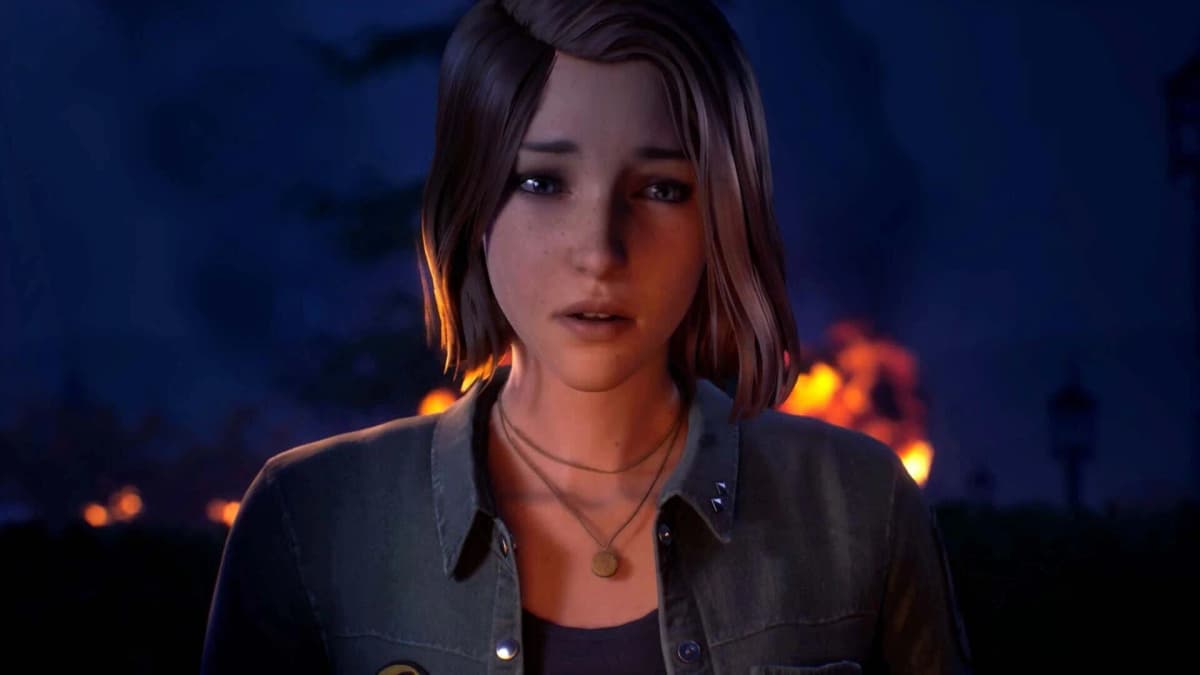
Alex’s empathy power is ripe for something raw and uncomfortable. Instead, it’s mostly framed like a cool social tool that lets you insta-parse people’s moods with a splash of neon aura, and then you all talk about it like emotionally literate adults. It’s therapy fanfic, not messy adolescence. I enjoyed parts of it, but I never once felt the same sick, nervous energy I had walking through Blackwell halls knowing I could ruin someone’s life with a single decision.
And then Double Exposure brought Max back in 2024. On paper, I should’ve been ecstatic. In practice, it felt like seeing an old friend who’s been flanderised by a spin-off sitcom. She’s older, sure – a lecturer now, more confident – but she’s also smoothed over, always ready with a quip or level-headed response, clearly post-therapy and very, very TV-ready. The dual-timeline mechanic had potential, but the puzzles were neon-signposted and cleanly explained, more “interactive workshop” than chaos theory.
At every turn, the Deck Nine era trades volatility for polish. Gorgeous facial animations, more natural voice work, better lighting, sure. But the emotional volatility – the sense that things could spiral genuinely out of control – has evaporated. It’s all carefully managed, like a prestige streamer drama that never wants you to change the channel because you’re uncomfortable.
Reunion’s Whole Pitch Feels Like Nostalgia Bait
The marketing for Reunion leans hard on one idea: Max and Chloe, back together, one last time. It’s all wistful VO about making “new memories,” music cues designed to yank you back to 2015, and shots that make sure you recognise every hairstyle, every necklace, every mannerism you’ve spent ten years tumbling over in fan art and fanfic.
On its own, that wouldn’t be so bad. Of course fans want to see them again; hell, I want to see them again. I’ve read the comics, dug through Reddit theories, argued endlessly over which ending “really happened.” But Reunion isn’t some weird side-story or abstract epilogue. It’s being pitched as a legit conclusion, a return to the storm, another disaster to face together. In other words, it’s stepping onto the same thematic ground the original already scorched – just with way less courage.
Early previews talk about a new natural disaster and big climactic choices, like we’re going to re-litigate sacrifice vs love all over again. That doesn’t feel profound to me; it feels like the design doc literally said “do Life Is Strange 1 again but with prettier graphics and more closure.” If you already told a story about how trying to fix the past destroys the present, coming back a decade later to squeeze in more closure is… kind of missing your own point.
And I can’t shake the feeling that we’re here because Double Exposure didn’t hit the financial targets someone wanted. Max alone wasn’t enough; the corporate conclusion is obvious: bring back Chloe, rewind powers, storms, Bay nostalgia, everything. That doesn’t read like artistic necessity. It reads like a boardroom note.
Safer Stories, Safer Profits
Look at the trajectory from the outside and tell me it doesn’t scream risk management. Life Is Strange 2 takes a big swing at political, uncomfortable topics with new characters. It’s divisive. Reception is passionate but messy. After that, Square Enix hands the keys fully to Deck Nine and the games become smaller, prettier, safer – tightly scoped towns, low body counts, drama that mostly happens at talking volume.
Safer Stories, Safer Profits
Look at the trajectory from the outside and tell me it doesn’t scream risk management. Life Is Strange 2 takes a big swing at political, uncomfortable topics with new characters. It’s divisive. Reception is passionate but messy. After that, Square Enix hands the keys fully to Deck Nine and the games become smaller, prettier, safer – tightly scoped towns, low body counts, drama that mostly happens at talking volume.
🎮 Get This Game at the Best Price
Compare prices instantly and save up to 80% on Steam keys with Kinguin — trusted by 15+ million gamers worldwide.
*Affiliate link — supports our independent coverage at no extra cost to you
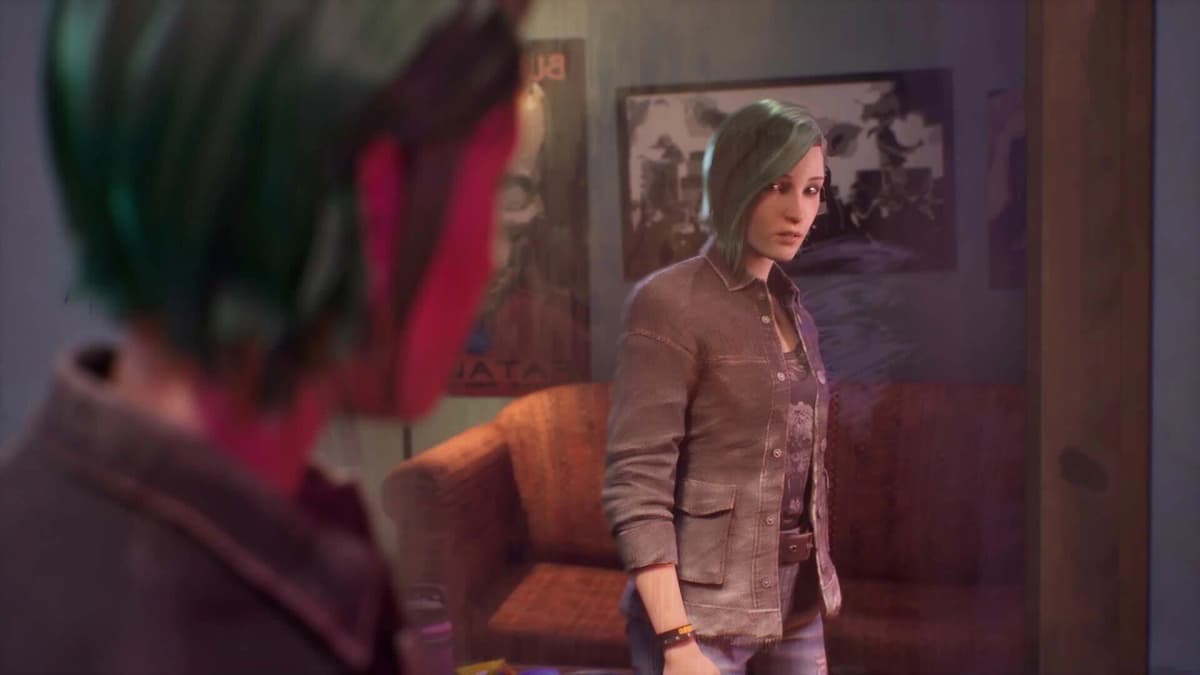
I’ve seen reporting over the years that suggests Square Enix has been cautious – even squeamish – about the series getting firmly labelled as “the gay game.” That’s always made the way they handle Max and Chloe’s relationship feel strangely noncommittal, like they want all the emotional power of a queer love story and all the plausible deniability of “it’s up to the player’s interpretation.” Meanwhile, the queer fanbase is doing the heavy lifting, investing, reading between the lines, filling the void the publisher refuses to commit to.
Reunion looks like more of the same: cash in on the decade-long fixation with this relationship without ever fully owning what it is. Lots of intimate shots, soft exchanges, “making memories” language, but I’d be shocked if it finally nailed the flag to the mast and said, plainly, “they’re together, this is a romantic love story, full stop.” You don’t design games this meticulously to be easily marketable across every region and then suddenly decide to be that bold.
Combine that with the commercial context – True Colors doing fine, Double Exposure apparently not doing fine enough – and Reunion starts to look less like an epilogue and more like a financial correction. Max wasn’t enough; bring in Chloe, bring back the original powers, bring back a storm. It’s not just nostalgia; it’s brand consolidation.
What We Lost When Life Is Strange Abandoned Its Episodic Chaos
The other thing that made the original Life Is Strange hit so hard for me was the episodic structure. Not just as a marketing gimmick, but as a story rhythm. Each episode ended on a vicious cliffhanger – the video of Kate, the eclipse, Rachel’s body, the alternate timeline – and then you had weeks to sit with what you’d done.
Those gaps mattered. I remember scouring forums, arguing with friends, replaying episodes to see if I’d missed anything that could save Kate or soften that fight with Chloe. My guilt had time to ferment. When the next episode dropped, my choices felt like they belonged to another, stupider version of me from a month ago – which is exactly how being a teenager feels. You shed skins faster than you can keep track.
True Colors and Double Exposure, released as single, complete packages, don’t leave that kind of psychic bruise. Yes, they have chapters, but the pacing is smoother, more like a prestige TV season you binge in a few sittings. You don’t live with your choices; you solve them, you move on, you roll credits.
Reunion looks set to follow that same structure: one packaged story, divided into neat internal beats, no time for regrets to breathe outside the boundaries of a weekend playthrough. On the surface, that’s more consumer-friendly. Underneath, it flattens the emotional texture that made the original game linger like a bad dream. A coming-of-age story built around rewinding time needs those disjointed, cliffhanger spaces to feel like your decisions actually haunt you.
Why Reunion Feels Unnecessary, Even as a Max & Chloe Diehard
Here’s the thing: I am exactly the person Reunion is trying to seduce. I adored Max and Chloe. I argued for bay and for bae. I read the comics. I replayed the original multiple times across different platforms. When I see that blue hair and that camera back on screen, some very real, embarrassingly strong part of my brain lights up.
And yet, the more I sit with Reunion’s pitch, the more it feels like fan-fiction that escaped a Tumblr dash and got a budget. Not fan-fiction in the derogatory sense – some of the best emotional work in this fandom is fanfic – but fan-fiction in the “we couldn’t let these characters go, so we engineered a reality where they don’t have to make that choice” sense.
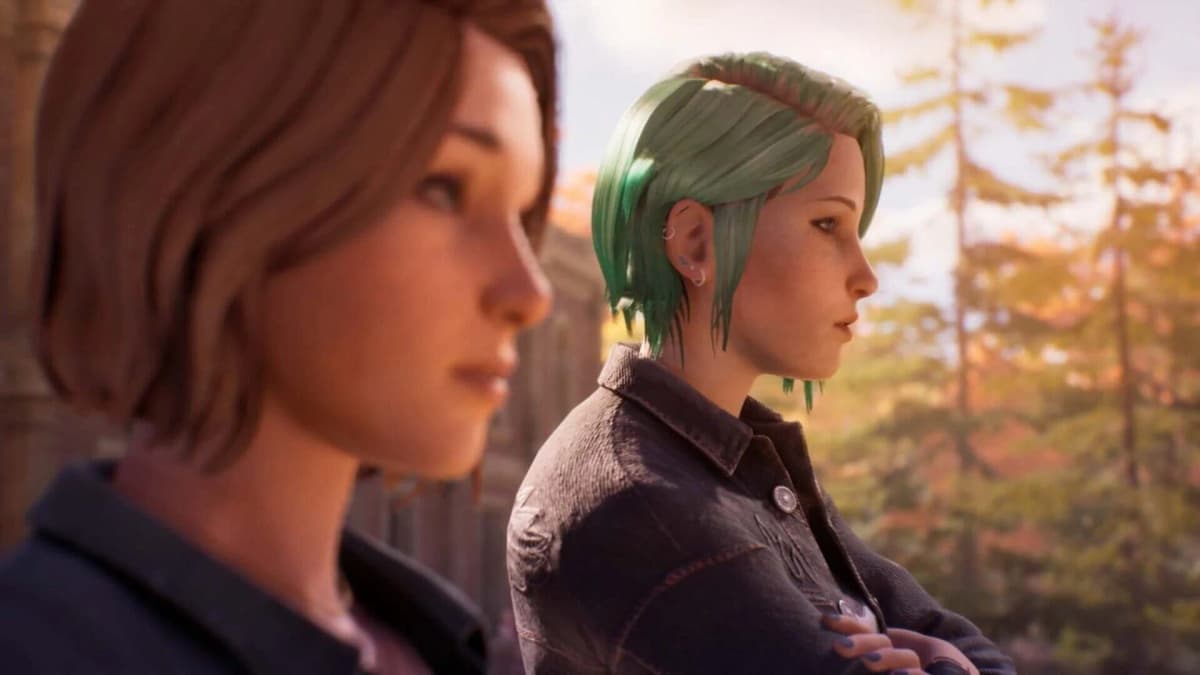
The thing is, we already have a place for that: our own imaginations, our communities, the comics, the what-if timelines. The official canon stepping back in to “clarify” or “conclude” Max and Chloe’s story doesn’t feel generous; it feels invasive. It collapses the multiverse of interpretations down into one publisher-approved, quarterly-report-justified reality.
This is where I draw the line with Reunion: I don’t believe its existence is justified by anything other than commerce. Not artistically, not thematically. The most interesting version of this game would’ve been one that leaned into the discomfort of having two incompatible endings in the past and refusing to pick a canon – something fragmented, experimental, maybe even mechanical about living with branching realities that don’t reconcile.
Instead, everything I’ve seen suggests a sleek, emotionally earnest, tightly managed goodbye tour. One more storm. One more moral test. One more promise that this time, your choices will be the “most meaningful.” But if you keep respawning meaning every few years, it stops being meaning. It becomes product.
The Alternate Timeline This Series Deserved
There was a more interesting path than this. Double Exposure’s dimension-hopping could’ve evolved into something truly gnarly – combining rewind with parallel realities in ways that make you genuinely doubt what “fixing” anything even means. Not just nicer puzzles, but systems that leave you unsure whether your intervention helped, hurt, or just displaced the damage somewhere you can’t see.
Instead of retreating back to the Arcadia Bay well for the third time, Life Is Strange could’ve doubled down on the Life Is Strange 2 approach: new characters, new settings, new forms of injustice and confusion. The series tagline practically writes itself. The strange part of life isn’t that you kept the same two people in your orbit forever; it’s that you don’t. People leave, move, die, drift. That’s the whole point.
Imagine a Reunion that wasn’t about Max and Chloe at all, but about a new kid who grew up with stories of the Arcadia Bay storm and has to live under the myths and fan theories we, the audience, created. Imagine a game that acknowledged that Life Is Strange has become an IP with baggage and explored that, instead of quietly exploiting it. That’s the kind of meta risk I expect from a series that once made me choose between my best friend and an entire town.
Where This Leaves Me With Life Is Strange
I don’t hate Deck Nine. I don’t think the writers on Reunion are hacks. I’m sure there are people on that team who care as deeply about these characters as I do, maybe more. But when I look at the arc from 2015 to now, it’s painfully obvious what’s changed: the risk is gone. The strangeness is gone. What’s left is a beautifully rendered, emotionally earnest, increasingly safe series that’s terrified of letting anything truly break.
Am I going to play Reunion? Probably, eventually. I’m too invested in Max and Chloe not to at least peek into this timeline. But I’m not going in excited; I’m going in wary, and I’m absolutely not pretending this is some essential, long-awaited chapter. For me, Life Is Strange already ended – in a bedroom with a butterfly photo, or on a cliff overlooking a buried town, depending on which wound I picked that night.
Reunion doesn’t feel like a bold epilogue to that story. It feels like a shareholder-friendly rollback, a way to steam-iron a gorgeously messy, morally complicated ending into something more marketable, more replayable, more “accessible.” And if that’s the direction this franchise is committed to, then the title is starting to sound less like a promise and more like a joke.
Life is still strange. The games, sadly, are getting less so.
FinalBoss // Gear
Level up your setup
01Top-rated gaming headsetson Amazon→02High-refresh gaming monitorson Amazon→03Gaming chairson Amazon→04Discounted game keyson Kinguin→
Affiliate links · As an Amazon Associate, FinalBoss earns from qualifying purchases.
Want to Level Up Your Gaming?
Get access to exclusive strategies, hidden tips, and pro-level insights that we don't share publicly.
Ultimate Gaming Strategy Guide + Weekly Pro Tips