
Table of Contents (6)
The Hex Grid Doesn’t Forgive Cowards
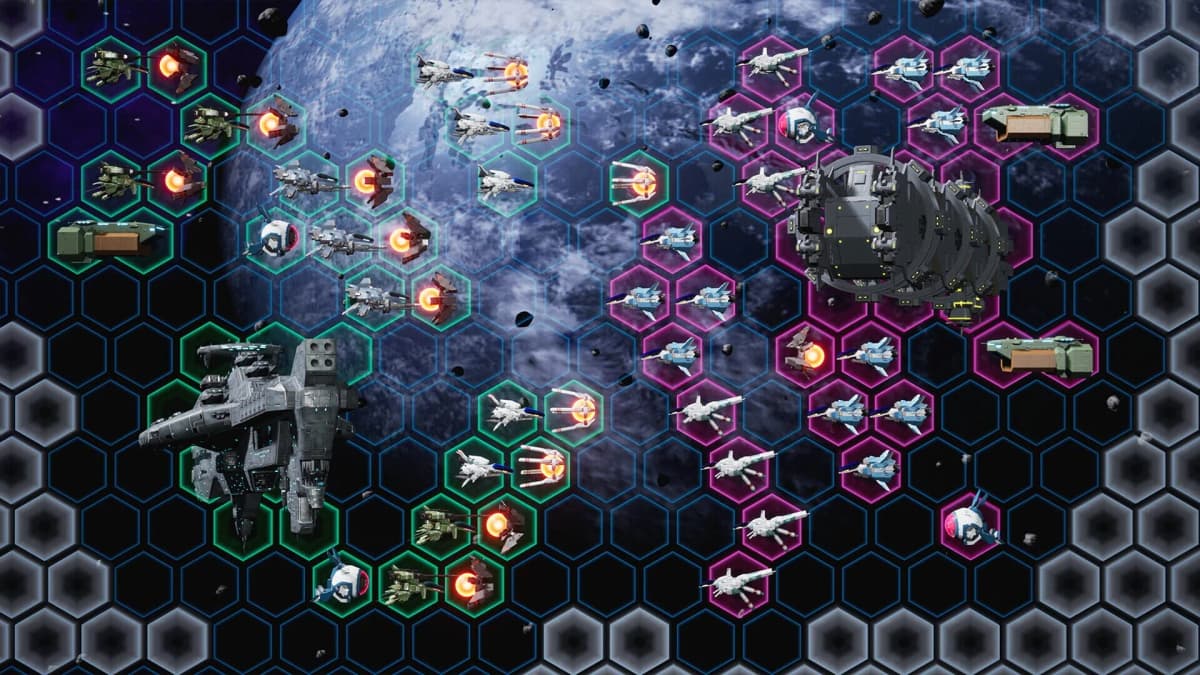
My first catastrophic loss came ten turns into what looked like a milk run. I had parked my R-9A Arrowhead on a hex I swore was safe, its blue Force unit detached and bouncing two hexes ahead to clear a clutch of Bydo fighters. I checked the front arc. I checked the sides. I completely forgot to secure my rear. A single Pata-Pata slipped through the debris field, hugged the blind spot my shield generator did not cover, and shredded the Arrowhead’s armor in a single volley. No dramatic boss fanfare. No screen-filling wave cannon to telegraph the danger. Just a quiet little hex I ignored, and suddenly I was down my best pilot, the deployment points I had sunk into that machine, and whatever hope I had of an S-rank clear. I stared at the post-mission debrief for a full minute, watching the repair bill flash red, not angry, just stunned into a new respect. That is R-Type Tactics in miniature. It wears the chrome and cosmic dread of Irem’s arcade legacy, but the battlefield is a cold, logistical nightmare where your ego goes to die one hex at a time.
Arcade Nerves, Turn-Based Muscles
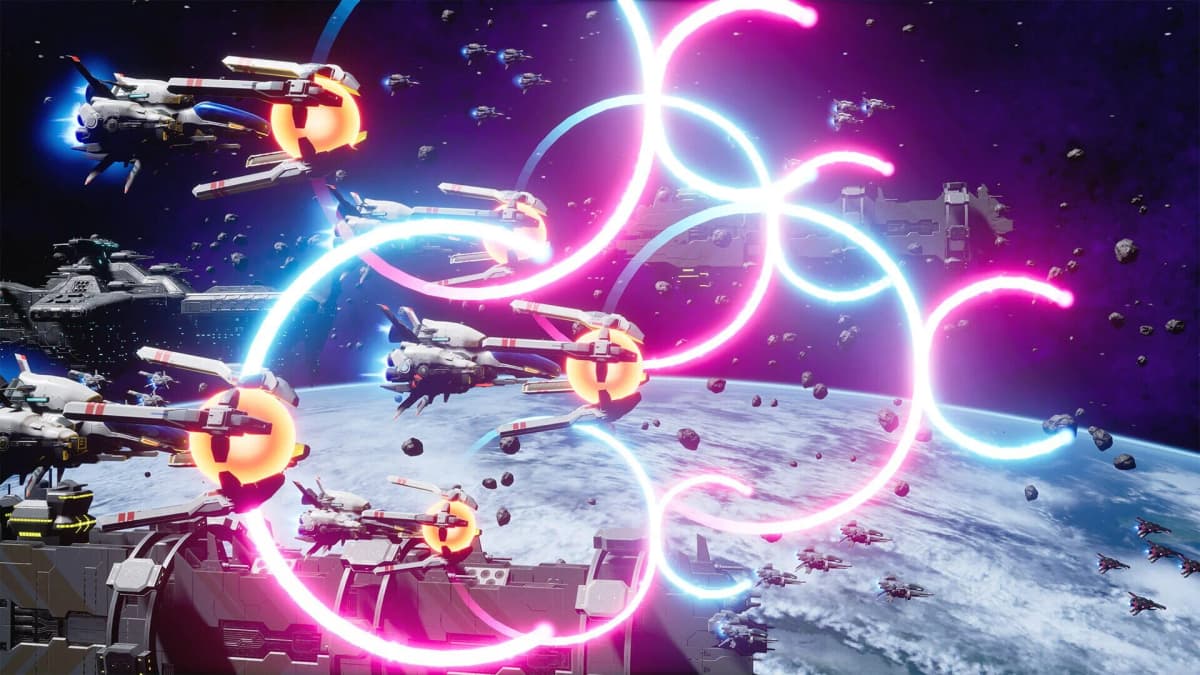
I came in skeptical, and I will own that. The R-Type name carries a specific electricity in my bones: the sweat-palm tension of forced scrolling, the desperate clench of holding a charge shot while the screen floods with pink death, the exact pixel-width gap between survival and a restart. Translating that kinetic trauma into a turn-based hex-grid strategy game sounded like a dare somebody lost in a bar bet. Even booting into the collection, the title screen hums with that same oppressive synth-dirge, and the unit viewer lets you rotate the classic fighters in all their chunky, lovingly pixelated glory. For a moment, it feels like a nostalgia trap. Then the first mission loads, the camera drops into this austere tactical tableau of vector lines and threat radii, and I realized this is not a cheap reskin. It is a strategy RPG with a real franchise identity, one that treats the Bydo war as a campaign of attrition rather than a solo dash to the right. The first game drops you into the Space Corps as a junior commander wrangling humanity’s desperate pushback against an enemy that does not sleep, does not negotiate, and absolutely does not play fair. The second campaign, bundled here under Cosmos, widens the scope into stranger territory, with unit types and environmental hazards that feel almost hostile to the player’s comfort. The pacing is deliberate. You are not racing a scrolling screen; you are managing fuel reserves, ammunition counts, and the slow, creaking terror of being outnumbered three to one in an asteroid belt where every rock hides another shape waiting to unfold into violence.
Force Units and the Art of Facing
What saves this from being another generic fantasy tactics exercise is how ruthlessly the game treats positioning, facing, and formation. Every fighter occupies a single hex, but those six sides are the entire game. Turning costs action points. Moving backward is sluggish. Attack arcs are narrow, and getting hit from behind strips away the evasion bonus your shielded front provides. I learned this the hard way when a heavy gunship I thought was flanking an enemy got torn apart because I had rotated it one hex too few, leaving its engine block exposed to a cannon I never saw coming. The Force unit is the brilliant mechanical bridge between the shmup roots and the grid. You can attach it to the nose for a forward cannon boost, dock it to the rear for added defense, or detach it entirely, sending it floating ahead as an autonomous weapon platform that ricochets off terrain and clips through enemy formations on its return path. On the arcade floor, the Force was a power-up you grabbed and held until the chaos peaked. Here, it is a chess knight with a grudge, and misjudging its bounce trajectory is as fatal as leaving a bomber exposed to interceptors. I spent one mission trying to thread a detached Force through a dense cluster of neutral asteroids to hit a Bydo battleship hiding on the far side. The geometry looked perfect until the second ricochet sent the Force careening into my own support frigate. I did not know whether to laugh or reload. The Wave Cannon makes a similarly successful transition: instead of instant fire, it now charges over turns, forcing you to decide whether a fighter stays stationary and vulnerable for a devastating strike or plays it safe with standard guns. Terrain is not cosmetic set-dressing. Nebulae drain energy and reduce accuracy. Asteroid fields block line of sight and force narrow chokepoints. Solar flares and debris storms introduce timing pressure that mocks your careful formations. The game constantly asks you to read the map like a pilot reads instrumentation, not like a general admiring a diorama. Operation Bitter Chocolate was the mission that broke my old habits for good. I had to shepherd a crippled supply vessel through a dense debris ring while Bydo interceptors used the rocks for cover. I failed twice because I treated open space like a safe corridor and hugged the center. The third attempt, I used the debris as walls, parking my heavy units in shadowed hexes and baiting enemies into my Force unit’s ricochet lane. Watching that battleship explode because I finally understood the geometry of the map, not just the stats of my guns, was the exact click that hooked me.
Two Wars and a Mountain of Aftermath
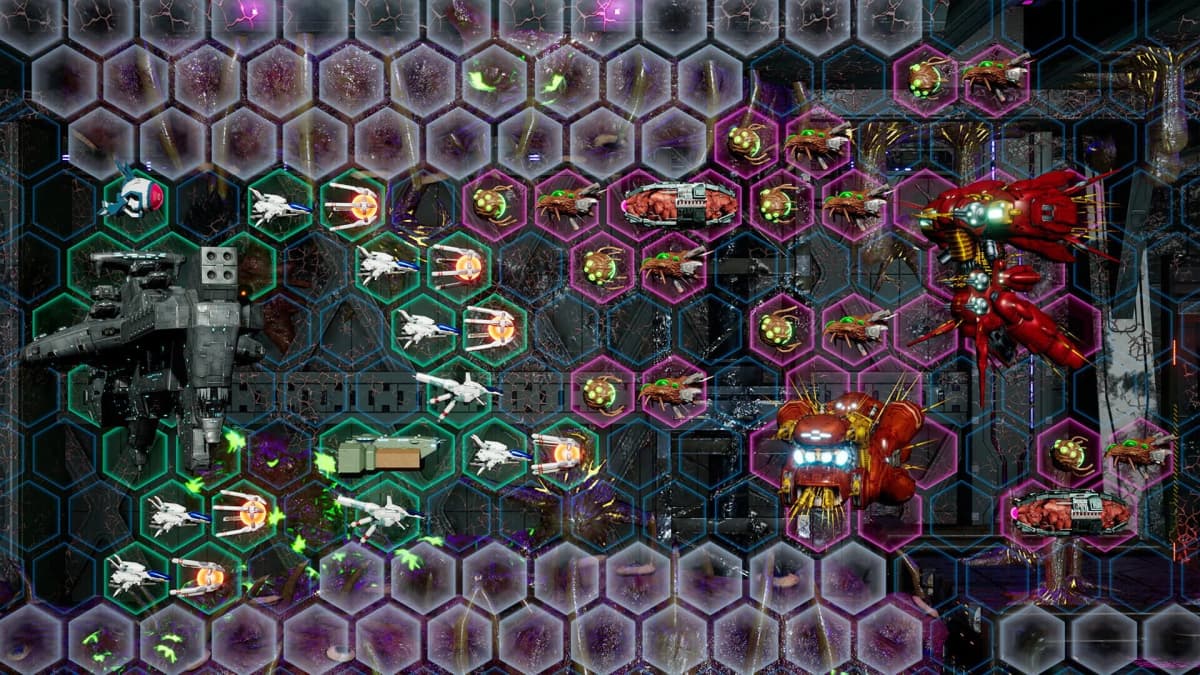
This collection bundles both campaigns, and together they represent a staggering amount of content. The first R-Type Tactics charts the Space Corps’ initial push, mission after mission of escalating desperation that teaches you the rules by punishing your assumptions. The second game, folded into Cosmos, widens the scope dramatically, introducing stranger unit types, more sadistic terrain, and a storyline that gets bleak in ways I did not expect from a series I associate with neon explosions and giant mechanical bosses. Between the two narrative arcs and the post-game skirmish material, I was still unlocking experimental hardware and tackling optional missions well past the point where most tactics games have shown me everything and sent me home. There is no hand-holding. Mission objectives oscillate between total annihilation, fragile escort duty, and grim survival, and the campaign loves to spring mid-mission twists: reinforcements pouring in from an unexpected vector on turn eight, environmental hazards activating without warning, allied units suddenly turning hostile because the Bydo infection does not stop at hull plating. The campaign structure respects your time in one sense-saves are liberal and mid-battle checkpoints keep you from replaying huge openings-but it absolutely does not respect your comfort. I hit a wall around the twelfth mission of the second campaign where my established gunline formations simply stopped working. The enemy had started fielding units that chewed through frontal armor and shrugged off wave cannon hits I thought were guaranteed kills. I had to retrain my brain, pivoting from static defense to hit-and-run harassment using faster fighters, detached Force orbits, and bait tactics that felt more like aerial dogfighting than squad chess. That kind of forced reinvention keeps the challenge loop alive and punishes anyone trying to brute-force their way through with a single favorite unit loaded with the best gear.
What Held Me, What Tested Me
The high points are undeniable when you are in the groove. This is a strategy game that actually earns its sci-fi skin. Every tactical decision feels filtered through the cold logic of space combat. Repairing a fighter between missions costs resources you could spend on new ordnance or a better chassis. Losing a veteran pilot stings because experience translates to better initiative, accuracy, and evasion. The hex grid strips away the fantasy of heroic last stands; you either control the terrain and the angles, or you die in the dark. That identity is rare in a genre crowded with swords and spell lists. That said, the UI and general user experience sometimes feel like they were built for a PSP screen in 2007 and hastily magnified for modern displays. On PC, certain menus require more clicks than necessary to compare unit stats, check weapon ranges, or manage pilot loadouts. Playing on Steam Deck, the text is readable but cramped, and the interface does not always make the best use of touch input for those moments when you want to quickly swipe through a long roster of abilities or equipment slots. It is functional, but it carries the faint whiff of a conversion holding its breath rather than a native PC build designed for a mouse. There are also pacing valleys that test your patience. Some early missions in the first campaign feel like tutorials that overstay their welcome, spelling out basic movement and facing rules for far longer than necessary. A handful of late-game maps recycle terrain layouts with thicker enemy padding and harsher turn limits, which can make the back half of each campaign feel like a marathon rather than a crescendo. None of these issues are ruinous, but they are the sand in the gears that keeps the experience from being seamless.
Who This Is For
R-Type Tactics I & II Cosmos is not a compromise for people who miss the arcade games. It is a full mutation, and you need to want that. If you come looking for the reflex-driven dopamine of the originals, you will bounce off the methodical cruelty of the hex grid like a Force unit hitting a solid wall. But if you want a tactics game where every move feels like an engineering calculation and the threat of the Bydo is measured in blind arcs, ammunition reserves, and the slow panic of realizing your rear is exposed, this is one of the most distinctive strategy RPGs on PC right now. It sits in its own category, separate from the melodrama of Front Mission or the breezy skirmishes of Advance Wars. It is slower, meaner, and more committed to its fiction than almost anything else in the genre. I started my playthrough chasing novelty, curious how a shmup could possibly survive the transplant to a genre built on deliberation. I finished it because the game demanded I think harder, position smarter, and treat every single hex like it was trying to kill me. It usually was. 8/10.
FinalBoss // Gear
Level up your setup
01Top-rated gaming headsetson Amazon→02High-refresh gaming monitorson Amazon→03Gaming chairson Amazon→04Discounted game keyson Kinguin→
Affiliate links · As an Amazon Associate, FinalBoss earns from qualifying purchases.
Want to Level Up Your Gaming?
Get access to exclusive strategies, hidden tips, and pro-level insights that we don't share publicly.
Ultimate Reviews Strategy Guide + Weekly Pro Tips