
Table of Contents (8)
The curse of “go play outside” finally caught up with me
“Kid, look at the nice weather. Go play outside!”
My mother used that line so often it might as well have been etched into the CRT glass of our old TV. She stopped saying it the day I dragged my C64 and a tiny television into the garden to play California Games on the grass. Technically I was outside, technically I was playing – and technically I was still glued to pixels. Loophole achieved.
Decades later, nothing has really changed. I’m still gaming in the garden – only now I’m doing it with my son, not alone, and the setup looks like I robbed a small data center and a camping store at the same time. Cotton LARP tent. ITX PC with a carry handle. Power stations. Static 415 W solar panels in the orchard. A Raspberry Pi humming away as a retro box. And a horror game like Resident Evil Requiem echoing into the night while some poor neighbor wonders why people are screaming in English in the middle of nowhere.
What started as a simple “last summer before adulthood” project for my son – a kind of weirdly nerdy rite of passage after finishing school – snowballed into a full-blown outdoor gaming camp that’s been running, more or less, for a year straight. And I’ve realised this whole thing is my private special: gaming aber moment: gaming, aber bewusst; gaming, aber draußen; gaming, aber als echtes Bindungsritual.
Anyone still parroting the lazy line that gaming ruins family time has absolutely no idea what they’re talking about.
Gaming, aber draußen: why I built a backyard LAN instead of “touch grass” lectures
When school ends and adulthood starts creeping up on you, it’s terrifying. I remember that weird limbo: no timetable, no structure, suddenly everything is bills, jobs, expectations. I didn’t want my son’s last school-free summer to be just job hunting, anxiety, and doomscrolling.
And because I’m apparently addicted to inventing traditions, I went all in. After primary school we did a father–son trip to London. After finishing school? A father–son summer. Not some picture-perfect Instagram hike, not an overpriced city trip we’d both forget in a month. I wanted something that felt like ours.
We could’ve just crashed on the couch and blasted through a backlog on console. But we’re both PC gamers. The living room feels like everyday life: laundry basket in the corner, emails a remote click away, the vague guilt of “I should be doing something productive”. That’s not a rite of passage. That’s Tuesday.
So we dragged our lives into the garden instead. I’ve been doing live-action roleplay for years, so the big cotton LARP tent was already in the garage. We pitched it in the middle of what’s technically a garden but behaves more like a slightly feral orchard – apples, plums, pears, wild grass. Within a day, our “gaming cave” was standing. Within a week, it became the place we both gravitated to most nights.
And this is where the whole special: gaming aber game thing kicks in. Yes, we played. A lot. But the point wasn’t the frames per second. It was that tiny physical and mental distance from the house. Ten meters away, but a different headspace. The walk across the grass, the tent zip closing behind us, the lanterns, the hum of the power station – it tells your brain: now it’s us, not the rest of the world.
Building the camp: power stations, solar panels and an ITX war machine
Let’s talk tech, because this whole thing only works if the electrons do their part.
At the start I set myself a stupid challenge: do this mostly off-grid. I could’ve run a cable from the garage and been done in ten minutes. Instead, I lugged out a power station with about 1 kWh capacity and a 200 W folding solar panel. Under full load our little hardware zoo pulls roughly 300 W: ITX gaming PC, monitor, speakers, lights, sometimes a laptop if I moved my home office outside.
On paper, it looked doable. In reality, you quickly learn a lesson everyone with “portable power” learns: spec sheets are optimistic fairy tales. The folding panel was almost always under peak output. Clouds, angle, heat – it all eats into the numbers. Some days we finished with the battery basically empty and a mental note: okay, no gaming tomorrow or the work laptop dies.
Eventually the Jackery power station that started this whole mess just… gave up. After two years of being my camping, balcony-power and now garden-gaming workhorse it simply refused to charge ever again. No drama, no half measures. Just nope. For a device sold as the backbone of your off-grid dream, dying that fast is pretty insulting. These things are not cheap toys; if they peace out after such a short time, something is very wrong in how we design and market “portable power”.
So I swallowed my anger, swore at it a bit, and upgraded to an EcoFlow Delta 2 Max with double the storage and safer LFP cells. That, plus a fixed 415 W solar panel hammered into the garden, finally turned the whole camp into something close to self-sustaining. On good days the panel topped everything up so well that I started doing full outdoor home office days: writing, calls, and then sliding straight into gaming without ever stepping inside.
My main rig moved out too. I’d rebuilt it into an ITX case with a handle – effectively a weaponised lunchbox – and suddenly “portable PC” didn’t mean “compromise”. We had real power under that canvas. The monitor situation was more chaotic: I burned through multiple used panels over the months, but I’ll get to that joyful disaster later.
Add a Raspberry Pi 5 as a permanent resident for retro emulation and some nights we wouldn’t even boot the big PC. Just fire up mid-2000s shooters and pixel classics while listening to the actual wind in the trees instead of canned ambience.
Split Fiction, It Takes Two and why co-op is the real family therapy
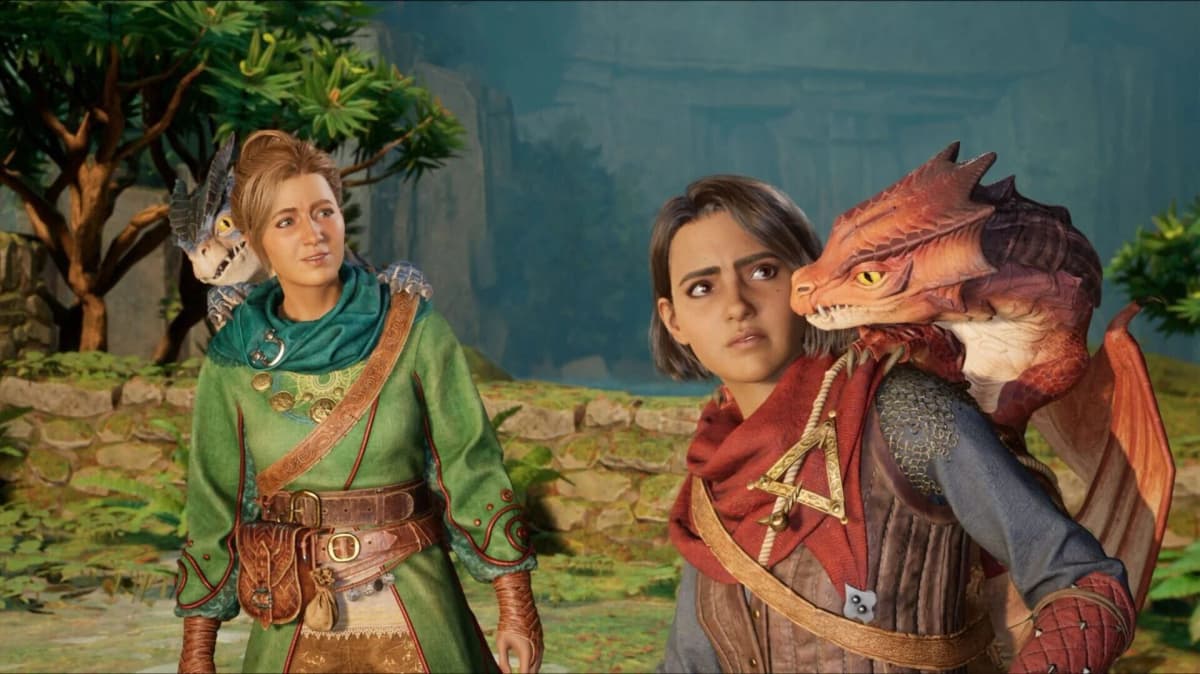
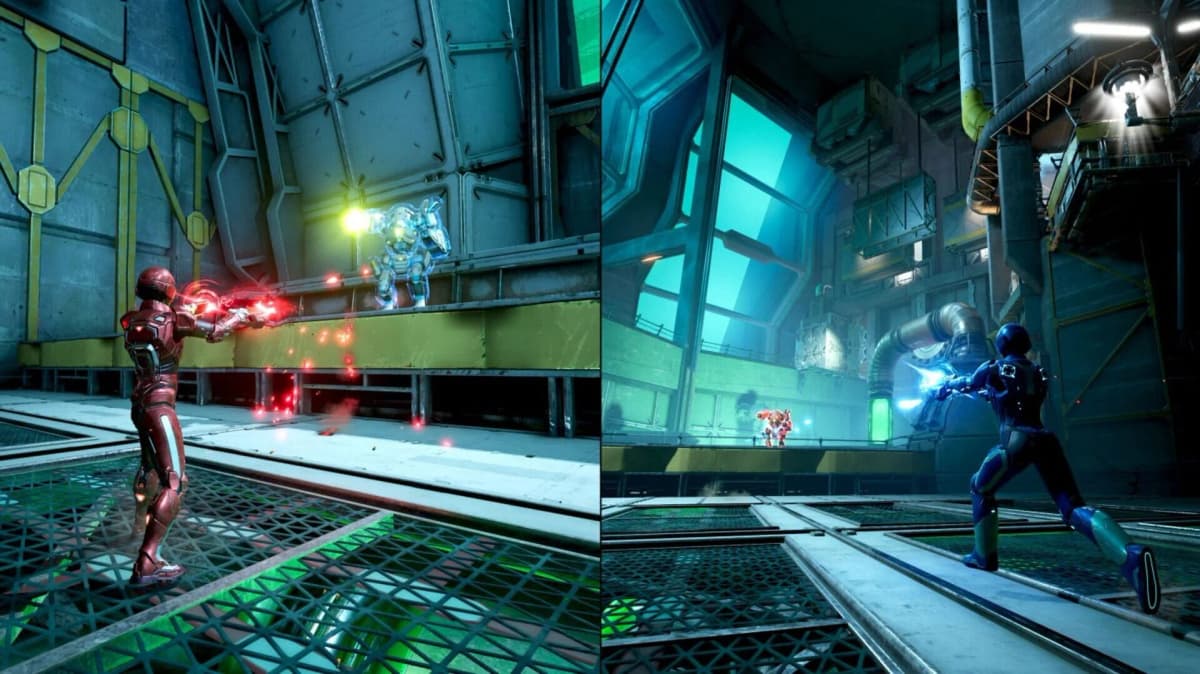
If there’s one design trend I’ll defend to the grave, it’s modern co-op built around communication rather than grind. Split Fiction, It Takes Two – these aren’t just games where two people press buttons together, they’re systems built to force constant talking, planning, screwing up and laughing it off.
We switched a lot between taking turns and playing together. The “taking turns” part sounds old-school, but it’s underrated: when one of us played, the other had time to comment, roast, analyse mechanics, talk hardware, or just silently watch a good story unfold. If spectating wasn’t compelling, Twitch wouldn’t exist. Watching your kid puzzle out a tricky fight in Split Fiction or flinch at a perfectly timed jumpscare in Resident Evil Requiem is its own kind of entertainment.
But the nights where we really clicked were the co-op runs. Split Fiction in particular turned our orchard into a laughter factory. Neighbours got free surround sound of two idiots screaming, cackling, and shouting half-serious tactical advice through canvas walls. That game is already one of the standouts of the year for me, not because it’s technically flawless – although it’s damn good – but because of what it does to people playing it together.
This is where the whole “gaming aber” mindset slaps the clichés in the face. Gaming, aber wir reden; gaming, aber wir bauen Vertrauen; gaming, aber man lernt den anderen neu kennen. People love to frame gaming as the absence of interaction. What I experienced in that tent is the opposite. Co-op made us louder, more honest, more ourselves.
And then there’s Resident Evil Requiem. Playing a Resi game at night, under canvas, in the middle of a garden that creaks and rustles on its own, is unreasonably intense. Every real twig snap outside becomes a potential in-game threat. Branches scraping the tent wall sound like something trying to get in. The game doesn’t need a fancy 3D audio system when the entire orchard is your surround setup.
And then there’s Resident Evil Requiem. Playing a Resi game at night, under canvas, in the middle of a garden that creaks and rustles on its own, is unreasonably intense. Every real twig snap outside becomes a potential in-game threat. Branches scraping the tent wall sound like something trying to get in. The game doesn’t need a fancy 3D audio system when the entire orchard is your surround setup.
🎮 Get This Game at the Best Price
Compare prices instantly and save up to 80% on Steam keys with Kinguin — trusted by 15+ million gamers worldwide.
*Affiliate link — supports our independent coverage at no extra cost to you
Half of the terror came from the screen. The other half came from the fact we were actually exposed – not just sitting in a safe living room box. It’s a small thing, but it changes how you experience horror. And honestly, Resident Evil Requiem with that much screen space and that little artificial light around? It’s up there with my favourite ways I’ve ever played any Resi entry.
Retro austerity, no autosaves and the conversations that actually matter
Here’s the twist I didn’t see coming: the best conversations didn’t happen during new releases. They happened while we were running old stuff.
When the power budget got tight or we just wanted something different, we dove into classics: Serious Sam, the first Far Cry, Dark Messiah of Might and Magic, a bit of Quake 3, even some old-school Command & Conquer where my son, to his absolute horror, discovered that dad can still micro him into the ground.
These games are from that wonderfully cruel era where saves are rare, ammo is limited, health doesn’t magically grow back because you crouched behind a crate for six seconds. They’re unapologetic. They expect you to pay attention, learn, adapt.
Watching my son run into those walls and then push through them was weirdly emotional. It opened the door to saying: this is kind of what adult life feels like. No autosave. Bad decisions don’t get silently erased. You don’t always get a tutorial. Sometimes you just get dropped into the jungle with a pistol and terrible odds and you make it work.
That sounds melodramatic, but those metaphors land better when you’ve just died for the fourth time because you wasted all your rockets on the wrong target. From there we slid into everything else: school memories, friendships that ended badly, first job fears, contracts, taxes, politics, the world being on fire, literally and metaphorically.
We’ve all heard someone talk about “quality time” like it’s a specific format. A board game, a hike, a museum. Anything with screens is instantly labelled “bad” or “lazy”. Honestly? Bullshit. The tent, the PC, the retro titles – they gave us a language we both speak fluently. We weren’t staring silently at separate feeds; we were pushing through the same challenges, laughing at the same jank, dissecting the same design decisions, then somehow taking that energy into talking about real life.
One of my favourite side quests in this whole experiment: the music sharing around the campfire. We’d pause the games, build a small fire just outside the tent, hook a playlist to the PC speakers, and take turns playing songs we loved. Entire genres I used to ignore are now in my rotation because he insisted on “just listen properly once”. In return, a handful of my old favourites ended up on his phone. That mutual vulnerability – “this track really means something to me” – is a kind of character creation screen you never get in polite conversation.
Tech vs. nature: humidity, dead monitors and the WiFi from hell
Now for the ugly part: electronics do not love living in a tent 24/7.
Even under a cotton roof, humidity is relentless. Temperature swings condense inside panels. Dust crawls into every gap. Over the course of a year, we killed two monitors the exact same way: first one half of the screen flickered with sickly green artefacts, then it died altogether. When the second went the same route, I stopped pretending it was bad luck. This is simply what happens when you treat living-room equipment like camping gear.
I’d deliberately bought used monitors because I knew I was abusing them. Still, watching hardware fail because you were lazy about packing up is a humbling kind of tax. The latest “upgrade” is a cheap 43″ 4K TV that now lives out there. It’s hilariously oversized for a tent, but it turns Resident Evil Requiem into an almost theatrical experience. The downside? If our neighbours weren’t horror fans before, they probably have new nightmares now from all the late-night screaming.
The power station, surprisingly, handled abuse far better than the displays. Rain, storms, even the time the tent partially flooded – it just shrugged and kept delivering watts. The only hard limit is physics: LFP batteries don’t charge below freezing, so winter nights forced us back into the house. Fair. I’d rather have a safe battery than a fireball in the orchard.
The real enemy was WiFi. The router sits under the roof of the house, beaming glorious fibre into the void. The tent is sort of in line of sight, but trees, walls and sheer distance messed with the signal. Some nights we’d pull a solid 500 Mbit/s, others we’d get 10 Mbit/s and latency that made every online session feel like playing through molasses.
That inconsistency is maddening. You don’t notice in a flat where your router is basically next door to every device. Out there, though, you feel every weak hop. A beefy WiFi 6 access point and an external antenna on a cable for the PC saved the day. Suddenly the connection was stable enough that co-op wasn’t a coin flip. But it drove home how fragile our “always online” world really is as soon as you step outside the ideal indoor bubble.
Honestly, it makes me side-eye a lot of modern hardware design. Devices are sold like lifestyle upgrades but designed only for pristine, climate-controlled living rooms. The moment you treat them as tools instead of decorations – haul them into a garden, leave them in an unheated tent, run them off solar – they reveal how brittle they really are.
Why I’m not going back to “normal” gaming spaces
This whole thing started as a sentimental project: give my son a weird, memorable last-school-summer. It morphed into something bigger. The tent in the orchard changed how I think about gaming itself.
I’ve poured thousands of hours into games across all kinds of setups – CRTs balanced on wobbly desks, noisy LAN parties in school gyms, sterile home offices with LEDs arranged like a spaceship. None of those hit me as hard as playing Split Fiction in a canvas tent lit by a camping lamp, or creeping through Resident Evil Requiem while hearing an owl somewhere above the roofline, or watching my kid survive an old Far Cry mission by the skin of his teeth and then immediately pivoting into a talk about job interviews and self-doubt.
Gaming didn’t suddenly become “healthy” or “wholesome” because we added solar panels and a tent. It became honest because we built a space around it that demanded presence. No algorithmic noise. No one doomscrolling on a second screen. Just us, the garden, and whatever digital chaos we invited in for the night.
I’m not saying everyone needs to copy the exact setup. Not everyone has a garden, not everyone can afford power stations or spare monitors to sacrifice to the moisture gods. But the principle holds: if you care about someone and you both care about games, you can build your own special: gaming aber space. Gaming, aber als Ritual. Gaming, aber mit Absicht. Maybe that’s a tiny balcony with a Steam Deck and a camping chair. Maybe it’s a weekly couch co-op night where phones stay in another room. Maybe it’s a shed, a rooftop, an internet café you reclaim from pure grind sessions.
I’ll keep hauling my PC into the garden as long as my back survives it. I’ll keep burning through cheap screens and cursing at WiFi drops, because the payoff is worth every annoyance. One day my son will move out, and the tent will probably come down. But when he thinks back to that weird summer between school and “the rest of his life”, I doubt he’ll remember individual cutscenes or boss fights.
He’ll remember the orchard, the flicker of the campfire on the canvas, the hum of the power station, the stupid in-jokes that came out of failing a level five times in a row, the way Resident Evil made us both jump even though we pretended we weren’t scared. And I’ll remember that, for once, gaming wasn’t something I squeezed in around real life.
For one long, messy, beautiful stretch of time, gaming was real life – in a tent, under the trees, with my son on the next chair over.
FinalBoss // Gear
Level up your setup
01Top-rated gaming headsetson Amazon→02High-refresh gaming monitorson Amazon→03Gaming chairson Amazon→04Discounted game keyson Kinguin→Affiliate links · As an Amazon Associate, FinalBoss earns from qualifying purchases.
Want to Level Up Your Gaming?
Get access to exclusive strategies, hidden tips, and pro-level insights that we don't share publicly.
Ultimate Gaming Strategy Guide + Weekly Pro Tips