
Table of Contents (8)
The Night the Floor Disappeared
It was past 3 AM and my third cup of coffee had gone cold. I had just finished what I believed was my architectural masterpiece-a split-level modernist nightmare with curved glass walls angling out over a sculpted ravine. For four hours I had been lost in the gridless bliss of Build Mode, nudging a sofa to a 37-degree angle because it felt right, stretching a bay window until it caught the morning light exactly how I imagined. I hand-placed floor planks one by one to get a herringbone pattern that no prefab would allow. I didn’t use a single cheat to place anything. I didn’t need to. The game let me build. I rotated the camera one last time, placed a minimalist lamp on a floating shelf, and switched to Live Mode with the proud sigh of a creator who thinks their work is done. Juno, my first Para, walked into the kitchen to grab leftover stir-fry from the fridge. She took three steps toward the island counter and dropped straight through the floorboards into the digital void beneath the lot. No stumble animation. No warning buzz. One frame she was there, the next she was clipping through geometry that had absolutely existed in Build Mode, plummeting into an empty blue nowhere. I sat back in my chair and laughed, because the alternative was screaming over four lost hours. I hit Ctrl+F1. That top-right cheat overlay slid into view like a guilty secret. I typed PIGGYBANK for a quick 1,000 paradimes because the build had left me broke, then I tried to summon Juno back with a teleport command that may or may not have worked. I reloaded the lot twice before the floor decided to render properly again. That single moment sums up Paralives better than any feature list: this is a game that hands you godlike creative power, then forgets to nail down the physics. It is intoxicating and infuriating in the same breath. I went to bed angry and woke up wanting to build again.
The Character Creator Stole My First Evening
Before the floor betrayed me, there was the character creator, and I need to be clear about what happened. I booted up Paralives expecting a Sims clone with the serial numbers filed off. Ten minutes later I was still sculpting a nose. Twenty minutes in, I was adjusting the tilt of an eyebrow by two degrees. The controls are precise in a way that feels almost tactile, like you’re pushing clay instead of clicking sliders. You aren’t picking from eight preset noses and calling it custom; you’re pulling, pushing, and tilting features with a freedom that reminds me more of a lightweight 3D art suite than anything in this genre. I gave Juno an asymmetric smile, a slight shoulder hunch that made her look exhausted, and eyes that actually carried weight-bags under them because I wanted her to look like she’d worked a double before moving to this new town. The color wheel isn’t a fake palette locked behind a dozen swatches; it’s a genuine gradient that covers the full spectrum. Hair, skin tone, fabric texture, all of it. I spent ten minutes matching a sweater to a specific rust orange I remembered from a photo. I burned three hours in that menu without touching actual gameplay once. I haven’t done that since My Sims, but where that game was charmingly simple, this is adult and intentional. The cel-shaded art direction saves it from the uncanny valley. Every Para looks like a drawing made by someone in a good mood, distinct and warm. When I finally dropped Juno into the world, she felt like my Para, not a doll I dressed up. That ownership is rare, and it made the eventual floor collapse feel personal.
Build Mode Made Me Feel Like an Architect Again
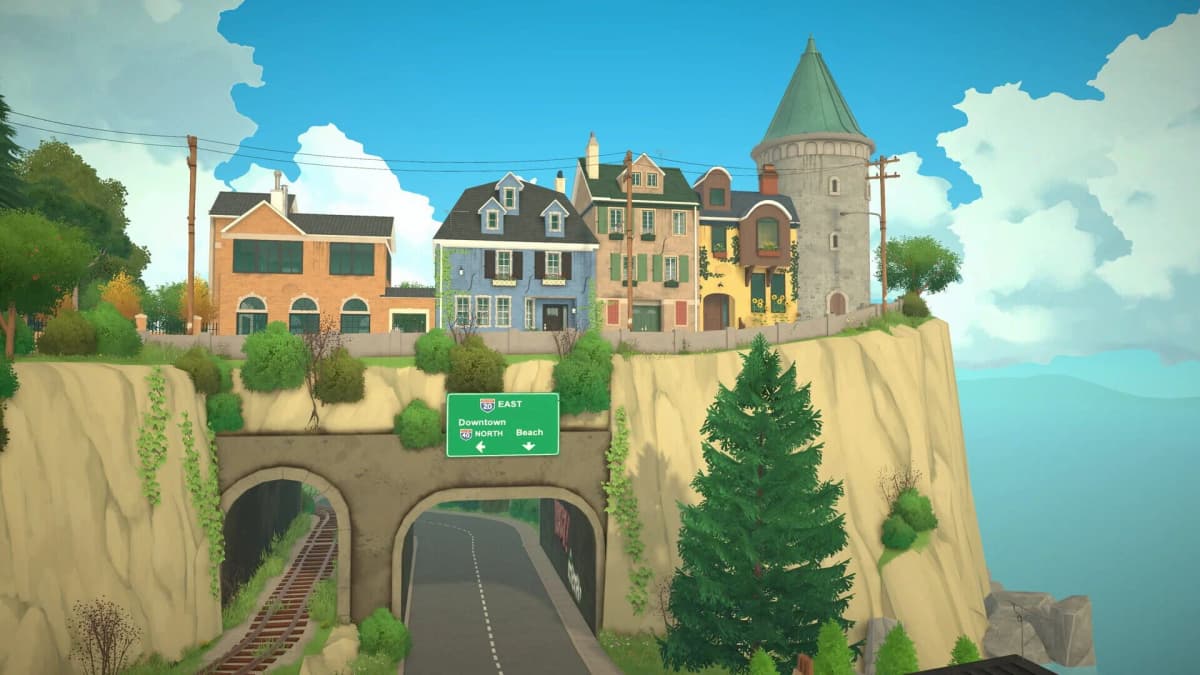
If the character creator is the hook, build mode is the reason I keep booting Paralives up at unholy hours. Gridless placement isn’t a marketing bullet point here; it is the entire philosophy, and it changes everything. I placed that sofa at a 37-degree angle because I wanted to, and the game didn’t fight me. I built curved walls that actually curve, smooth and unbroken, not the segmented fakes you get by chaining tiny straight pieces together. I made a staircase float because I felt like it, and Paralives said sure, that works. The tactile finesse-holding Shift for micro-nudges, free rotation on every single object, walls that snap when you want them to but don’t bully you when you don’t—reminds me of The Sims 2 during its expansion heyday, back when the tools felt generous instead of nickel-and-dimed. I constructed a reading nook with a bay window that technically shouldn’t exist, angling the glass until it caught the in-game light just right and cast a shadow across the hardwood I hand-placed plank by plank. It felt like sketching in three dimensions. The system asks what you want to build, then gets out of your way. There are limits, and I have to mention them because they hurt: no pools yet, which feels bizarre for a life sim in 2026, and the terrain tools occasionally fight back. But the architectural freedom is intoxicating. I rebuilt my real-life apartment floor plan in about 45 minutes just to test the fidelity. In The Sims 4, that same process would have been an hour of grid wrestling, moveobjects rage, and resigned compromise. Here, it was calm. Creative. Almost meditative. That generosity is Paralives’ soul. It trusts you to be the designer. It doesn’t gate the fantasy behind DLC packs or currency grinds. When I finished that modernist house, I didn’t feel like I had gamed a system; I felt like I had drawn something true.
Living the ParaLife Is Slower, Calmer, and Still Too Thin
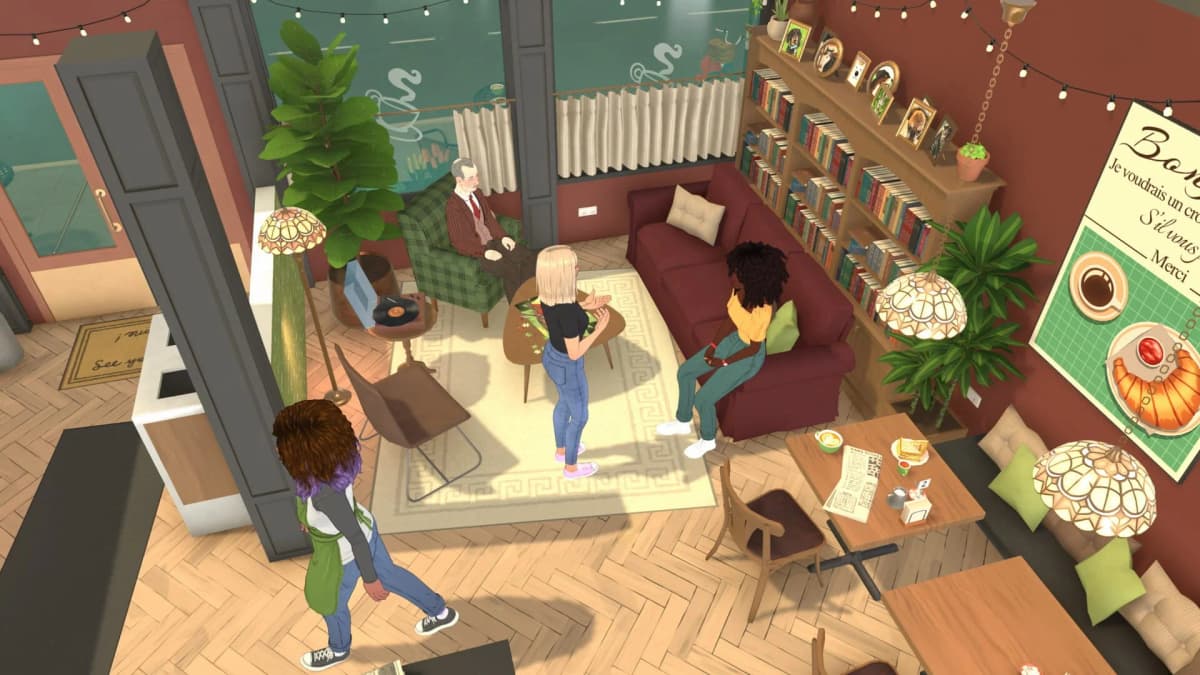
When you stop building and start living, the temperature drops noticeably. Paralives runs at a slower BPM than The Sims, and that is both its greatest strength and its earliest weakness. Social interactions aren’t rapid-fire spam clicks that max out a relationship bar before lunchtime. I tried to turn Juno into a social butterfly on her first day, chaining conversation after conversation with the neighbor who lived in the prefab ranch next door. The game pushed back. A conversation system kicks in that forces pacing; repeated interactions feel intentional, not like grinding an invisible meter. It took three in-game days of shared microwave meals, parallel TV watching, and one awkward moment where they both reached for the same book before Juno and that neighbor became actual friends. I appreciated that discipline. It makes progression feel weightier, more observed, less like a spreadsheet and more like a courtship. The Storyteller events pop up to shake the routine—little narrative nudges that give you choices with minor consequences. I had one event where Juno found a stray wallet and had to decide whether to keep the cash or turn it in. The choice felt small but personal. It’s a smart system that hints at real depth. But after roughly 35 hours, the loop reveals its short length. Career paths are present but shallow, mostly reduced to sending your Para off to a rabbit hole job and waiting for her needs to recover. I sent Juno to her writing gig and she came back with money and exhaustion, but I never saw the office. Hobbies exist but run out of new interactions quickly; I maxed out Juno’s painting skill and then realized there were only so many canvases she could churn out before the activity felt robotic. Personality traits define your Para on paper, but in practice, the emergent behavior pool feels small. I watched NPCs behave with all the grace of broken animatronics: walking into corners for hours, getting stuck in bathtubs, refusing to use front doors I had specifically placed for them while pathing around the entire lot to use a back entrance. The world is pretty but static. Without seasons turning the leaves, without pets underfoot, without a town festival or even a dramatic break-in, the neighborhood feels like a stage set after the actors have gone home. The calm becomes repetition. The deliberate pace becomes waiting. I found myself building a second house just to avoid the tedium of Juno’s daily routine.
Early Access Means Broken Floors and Missing Pets
Let’s be blunt about what Early Access means in Paralives. It does not mean a few rough edges or occasional texture pop-in. It means ghost objects that haunt your lots after you delete them, flickering in and out of existence like poltergeists. It means floor tiles that render perfectly from one camera angle and vanish from another, leaving your living room looking like a diorama of the abyss. It means saving obsessively—every twelve minutes became my neurotic rhythm—because a complex build might corrupt if you breathe on it wrong. During one session, an entire exterior wall disappeared and left my bathroom exposed to the street. Juno didn’t seem to mind, but I did. Performance chugs, too; my frame rate dipped hard during complex builds with lots of glass, and Live Mode stutters when multiple NPCs crowd a lot. The cheat console, accessed with that same Ctrl+F1 shortcut, became less of a toy and more of a trauma kit. MAKEITRAIN for 10,000 paradimes when my job payment glitched and failed to process. JACKPOT for 50,000 when I needed to fund a full rebuild after a save file decided my kitchen no longer deserved to exist. I used these codes not to break the game, but to fix what the game broke. The missing content hurts even more than the technical instability. No swimming pools. No pets to adopt or care for. No weather, no seasons, no changing leaves or summer thunderstorms. No major town events, no holidays, no sense that the world evolves without your direct hand on the wheel. For a life sim launching into a market that already has established giants, those absences are deafening. The developer roadmap promises additions over the next two years, and I genuinely believe they mean it based on the care evident in the building tools. But right now, Paralives is a house with incredible bones and no plumbing. You can live in it, but you’re going to notice the missing toilet eventually.
Should You Move In Right Now?
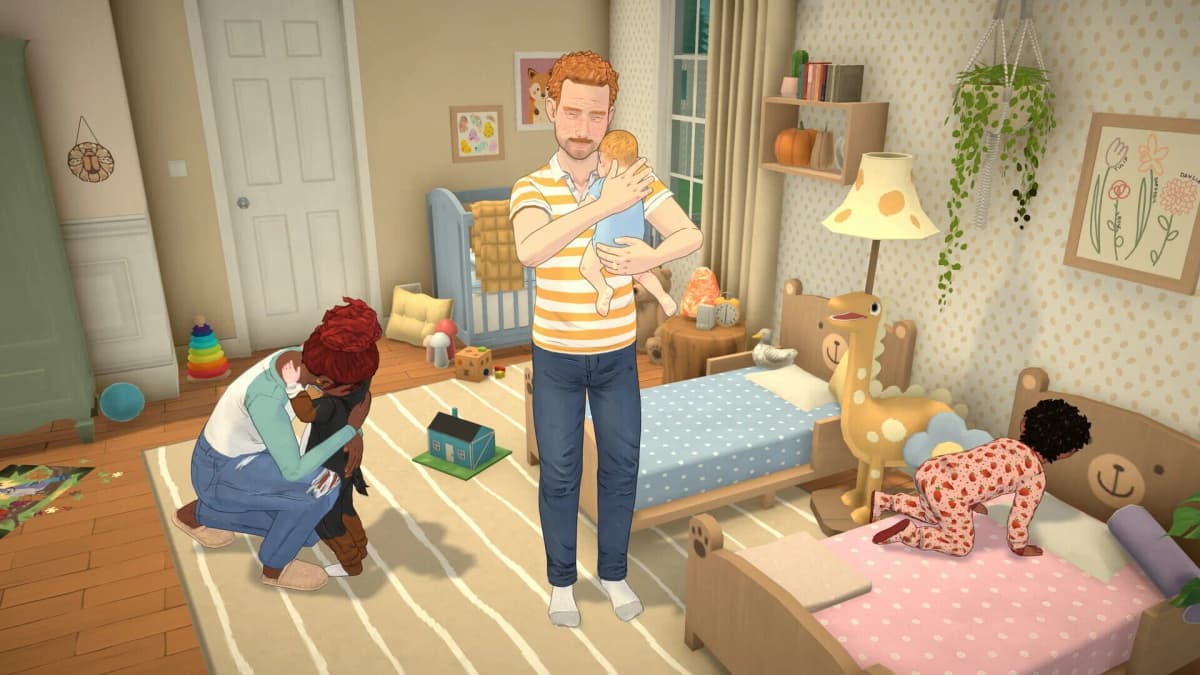
Builders should buy this immediately. If you spend seventy percent of your life sim hours in Build/Buy mode, Paralives is already essential. The gridless freedom is that good. It redefined what I expect from virtual architecture, and going back to The Sims 4’s rigid grid feels like trading a paintbrush for a brick. Sims veterans who are burned out on the franchise’s current direction—its monetization, its chaos, its relentless DLC cycle—will find a calmer, more respectful creative partner here. It feels like a game made by people who remember why players loved this genre in the first place. But if you are here for the life part—if you need emergent chaos, deep career gameplay, pets running underfoot, or weather pounding on the windows while your Para sips cocoa—you need to wait. This is not a replacement for a finished life sim yet. It is a foundation, and a fragile one. Early Access supporters who can tolerate phantom floors, repetitive social loops, and the very real possibility of a corrupted save will discover a gem underneath the grit. Casual players looking for a complete, polished package should bookmark it and check back in a year, maybe two. The promise is real. The execution is just early, and your willingness to pay for potential will determine whether this feels like a steal or a stumble.
The Bottom Line
Paralives has already eaten 35 hours of my life, and I resent every bug that made those hours frustrating. I treasure every build session that made me feel like an artist again instead of a consumer downloading content packs. It has the strongest character creation and architectural toolkit I’ve used in this genre since The Sims 2’s expansion era. It also has void floors, brain-dead NPC pathing, and a live mode that runs out of breath too soon. I cannot call it a masterpiece. I can call it a promise I desperately want kept. After seven years of development, what we have is a brilliant blueprint with a charming cel-shaded face and an engine that occasionally stalls out at the intersection. I will keep playing. I will keep building glass houses on hills and sculpting Paras with crooked smiles. But I will keep saving every twelve minutes, and I will keep that cheat console hotkey burned into my muscle memory. Paralives is not dethroning anybody today. It is, however, building a throne that might actually fit a king if the team can fill the gaps. I give Paralives a 7.5 out of 10. When the floors stay solid, the pets arrive, and the town starts breathing on its own, this might become a genre leader. For now, it’s the most exciting, broken, beautiful construction site on Steam.
TL;DR
- Paralives has the best gridless build mode and character creator I’ve used in years.
- Live Mode is calmer and more deliberate than The Sims, but too shallow and repetitive after 20-plus hours.
- Bugs are constant—missing floors, phantom objects, broken pathing, and save corruption risks.
- Major life sim staples are missing: no pets, pools, seasons, weather, or town events yet.
- Worth buying now for builders and patient Early Access fans; everyone else should wait for updates.
FinalBoss // Gear
Level up your setup
01Top-rated gaming headsetson Amazon→02High-refresh gaming monitorson Amazon→03Gaming chairson Amazon→04Discounted game keyson Kinguin→
Affiliate links · As an Amazon Associate, FinalBoss earns from qualifying purchases.
Want to Level Up Your Gaming?
Get access to exclusive strategies, hidden tips, and pro-level insights that we don't share publicly.
Ultimate Reviews Strategy Guide + Weekly Pro Tips