
Table of Contents (10)
The Exact Moment Metroid Prime 4 Lost Me
About ten hours into Metroid Prime 4: Beyond, I realised something ugly: I wasn’t exploring anymore. I was commuting.
I’d just cleared yet another “biome dungeon,” hopped on Samus’ Vi-O-La motorcycle, and was speeding across Sol Valley – the big central hub Nintendo once pitched as “the perfect size: big enough that the motorcycle feels necessary, but not so big that you are ever driving for too long.” In reality, it felt like an overdesigned loading screen with enemies sprinkled in for show. A squadmate radioed in, politely-but-not-really “suggesting” the next objective, complete with a glowing marker already stamped on my map.
On instinct, I did what a Metroid veteran does when they smell a scripted funnel: I turned the bike the other way. I went looking for that classic Prime feeling – the hidden nook, the suspicious ledge, the scan that opens a shortcut three hours later. After fifteen minutes of riding through mostly empty desert, fighting recycled mobs and finding nothing but a couple of token crystal deposits, the truth hit me.
Metroid Prime 4 wasn’t letting me get lost. It wasn’t even interested. It just wanted me back in the corridor, back on the ride, back on the checklist. And for a series that built its legend on pure, unguided wonder, that’s a betrayal I’m still pissed about.
Why This Hurts So Much: My History With Prime
I’m not some tourist strolling into Metroid because the box art looks cool. I grew up on this stuff. I still remember booting up the original Metroid Prime on GameCube, stepping onto Tallon IV, and just standing in that rain-drenched landing site listening to the music. No waypoint, no icon soup, just a world and a gun and an invitation: “Figure it out.”
I 100%-ed Prime 1 and 2 back when that actually meant drawing your own maps or obsessively scanning every panel in Phazon Mines. I sequence-broke my way through Prime 3. I adored Dread for how it quietly guided you without ever yanking the leash. Metroid, especially the Prime sub-series, taught me to love level design as an art form. It made me care about how rooms interlock, how secrets loop back, how a single new ability can suddenly rewire your mental map of an entire planet.
So when Nintendo announced Metroid Prime 4 in 2017, then restarted development with Retro, then spent years in total silence, I did what every long-suffering Metroid fan did: I told myself, “They’re cooking something big. This is going to be our Breath of the Wild moment.” Eighteen years since Prime 3, eight years of build-up… and what we got is, hands down, the least ambitious 3D Metroid in the series.
From Interconnected Planet To Theme Park Hub
The fundamental sin of Metroid Prime 4 isn’t its story, or its gimmicky psychic powers, or even its bizarre music paywalls. It’s the world structure. This game takes the beautifully interwoven planet design of the older Primes and rips it apart into something closer to a Zelda hub with attached dungeons – except without the charm or density.
Sol Valley is the new “overworld,” a desert hub that connects to four main biomes. On paper, that sounds a bit like Prime 2’s Agon Wastes/LF Temple setup. In practice, it feels like Hyrule Field from Ocarina of Time if every exit just dropped you into a separate, isolated theme park with one way in and one way out. None of the biomes genuinely thread back into each other. No late-game shortcut quietly links the frozen area to the jungle. There’s no equivalent of discovering that the crashed frigate in Prime 1 is actually a bridge between regions you thought were miles apart.
Instead, you get what a level designer friend of mine accurately called “very narrow linear spaces connected by shootable doors.” Almost every major area plays like this: a long hallway, a slightly wider combat arena, a puzzle room, elevator, repeat. The map pretends there are branching paths, but nine times out of ten the “fork” is an obvious dead end you’ll revisit once you find the color-coded psychic key that matches the door. The old Prime games bent back in on themselves constantly. Beyond feels like it was laid out with a ruler.

The Death Of “Pure, Unguided Wonder”
Now, Metroid has flirted with linearity before. Fusion literally tells you where to go on a big blinking map. Zero Mission hands you waypoints. Prime 3 was already more guided, and Dread uses incredibly clever level “locks” to keep you flowing forward. I’m not allergic to direction. What I can’t stand is being treated like someone playing Metroid for the first time and being given nothing interesting to find when I ignore the arrow.
Prime 4 drowns you in “suggestions.” Your support crew radios you so often it feels like you’re on a Nintendo-published podcast. They don’t just hint; they practically GPS-navigate you: “Hey, Samus, I’m picking up a psychic anomaly northeast of your position, maybe check that out?” The map drops explicit icons for your next power conduit, your next objective, your next “dungeon key.” Even scan points, once an organic part of soaking in the world, are now often highlighted like giant neon signs.
And when you resist? When you go full stubborn veteran and ride your Vi-O-La in the opposite direction like I did? The game shrugs. That canyon you painstakingly traverse, wall-jumping and shining-sparking because you’re sure there’s some wild missable upgrade at the end? It dumps you back at a locked gate that just says, in design language, “Come back with 80 more psychic crystals, idiot.” I used to get lost in Metroid because the world was richer than my memory. In Beyond, you get lost because you haven’t farmed enough currency.
Gates, Grinding, And The Illusion Of Progress
The crystal gating is where Beyond fully stops feeling like Metroid and starts feeling like a live-service designer crashed through the ceiling mid-meeting. A shocking number of core progression doors are locked behind “energy crystal” thresholds – 50, 75, even 100 crystals to advance. Your first couple of hours you barely notice, because the gates are cheap and the drops are generous. Then, somewhere around biome two, the screws tighten.
I hit a 75-crystal psychic barrier after a boss in my eleventh hour with only 21 in my pocket. The nearest reasonably dense crystal route was three rooms back, a series of respawning enemies and destructible nodes that coughed up 2–3 crystals apiece. I timed it: it took me just over 35 minutes of running the same three-room loop to get enough to open one door. Not a secret room. Not an optional super missile expansion. The door.
This is the worst kind of faux-“Metroidvania” design – progress measured in currencies instead of knowledge or abilities. Old Metroid locked you out because you hadn’t earned the Grapple Beam, or because you hadn’t cottoned on to the idea that the glass tube could be bombed. Prime 4 locks you out because you didn’t kill enough psychic pirates in Section C. It’s busywork disguised as exploration, and it absolutely murders pacing. Those 12–15 hours everyone quotes for the main campaign? A depressing chunk of that is crystal grinding you’ll never remember.
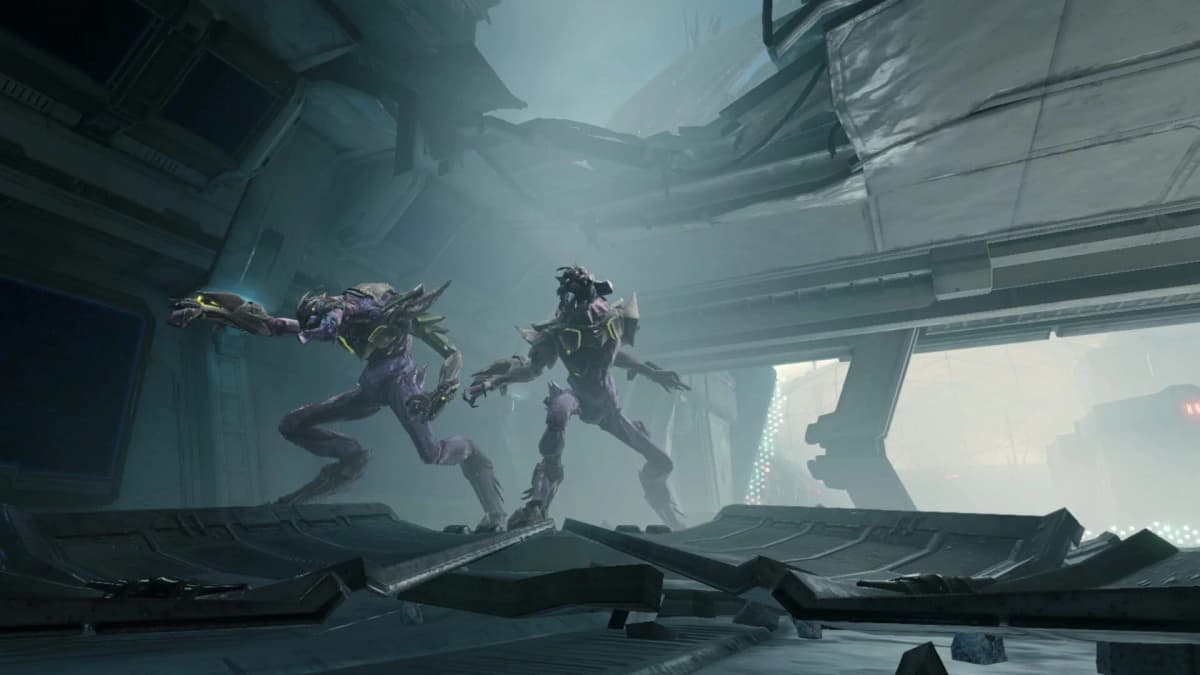
Cool Toys, Wasted On Empty Spaces
The tragic thing is that on a mechanical level, Prime 4 feels fantastic. Retro absolutely nailed the controls this time. Gyro aiming on the Switch 2 hardware is crisp, movement is snappy, the lock-on system is smarter, and they’ve finally modernised things like beam switching and visors so they don’t feel like hand gymnastics. Samus has never been more fun to simply pilot.
The new psychic toolkit should have been the big swing. Instead, it’s mostly reskinned keys. You get a telekinetic “pull” that functions like a less interesting Grapple Beam, a mind-blast that exists to break purple walls the missiles can’t, and a clairvoyance visor that might as well be labeled “Highlight Interactables.” Yes, there are a handful of genuinely cool uses – a late-game sequence where you mind-link through a creature to scout a new area is a rare flash of brilliance – but they’re exceptions, not the rule. Most of the time you’re just cycling powers to match the color of the obstacle in front of you.
And then there’s the Vi-O-La motorcycle. The marketing sold it as this big, stylish answer to Metroid’s slow backtracking: a high-speed traversal tool that justified Sol Valley’s scale. In the game, it’s basically a fancy loading corridor on wheels. You ride from biome entrance to biome entrance, maybe take a detour to a crystal deposit or a combat encounter, then dismount and go back into another linear maze. There’s no layer of secrets here – no hidden canyons, no abandoned Chozo ruins tucked off the beaten path. It’s an empty stage demanding applause because you’re zooming instead of walking.
Gorgeous Presentation, Hollow Soul
I’m not going to pretend Metroid Prime 4 isn’t visually staggering. On both Switch and Switch 2, this thing sings. The lighting in the submerged labs, the heat shimmer in volcanic vents, the way moisture beads on Samus’ visor when you exit a freezing chamber – Retro flexed hard. The sound design is equally slick. Mechanical hums, alien chatter, the thrum of charged psychic shots; it’s all immaculate. Patch 1.0.1 even tightened some performance hitches without breaking anything major, which, in 2025, feels like a small miracle.
But all that polish just makes the hollow bits more glaring. The story leans into Prime 3-style cinematics and full voice acting, yet somehow says less. We get a bigger cast, more chatter, more lore about psychic anomalies and galactic politics, and almost nothing that sticks emotionally. Samus is still mostly silent, yet the constant radio noise around her strips away that iconic isolation. In Prime 1, silence meant dread. In Beyond, silence is just the brief lull between someone telling you what to do next.
And then there’s the music debacle. The base soundtrack is good – occasionally great – but the decision to wall off alternate tracks behind a “Galactic Archives” unlock system that’s transparently designed to nudge you towards microtransactions is baffling. We’re seriously at the point where a first-party Nintendo Metroid is flirting with selling you background music remixes. The closest thing to a bold new idea in Prime 4 is a monetisation scheme. If that doesn’t feel wrong to you, I don’t know what to tell you.
Metroidvania Has Moved On – Nintendo Hasn’t
The most damning thing I can say about Prime 4 is that if it didn’t have “Metroid” on the box, it would just be “a decent, pretty linear sci-fi shooter with some light backtracking.” In 2002, that would’ve blown our minds. In 2025, it’s behind the curve.
Look at what’s happened to the Metroidvania space while Nintendo sat on this IP. Hollow Knight and its upcoming Silksong turned interconnected worlds into an obsession, with NPCs roaming between regions, secrets nested inside secrets, and side quests woven into level geometry itself. Ori and the Will of the Wisps showed how you can marry precision platforming with sprawling, readable maps. Animal Well basically said, “What if the entire game was optional secrets?” and people ate it up.
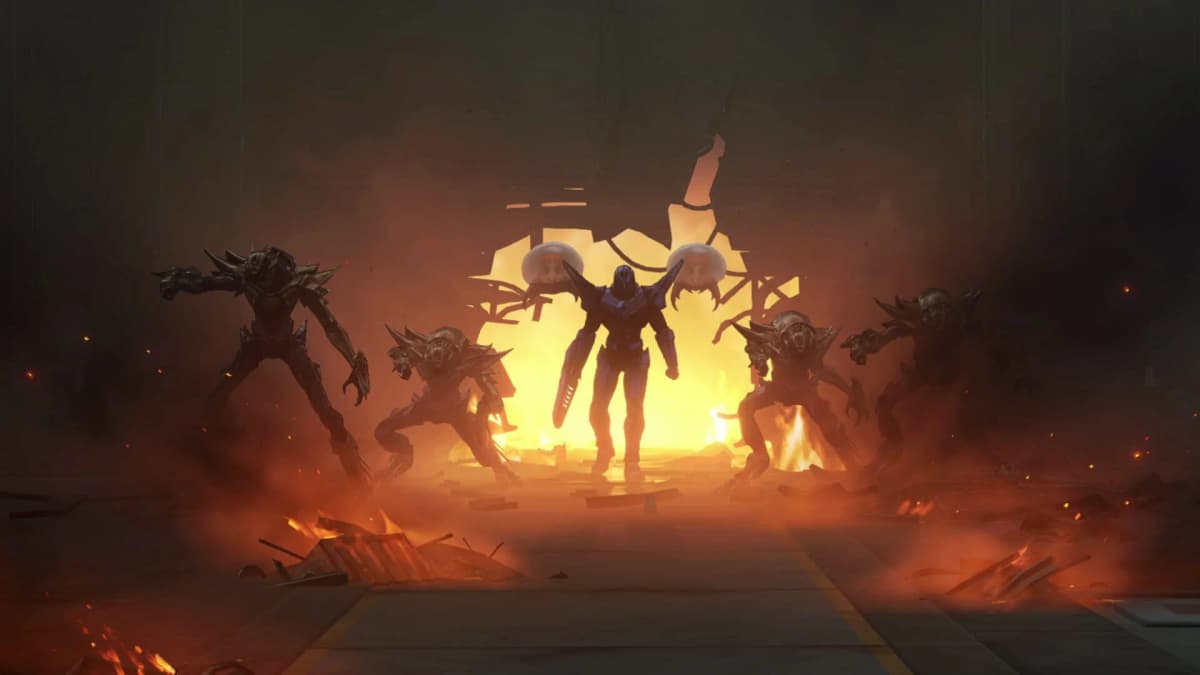
Even in 3D, the space Metroid Prime once owned, others have stepped in. Batman: Arkham Asylum and Star Wars Jedi: Fallen Order both understood the thrill of slowly mastering a place, of seeing a ledge or door hours before you can do anything about it, then having that eureka moment when your new toy completes the mental circuit. Hell, FromSoftware’s recent worlds, while not Metroidvanias in the strictest sense, are masterclasses in environmental interconnection. Prime 4, by comparison, feels frightened of confusing you, frightened of letting you miss anything, frightened of trusting you to be curious.
“Maybe You Just Wanted A Different Game” – No, I Wanted A Better One
I can already hear the counterargument: “Not every game has to reinvent the wheel. Some of us just wanted more Prime.” And to a tiny extent, I get that. If what you wanted was a graphically upgraded comfort food tour of familiar Prime beats – scanning logs, morph ball puzzles, Chozo ruins in HD – Beyond delivers just enough to scratch that itch. The shooting feels good. Bosses are mostly solid. If this is your first Metroid, you might even love it.
But for those of us who’ve lived with this series for decades, “more of the same, but narrower” isn’t acceptable after an 18-year wait. Nintendo and Retro had the time, the hardware jump, and the accumulated wisdom of an entire genre blossoming around them. They could have taken the core of Prime – that sense of being alone on an alien world, slowly making it legible – and pushed it somewhere wild. Larger-scale interconnected environments. Deeper scanning implications. Enemies and NPCs that genuinely move through the world instead of freezing when you leave the room. Instead, we got a gorgeous museum exhibit of past ideas with modern hand-holding layered on top.
Where Metroid Goes After Beyond
Here’s the twisted silver lining: I think Metroid Prime 4 might end up being this series’ Skyward Sword moment. A technically impressive, creatively timid game that makes Nintendo stare in the mirror and realise, “We can’t keep doing this.” Zelda needed the growing discomfort around Skyward Sword’s hyper-scripted corridors to break into Breath of the Wild. Maybe Prime needs Beyond’s hyper-linear biomes and grind walls to finally snap out of its own nostalgia trap.
Do I trust Nintendo to actually make a Metroid “Breath of the Wild”? Honestly, less than I did before Beyond. Metroid has always been the awkward middle child compared to Mario and Zelda, the one that gets love in bursts and then left in the attic for a decade. The fact that Prime 4 feels more like a contract obligation than a passion project – a game they couldn’t cancel after announcing it too early – doesn’t inspire confidence.
But I’m not done with this series. I can’t be. Metroid is still my favourite Nintendo franchise, even after Beyond tried its best to smother that flame under a pile of psychic crystals and corridor maps. What this game has changed is how high the bar now is for whatever comes next. If we ever get a Prime 5, it can’t just be “Prime, but prettier.” It needs to reclaim that sense of discovery that modern indies have been carrying without Nintendo’s help. It needs to make other developers jealous again, not the other way around.
Until then, if you want to feel what Metroid Prime 4 should have made you feel, go play Hollow Knight again. Boot up Animal Well. Revisit Tallon IV on your dusty old hardware. Those games still trust you to get lost. Beyond doesn’t. And that’s the real tragedy of Metroid Prime 4: not that it’s unplayable or broken, but that it’s perfectly fine in a genre where Metroid used to be legendary.
FinalBoss // Gear
Level up your setup
01Best-selling Switch 2 gameson Amazon→02Switch 2 accessorieson Amazon→038BitDo controllerson Amazon→04Discounted game keyson Kinguin→Affiliate links · As an Amazon Associate, FinalBoss earns from qualifying purchases.
Want to Level Up Your Gaming?
Get access to exclusive strategies, hidden tips, and pro-level insights that we don't share publicly.
Ultimate Gaming Strategy Guide + Weekly Pro Tips