
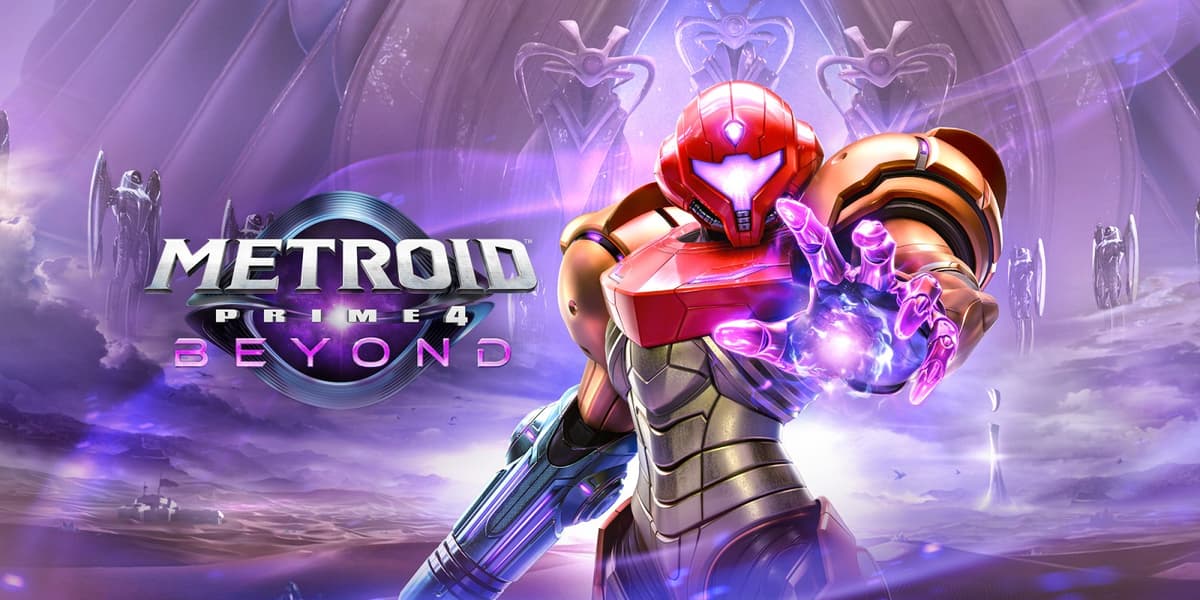
I walked into Metroid Prime 4: Beyond skeptical—after a 1-hour Switch 2 demo, I’m all in
Game intel
Metroid Prime 4: Beyond
An episode in the Metroid Prime series which started on the GameCube, this game takes place between Metroid Prime and Metroid Prime 2: Echoes. Interstellar bou…
Why This Preview Actually Changes the Conversation
I wasn’t hyped for Metroid Prime 4: Beyond. The early trailers looked oddly stiff, the gunplay felt flat on video, and the “is this just Halo now?” chatter didn’t help. After an hour hands-on, I’m eating my words. Beyond plays and presents like a true Metroid game-with modern control finesse-and it’s quietly one of the most technically impressive things I’ve seen running on Nintendo’s new Switch hardware.
- Two visual modes on Switch 2: Quality at 4K/60, Performance at 1080p up to 120 fps; handheld segments were shown at 1080p/60.
- It’s still an exploration-first, puzzle-driven adventure that uses combat as rhythm-classic Prime DNA intact.
- Controls feel meaningfully smoother than the remastered Prime 1: faster morph ball transitions, snappier movement, less stiffness.
- Those divisive trailers likely ran on Switch 1, which explains the “muddy and slow” first impression.
Breaking Down the Demo: A Prime That Remembers It’s an Adventure Game
The slice I played opened with a set-piece-heavy intro that, yes, carries a bit of “Call of Duty energy” in how much is happening on screen. But once I hit the Jungle Furieuse—what feels like the first major biome—the game settled into what makes Prime special: scanning the unknown, tracing environmental logic, and teasing open pathways you’ll fully crack once you return with new tools.
The new “psychic arsenal” (Nintendo’s term in the demo materials) hints at fresh puzzle layers. Think less brute force, more pattern recognition: shifting fields, conditional vulnerabilities, and traversal riddles that recontextualize familiar spaces. A mid-area boss was textbook Prime—dangerous only under specific conditions—and figuring out the “when” mattered more than unloading missiles.
Control-wise, it’s the cleanest Prime has ever felt. The remaster of Prime 1 was gorgeous, but you could feel the age in movement latency and animation lock-ins. Here, morph ball swaps are near-instant, platforming has more micro-corrections, and Samus just… flows. It’s still a complex controller layout—expect to juggle modes and modifiers—but the friction’s been sanded down. There’s also a “mouse-style” option with detached Joy-Cons that mimics pointer precision; after bouncing between that and standard controls, I can see players settling on whichever fits their muscle memory.
FinalBoss // Gear
Level up your setup
01Best-selling Switch 2 gameson Amazon→02Switch 2 accessorieson Amazon→038BitDo controllerson Amazon→04Discounted game keyson Kinguin→Affiliate links · As an Amazon Associate, FinalBoss earns from qualifying purchases.
The Tech Story: Switch 2 Finally Flexes
Let’s talk numbers and feel. The demo offered two modes on Switch 2: a Quality option targeting 4K at 60 fps, and a Performance mode at 1080p targeting up to 120 fps. The opening handheld segment ran at 1080p/60, and it looked pin-sharp. I felt the higher frame rate in Performance during combat rooms, but I preferred Quality for the dense atmospherics—thick foliage, volumetric fog curling through light shafts, and material detail that pops on metallic surfaces. If the rest of the game holds, I’ll play in 4K/60.
The real flex isn’t just resolution; it’s stability and density. Streaming between chambers was near-seamless, and the jungle’s layered geometry (climbable canopies, machinery embedded in rock, wet surfaces reacting to particles) sells the space as more than a corridor. It’s Retro Studios doing what Retro does when given headroom: pushing art direction and performance in tandem instead of choosing one.
Important caveat: this was a controlled demo. Targets are not guarantees across the full game, and 120 fps on a Nintendo title is eyebrow-raising enough that I’ll want to see how consistently it holds. But even with that caution, Beyond currently looks like first-party Nintendo finally showing what the new hardware can do without abandoning the silhouette of the Switch.

Want to Level Up Your Gaming?
Get access to exclusive strategies, hidden tips, and pro-level insights that we don't share publicly.
Ultimate Gaming Strategy Guide + Weekly Pro Tips
So Why Did the Trailers Look Flat?
A lot of the skepticism was earned. Reactions to earlier trailers ranged from “Seven years for this?” to “The shooting sequence is appalling—unbelievably sluggish” to “I’m worried about those huge open areas.” One person even quipped they thought it was a Metroid racing spin-off at first. If those cuts were captured on Switch 1—as the demo reps implied—then the unease makes sense. Cross-gen footage muddies expectations.
Playing it dispelled the “it’s just Halo” fear. The spaces read bigger on camera, but in practice they’re classic Prime: interconnected arenas that mask their lock-and-key structure with striking vistas. You’ll backtrack. You’ll spot doors you can’t crack yet. You’ll mark curiosities for later. That’s the loop, and Beyond embraces it.
What Gamers Should Watch For Next
- Pacing and gating: Backtracking is Prime’s heartbeat, but it needs smart breadcrumbing to avoid slog. The early zone balanced this well; the full map is the real test.
- Control overhead: There are a lot of inputs. Accessibility options and custom remaps will matter for comfort.
- Mode viability: If 4K/60 stays locked and Performance truly hits 120 fps during heavy fights, that’s huge; consistency will decide the “right” choice.
- Cross-gen compromises: It’s launching on both Switch and Switch 2. Retro’s history suggests strong optimization, but parity decisions can blunt ambition.
For now, I’m encouraged—and honestly a little shocked—by how much Beyond rekindles the wonder of scanning an alien world and feeling like you’re learning its rules, not just clearing markers. The demo name-dropped the planet Viewros and hinted at multiple distinct biomes beyond the jungle. If the rest are this layered, we’re in for a proper adventure.

Metroid Prime 4: Beyond is slated for December 4 on Switch and Switch 2. After years of radio silence and a restart at Retro Studios, it finally looks like the series is stepping into a new generation without forgetting what made it great.
TL;DR
The hands-on sold me: Metroid Prime 4: Beyond feels like classic Prime evolved—cleaner controls, puzzle-first design, and serious tech chops on Switch 2. If the full game keeps this balance, December 4 could mark Nintendo’s first truly next-gen-feeling adventure on its new hardware.