
Table of Contents (10)
The One Thing Elder Scrolls 6 Can’t Afford to Change
I’m not exaggerating when I say this: if The Elder Scrolls VI doesn’t start with me as some kind of prisoner, it’s going to feel wrong on a gut level. Not “oh, that’s a cute little reference they skipped” wrong. I mean wrong in the foundational, structural sense – like a Fallout game where you don’t step out of a vault, or a Dark Souls that doesn’t hit you with that first, brutal death as a lesson.
I’ve been playing Elder Scrolls long enough to have my personal “where were you when you first saw it?” moments burned into my brain. Stepping out of the Imperial Prison sewer in Oblivion and seeing Cyrodiil bathed in sunset light. Surviving Helgen in Skyrim, stumbling into the forest with nothing but rags and a half-baked birthsign choice. Even the clunky boat landing of Morrowind, with Seyda Neen creaking into view. Every one of those moments follows the same ritual: you start in chains, then you’re cut loose. That’s the soul of this series.
Bethesda can overhaul combat, throw the UI into a volcano, rebuild the engine (they’re already doing that with Creation Engine 3), even push the timeline forward in wild ways. Fine. Go off. But there’s one tradition they shouldn’t touch in Elder Scrolls 6: you begin as a nobody, powerless, restrained – a prisoner in some form – and then you’re dumped into the world with everything to prove.
That’s not a meme. That’s not a cute reference. That’s a 32-year design spine that quietly makes Elder Scrolls work better than most open-world RPGs that have copied its homework for decades.
32 Years of Waking Up in Chains
People like to joke that Bethesda only knows one way to start a game: you’re locked up, something goes wrong, oops, you’re free now, go touch grass. It’s funny because it’s true, but it’s also lazy to dismiss it as “samey writing”. When a studio holds onto a ritual for this long, it’s usually because it works on multiple levels.
Just look at the mainline Elder Scrolls intros:
- The Elder Scrolls: Arena (1994) – You’re a prisoner in the Imperial Dungeons, escaping through grimy sewers after Ria Silmane appears in a dream and sets the plot in motion.
- The Elder Scrolls II: Daggerfall (1996) – Technically you’re on Imperial business, but a shipwreck leaves you trapped in a cave, alone, underpowered and boxed in. Functionally? You’re stuck and powerless until you claw your way out.
- The Elder Scrolls III: Morrowind (2002) – Shackled on a prison ship, processed like cargo, then spat out into Seyda Neen because the Emperor said so. You’re legally free, but socially? You’re nobody.
- The Elder Scrolls IV: Oblivion (2006) – Literally rotting in a cell until the Emperor himself barges in because there’s a secret passage in your wall. You hitch a ride on his last walk and survive by pure luck.
- The Elder Scrolls V: Skyrim (2011) – Bound in the back of a cart on the way to your own execution. Your freedom is bought with dragon fire and chaos.
- The Elder Scrolls Online (2014) – One of the soulless in Molag Bal’s domain, imprisoned in Coldharbour until you break out with Lyris at your side.
From 1994 through the 2010s, the shape is consistent: restrained start, limited space, low power, then boom – the doors open, and the world hits you in the face. Even Starfield, for all its “new IP, new vibe” posturing, quietly plays a similar hand: you’re a miner doing grunt work in a tightly controlled space before stepping out into something bigger.
And no, this isn’t just “Bethesda doesn’t know how to do other openings.” We’ve had 30 years of game devs trying to frontload their games with insane setpieces and flashy cinematics that feel like trailers you can vaguely control. Then, after that opening high, you’re dropped into 20 hours of something less interesting. The intro and the game don’t match. Elder Scrolls, at its best, does the opposite: the opening is deliberately constrained so that the actual game can blindside you with scale.
Why Starting as a Prisoner Actually Rules
I don’t want Elder Scrolls 6 to keep the prisoner start just because “it’s tradition.” I want it because, from a pure design perspective, it’s one of the smartest, cleanest ways to set up an open-world sandbox. There are a few reasons, and they’re all more interesting than “haha cart meme go brr.”
1. The Zero-to-Hero Arc Hits Harder
Elder Scrolls lives and dies on empowerment. You start as nothing; you end as a demigod who screams dragons out of the sky or re-writes prophecy by existing. That arc hits way harder when your first moments are humiliating. Shackled. Caged. Dismissed.
In Skyrim, that contrast is brutal. One minute your head is literally on the chopping block; a few hours later you’re shouting down overlords and bending the main quest to your pace. In Morrowind, you go from a nameless ex-con being handed some paperwork to a figure the entire island whispers about. In Oblivion, that sewer exit is more than just a nice view – it’s the narrative flipping from “you’re a criminal in a hole” to “congrats, you’re the only person who was there when an emperor died, and the gates to hell are opening.”
If Elder Scrolls 6 starts you as a respected noble, a famous adventurer, or some chosen heir already dripping with status? You cut that arc off at the knees. Power feels earned when you start at absolute zero.

2. Clean Slate, Clean Conscience
The prisoner start is also a brilliant lore cheat. It explains why your character is a blank slate without awkward exposition dumps. Of course nobody knows who you are – you’ve been locked up, exiled, transported or dumped somewhere out of the way. Of course your skills are rusty; of course you don’t have gear, contacts or reputation. The absence of history becomes the point.
That gives you the room to roleplay properly. Are you wrongfully imprisoned? Absolutely guilty? A political prisoner? Some Daedric cultist who got caught at the wrong ritual? The game doesn’t need to pick; it just gives you the framework, and your imagination fills in the gaps. That’s the right kind of vagueness for an RPG.
Other RPGs bend over backwards trying to explain why you’re both important and unknown. Elder Scrolls shrugs and says: “You’ve been in chains. Nobody cared. Now you’re free. Start writing your story.” It’s elegant.
3. A Diegetic Tutorial That Doesn’t Insult You
Here’s the part people underappreciate: the prison opening is a fantastic tutorial wrapper. You’re in a small, controlled space with clear stakes. Guards, monsters, collapsing dungeons – whatever. Basic mechanics can be introduced one by one without it feeling like a mobile game pop-up telling you to “tap to move.”
Oblivion using the escape tunnels to teach stealth, lockpicking and combat? Perfect. Skyrim alternates between hiding with Ralof/Hadvar and fighting through Helgen’s keep – simple, but effective. Even Morrowind walks you through your character sheet and inventory under the guise of being processed by the Empire.
And then, crucially, it lets go. As soon as you step out – sewer grate, cave mouth, city gate, whatever TES 6 uses – the game stops holding your hand. The contrast between tight corridor and limitless horizon is a design trick that still works in 2026, and it’s directly tied to that prisoner framing. You were constrained for a reason. Now you’re not.
4. Built-In Moral Ambiguity
Last one: being a prisoner sets your moral tone to “complicated” right from the jump. You’re not a pure hero descending from the heavens to fix everyone’s problems. You’re a suspect. A criminal. A tool. People can project anything onto you.

It’s why joining the Thieves Guild or Dark Brotherhood in previous games never felt like a huge moral heel turn. Society already wrote you off. If Elder Scrolls 6 starts you as some decorated war hero, that flexible morality gets harder to sell. Either you’re locked into being “good,” or the game has to justify you spiraling, and that baggage gets in the way of the sandbox.
“It’s Just a Meme” – No, It’s the Backbone
I’ve seen the argument that Elder Scrolls 6 “needs to break the prisoner cliché” to feel fresh. I get where that comes from. We’re eight years out from that first 2018 teaser, Todd Howard is literally out there saying “pretend we didn’t announce it,” and people are desperate for any sign that TES 6 will reinvent the wheel.
But this is where I draw a line between real innovation and what I’ll happily call bullshit: changing fundamental things that actually work just to generate headlines and reaction clips. If Bethesda throws out the prisoner intro purely to be able to say “see? It’s different this time!” that’s not bold design, that’s marketing theater.
Think about the other long-running series with strong opening rituals. Fallout has the vault doors. Monster Hunter has the humble village and the first clumsy hunt. Dark Souls has that initial humiliation, that first crushing defeat or bleak prison. When those series toy with those rituals, they do it carefully, because they know those intros aren’t just habits. They’re the thesis statement of the whole game.
The prisoner framing is Elder Scrolls’ thesis: the world doesn’t care who you are until you force it to. You’re not the center of the universe when you wake up. You’re barely a legal person. The entire game is you pushing against that indifference until the universe has to acknowledge you. That’s why the first steps out of your cell, cave or execution cart feel like more than just “open world unlocked.”
What Happens If Elder Scrolls 6 Breaks the Chain?
Let’s say Bethesda caves to the “no more prisoners” crowd. Elder Scrolls 6 opens with you as… I don’t know, a decorated general in a big war, or a famous mage already running a guild, or someone sitting on a council. How does that actually play with what Elder Scrolls is good at?
Suddenly, you have status the game has to respect. NPCs should know your name. Factions should already love or hate you. The illusion of starting as a blank slate shatters. Either Bethesda pretends your past doesn’t matter – which is just bad writing – or they have to railroad your behavior to keep the story coherent, which guts the freedom that defines the series.
Or maybe they go the other way and lean into big cinematic spectacle: your village burns, your family dies, the camera swoops around a dozen times before you take control. That’s the generic AAA playbook now. Start huge, then shrink. It looks great on trailers and feels hollow by hour ten, when you realize the most interesting thing that ever happened to your character was the pre-rendered cutscene at the start.
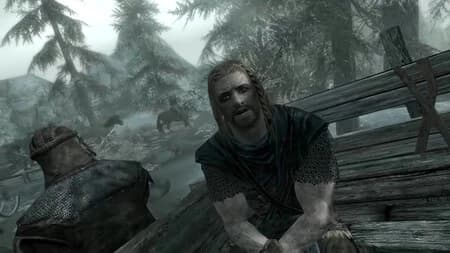
Elder Scrolls traditionally does the reverse. It starts small, bored, constrained – then lets the most interesting stuff be what you choose to do. The prisoner intro is the cleanest way to justify that slow, grounded start without feeling cheap.
If TES 6 ditches that in favor of something splashier, I’m not convinced the trade is worth it. You get a cooler YouTube-ready opening and pay for it with weaker roleplay, muddier pacing, and a protagonist who feels pre-written instead of discovered.
My Line in the Sand for Elder Scrolls 6
None of this means Elder Scrolls 6 has to copy-paste Helgen or the Imperial Prison. I don’t want that either. There’s a ton of room to keep the prisoner tradition alive while still proving the series has learned something in the last decade.
Start me in a besieged dungeon fortress on the edge of a new province. Throw me in a Daedric arena I have to fight my way out of. Make me a political hostage being traded between powers when everything goes sideways. Lock me in a cursed ruin under an ancient city. I don’t care – as long as I begin restrained, disempowered, and cut off from the world I’m about to reshape, the spirit of Elder Scrolls is intact.
What I’m not interested in is change for the sake of headlines. “This time, you’re not a prisoner!” sounds like boldness only if you ignore why that setup became a 30-year constant in the first place. In a genre full of bloated, try-hard openings that burn all their energy in the first hour, Elder Scrolls’ humble, shackled starts are almost rebellious now. They trust the player and the world to carry the experience, not just the script.
I’ve spent hundreds of hours wandering Tamriel across different games, and those first few minutes in chains are always the same quiet promise: this world owes you nothing, but you can take everything from it. If Elder Scrolls 6 remembers that – if I wake up constrained and walk out under a new sky, truly free – I’ll forgive a lot of other sins.
If it forgets it? If it trades that raw, vulnerable opening for something slick and focus-tested that could belong to any other RPG? Then it’ll be the clearest sign that Bethesda understood the memes around Elder Scrolls better than it understood the magic.
My verdict is simple: innovate everywhere you want, Bethesda. Tear up the combat, rebuild the engine, push the timeline decades forward, surprise me with systems I haven’t even thought to ask for. But if Elder Scrolls 6 doesn’t start with me as some kind of prisoner breaking into the world, it won’t feel like coming home to Tamriel. It’ll feel like visiting a very expensive, very pretty imitation.
FinalBoss // Gear
Level up your setup
01Top-rated gaming headsetson Amazon→02High-refresh gaming monitorson Amazon→03Gaming chairson Amazon→04Discounted game keyson Kinguin→Affiliate links · As an Amazon Associate, FinalBoss earns from qualifying purchases.
Want to Level Up Your Gaming?
Get access to exclusive strategies, hidden tips, and pro-level insights that we don't share publicly.
Ultimate Gaming Strategy Guide + Weekly Pro Tips