
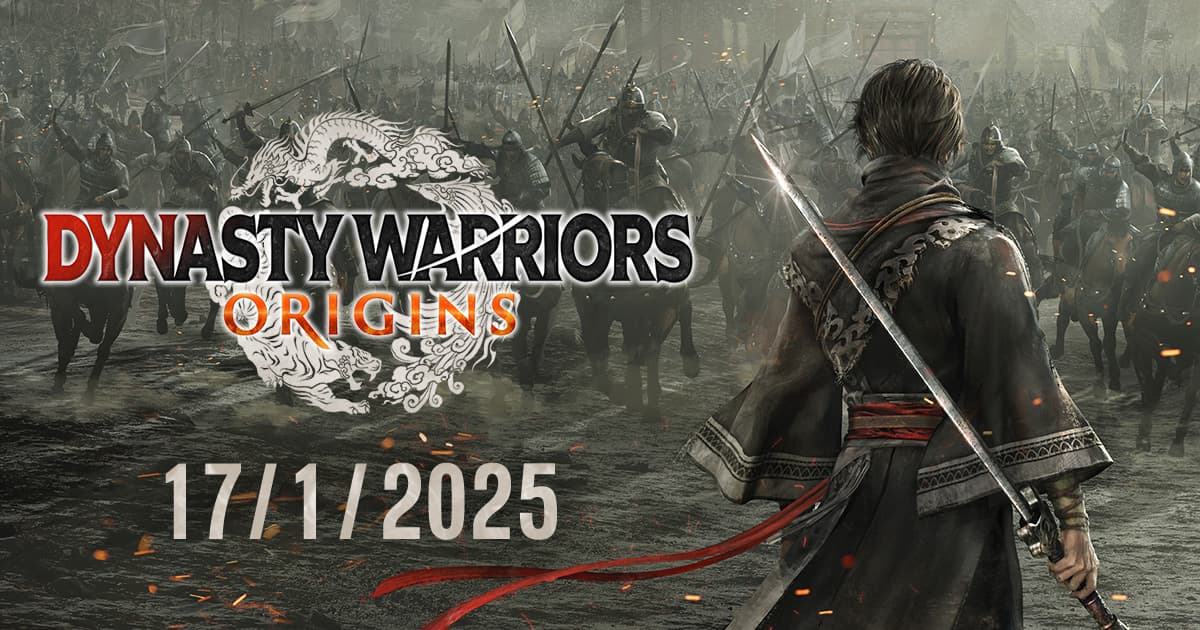
I’m excited for Lu Bu to headline Dynasty Warriors’ new DLC, but here’s my $34.99 concern
Game intel
Dynasty Warriors: Origins
Experience an unrivaled sense of realism on the battlefield, fueled by exhilarating 1 vs. 1,000 action and the rush of massive armies! A nameless hero conquers…
Why This Announcement Actually Matters
Omega Force just announced Visions of Four Heroes, a narrative expansion for Dynasty Warriors: Origins dropping January 22, 2026, and it immediately grabbed me for two reasons: the “what if” focus on Zhang Jiao, Dong Zhuo, Yuan Shao, and the big dog Lu Bu, and a feature set that actually changes how we play-new weapons (bow and rope dart), a Training Ground mode, and progression tweaks. That’s substance, not just skins. The catch? It’s a $34.99 add-on, and while that price screams “major expansion,” musou DLC has a mixed track record on fixing core issues. If you bounced off Origins for repetitive mission design or shallow AI, temper the hype. If you love experimenting with builds and alternate histories, this could be the shot in the arm you were waiting for.
Key Takeaways
- Launches January 22, 2026 across PS5, Xbox Series X|S, PC, and Nintendo Switch 2.
- Alternate-story arcs centered on Zhang Jiao, Dong Zhuo, Yuan Shao, and Lu Bu, plus new allies and a newly playable Zhuhe.
- New weapons-bow and rope dart-alongside fresh Battle Arts, a Training Ground mode, and progression improvements.
- Available from Chapter 2 onward, so you don’t need to finish the campaign to jump in.
- Costs $34.99; pre-orders include a Yellow Turban-themed outfit for your protagonist.
Breaking Down the Announcement
Omega Force isn’t pitching a throwaway content pack here. Day-and-date with the Nintendo Switch 2 debut of Origins, Visions of Four Heroes lands on every platform at once—a good sign for parity and polish. It’s also the studio returning to a fan-favorite lane: hypothetical history. Dynasty Warriors 8 nailed this with its “Hypothetical” routes, letting us rewrite Three Kingdoms outcomes. If Origins’ base story felt too constrained, this DLC aims to bust it wide open. The pre-order bonus—Yellow Turban attire—is a little cheeky considering Zhang Jiao’s starring role, but at least it nods to the era rather than being an out-of-place crossover.
Why These Four Heroes, and Why Now?
This selection makes sense. Zhang Jiao’s rebel spirituality, Dong Zhuo’s raw tyranny, Yuan Shao’s aristocratic ambition, and Lu Bu’s “god of war” swagger all beg for alternative endings. In Origins, some of these figures felt sidelined or painted with a single brushstroke. A “What If” frame can humanize the villains, complicate the heroes, and give us scenarios that aren’t handcuffed to textbooks. The narrative hook—your “Guardian of Peace” protagonist aiding each figure to chase their long-denied dreams—sounds very DW: big emotions, bigger battles, and zero fear of deviating from the record. Zhuhe stepping up from mysterious NPC to playable character is a smart move too; fresh POVs are how you keep a 20-plus-year-old series feeling alive.
Combat Additions That Might Actually Change Your Flow
New weapon types always make or break a musou refresh. The bow finally gives proper range play that isn’t just “hold a trigger and pray,” while the rope dart screams mobility and crowd control—think gap-closing into a spin, yanking officers out of guard, or styling on mobs with pull-and-punish loops. Layer in new Battle Arts, and we’re looking at more expressive builds rather than everyone leaning on the same two optimal strings. The Training Ground mode is sneakily the most exciting piece: a space to lab combos, test loadouts, and min-max without slogging through a full chapter. If you’ve ever tried to “learn” a weapon while a timer ticks and an escort NPC eats dirt, you know why this matters.
About That $34.99 Price
Let’s be real: thirty-five bucks is a statement. It puts Visions of Four Heroes closer to the old Xtreme Legends expansions and big-ticket DLC like Monster Hunter’s Iceborne/Sunbreak than to a cosmetic pack. At that price, players expect substantial scenarios (plural), new systems that stick around, and a meaty roster shake-up—something in the ballpark of 15-20 hours of fresh play if you’re not speed-running. If this ends up as a handful of missions with reskinned bosses, the community will torch it. The good news is the feature list—new weapons, Training Ground, progression improvements, and multi-perspective stories—reads like a proper expansion. Just don’t expect an Empires-style sandbox overhaul; that’s a different flavor entirely.
Switch 2 Launch, Performance Questions
Musou games live or die on two things: enemy density and frame pacing. A platform launch alongside Switch 2 hints that Omega Force thinks the new hardware can handle armies without turning into a slideshow. If it delivers 60fps with big crowds, that’s huge for portable play. PC and current-gen consoles should be fine, but I’m still watching for consistency in those “1 vs. 1,000” moments the devs say are “even more evolved.” More soldiers and smarter AI are great—unless the frame rate is the casualty. Wait for hands-on impressions if performance is your deal-breaker.
What I’m Watching For
Origins had energy but stumbled with repetitive objectives and officers that either melted in seconds or tanked forever. If “progression improvements” mean saner stat scaling, better EXP flow, and less grindy unlocks, that’s a real quality-of-life win. If the Training Ground lets us preview Battle Arts and weapon synergies, new players get onboard faster and veterans can finally theorycraft without wasting consumables. And if those alternate scenarios respect the personalities of Zhang Jiao, Dong Zhuo, Yuan Shao, and Lu Bu—without turning them into cartoon parodies—the narrative could punch above typical musou fluff.
- Will rope dart meta replace every melee because of free pulls and stuns?
- Do “evolved” mass battles add new encounter types, not just more bodies?
- Are companion and ally systems meaningful or passive stat sticks?
- Is the Chapter 2 access point balanced for newcomers, or a difficulty spike?
TL;DR
Visions of Four Heroes looks like a real expansion, not filler: alt arcs for four iconic figures, new weapons, Training Ground, and progression clean-up. The $34.99 price sets high expectations, and it won’t magically fix every Origins gripe. But if you want fresh stories and new tools to carve through armies, January 22 could be a very good day to mount Red Hare again.