
Table of Contents (7)
inKONBINI’s new demo proves the game’s rhythm is the point – the outfit tease is the story
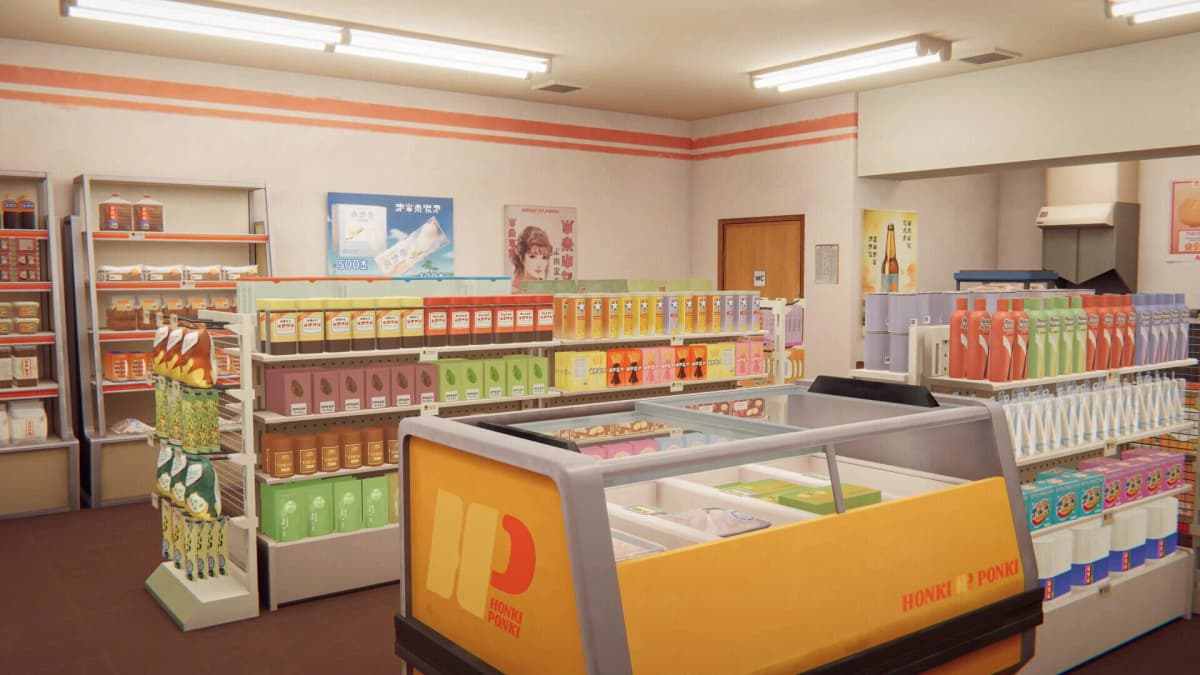
Steam Next Fest shoved a small, beautifully tuned game into the spotlight this week: inKONBINI: One Store. Many Stories. The updated demo – now part of Valve’s official Feb 2026 trailer – doesn’t sell you on flashy systems. It sells the feeling of being behind a counter in a quiet, early‑’90s Japanese konbini: the rhythm of restocking, the hush of conversation, the tiny satisfactions of a well‑tended shelf. And then, almost coyly, it drops a tease: an outfit customization system for your protagonist. That’s the most interesting part, because it tells you how this team thinks about player expression without breaking the game’s mood.
Key takeaways
- Updated demo, now in Steam Next Fest’s Feb 23 trailer, tightens interactions and pacing to make the konbini loop feel meditative rather than mechanical.
- The teased outfit system is framed as subtle, era‑appropriate customization — a small social lever that could deepen roleplay or simply be cosmetic.
- Being featured in the festival trailer is visibility gold for an indie cozy sim; a polished demo during the event increases wishlist and discovery chances.
- What the team doesn’t say yet — whether outfits affect NPC reactions or are monetized — is the real question that will decide whether this is warmth or window dressing.
Why this demo actually matters
Cozy sims succeed or fail on a single axis: atmosphere that justifies repetitive actions. The updated inKONBINI demo focuses on that axis. According to Beep Japan and Nagai Industries, interactions have been refined, pacing tuned, and ambient elements boosted — the kinds of adjustments that transform “fetch quest” into “meditative routine.” That matters because the genre is crowded right now; Steam Next Fest has a pile of charming demos, and players pick the ones that feel like they were made by people who live in their game’s world rather than people who reverse‑engineered “cozy” from a checklist.
Where the demo shows real confidence is in restraint. The game isn’t promising sprawling mechanics or a thousand unlocks. It promises a rhythm: sweep, restock, chat, make change, listen. Polishing that loop is the most genuine way to sell a cozy game, and Nagai’s choice to push those refinements into the Next Fest demo signals they know what players of the genre value.
The wardrobe tease is the story nobody’s loudly talking about
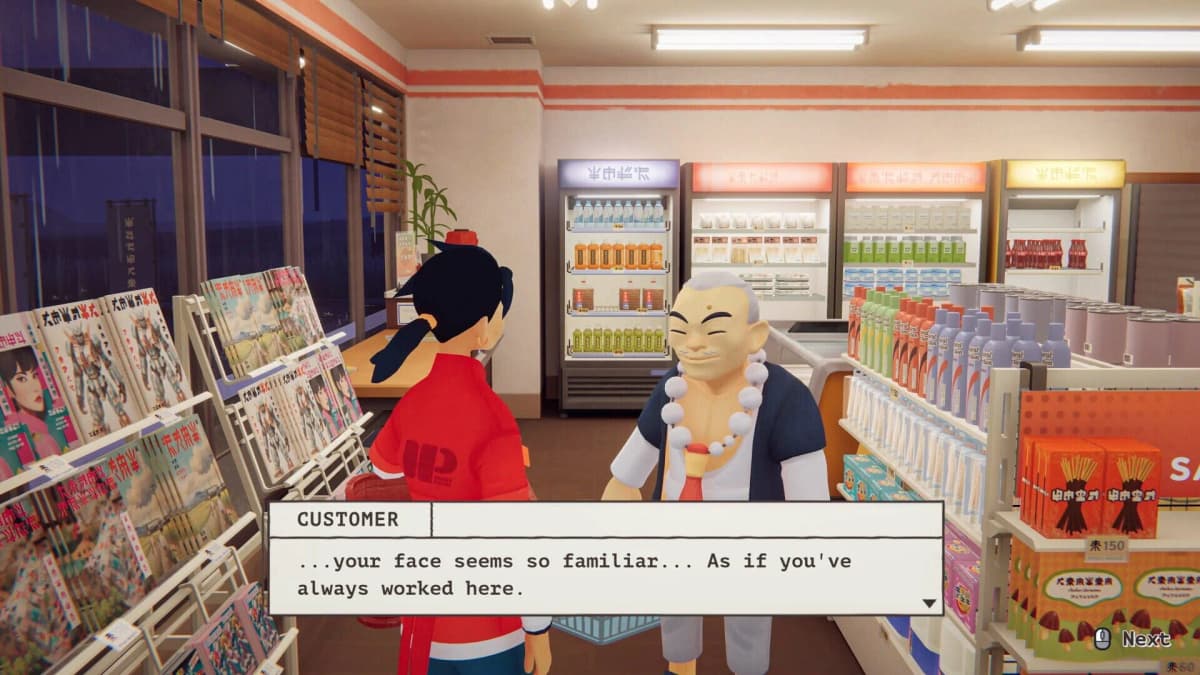
The demo update also teases an “expanded outfit system” for Makoto, the college student working shifts at Honki‑Ponki konbini. On the surface, that’s a harmless flourish: era‑appropriate uniform variations that let players nudge how their character reads. But it’s the kind of small feature that decides how personal a game feels. Will outfits change NPC reactions, unlock dialogue, or be purely cosmetic? Is customization earned through play or unlocked (or sold) later?
If I were in a press call I’d ask: “Will outfits alter how the town sees you, or are they soft aesthetics?” The PR answer will tell us whether Nagai is adding a roleplay lever — which could give the narrative branches more texture — or a cosmetic toggle that does nothing but decorate screenshots. Both are valid design choices; only one deepens the simulation.
What being in the Steam Next Fest trailer buys an indie like Nagai
Steam Next Fest is noisy and brief — a week where hundreds of demos flood players’ feeds. Being featured in Valve’s official trailer is an efficiency shortcut: it directs eyeballs toward a demo that’s already been polished to show its best self. That polish matters; PC Gamer’s recent writeups of Next Fest show how a tidy demo can lift an indie above dozens of charming but rough prototypes.
For inKONBINI, the timing is smart. A refined demo during the festival is a low‑risk funnel: players wishlist, spread clips, and return to the studio’s updates. It raises the odds that April’s planned release on PC, Switch, PS5, and Xbox lands with a small but engaged audience rather than disappearing in the noise.
What to watch next
- Official clarification on the outfit system: cosmetic only, or tied to choices and NPC reactions?
- Demo feedback and wishlist numbers post‑Next Fest — those will show whether the polish translated to interest.
- Performance targets and feature parity for Switch and consoles; cozy sims can lose their feel on underpowered or poorly optimized ports.
- Details on localization and how the game’s 1990s specifics will read to international audiences.
TL;DR
inKONBINI’s Steam Next Fest demo sharpens the game’s calm, repetitive loop into something genuinely meditative, and Nagai’s subtle outfit tease hints at a desire to let players express themselves without breaking the mood. The next few updates — specifically what outfits do and how the game performs on consoles — will tell us whether this is a thoughtful cozy sim or a missed opportunity for deeper roleplay.
FinalBoss // Gear
Level up your setup
01Graphics cardson Amazon→02Gaming laptopson Amazon→03High-refresh gaming monitorson Amazon→04Discounted game keyson Kinguin→Affiliate links · As an Amazon Associate, FinalBoss earns from qualifying purchases.
Want to Level Up Your Gaming?
Get access to exclusive strategies, hidden tips, and pro-level insights that we don't share publicly.
Ultimate Gaming Strategy Guide + Weekly Pro Tips