

Interstellar Utopia Wants To Be EVE + No Man’s Sky + Mechs
Game intel
Interstellar Utopia
Why This Announcement Actually Caught My Eye
I’m a sucker for audacious sci-fi sandboxes, and Interstellar Utopia is shooting for the moon: a seamless galaxy, cyborg races, customizable mechs and ships, terraforming, and a unified global server – all wrapped in a transhumanist pitch about uploading your consciousness. That’s a heady cocktail. It also sets off my “we’ve heard this before” alarm. Pixel Software’s previous MMO, Chimeraland, proved the studio can build sprawling systems at scale, but it also came with jank, grind, and mobile DNA that turned some PC players off. With Tencent publishing, the budget and infrastructure might be there; the question is whether the design discipline is.
Key Takeaways
- Interstellar Utopia targets 2026 with a gamescom playable demo and a flashy “Mind Upload Terminal” photo op; the premise leans hard into cybernetic evolution.
- Feature list is huge: seamless maps with no loading, multiple cyborg races, modifiable mechs and ships, terraforming, and open-ended progression across a global server.
- Pixel Software’s Chimeraland hit big registration numbers but had mixed reception; great ambition, uneven polish. That history matters here.
- The big questions: performance and latency on a unified server, monetization under Tencent, and whether all these systems meaningfully interlock for players.
Breaking Down the Pitch: Big Ideas, Bigger Risks
Set 400+ years after humanity flees an alien invasion by uploading their minds into new bodies, Interstellar Utopia leans into transhumanism with its “Everything Can Be Cyberized” mantra. That’s not just marketing flavor – if the game ties cybernetic upgrades to meaningful buildcraft, faction identity, and social roles, it could be more than another “pick your class” wrapper. The playable demo at gamescom will be our first sniff of whether progression is deep or just a techy reskin of standard MMO perks.
The feature mash-up reads like a wishlist: roam a seamless galaxy (no loading), pilot mechs and ships, reshape worlds with robust building tools, and forge alliances or rivalries on one global server. In practice, few games pull off this combination. No Man’s Sky nails exploration and base-building but isn’t an MMO economy sim. EVE Online is peerless in politics and player-driven markets but avoids cumbersome ground-level survival loops. Star Citizen is still proving it can stitch its dream together in daily play. Interstellar Utopia is promising all of that, plus cyborg racial diversity. That’s… a lot.
The unified global server claim is the spiciest bullet. It sounds EVE-esque, and that’s cool, but it raises hard questions: how will they handle latency-sensitive combat across regions? What’s the plan for server-authoritative physics when mechs, ships, and base-building collide? How do they moderate a single shard with multiple languages, and what tools will players have to protect their creations from griefing without walling off interaction? These aren’t footnotes – they’re the difference between a living galaxy and a laggy mess.
Pixel Software’s Track Record: Ambition vs. Execution
Credit where it’s due: Pixel’s Chimeraland showed serious ambition. Massive biomes, seamless travel, wild creature crafting — it was a kitchen-sink sandbox you could get lost in. It also took heat for rough edges, grindy loops, and monetization that felt more mobile-centric than PC-first. “30 million registrations” is a great headline, but retention, balance, and polish are what keep a sandbox alive. If Interstellar Utopia is to thrive, it needs systems that sustain player stories without burying them under timers and currencies.
Tencent’s involvement cuts both ways. On the plus side: bigger QA, live-ops muscle, anti-cheat, and global rollout expertise. On the risk side: free-to-play monetization that can smother emergent play with pay-for-convenience or lootbox creep. The press materials don’t specify platforms or business model yet. That transparency needs to come early — before communities invest in empires that can be distorted by the shop.
Want to Level Up Your Gaming?
Get access to exclusive strategies, hidden tips, and pro-level insights that we don't share publicly.
Ultimate Gaming Strategy Guide + Weekly Pro Tips
What To Look For at gamescom (And Beyond)
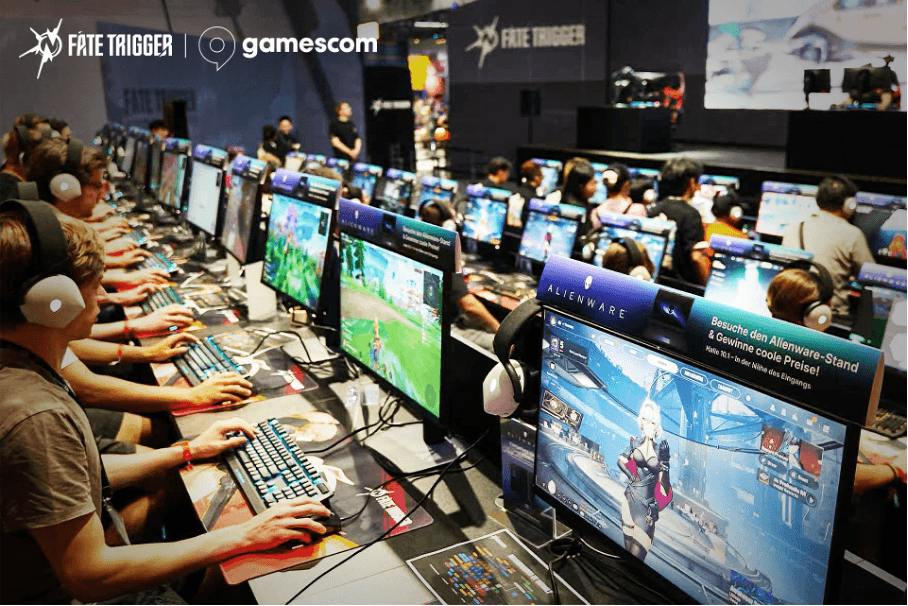
The starship-themed booth and the “Mind Upload Terminal” will make for fun photos, but the demo is what matters. If you’re hands-on, pressure-test the glue between systems rather than just the spectacle. Can you switch from on-foot to mech to ship cleanly? Does the building tool feel like creative empowerment or spreadsheet hell? Are resources meaningful or just busywork?
- Seamless world claim: Can you travel ground-to-orbit without a load screen or smoke-and-mirrors transitions?
- Mech depth: Are mechs distinct builds with subsystem damage and meaningful trade-offs, or cosmetic mounts with guns?
- Player safety vs. creativity: What anti-griefing tools exist for bases and terraforming in a persistent MMO?
- Economy shape: Is there the skeleton of a player-driven market, or just NPC vendors with fixed prices?
- Technical feel: Rubber-banding, input latency, and server tick stability — even in a show build — will tell you a lot.
- Monetization hints: Battle pass UI slots? Premium currencies? Cosmetic-only promises? Ask directly.
Outside the show floor, I want to see a clear roadmap with public milestones: closed tests focused on server concurrency, builders-only alphas to tune terraforming limits, and transparent devlogs about shard architecture. If they really want one global server, tell us how it scales — and where it bends before it breaks.
The Gamer’s Perspective: Cautious Optimism
If Interstellar Utopia delivers even half its pitch — EVE-scale politics, No Man’s Sky exploration, meaningful mech and ship engineering, and social sandbox building — we’re looking at a potential time sink of the best kind. The theme of conscious digital migration isn’t just cool sci-fi dressing; it could justify bold respecs, body-swapping builds, and identity-driven factions if the designers lean into it.
But it’s 2026. That’s a long runway, and sandboxes famously morph before launch. My advice: enjoy the gamescom spectacle, stress-test the demo, and hold the team to specifics. Show us the systems, not just the sizzle. With Tencent’s resources and Pixel’s appetite for scale, the stars are aligned — now they need a flight plan that survives turbulence.
TL;DR
Interstellar Utopia is a wildly ambitious sci-fi MMO from Pixel Software, backed by Tencent and aiming for 2026. The promise is huge — seamless galaxy, cyborg builds, mechs, terraforming, and a single global server — but execution will come down to performance, monetization, and whether its systems actually mesh. I’m intrigued, but I’m bringing a stress ball to the demo.