
InZOI just hit the point every ambitious Early Access game eventually reaches: the moment the devs admit they need to stop adding cool toys and start fixing the plumbing.
After a blisteringly fast first year that crammed in burglars, seasons, memories, and a full calendar overhaul, the team is pivoting to a “Fundamentals First” roadmap for 2026. On paper, that sounds responsible. In practice, it’s the stress test of InZOI’s whole Early Access strategy – and it’ll decide whether this becomes a real alternative to The Sims or just another overpromised life sim stuck in perpetual beta.
Table of Contents (6)
Key takeaways
- InZOI’s first Early Access year (since late March 2025) was an aggressive feature sprint, with 55 roadmap items delivered ahead of schedule – and plenty of rough edges to show for it.
- From April 2026, the “Fundamentals First” plan deliberately slows new content to focus on bug fixes, AI behavior, performance, and the most painful quality-of-life gaps.
- Mods and UGC are central to the long game: an early mod kit shipped in 2025, but full script modding and deeper systems access aren’t targeted until late 2026.
- The late‑2026 roadmap is stacked with high school life, festivals, vehicles 2.0, a Karma overhaul, and more – raising real questions about scope, pacing, and when 1.0 might actually arrive.
Year One was a feature blitz that left scars
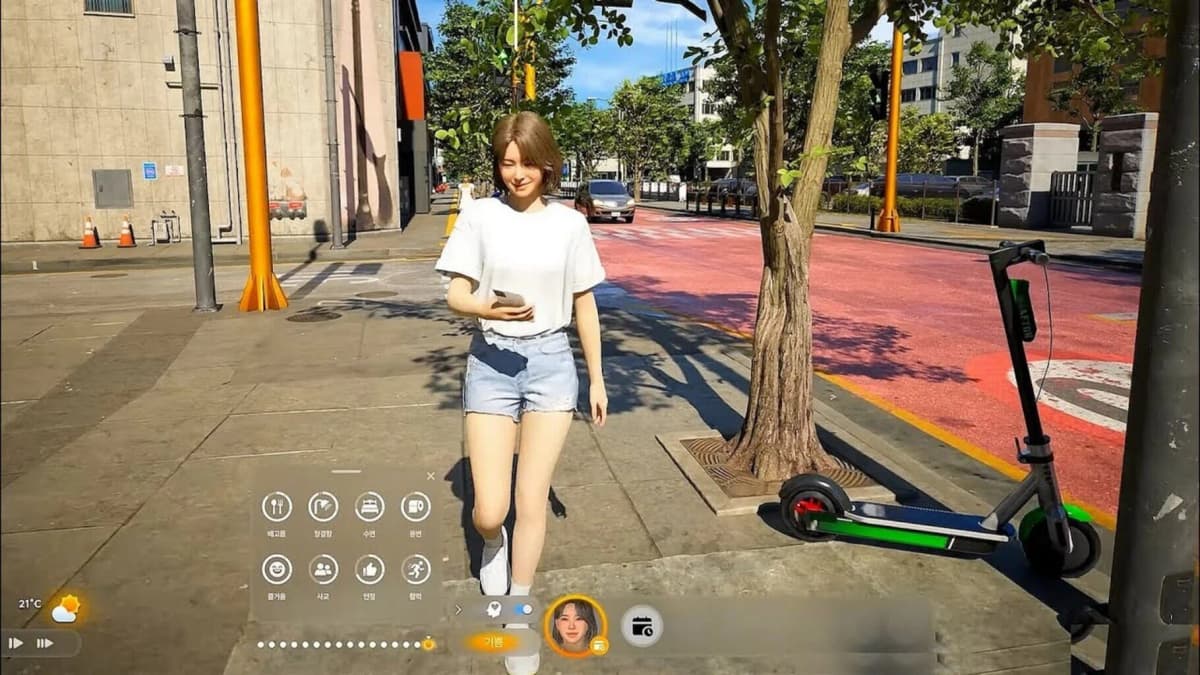
InZOI entered Early Access on Steam around March 27–28, 2025. By its first anniversary in late March 2026, the game had changed a lot. Burglars, an initial take on multitasking, full seasonal cycles, a memory system, graphical upgrades (including the Cahaya update), and a reworked calendar all landed within twelve months. The March 26, 2026 update alone dropped a detailed memories system that logs major life events – first steps, graduations, childbirth – and improved multitasking so Zois can juggle food, objects, and conversation like actual people.
That pace wasn’t a fluke. The studio says it finished 55 roadmap items ahead of schedule by early 2026, despite the project only having about three years of full development behind it – which is short for a modern, simulation-heavy life sim. For players, that meant the game stopped feeling like a barebones prototype surprisingly fast.
But there’s a cost to shipping this hard, this early. Systems like burglars and seasons exist, but they don’t yet have the years of iteration, edge-case handling, and AI tuning that make The Sims’ better expansions feel coherent. The more InZOI stacked on top, the more obvious the cracks became: odd routing, inconsistent autonomy, bugs hiding in the interactions between new and old features.
To their credit, the devs aren’t pretending this is fine. The whole 2026 strategy is basically an admission that you can’t speedrun the kind of invisible polish life sims are built on – and that the first year was intentionally front-loaded on “wow” features.
‘Fundamentals First’ is smart, but also a warning sign
From April 2026 onward, InZOI’s Early Access lifecycle shifts into a different gear. The team has published dual roadmaps: one for content drops, and one called “Fundamentals First” that’s all about stability, quality, and fixing the stuff that quietly ruins saves.
“Fundamentals First” means:
- Prioritizing bug fixes over headline features, especially around complex systems like memories, seasons, and burglar behavior.
- Addressing the top pain points already flagged by players – the studio calls out a “top 7” set of issues that’s actively in development.
- More work on UI, controls, and base-game workflows, including things like the March 2026 keyboard customization update.
- Intensifying this focus in the second half of 2026, even if it slows the pace of flashy new content.
This is the right move for a life sim. If your pathfinding, scheduling, and simulation layers are janky, no amount of new jobs or furniture can save you. In that sense, inzoi’s early access lifecycle – “Fundamentals First” roadmap, mods/UGC, and late‑2026 plans – is a textbook example of how these projects should mature: sprint for breadth, then grind for depth.
But it’s also a warning sign about how hard they pushed in Year One. You don’t pivot to a fundamentals phase this aggressively unless the tech debt is real. The risk is obvious: players who stuck around for the rapid-fire monthly updates suddenly find themselves in a long season of less visible progress.
The uncomfortable question for the devs is simple: if “Fundamentals First” takes most of 2026, what does that say about how early you launched into Early Access in the first place?
Content isn’t stopping – but the tempo is changing
None of this means InZOI is going into a content freeze. The 2026 “New Content” roadmap is still surprisingly packed – just less frantic than Year One. Broadly, the team has outlined a quarterly cadence:
- April 2026: Job and freelancing expansion – think job interviews, remote work, pensions, and more “everyday” economic systems like package delivery.
- May 2026: High school life – an actual on-site school lot with classes, events, and a prom-style big moment for teen Zois.
- July 2026: Travel and resort systems, prison mechanics, and fixes to core family tree behavior.
- September 2026: Festivals and user-defined holidays, plus much deeper vehicle interactions: repairs, car washes, in-car conversations, audio, taxis, and driver jobs.
- October 2026: A Karma system overhaul with better life-tracking, reports, and summaries.
On top of that, the studio has repeatedly mentioned expanded careers, a fame/celebrity layer, social media systems, and more robust life-stage content as medium-term goals. It’s a lot. Maybe too much.
This is where the frustration kicks in. The roadmap reads like a greatest-hits remix of The Sims expansions: high school, fame, travel, festivals, vehicles, karma-like morality. Players know exactly what they want those features to feel like, because they’ve seen them done (and redone) for twenty years. Shipping barebones versions and “fixing them later” is the trap EA fell into; it’d be a shame to watch InZOI repeat it under the banner of Early Access.
The devs have earned some trust by hitting 55 items ahead of schedule, but ambition is now the enemy as much as the selling point. Every new system in H2 2026 is another thing that can destabilize saves just as the team is trying to lock fundamentals down.
Mods and UGC are the real long game
If InZOI is going to matter long-term, it won’t be because the base game ships one more job system than its rivals. It’ll be because modders can bend it into anything.
The team clearly understands that. The very first major post-launch update back in May 2025 brought a mod kit with support for Maya/Blender, plus a wave of creator-friendly features: body weight and muscle sliders, cheat codes, adoption and relationship tweaks, more furniture and build tools, Create-a-Zoi improvements, and extra outfits. That early investment paid off in replayability while the core game was still relatively thin.
But true UGC power in a life sim lives in script mods, not just meshes and recolors. And that’s where the timeline gets interesting. Script modding and deeper systems exposure are part of the late‑2026 plan – grouped in with those big systems like vehicle overhauls, festivals, and Karma reworks.
That’s a double-edged sword:
- On the plus side, waiting until the simulation layer is more stable before unleashing script mods is sane. If the base game keeps changing under modders’ feet, nobody wins.
- On the downside, delaying script access also delays the one thing that could take pressure off the dev team to be everything to everyone. Right now, if you want a niche system, you’re waiting for the official roadmap. In a mod-heavy ecosystem, the community would already be prototyping it.
Given how quickly they burned through the early roadmap, it’s slightly surprising script modding wasn’t treated as a Year One priority. If I had one pointed question for the team’s producer, it’d be this: why is a fully-featured script API arriving after high school, prison, and a Karma overhaul, instead of before them, when modders could actually help test and extend those systems?
Late‑2026 is stacked; 1.0 still feels far away
Add everything up – the Fundamentals First push, the quarterly content drops, the late‑2026 ambitions around Karma, vehicles, and script mods – and one thing is conspicuously missing: any serious talk of a 1.0.
That’s not inherently bad. Early Access is supposed to be long, messy, and iterative, especially for a genre that’s more about systems colliding than levels ending. But players need to be realistic about what this roadmap says:

- 2025–early 2026 was about breadth: prove InZOI can be a full-fledged life sim, not just a tech demo.
- 2026 is largely about depth and reliability: Fundamentals First, pain-point fixes, and maturing core systems like memories and seasons.
- Late‑2026 is about “phase two ambitions”: high school, prison, festivals, vehicles 2.0, Karma rework, script modding, and more life-stage nuance.
None of that sounds like a project about to slap on a gold sticker and call itself done. More likely, we’re looking at a multi-year Early Access where 2026 is the foundational year that decides whether 2027+ is about expanding a stable platform… or still firefighting basic systems while adding expansion-sized features.
In other words: if you buy in now, you’re not getting a “nearly finished” game that just needs a last coat of paint. You’re signing up to watch a very public refactor of a sim that sprinted out of the gate and now has to grow up in front of everyone.
FinalBoss // Gear
Level up your setup
01Top-rated gaming headsetson Amazon→02High-refresh gaming monitorson Amazon→03Gaming chairson Amazon→04Discounted game keyson Kinguin→Affiliate links · As an Amazon Associate, FinalBoss earns from qualifying purchases.
Want to Level Up Your Gaming?
Get access to exclusive strategies, hidden tips, and pro-level insights that we don't share publicly.
Ultimate Gaming Strategy Guide + Weekly Pro Tips