
A heavy gun should not feel like a crosshair with extra noise, and this PC artillery simulator understands that better than most games understand their central mechanic. Every firing solution has weight because every shell begins as a problem on a map table.
Released for PC on August 7, 2026 at 1980円 tax included, IRON NEST comes from developer-publishers Nick Talmers and Dominik Latos. Its late-1920s Spain setting places a lone operator inside a mechanized artillery unit, taking orders from High Command during a rebellion. The political framing is grim, but the immediate concern is practical: interpret the message, find the target, calculate the shot, load the gun, and live with the result.
That is a far stronger proposition than a conventional power fantasy. Iron Nest makes a massive turret feel massive because it refuses to make the work disappear. The game asks for attention, patience, and accuracy. In return, it gives every successful bombardment the force of a solved equation becoming a physical event.
Table of Contents (7)
The decisive details
- High Command communications provide the coordinates and tactical information that start each firing procedure.
- The map table requires manual plotting, line drawing, bearing work, and distance calculation before a shot is ready.
- A firing computer turns the calculated solution into usable artillery settings, while turret controls handle direction and elevation.
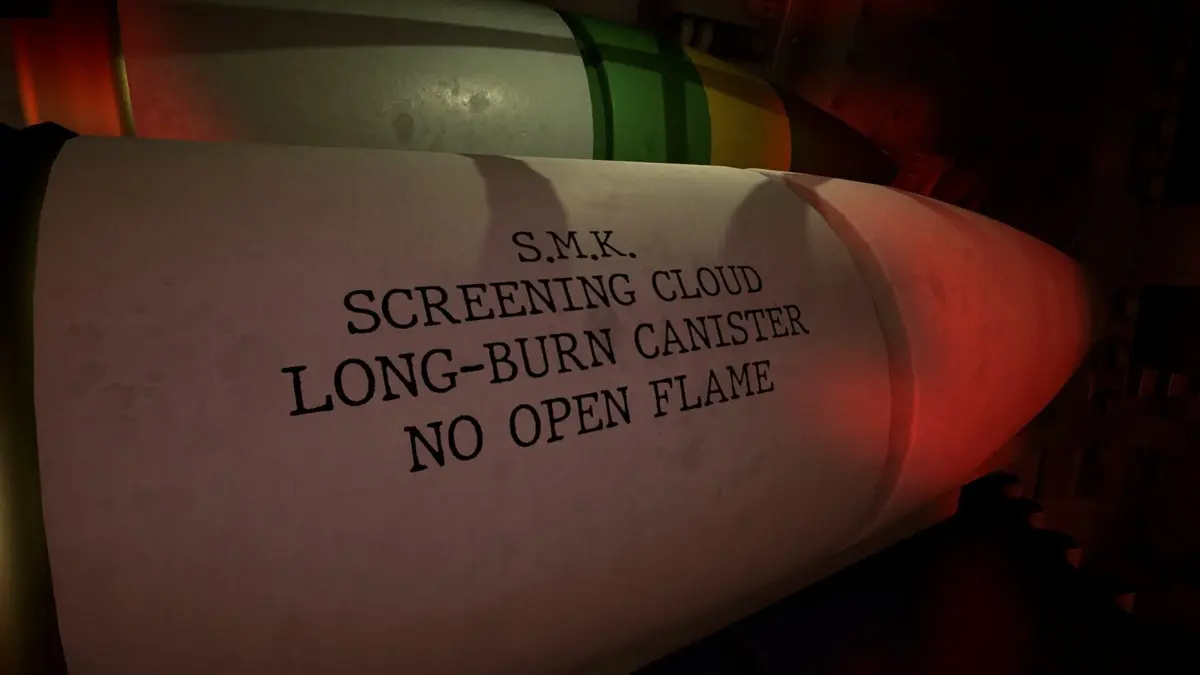
- Shells and powder charges must be selected and loaded manually rather than abstracted into a single button press.
- An in-game notepad can attach necessary information with a mouse click, keeping the multi-stage workflow readable.
Artillery is the game, not the decoration
Iron Nest’s best decision is also its least fashionable one: it trusts map work to carry the experience. Orders arrive through High Command communications, but the game does not convert them into an effortless target marker. The player has to work from the information provided, establish the target’s position on the map table, draw the necessary lines, determine bearing and distance, then turn those results into a firing solution.
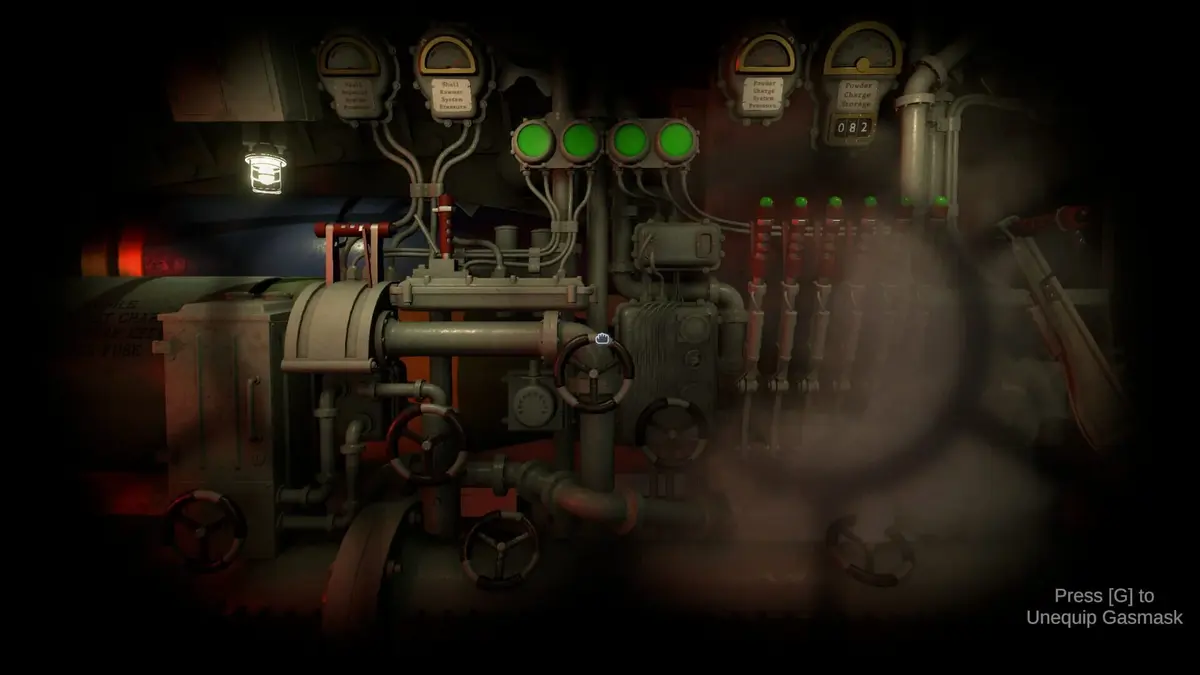
That solution moves through several stations. The map produces the plan. The firing computer receives the calculated values. The gun controls set the turret’s orientation and elevation. The loading area turns numbers into shells and powder charges. Only then does the artillery fire. Iron Nest builds tension by making those steps inseparable. The map is not a minigame before the action; the map is the action.
It also means this is indirect fire in the strict sense. You are not aiming by staring at a target through a convenient reticle. You are aiming by procedure: plotting, measuring, entering values, adjusting the guns, and accepting that the shot is only as good as the work behind it. That distinction gives Iron Nest a much clearer identity than most games built around oversized weapons. The turret is powerful, but the procedure is what makes that power legible.
This is why the game’s slow rhythm works. A fast, frictionless firing loop would flatten the entire fantasy. Here, a missed shot has procedural consequences. A bad measurement or a wrong value can waste ammunition and cost an objective, so correction means returning to the map, reassessing the impact error, revising the calculations, and entering a new solution. The pressure comes from the possibility that the operator’s own method was wrong, not from a stream of disposable targets.
For players who want a quick artillery spectacle, that process will feel like administration. For players who enjoy simulations because they turn expertise into play, it is the whole reason to show up. Iron Nest does not apologize for demanding a procedure. It makes the procedure satisfying enough to justify the demand.
The notepad prevents precision from becoming clutter
The in-game notepad is the small system that makes the larger system work. Iron Nest places a lot of information in the player’s hands: coordinates, priorities, distances, firing values, ammunition choices, and changing mission instructions. Without a way to hold onto the relevant details, that volume could turn careful simulation into bookkeeping fatigue.
Instead, the notepad lets needed information attach with a mouse click. That choice is more important than a decorative immersion detail. It preserves the tactile appeal of working through paper-style map procedures without forcing the player to treat every order as a memory test. The game still requires understanding; it simply avoids confusing understanding with needless transcription.
That distinction gives Iron Nest its sharpest design advantage. The artillery procedure is complex because the game wants the player to learn how the parts relate to one another. The notepad respects that ambition. It supports the calculation rather than replacing it, and it keeps the player’s focus on why a bearing, range, charge amount, elevation angle, and turret orientation belong together.
Good simulation tools do not make a system shallow; they make a deep system readable. Iron Nest understands that. The notepad does not solve the problem for the player, but it stops the interface from becoming an enemy separate from the artillery itself. In a game this procedural, that is not a minor convenience. It is one of the reasons the whole structure remains inviting long enough for mastery to take hold.
Complexity has somewhere to go
Iron Nest does not stop at simple coordinate strikes. Its mission progression moves toward spotter-assisted unknown targets, support munitions, and timed bombardment work. That escalation matters because it asks the player to apply the same basic literacy under more complicated conditions rather than abandon the central loop for a separate gimmick.
After successful missions, the game also expands the operator’s toolbox with different types of munitions. That is a smart form of progression for a simulator like this. New shells and support options do not replace the original job of plotting, calculating, and laying the gun. They give those actions more tactical shape. The core loop stays recognizable, but the consequences of each choice widen.
The result is a simulator built around compounding responsibility. A target is not merely a point to erase. It is a tactical instruction interpreted through a map, a mechanical task completed through the turret, and a consequence that matters within the rebellion and High Command’s campaign. Mission failure can follow missed targets, bad coordinates, or lost time, which gives the work a stern sense of accountability.
That severity fits the setting. The game’s industrial interiors, hydraulic machinery, and retro-futuristic instruments give the unit a dieselpunk character, but Iron Nest avoids treating its machinery as harmless scenery. The whole presentation reinforces the same idea: this is a weapon operated from the inside, through levers, calculations, loading bays, and constrained mechanical movement.
Slow machinery is a feature, not a concession
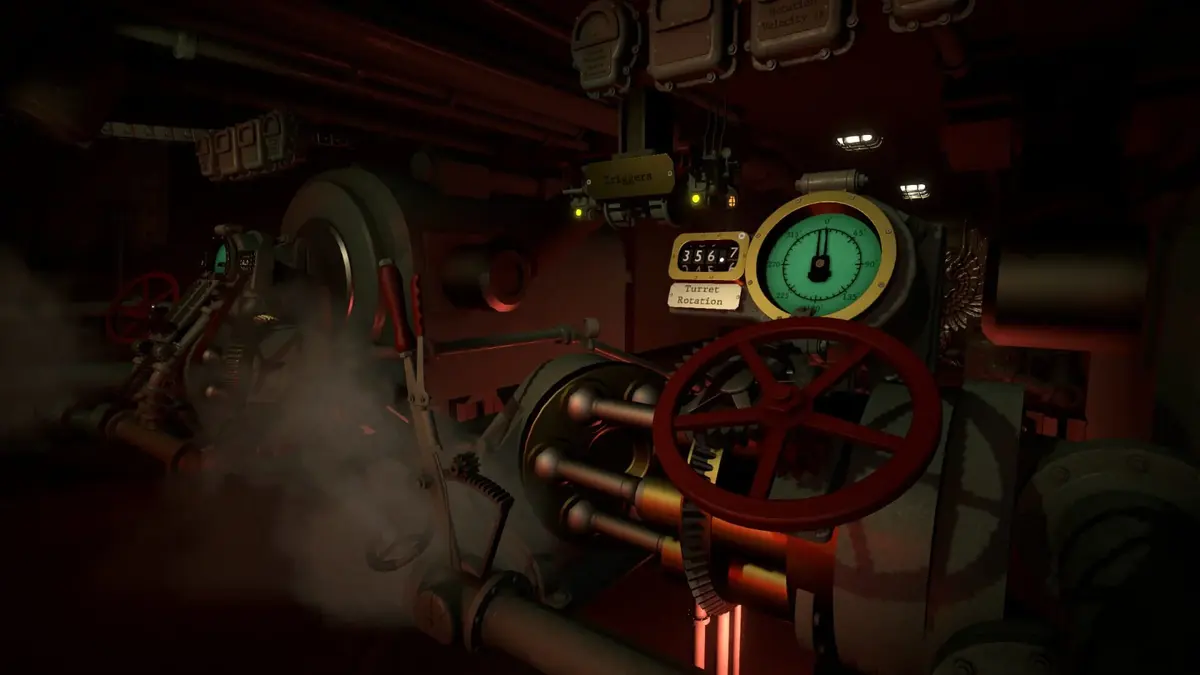
The turret does not whip around a battlefield at the pace of an arcade camera. Hydraulic limits and slow mechanical movement force planning. Traverse takes time. Elevation takes time. Reloading takes time. That delay has a practical effect on the way Iron Nest is played: committing to a target means accepting the physical cost of getting the gun into position.
That design gives the game a welcome sense of scale. The operator is moving between the map table, firing computer, gun controls, and loading area from inside the unit’s body, which makes the turret feel less like a vehicle skin and more like a workplace built around one brutal purpose. Iron Nest gets a surprising amount of drama from the distance between deciding to fire and being ready to fire.
The release build is also entirely single-player, and that matters to the feel of the work. There is no crew splitting map duty, loading, and gunlaying while you specialize in one station. You do everything yourself. That turns the turret into a full-process simulation rather than a role within a larger crew sim, and it makes the notepad and station-to-station flow even more important. If you wanted a co-operative scramble of shouted numbers and divided labor, that is not what this version provides. What it provides instead is solitary ownership over every successful shot and every avoidable mistake.
Minimal HUD overlays help preserve that identity. The important tools are in-world instruments, paper-style map interactions, control levers, and loading hardware. The screen does not solve the artillery problem for the player. It presents the equipment needed to solve it. That is an uncompromising choice, and it gives the game an unusually coherent point of view.
Who should take command
Iron Nest is for players who enjoy learning a system until its separate pieces become instinctive. The ideal player wants to trace a target from message to map, from map to firing computer, from firing computer to turret controls, and from there to a loaded shell. Anyone who finds satisfaction in methodical mechanical work will find a focused, intelligent simulation here.
It also helps if you like games that ask you to build your own fluency. Iron Nest explains itself through practice and repetition more than through constant hand-holding. That can make the opening stretch feel stern. Then the logic clicks, the stations start to connect in your head, and the workload stops feeling like a list of chores and starts feeling like command procedure. That shift is where the game earns its keep.
Players looking for constant combat, instant aiming, or a forgiving shortcut through the artillery process should skip it. Iron Nest makes accuracy work feel meaningful by refusing to make it easy. That commitment is its greatest strength, but it also means the game has little interest in meeting an impatient audience halfway.
Bottom line
IRON NEST: Heavy Turret Simulator is a great artillery simulation because it understands that manual operation is the reward, not the obstacle standing between the player and the reward. The map triangulation, firing computer, loading procedure, mechanical controls, and exceptionally useful notepad form one disciplined loop. The game’s narrow appeal is real, and its single-operator structure leaves no room to hide from the workload, but that is also the source of its authority.
8/10. Iron Nest turns procedural artillery into real mastery. If that precision sounds like paperwork to you, this will be a wall. If it sounds like the point, few recent PC simulators make their central mechanic feel this clear, this physical, or this earned.
FinalBoss // Gear
Level up your setup
01Top-rated gaming headsetson Amazon→02High-refresh gaming monitorson Amazon→03Gaming chairson Amazon→04Discounted game keyson Kinguin→
Affiliate links · As an Amazon Associate, FinalBoss earns from qualifying purchases.
Want to Level Up Your Gaming?
Get access to exclusive strategies, hidden tips, and pro-level insights that we don't share publicly.
Ultimate Reviews Strategy Guide + Weekly Pro Tips