
Table of Contents (9)
The First Time a Hadoken Felt Like Black Magic
The first time I did a Hadoken in Street Fighter II, it felt like I’d just hacked the game.
I was in a smoky arcade, barely tall enough to see the screen properly, parroting older kids who were yelling “down, down-forward, forward, punch!” like it was forbidden knowledge. I didn’t understand frames, buffers, or input leniency. All I knew was that if I turned the stick roughly in that shape and hit a button, sometimes Ryu spat a fireball and the other kid’s health bar exploded. It didn’t feel like a “mechanic.” It felt like a cheat code that happened to be baked into the controls.
Fast forward three decades, and I’ve spent stupid amounts of time in fighting games – Street Fighter II on SNES, endless nights in dingy Tekken 3 cabs, lab sessions in Guilty Gear, sweaty online matches in Street Fighter IV, V, VI, and now Tekken 8. I can do quarter-circles and dragon punches in my sleep. I’ve played long enough that doing a double fireball super is more natural to me than tying my shoelaces.
But here’s the thing: I no longer buy the idea that motion inputs are just some harmless legacy quirk we all tolerate out of nostalgia. They’re a deliberate, stubborn design choice at this point. And pretending they’re either holy scripture or evil gatekeeping is equally lazy.
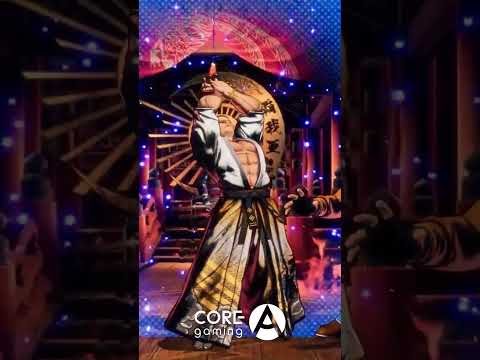
Core-A Gaming’s video “Even Children and Dogs Know Hadoken” put a spotlight back on this exact issue: motions started strict as hell in the late ‘80s, got opened up in Street Fighter II, then got simplified or outright scrapped in games like Mortal Kombat… yet here we are, over 30 years later, still rolling quarter-circles like it’s 1991. That’s not an accident. That’s ideology.
From “Pixel-Perfect” Pain to Street Fighter II’s Gateway Drug
People forget how hostile early fighting games were to normal humans. The original Street Fighter – the one almost nobody talks about fondly – had special moves so strict they might as well have been lottery tickets. The inputs were there, technically, but the timing windows were razor-thin. If you didn’t hit the exact motion with absurd precision, nothing came out. No visual feedback, no leniency, just “guess you’re doing normals, buddy.”
Street Fighter II is where Capcom stopped treating special moves like a secret club and started treating them like, you know, designed mechanics. Inputs got more forgiving: the game buffered your stick motions over a chunk of frames instead of demanding a 1-frame miracle. Modern breakdowns and dev notes talk about how SFII extended the input window for stuff like fireballs and dragon punches to around 10–15 frames. That doesn’t sound like much on paper, but in play it’s the difference between “this feels impossible” and “this feels learnable.”
Guile’s Sonic Boom and Flash Kick are a perfect example. Hold back, then forward + punch. Hold down, then up + kick. That’s not a quarter-circle pretzel. It’s a simple rhythm that says: “Commit to blocking or crouching, then cash out with a special.” SFII quietly democratized special moves. Average players started throwing fireballs and flash kicks on purpose, not by accident. Arcade floors filled up with people who, for the first time, had agency in a one-on-one game. SFII didn’t just make special moves possible; it made them understandable.
That’s the version of motion inputs I fell in love with: not the SF1-style cruelty, but the SFII-style handshake. “You give me a bit of effort, I give you a powerful move that feels earned.”
Mortal Kombat, SNK Pretzels, and the Split Path
Once SFII blew the doors off, everyone copied the template… but not everyone interpreted “motion input” the same way.
Mortal Kombat said: forget all that quarter-circle nonsense, here’s “down, forward, high punch.” It kept the idea of sequences but ditched the joystick gymnastics. By the time NetherRealm fully locked in its post-2011 design (starting with MK9), most specials were essentially directional + button chains – easier to do on controllers, consistent across characters, and way more forgiving for casual players mashing on the couch.
SNK, on the other hand, looked at motions and went: “What if this but pain?” You got stuff like the infamous pretzel input for Geese Howard, or half-circle plus forward plus another quarter-circle with a button slapped on the end. Fatal Fury and King of Fighters became famous for not just special moves, but special moves that required your thumb to sign a contract in blood. To be fair, SNK also toyed with simplified motions (down, down + button, or quarter-circle-forward instead of half-circle) and some of those stuck all the way into modern tournaments. But their identity was very much “you want this power, you’re going to work for it.”
Even outside dedicated fighters, you felt it. Sabin suplexing a literal train in Final Fantasy VI? That’s a fighting game motion input. Down, up, left, right, left, right + attack. As a kid, I wasn’t thinking “this is an execution tax.” I was thinking “yo, I get to do a fighting game move in an RPG.”
The point is, by the mid-’90s, motions had become more than just a control method. They were a language. Different series spoke different dialects, but the underlying message was the same: special moves require intention and a bit of practice.
Are Motion Inputs Really Gatekeeping, or Are We Lying to Ourselves?
In 2026, the argument’s shifted. It’s not “can you do a fireball?” anymore. It’s “should you have to?” You’ve got people calling motion inputs archaic, exclusionary, or pure gatekeeping. You’ve got others defending them like they’re sacred scripture handed down from the CPS-1 board itself.
Here’s my honest take as someone who’s taught friends, kids, and complete newbies how to play: calling basic quarter-circles and dragon punches “gatekeeping” is overblown. With SFII-style leniency and modern training modes, most able-bodied players who want to learn can get a Hadoken out in under an hour. Core-A’s joke title – “even children and dogs know Hadoken” – isn’t totally wrong. Once you grasp “roll the stick in that direction,” it sticks.
But swinging the other way and pretending motions have no exclusionary effect is just as dishonest. Not everyone has the motor skills, physical comfort, free time, or patience to grind muscle memory on something that, to them, looks like arbitrary hand yoga. If you’re disabled, if you grew up on Pokémon and not arcades, if your gaming time is 30 minutes after work, execution barriers absolutely matter.
There’s a great parallel here with Pokémon’s design. Part of why that series has kept people playing for decades is because the core inputs are brain-dead simple: pick a move, select a target, done. The depth lives in the decisions, not in how fast you can rotate a stick. Whenever that series veered into gimmicky motion controls or twitch-heavy mechanics, a chunk of long-time players felt pushed out. Accessibility wasn’t a side note; it was the foundation.
Fighting games are a different beast, sure. But the idea that inputs themselves carry a cost isn’t theoretical. It’s visible in who sticks with these games and who bounces off after getting bodied online for a week.
Modern Fighters Proved Motions Are a Choice, Not a Law of Nature
The clearest evidence that motion inputs are a design choice, not a natural law, is what modern fighters have actually done.
Street Fighter 6 introduced “Modern” controls: simplified inputs where a single direction plus a button does what used to be a quarter-circle or DP. You literally don’t have to roll the stick to get a fireball. The trade-off? You lose some access to your normals and optimal damage routes. The game bakes in the idea: easier execution, lower ceiling.
Tekken 8 added a “Special Style” layout with single-button access to key moves and strings. Under the hood, Harada and team still defend traditional motions and tighter inputs as a way of expressing “precise intent,” especially around its new Heat system. And use stats that devs have talked about back that up: most players dabble with the simple mode, then migrate back to classic controls once they’re comfortable. But the existence of Special Style proves something important: the old way isn’t the only way.
Mortal Kombat went even harder. Since MK9, NetherRealm has basically said, “no more quarter-circles, we want simple, consistent strings that work across controllers.” Inputs are direction + button combinations, nothing fancy. That didn’t kill depth. It didn’t ruin tournaments. People still study frame data, lab setups, and scream when they get grabbed into a fatal blow for the tenth time.
So when I hear someone insist that fighting games must cling to complex motions or they “won’t be real” anymore, I call bullshit. Mortal Kombat exists. Dragon Ball FighterZ exists with its lenient quarter-circles and auto-combos. Smash Bros exists, it’s a whole separate universe of movement and inputs. Depth survived just fine.
Why Motions Still Matter to Me (and Why They’re Not Sacred)
So why, after all that, do I still actually like motion inputs? Because at their best, they do something other games can’t replicate: they make your physical movement on the controller directly mirror your character’s intention.
When I roll a quarter-circle forward, I am literally pushing the stick in the direction I want the projectile to travel. When I do a dragon punch, that forward-down-down-forward angle feels exactly like Ryu stepping in then snapping upward with an uppercut. Motion inputs are a primitive but powerful kind of analog expression.
That’s what Harada’s getting at when he talks about quarter-circles expressing “precise intent” in Tekken 8. When you input a just-frame EWGF or a complex motion for a Heat-engaged move, you are declaring, in no uncertain terms, “I meant to do this.” You can’t get that same expressive clarity from a single “Special” button that the game recontextualizes based on position and state. You can make it work, but you lose something along the way.
On top of that, the journey of learning motions matters. My early hours in Street Fighter II weren’t fun despite struggling to get fireballs on demand; they were fun because I felt myself getting better every day. First it was random Hadokens, then consistent ones, then anti-air DPs, then combos into supers when that era hit. Execution wasn’t just a barrier; it was a growth arc.
But – and this is where a lot of FGC diehards lose me – that doesn’t mean every bit of execution friction is automatically good. There’s a difference between a skill curve and busywork.
Where I Draw the Line: “Balanced by Difficulty” Is Lazy Design
Core-A’s video quotes a sentiment I’ve heard a thousand times: that it’s “lazy design” to balance moves by making the inputs harder. And I agree with that part completely. The moment a designer says, “This move is busted, but it’s okay because it has a weird, strict input,” alarm bells go off in my head.
I’ve felt this firsthand. SNK pretzel inputs, 720-degree supers on pad, aerial motions that require you to tiger-knee at a specific height with zero feedback – that stuff doesn’t feel like expression, it feels like hazing. If a move is so strong that the only way to keep it in check is to wrap it in hand torture, maybe the move itself needs a redesign.
Street Fighter II, for all its age, mostly avoided that trap. A fireball is strong, but it’s not game-breaking. A dragon punch is a great anti-air, but it’s also super punishable. The input gives you a sense of accomplishment, but the actual balance lives in frame advantage, spacing, and recovery. Compare that to some later-era supers in other series where the devs very clearly thought, “yeah, this is busted, but almost nobody can do it consistently, so whatever.” That’s when execution stops being a meaningful skill gate and becomes a band-aid on sloppy design.
I’m also not interested in defending motion bloat. If your character has six overlapping quarter-circle motions in different directions plus charge moves plus a pretzel super, maybe the problem isn’t the existence of motions, it’s that the command list has been allowed to grow like an unchecked tumor.
The Future I Want: Optional, Honest, and Intentional
Where does that leave someone like me – a lifelong motion-input junkie who also wants more people to enjoy these games without feeling like they’re learning an instrument?
I want motion inputs to stay. But I want them to stay honestly and intentionally.
Street Fighter 6 is on the right track with its dual control schemes. Want the classic experience, motions and all, max damage, full normals? Go nuts. Want the simplified, “I just want to see my character do cool stuff without grinding out a DP for a week” layout? That’s there too, clearly labeled with its pros and cons. Tekken 8’s Special Style is another step in that direction, even if it’s half-hearted in places.
For future fighters, I’d love to see:
- Motion-optional inputs that let you map key specials to shortcuts without completely gutting depth.
- Transparent trade-offs: simplified controls might cap damage, limit move access, or tweak frame data, but in a way that’s clearly explained.
- Serious input leniency that preserves the shape of motions without demanding absurd precision.
- Robust training tools that actually teach motions with visual guides, timing bars, and slow-motion breakdowns.
- Accessibility toggles for players with motor impairments – macro systems, auto-input assists, customizable shortcuts – without locking them out of online play.
Most importantly, I want devs to stop hiding behind “tradition” as a shield. If a game keeps quarter-circles, it should be because the designers genuinely believe that physical input pattern deepens the connection between player and character, not because they’re terrified of being accused of “selling out” the FGC.
Street Fighter II’s Legacy, Without the Rose-Tinted Chains
Street Fighter II turned dusty arcade cabinets into arenas. It took the brutal, inconsistent, borderline-broken inputs of the original Street Fighter and turned them into something regular people could actually perform. It made the idea of learning a motion – of slowly mastering a character’s special moves – part of the fun, not just part of the suffering.
That’s the legacy I want modern fighting games to carry forward: intentional challenge, understandable mechanics, visible growth. Not “we kept quarter-circles because that’s what our predecessors did.” Not “we made this super busted but slapped a nightmare input on it so only nerds can abuse it.” And definitely not “if you can’t grind these motions, you don’t belong here.”
I’m going to keep rolling Hadokens. They’re part of my gaming DNA at this point. But I’m done pretending that motion inputs are some sacred cow that must never be questioned, or some evil gate that must be torn down entirely. They’re a tool. A powerful one. A historically important one. And like any tool, they can either invite people in or push them away, depending on how bravely designers are willing to examine why they’re still using it.
Street Fighter II proved that loosening the screws on execution could explode the genre’s popularity without destroying its soul. If modern devs can’t look at that lesson and design around it with eyes open, that’s not tradition. That’s cowardice.
FinalBoss // Gear
Level up your setup
01Top-rated gaming headsetson Amazon→02High-refresh gaming monitorson Amazon→03Gaming chairson Amazon→04Discounted game keyson Kinguin→Affiliate links · As an Amazon Associate, FinalBoss earns from qualifying purchases.
Want to Level Up Your Gaming?
Get access to exclusive strategies, hidden tips, and pro-level insights that we don't share publicly.
Ultimate Gaming Strategy Guide + Weekly Pro Tips