
About an hour into John Carpenter’s Toxic Commando, I was standing on the roof of a half-collapsed motel, juggling a sputtering turret, a sputtering pick-up truck, and three friends who wouldn’t stop laughing as a tidal wave of sludge-zombies tried to climb the walls. Someone yelled that they were out of ammo, someone else drove the truck straight through our defenses, and I was just there, cackling, as my LMG turned the whole entrance into a meat blender.
That’s this game at its best: noisy, stupid, and very, very good at letting you turn a problem into paste with a satisfying thud of recoil and a shower of XP orbs. It’s not deep. It’s not clever. It barely has a story. But over one weekend, I finished its nine-mission campaign, replayed a couple of favorites, and walked away surprisingly satisfied.
I played on PC with mouse and keyboard, mostly in three-player co-op and a few hours solo to see how it held up. By my timer, credits rolled in just under six hours, including a couple of failed attempts on higher difficulty. It’s very much a “start Friday night, be done Sunday” kind of shooter.
Table of Contents (9)
A Weekend in the Sludge: First Impressions
Booting the game for the first time, two things jumped out immediately: the gunfeel and the tone. Toxic Commando has that chunky, crunchy headshot feedback that so many horde shooters chase and miss. The first time I popped a zombie’s skull with the basic assault rifle, the sound and little shudder in the camera told me, “Okay, this part they nailed.”
The other thing that hit me right away is how aggressively the game does not care about its story. There’s a nonsense setup about a “Sludge God” and apocalypse science gone wrong, some quippy characters, and occasional radio chatter, but it’s basically wallpaper. I stopped trying to follow the plot after Mission 2 and nothing of value was lost.
Instead, Toxic Commando wants you to care about one thing: go somewhere, fortify something, and absolutely ruin an ocean of undead. If you grew up playing Call of Duty Zombies or sinking nights into Left 4 Dead and World War Z, you’ll recognize the DNA immediately. It’s Saber Interactive doing what they’re comfortable with, just with John Carpenter synths humming under the carnage.
The Core Loop: Simple, Loud, and Surprisingly Tight
Every mission basically runs on the same skeleton: you spawn into a semi-open map, hop into a vehicle, bounce between a few points of interest to scavenge, then dig in for big defense sequences against the horde. Objectives rarely get more complicated than “hold this area,” “escort this thing,” or “survive until the bar fills.” And honestly? That’s kind of the charm.
The maps are more like compact sandboxes than linear corridors. You’ll roll through villages, highways choked with fossilized traffic, labs, refineries – each studded with pockets of loot. “Spare Parts” let you repair or upgrade defenses; sludge serves as the main currency for leveling weapons; XP orbs feed into your character skill trees. Crucially, all this stuff is clustered close enough that the game rarely wastes your time. You’re never driving for five dead minutes with nothing to shoot.
Weapons are where Toxic Commando really hits its stride. You start with basic ARs and shotguns, but within a couple of missions I’d unlocked a disgusting little SMG that turned short range into a blender, and a marksman rifle that sounded like a portable thunderclap. Each gun can be upgraded through multiple tiers with sludge, and you can slot attachments – grips, barrels, optics – that subtly change handling and feel.
The numbers go up quickly. By the back half of the campaign, my favorite shotgun was so juiced that regular zombies didn’t just die; they un-existed. It’s classic horde-shooter power fantasy, but the way recoil, sound, and hit reactions sync up sold the illusion hard. Snapping between weakpoints on special infected never got old.
Speaking of specials, they’re a greatest-hits package: big bruisers that charge and grab, ranged spitters, tall lanky things that yank teammates away, exploders that punish sloppy positioning. Nothing you haven’t seen before, but they’re tuned well enough to keep you on your toes. On higher difficulties, a badly timed combination – a grabber pulling your healer right as an exploder waddles in – can erase a run in seconds.
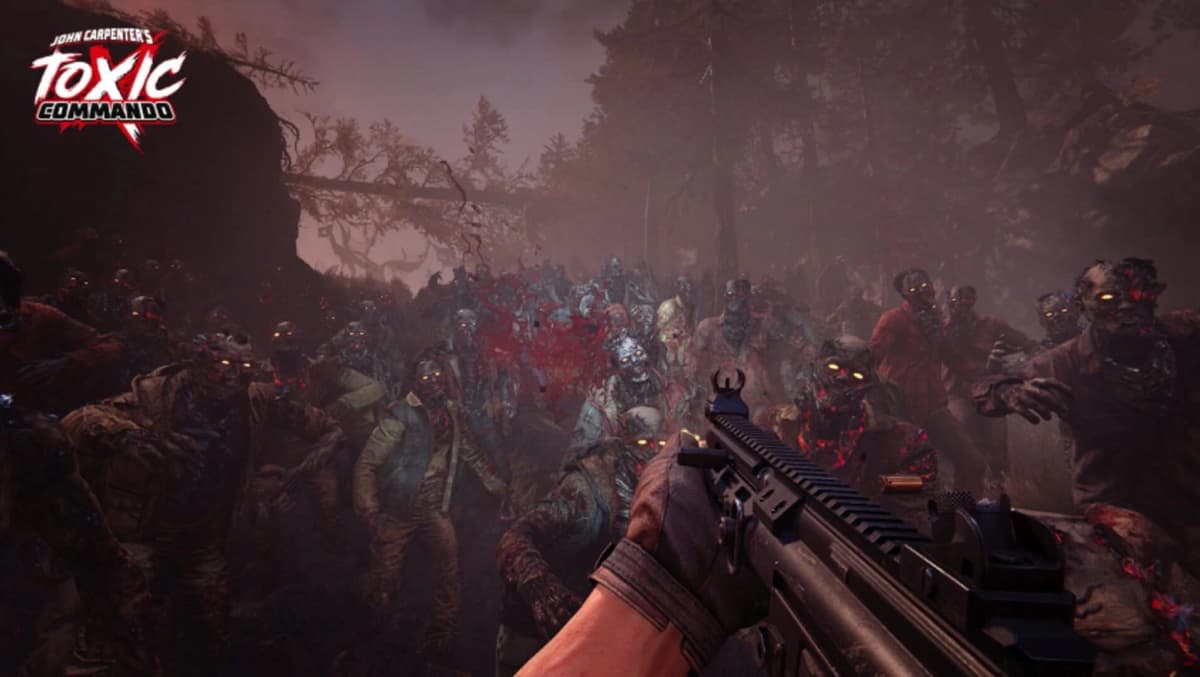
The final ingredient in the loop is the Swarm Engine tech Saber has used in previous games. When the game really lets loose, the screen becomes an ugly, beautiful tide of writhing bodies spilling over cars, fences, and each other. During one late-game village defense, we dropped an EMP, threw every grenade we had, and watched hundreds of zombies lock up and then shatter under LMG fire. It felt over-the-top in exactly the right way.
Vehicles: Roadkill as a Legit Strategy
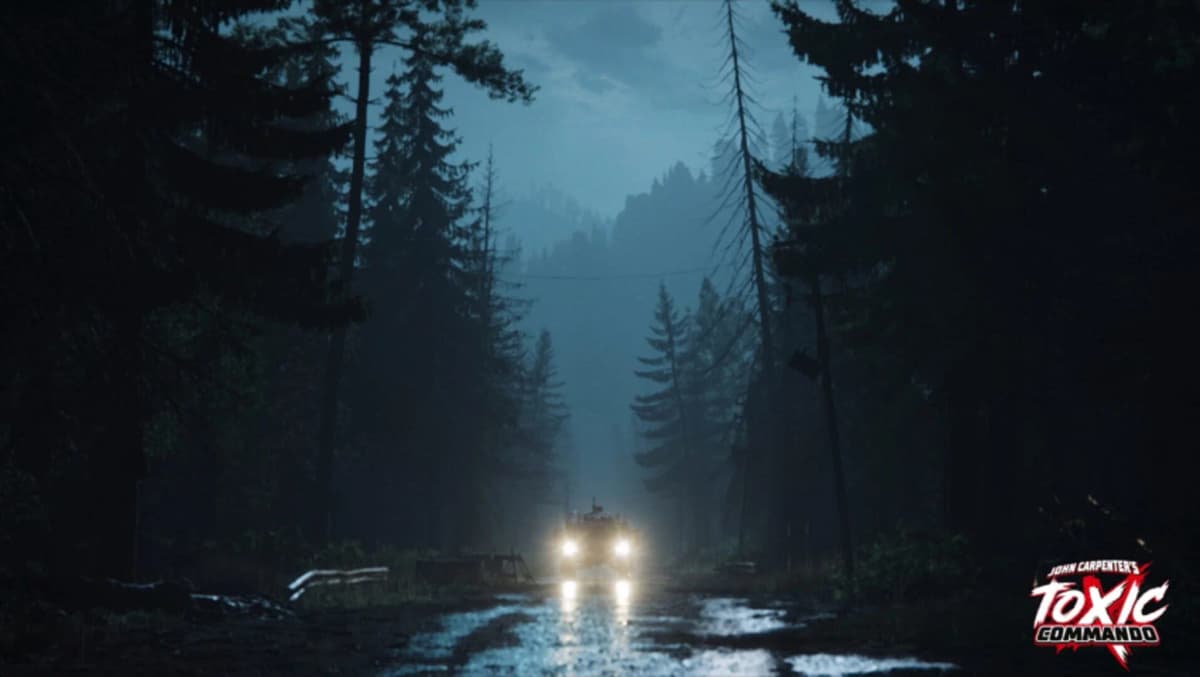
The big differentiator compared to other co-op zombie shooters is how much the game leans on vehicles. You’re not just sprinting through alleys; you’re piling into armored trucks and jeeps, slapping turrets on top, and plowing straight through swarms.
Driving feels loose but intentionally so. You’re not precision drifting; you’re fishtailing a pickup into a crowd of sludge freaks and laughing as they pop like water balloons. Trucks can be upgraded and healed at certain points, and losing one mid-mission can genuinely hurt, especially in open maps where they double as mobile fortresses.
One of my favorite moments was on a highway mission where we were escorting this fragile objective through stacked car wrecks. We had a mounted gun facing forward, someone on the back watching our flanks, and I was trying to thread the needle between abandoned SUVs while special infected clung to the sides like parasites. When we inevitably flipped the truck trying to “just squeeze through,” the horde flooded in, and the mission instantly turned into a last-stand scramble to reach the next safe zone. It felt like an 80s VHS action scene that went horribly, gloriously wrong.
Vehicles aren’t just flavor – they genuinely change the rhythm of missions. On foot, you’re cautious, checking corners, watching your ammo. In a truck, you’re loud and reckless, herding zombies into chokepoints and ramming your way out of trouble. The game is smart about giving you reasons to swap between the two states, so it never devolves into “drive everywhere, shoot everything from the turret.”
Co-op, Solo, and Those Surprisingly Obedient AI Teammates
I spent most of my time in three-player co-op, and that’s unquestionably where Toxic Commando shines. There’s a natural division of roles that emerges even before you get deep into the class trees – one player focuses on crowd control with explosives or LMGs, another locks down chokepoints with turrets and traps, a third picks off specials and handles revives.
The game supports AI squadmates when you’re not in a full party, and I was honestly surprised by how solid they are. They stick close, they actually shoot priority targets, and they’re quick on revives. They’re not going to solo a defense event for you, but they feel more like competent soldiers than the usual brain-dead filler. Playing solo with a full AI squad on normal difficulty was completely viable.
The big pain point solo is the lack of generous checkpoints in some longer missions. One lab level in Act 2 has you bouncing between multiple objectives and then surviving a brutal end-room siege. I died near the very end once, got kicked back far enough that I audibly groaned, and considered dropping the difficulty just to avoid re-running the same scavenging route. In co-op, the same mission felt more like a fun gauntlet; solo, it verged on a chore.
Classes add another layer to co-op synergy. You’ve got archetypes that lean into support, heavy weapons, gadgets, etc., each with their own skill trees. I gravitated toward a more utility-focused build: extra deployables, shorter cooldowns on defensive gadgets, and some team buffs. A friend went full offense with damage boosts and explosive upgrades. By the final act, we had a nice rhythm where I’d wire up chokepoints and he’d just erase anything that stumbled in.
Classes add another layer to co-op synergy. You’ve got archetypes that lean into support, heavy weapons, gadgets, etc., each with their own skill trees. I gravitated toward a more utility-focused build: extra deployables, shorter cooldowns on defensive gadgets, and some team buffs. A friend went full offense with damage boosts and explosive upgrades. By the final act, we had a nice rhythm where I’d wire up chokepoints and he’d just erase anything that stumbled in.
🎮 Get This Game at the Best Price
Compare prices instantly and save up to 80% on Steam keys with Kinguin — trusted by 15+ million gamers worldwide.
*Affiliate link — supports our independent coverage at no extra cost to you
Don’t expect ultra-complex synergies or build crafting à la Deep Rock Galactic or Vermintide 2, though. The skills are mostly straightforward percentage boosts and “this thing recharges faster now” perks. They’re enough to make you feel like you’re growing stronger over a 5–10 hour window, but not deep enough to support endless tinkering.
Weapons, Upgrades, and the Grind Question
Progression in Toxic Commando walks a fine line between satisfying and repetitive. On the positive side, unlocking a new gun and immediately pouring sludge into it to see the damage numbers spike is addictive. I loved experimenting with different primaries – beefy shotguns for tight interiors, a laser-accurate rifle for outdoor defenses, an LMG when we knew the game was about to spawn a full tidal wave.
On the flip side, the actual act of farming sludge and parts can start to blur together during a longer session. You’re doing the same POI loop: clear a small horde, pop the chests, vacuum up the resources, repeat. Over a short campaign, it’s fine. When I replayed a couple of missions on higher difficulty to chase better upgrades, I felt that “grind” fatigue creeping in.
Still, for a weekend-sized game, it hits a decent rhythm. By the time credits rolled, I had a handful of fully-upgraded favorites and a few experimental builds for replaying missions. You’re not expected to min-max across dozens of hours; you’re just meant to get convincingly overpowered and enjoy vaporizing sludge monsters with whatever loadout feels best.
Mission Variety, Repetition, and That Final Boss
The campaign is split into three acts, with nine missions total. The middle chunk opens up and lets you tackle some in any order, which helps pacing a bit. One night we knocked out three in a row – a village rescue, a highway escort, and a more indoor-focused lab crawl – and even though the objectives were similar, the different layouts and defense setups kept it from feeling totally samey in the moment.
That said, once you settle into the groove, you’ve basically seen the full bag of tricks by Mission 4. You’ll defend generators, objectives, or vehicles; you’ll escort something precious through hostile territory; you’ll hold the line while some bar fills. The game’s honesty about its own simplicity mostly saves it – it doesn’t pretend to be more than a horde shooter – but it does mean the magic wears off a bit faster if you try to marathon the whole thing in one sitting.
The finale, without spoiling specifics, leans into the Sludge God concept with a big, multi-phase boss encounter. Mechanically, it’s not going to blow anyone’s mind, but I liked how it forced us to move, reposition, and actually pay attention to weakpoints and arena hazards instead of just camping a corner with turrets. We wiped once because we got greedy on damage and let adds overrun us; on the second try, tightening up our positioning made the fight click, and the final explosion felt earned in that “we barely held that together” way.
Would I replay the entire campaign multiple times? Probably not. But I’ve already earmarked a couple of favorite missions – the motel stand, the highway escort – as “jump in with friends and smash some zombies for an hour” candidates. On higher difficulties, those set-pieces stay tense enough to be worth revisiting, especially if you’re chasing better upgrades or just want an excuse to flex your late-game builds.
Presentation, Vibes, and PC Performance
Visually, Toxic Commando looks exactly like the mid-budget co-op shooter it is. The environments are readable and occasionally striking – especially when the sky turns that sickly, apocalyptic yellow-green – but you’re not getting cutting-edge fidelity. The real showpieces are the hordes themselves and the way they pour over geometry, plus the chunky gore when heavy weapons go to work.
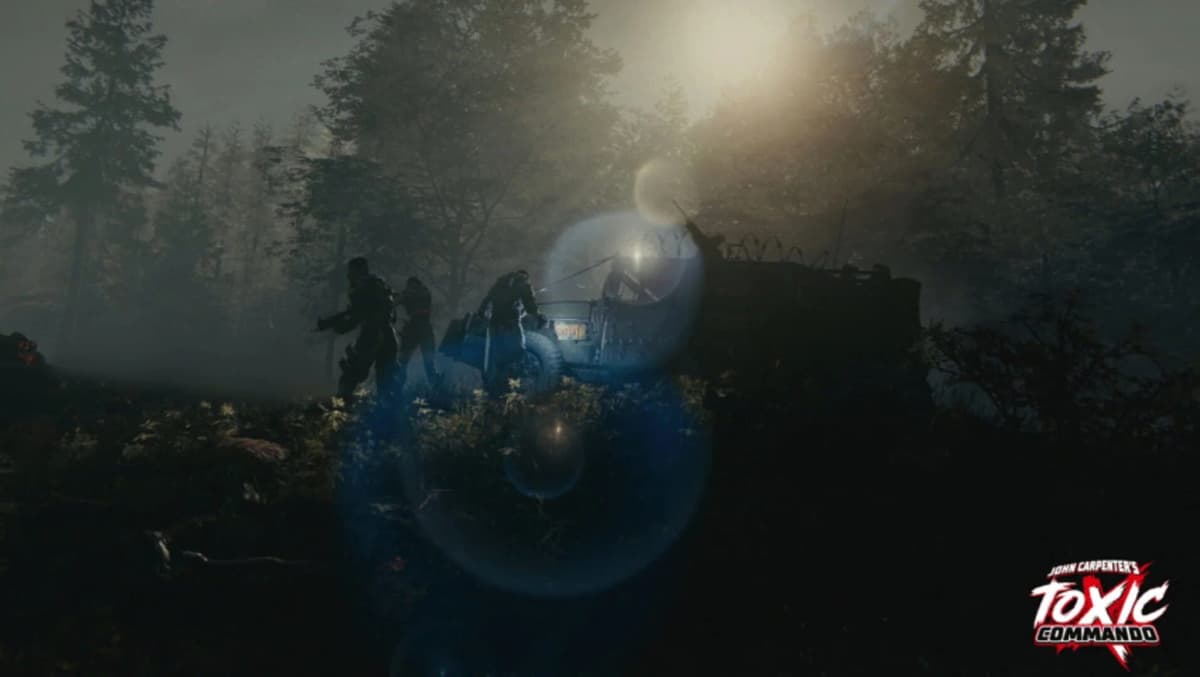
The 80s-inspired sci-fi horror aesthetic works better than the actual writing. Character banter ranges from mildly amusing to full-on eye-roll, and the overarching story never really gets its hooks in. But then a Carpenter-style synth track kicks in as a massive wave of enemies crests the hill, and suddenly the “vibes” half-succeed at selling you a campy B-movie apocalypse.
On PC, performance for me was solid. Running at 1440p on a mid-range RTX card with settings mostly cranked, I was comfortably north of 60 FPS even during the heaviest swarms. I didn’t hit any progress-killing bugs or disconnect storms either, which for an online co-op-focused game is a small miracle these days. Matchmaking with friends was painless; quickplay with randoms worked but felt chaotic in the way you’d expect when strangers are driving your only truck off a cliff.
Who This Game Is (and Isn’t) For
If you’re looking for a deep, endlessly replayable co-op obsession like Vermintide 2, Deep Rock Galactic, or even Back 4 Blood post-updates, Toxic Commando probably won’t scratch that itch for long. The class systems are lighter, the mission structure is simpler, and the campaign is short enough that you’ll see almost everything in a single weekend.
But if what you want right now is:
- A focused 5–10 hour co-op shooter you can actually finish with friends
- Guns that feel incredible to shoot, especially against big crowds
- AI allies that don’t constantly sabotage you when your squad isn’t full
- Simple objectives that don’t require constant micromanagement
…then Toxic Commando absolutely hits the spot. It reminded me a bit of the first time I played the original World War Z game: I wasn’t blown away by its ambition, but I kept saying, “Just one more mission,” because the act of mowing down hordes felt so good.
FinalBoss // Gear
Level up your setup
01Top-rated gaming headsetson Amazon→02High-refresh gaming monitorson Amazon→03Gaming chairson Amazon→04Discounted game keyson Kinguin→Affiliate links · As an Amazon Associate, FinalBoss earns from qualifying purchases.
Want to Level Up Your Gaming?
Get access to exclusive strategies, hidden tips, and pro-level insights that we don't share publicly.
Ultimate Reviews Strategy Guide + Weekly Pro Tips