
If Warhorse really just swapped a human Kingdom Come: Deliverance 2 translator for AI, that’s not “efficiency” – it’s vandalism on the one thing this series can’t afford to cheap out on: its words.
Table of Contents (8)
Key takeaways
- An in-house Czech-to-English translator on Kingdom Come: Deliverance 2 says his job was declared “obsolete” and replaced with AI tools after nearly four years at Warhorse.
- He claims the justification was to “save finances” and “make the company more effective,” despite KCD2 being a dialogue-heavy, historically grounded RPG that lives or dies on nuanced writing.
- Warhorse’s public response dodges specifics, stressing they “value” staff while refusing to address whether they are, in fact, replacing translators with AI.
- This isn’t just a sad labor story – it’s a test case for how far studios think they can push AI into creative roles before players notice the quality drop.
What actually happened – and what’s confirmed
The short version: a Czech-to-English translator who worked at Warhorse Studios on Kingdom Come: Deliverance 2 says he was fired on March 27, 2026, after being told his role would be made “obsolete” and replaced with AI-driven translation tools.
In a detailed post on the Kingdom Come subreddit (since widely picked up by press), he described nearly four years at the studio working across KCD2’s English localization: in-game dialogue, quest logs, item names and descriptions, DLC content, even marketing materials. Moderators verified his identity via LinkedIn, and he later publicly confirmed his name as Max Hejtmánek.
According to Hejtmánek, Warhorse management framed the move as a cost-saving and efficiency play, explicitly tying his dismissal to AI tools. He also says he’d argued internally against using AI for translation, but didn’t expect that stance to cost him his job. His own words on the fallout are blunt: he feels “incredibly betrayed.”
Warhorse, for its part, has issued a very carefully lawyered statement: they’re exploring new tools and technologies, and they “deeply value the people who shape [their] work,” but they will not comment on individual employment matters. Notice what’s missing: any clear denial that AI is replacing human localization staff.
So here’s what we actually know:
- A long-term in-house translator on KCD2 is out.
- He was told his position would become obsolete and that AI tools are part of the plan to “save finances.”
- His identity and role on the project have been independently verified; Warhorse hasn’t disputed that he worked there or that he’s now gone.
- The studio is pointedly refusing to say AI isn’t replacing his role.
If any game needs human translators, it’s Kingdom Come
On paper, you can see how some executive gets seduced here. KCD2 is likely massive – hundreds of thousands of words across quests, barks, flavor text, and system messages. Neural translation looks like an easy budget win: you keep a skeleton crew of editors, run the bulk via AI, and tell yourself players won’t notice.
But Kingdom Come is about as bad a candidate for that experiment as you could pick.
The first game built its entire identity on historical specificity. Archaic turns of phrase. Social hierarchies embedded into how people address each other. Jokes and insults that only land if you understand both the period and the culture. That’s not just “translate this sentence”; it’s “rebuild this line so it hits the same nerve in a different language, without breaking tone or lore.”
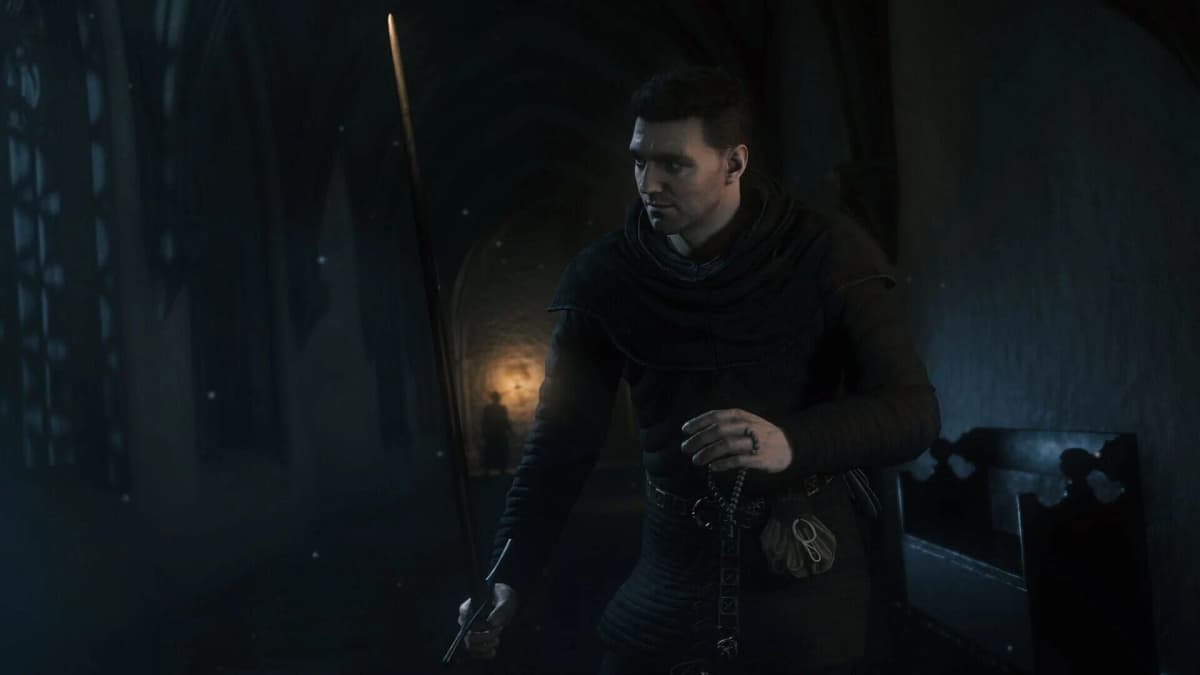
Modern AI translation is impressive, but it’s still fundamentally a pattern machine. It’s good at “average language” in “average contexts.” KCD2 isn’t average. It lives in edge cases: rural medieval Czech life, religious disputes, regional politics, period slang. The exact territory where automated systems tend to fall apart or flatten everything into bland, modern phrasing.
And that’s before you get into consistency: item names, faction titles, combat skills, and quest objectives all need one unified vocabulary across the entire game. That is months of human judgment and style-guide policing, not a handful of prompts.
Can AI speed up grunt work? Sure. Can it draft a first pass on UI strings or throwaway barks? Absolutely. But firing one of the people who’s been living in the guts of this game’s language for years, right as you head toward release, is not “experimentation.” It’s a bet that players either won’t notice the difference or won’t care.
This is what “AI replacing jobs” actually looks like
Most AI-in-games talk stays vague: “assistive tools,” “enhanced workflows,” “supporting our creatives.” You rarely get such a clean, human-shaped outline of what “efficiency” really means until someone’s badge stops working.
Hejtmánek’s account lines up with how this tends to go in other industries:
- First, AI gets introduced as a helper for late-stage polish or bulk tasks.
- Then management decides the “helper” is doing enough that you can shrink the team.
- Suddenly the person who understands the content best is labeled “redundant” because the tool “just needs supervision” – supervision that magically takes fewer staff-hours on the spreadsheet.
We’ve already seen a version of this in games media, where sites quietly swapped human reviewers for AI-generated “content” and hoped nobody would look too closely at the bylines. When they got caught, the brand damage was instant. In that case, players lost trust in coverage. In this case, they risk losing trust in the game itself.
What’s especially grim here is timing. KCD2 is not in pre-production. This isn’t some R&D experiment on a prototype. This is a late-stage RPG with marketing running and fans already invested. Swapping out experienced internal localization at this point suggests either major cost pressure, a deep belief that AI output is “good enough,” or both.
Warhorse’s statement says more in what it dodges
On paper, Warhorse’s response is exactly what you’d expect from a studio trying to ride out a bad headline. They stress how much they value their people. They say AI is one of many tools. They refuse to talk about a specific employee. It’s safe. It’s PR 101.
But if you peel back the nice words, a simple question hangs in the air: if this is just a misunderstanding, why not say the quiet part clearly?
- Are you, or are you not, replacing in-house translators on KCD2 with AI tools?
- Is the English localization team growing, shrinking, or staying flat?
- Will every language version of KCD2 have human translators in the loop from first pass to final ship, or only at the end as glorified proofreaders?
That’s the question I’d put to their PR team if they were on the line. Not “do you value your people” – everyone says that. “How many of those people are still going to be there next month?” is the one that matters.
Right now, the only concrete datapoint we have is a translator with a nearly four-year tenure being told his job no longer exists because software is cheaper. Warhorse’s refusal to contradict that story, even while polishing the edges, is telling.
Why players should care – even if you don’t care about labor politics
It’s easy to file this under “industry drama” and move on. But if you liked the first Kingdom Come, you have a very selfish reason to pay attention: this is how sequels quietly get worse while ticking every marketing box.
Bad or bland localization doesn’t always show up in trailers. It shows up 60 hours in, when:
- a crucial quest line reads like it was written three times by three different people,
- a supposedly tense scene lands with meme-tier phrasing,
- historical flavor gets sanded down into generic fantasy talk, because that’s what the model has seen most.
KCD’s fanbase is here for the nerdy detail. For the sense that this is a specific slice of history, not just another open world with a medieval skin. That feeling lives in the language as much as the art direction.
Replacing one of the humans who built that language with AI isn’t just a workplace story. It’s an early warning about where corners might be cut in a project that’s been sold on authenticity from day one.
What to watch next
- Warhorse’s next detailed statement (if any): A real answer on how AI is used in localization – not just vague “tools” talk – will tell us how deep this goes.
- Credits and staff movement: When KCD2 ships, how many in-house translators and editors are credited compared to expectations for a game of this size?
- Hands-on previews: As longer demo sessions and review builds go out, pay close attention to how dialogue and quest text feel in English and other major languages.
- Industry copycats: If this blows over without backlash, expect other AA studios to quietly run the same playbook: AI first, humans as cleanup.
TL;DR
A veteran Czech-to-English translator on Kingdom Come: Deliverance 2 says Warhorse fired him after declaring his role “obsolete” and shifting to AI translation tools to cut costs. For a historically obsessed, dialogue-heavy RPG, that’s not a harmless optimization – it’s a direct risk to the game’s core strength. Unless Warhorse can prove it’s keeping humans in charge of KCD2’s voice, this looks less like innovation and more like a short-sighted downgrade dressed up as progress.
FinalBoss // Gear
Level up your setup
01Top-rated gaming headsetson Amazon→02High-refresh gaming monitorson Amazon→03Gaming chairson Amazon→04Discounted game keyson Kinguin→Affiliate links · As an Amazon Associate, FinalBoss earns from qualifying purchases.
Want to Level Up Your Gaming?
Get access to exclusive strategies, hidden tips, and pro-level insights that we don't share publicly.
Ultimate Gaming Strategy Guide + Weekly Pro Tips