
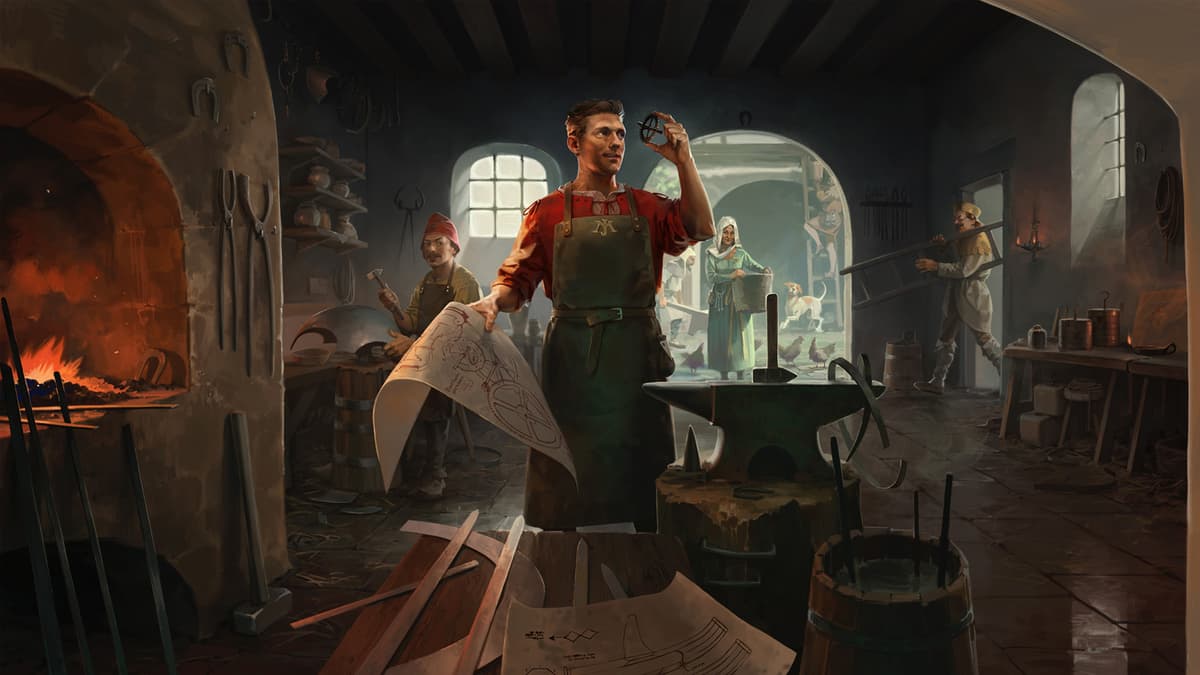
Kingdom Come II’s Legacy of the Forge Turns Henry’s Roots Into a 15-Hour Blacksmith Saga
Game intel
Kingdom Come: Deliverance II
In this DLC, Henry navigates the complex dynamics of Sedlec Monastery to discover hidden truths. This DLC is included in the Golden edition and season pass.
Why Legacy of the Forge Actually Matters
Kingdom Come has always been at its best when it leans into grounded, human-scale drama-quietly fixing a village, navigating guild politics, or solving a local scandal-rather than trying to be a medieval power fantasy. That’s why Legacy of the Forge caught my attention. Warhorse Studios is steering Henry back to his roots, literally handing him the keys to a derelict forge in Kuttenberg and asking him to restore an astronomical clock dreamt up by his adoptive father’s old crew. No dragons, no magic-just steel, reputation, and a massive community project. That’s quintessential Kingdom Come.
Key Takeaways
- 15-hour story expansion centered on joining Kuttenberg’s blacksmith guild and rebuilding a legendary forge.
- Long-form questline to repair the city’s astronomical clock by reuniting master craftsmen tied to Henry’s past.
- Customizable forge-home with claimed “100 million” design combinations and functional buffs (faster skill learning, general stat boosts).
- $13.99 standalone, included in the Gold Edition/Expansion Pass. Patch 1.4 with QoL improvements, updated photo mode, and an adaptive HUD is free for all KCD II owners.
Breaking Down the DLC: The Blacksmith Fantasy, Finally
The pitch is simple but smart: Henry earns his spot in Kuttenberg’s blacksmith guild, inherits a run-down workshop where Martin once trained, and tackles an unfinished dream—restoring the city’s astronomical clock—by rallying a scattered circle of master artisans. If you remember how strong Kingdom Come’s grounded questlines can be (think monastery infiltration or the simmering silver-mine politics), this setup is right in Warhorse’s wheelhouse.
The forge is the heart of the expansion. It’s not just a fast-travel icon; it’s pitched as a real home base. You can customize the exterior, private quarters, and yard, with a frankly hilarious “over 100 million design combinations” marketing flex. Translation: lots of options. What matters more is that these upgrades provide tangible gameplay perks—like beds that help Henry learn skills faster and overall skill improvements—turning the shop into a progression engine rather than mere medieval IKEA.
The big question is whether the DLC delivers hands-on smithing or sticks to management and narrative. Warhorse isn’t promising a deep forging mini-game here, so temper expectations. The emphasis seems to be on story, prestige, and functional upgrades, not crafting every pommel and guard. As long as the quests are as layered as KCD’s best, that’s fine—but if you came solely for a blacksmith simulator, read the room.
The restoration of an astronomical clock is a neat historical flex. It gives Warhorse an excuse to send you across Kuttenberg’s social strata—courtyards, workshops, guild halls—recruiting specialists whose personal baggage doubles as gameplay. Expect conspiracies and camaraderie, not loot treadmill design. If the writing lands, this could be one of those quietly memorable KCD arcs that sticks with you because the stakes feel human.
The Value Question: $13.99 for ~15 Hours
On paper, the math looks solid. Fifteen hours for $13.99 is generous in a world where some story DLCs are shorter and pricier. Warhorse’s previous expansions tended to split the difference between narrative and systems—and this follows that template: a story backbone with a home-base progression loop you can keep engaging with after the credits roll.
Two flags to watch for:
- Balance: Buff-granting furniture can be great—until it trivializes the early- to mid-game grind. If Legacy of the Forge is available too early, the progression curve could wobble. Ideally, Warhorse gates the best perks behind story milestones.
- Integration: Does the forge meaningfully interact with the rest of KCD II, or is it a cool cul-de-sac? If contracts, visitors, or guild politics bleed into other questlines, this could feel like a seamless part of Henry’s life rather than a siloed activity hub.
If you’re all-in on KCD II, the Expansion Pass makes sense. If you’re DLC-picky, this one feels more essential than a mere gear pack because it leans into Henry’s identity and adds a long-term home to the map. That’s real play value, not just a new sword skin.

Want to Level Up Your Gaming?
Get access to exclusive strategies, hidden tips, and pro-level insights that we don't share publicly.
Ultimate Gaming Strategy Guide + Weekly Pro Tips
Patch 1.4: The Free Stuff Everyone Gets
Even if you skip the DLC, patch 1.4 is worth a download. The headline is an adaptive HUD, which is exactly the kind of immersion-friendly option this series benefits from. Kingdom Come’s UI can be dense; letting elements fade in and out contextually helps the “living in Henry’s boots” vibe without sacrificing information when it matters.
There’s also an updated photo mode—nice for virtual medieval tourism—and a grab bag of quality-of-life tweaks. Warhorse didn’t itemize every change here, so manage expectations, but any smoothing of friction (inventory flow, readability, little paper cuts) is welcome in a game this detail-heavy. If history is any guide, give it a day or two for a hotfix to catch any stragglers, then dive in.
The Gamer’s Perspective
This expansion works because it doubles down on what makes Kingdom Come special: care for craft, community, and consequence. Turning the forge into a home you grow over time—and tying it to a prestige project with personal stakes—feels far more meaningful than another “go there, kill that” DLC. I’m skeptical of the “100 million combos” line, but if even a fraction of those options feel distinct and the buffs are balanced, I’m in.

My advice? If you love KCD’s slower, systemic storytelling, Legacy of the Forge is an easy recommend. If you bounced off the series’ methodical pace, this won’t convert you—it leans into the simulation of medieval life rather than away from it. And for everyone, patch 1.4’s adaptive HUD is a quietly big win.
TL;DR
Legacy of the Forge gives Henry a meaningful home and a 15-hour, character-driven guild story for $13.99—good value if you’re here for grounded medieval role-play. Patch 1.4’s adaptive HUD sweetens the deal for all players, DLC or not.