
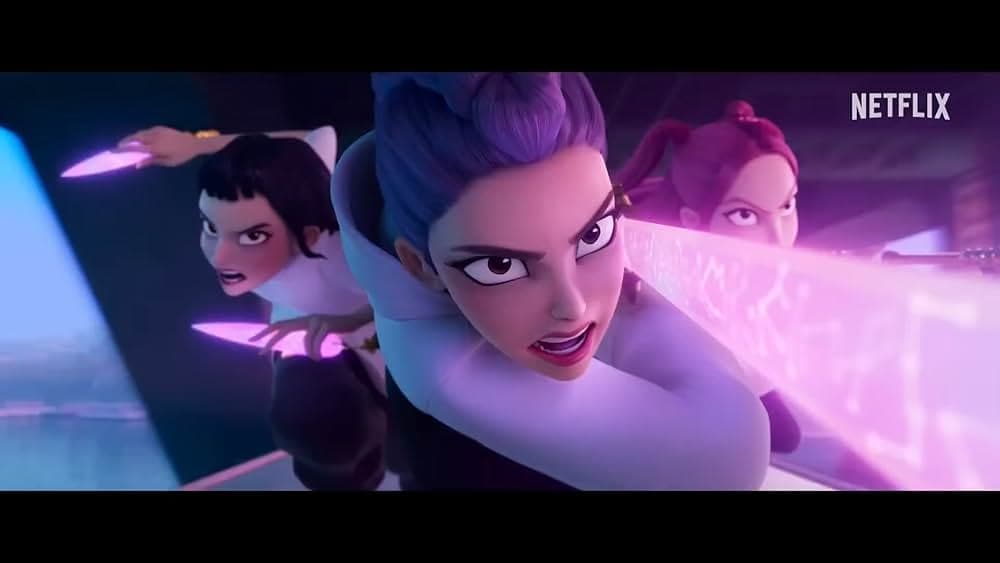
KPop Demon Hunters Is Owning Netflix — Here’s Why Gamers Should Pay Attention
Why This Caught My Eye
KPop Demon Hunters is back at No.1 on Netflix in France nearly two months after launch (June 20, 2025), with Netflix touting roughly 160 million views and a spot among its top four most-watched films of all time. That’s wild on its own, but what made me pay attention wasn’t just the streaming flex. It’s the perfect storm of Spider-Verse-style animation, K-pop-powered music design, and slick action that screams “make me into a game” – and the fact Netflix is already eyeing a trilogy, a series, a short, and even a stage musical tells me the transmedia push is only getting started.
- Back at No.1 in France on August 12, 2025; Netflix credits ~160M “views” and an all-time top 4 ranking.
- Soundtrack juggernaut: “Golden” hits No.1 on Billboard Global 200 and Hot 100; 250M Spotify streams.
- Hybrid 2D/3D look from Sony Pictures Animation leans hard into the Spider-Verse school of visual storytelling.
- This is prime material for a rhythm-action game if the right studio gets a shot.
Breaking Down the Numbers (and the Fine Print)
On July 29 it was crowned Netflix’s most-watched original animated film, and it’s climbed back to the top of France’s charts as of August 12. The 160 million “views” figure sounds massive – it is – but a quick reality check: Netflix’s “views” are its own metric, typically derived from hours watched divided by runtime. It’s valid for internal comparisons, but it doesn’t equal 160 million full front-to-back watches, and the “in France” phrasing you’ll see floating around likely refers to its chart position there, not 160 million French accounts. All that said, whether you’re counting hours, views, or pure vibes, this thing is a phenomenon.
The Creative Hook: K-pop Meets Folk Horror, Animated Like a Brawler
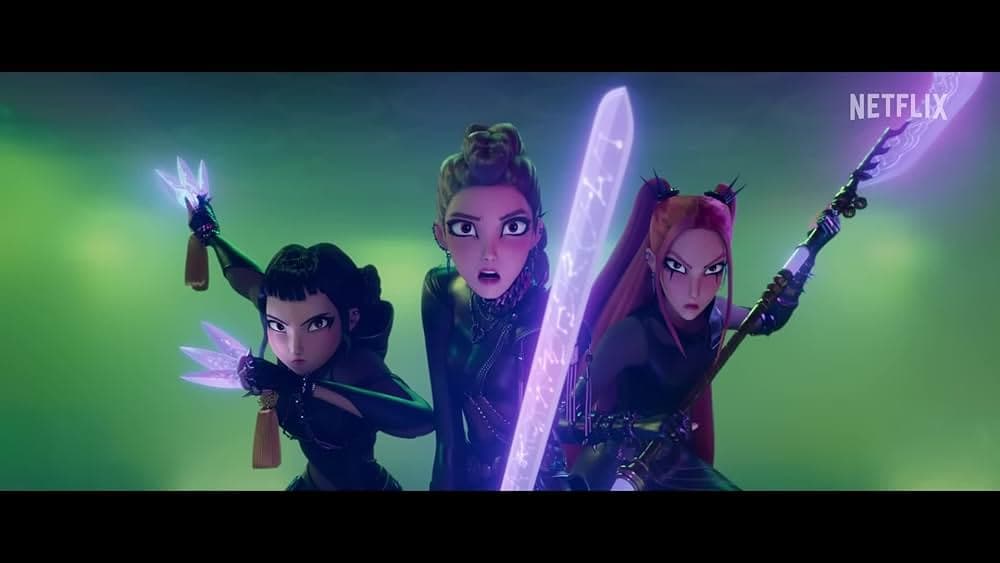
Directed by Maggie Kang and Chris Appelhans and produced by Sony Pictures Animation (the studio behind Spider-Man: Into/Across the Spider-Verse), KPop Demon Hunters follows Huntr/x — Rumi, Mira, and Zoey — a superstar K-pop trio moonlighting as demon hunters. Their rivals, the Saja Boys, channel the look of grim reapers from Korean folklore, complete with black hanbok and gat, while Huntr/x weave cultural touchstones like norigae pendants into their fashion. The result is a genuine love letter to Korean culture and pop, not a surface-level skin swap.
The hybrid 2D/3D aesthetic borrows the Spider-Verse playbook — stylized frames, bold palettes, and that kinetic, hand-crafted vibe — and it’s a perfect match for action beats that feel like they were storyboarded with game combat in mind. Think expressive hit-stops, choreographed group attacks, and visual rhythm that begs for a controller in your hand. Critics bought in too: Rotten Tomatoes sits in the high-90s, with praise for the “joyful family entertainment” and “excellent soundtrack.”
The Music Isn’t Background; It’s the Payload
“Golden,” the headline track from Huntr/x, has racked up around 250 million Spotify streams and topped both the Billboard Global 200 and the Hot 100 in the U.S. The full soundtrack notched the best debut of any film OST on the Billboard 200 in 2025 and the first to crack the top ten this year. That matters for gamers because we’ve seen what happens when a fictional pop act crosses the real-world threshold: League of Legends’ K/DA reset expectations for how music can shape a universe, while games like Beat Saber and Just Dance keep turning chart hits into play spaces. KPop Demon Hunters arrives with a music identity strong enough to carry mechanics, not just marketing.
Why Gamers Should Care
We’re living in a transmedia moment where animated hits become cultural load-bearing beams for games and vice versa. Arcane didn’t just sell lore; it deepened the way players felt about Runeterra. Cyberpunk: Edgerunners rehabilitated 2077’s public image and drove players back in droves. KPop Demon Hunters sits at that same crossroads — only with a musical backbone begging for rhythm-aligned combat.
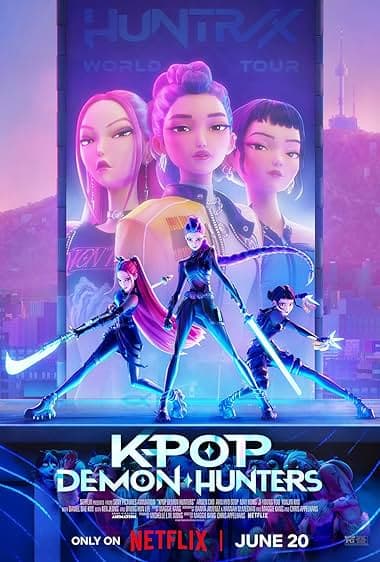
Imagine a stylish-action rhythm hybrid where demon slaying syncs to beat grids: Hi-Fi Rush’s timing-based combos meets Devil May Cry’s enemy design, flavored with Project Diva’s performance flair and Sayonara Wild Hearts’ neon-charged setpieces. Huntr/x’s trio setup practically writes co-op or character-swapping systems, while the Saja Boys’ folklore aesthetic sets up boss arenas with clear patterns and readable tells. If Netflix and Sony Pictures Animation want to futureproof this IP, a thoughtful game adaptation — not a disposable tie-in — is the obvious next move.
There’s also a practical angle: Sony Pictures Animation sits under the broader Sony umbrella alongside PlayStation Studios. That doesn’t guarantee collaboration — rights and timelines are messy — but the blueprint is there. Spider-Verse’s visual language already seeped into games (miles-per-frame animation toggles, comic-book shader passes). KPop Demon Hunters could take the baton with a music-driven combat loop and a cultural aesthetic that actually deserves the spotlight.
Looking Ahead
Netflix reportedly wants two more films to form a trilogy, plus a series, a short, and a stage musical. That’s a lot of worldbuilding runway — enough to support a game that lands after the universe and its music mature. The community signal is strong too: fan art, choreography, and covers are already flooding social channels, the same grassroots energy that powers mod scenes and cosplay at gaming cons. If they keep investing in the soundtrack with top-tier producers and retain that hybrid animation identity, this IP has the legs to jump mediums.
My only caveat: respect the audience. The film’s charm comes from cultural specificity, not checkbox aesthetics. Any adaptation needs to keep the folklore and fashion meaningful, keep the combat readable and musical, and avoid the trap of a rushed, empty-calorie spin-off. Get a studio that knows timing, feedback, and spectacle, and KPop Demon Hunters could be the rare streamer-born IP that actually levels up when it hits a gamepad.
TL;DR
KPop Demon Hunters isn’t just crushing Netflix; it’s building a foundation — style, music, and world — that’s tailor-made for a rhythm-action game. If the right team gets involved, this could be the next transmedia win gamers actually want to play, not just watch.