
Table of Contents (8)
The Day a Game Finally Broke Me
I remember exactly where I was when Lee Everett died. Not the in-game location – the room with the radiator, the gun, the impending walker – I mean my actual, real-world situation. Old PC wheezing louder than the zombies, headphones on at 2 a.m., cheap desk lamp barely lighting the room. And then, suddenly, silence. Black screen. Credits. And me, staring, feeling like someone had reached through the monitor and just ripped something out of my chest.
I’d played “emotional” games before The Walking Dead: Season 1. I’d done my time with Shadow of the Colossus, watched characters die in Final Fantasy, carried the weight of choices in Mass Effect. But nothing – absolutely nothing – hit me like putting a gun in Clementine’s shaking hands and telling her what to do with Lee. Over a decade later, I still think about that scene more than most games I played last year.
And the wild part is this: Telltale didn’t kill Lee with a big twist, a shocking betrayal, or some galaxy-brained plot swerve. They killed him slowly, inevitably, in a way that feels horribly mundane for a zombie apocalypse. They made me walk with him straight into his death, step by agonizing step, and then asked me to decide how painful those final seconds would be.
That’s why Lee’s death still lives rent-free in my head while most modern “shocking” story moments blur together. It’s not just about what happens. It’s about who Lee is, how we get there, and how much of ourselves we’ve poured into him by the time everything falls apart.
Lee Isn’t a Hero. He’s Worse: He’s Real.
When we meet Lee, he’s not a soldier, not a chosen one, not a grizzled smuggler with convenient plot armor. He’s handcuffed in the back of a police car, on his way to prison for killing his wife’s lover. That’s our protagonist. That’s the guy we’re stuck with.
I loved that immediately. Not because murder is cool, obviously, but because Telltale had the guts to start with someone properly messy. In those first few minutes, you can decide how Lee talks to the cop driving him. You can be bitter, sarcastic, polite, resigned. The game quietly lets you shape your version of Lee, not by choosing his class or skill tree, but by how he responds to his own worst mistake.
And then everything goes to hell. Literally. The crash, the first walker, the blood on the road – we’ve seen apocalypse openings before. But the moment that matters is when Lee limps into that quiet suburban house and hears the voice of a scared little girl coming from a walkie-talkie.
Clementine.
Here’s what still floors me about that first encounter: the game never asks, “Do you want to help this kid?” There’s no “Ignore her and loot the kitchen” option. Lee, this convicted murderer whose life just imploded, doesn’t pause to weigh the pros and cons. He just protects her. It tells you everything you need to know about who he really is without a single morality meter popping up on screen.
From developer interviews over the years, it’s pretty clear Telltale knew they were taking a risk centering the entire game on an adult–child dynamic in a brutal universe. A companion kid can easily become annoying baggage. Instead, Clementine becomes Lee’s (and our) moral anchor. The whole story hangs on whether you believe this guy – this failed husband, this convicted killer – can still be someone’s safe place.
And that’s what makes Lee so different from the usual “redemption arc” protagonist. He’s not clawing his way back with epic heroism. He’s not saving the world. He’s just trying, day after day, to be worthy of one terrified child’s trust. His journey is small in scale but massive in emotional stakes. That’s the trap Telltale sets for us from moment one: if you care about Clementine, you’re going to care about Lee. And if you care about Lee, his death is going to wreck you.
Clementine: The Choice I Never Really Had
I’ve never seen a game weaponize quiet moments the way The Walking Dead does with Lee and Clementine. And I don’t mean “weaponize” in a cynical way – I mean they load those little interactions with emotional shrapnel that explodes later.
Think about the playground scene. Pushing Clementine on a rusty swing for a few seconds, just talking. No QTE to mash, no timer rapidly counting down. Or teaching her how to fire a gun. Cutting her hair so walkers can’t grab it. Asking her what she wants to do, instead of telling her. These aren’t just flavor scenes. They’re the game slowly building a foundation the final episode is going to set on fire.
In the group, Lee naturally drifts into this quiet leadership role. Not the loud alpha like Kenny, not the volatile hardliner like Lilly. He’s the one mediating, smoothing conflicts, trying to keep everyone together with reasonable words in a world where reason is dying faster than anything else. Even if you play Lee as more ruthless, the game constantly pushes you to weigh every decision against one question: “What does this teach Clementine?”
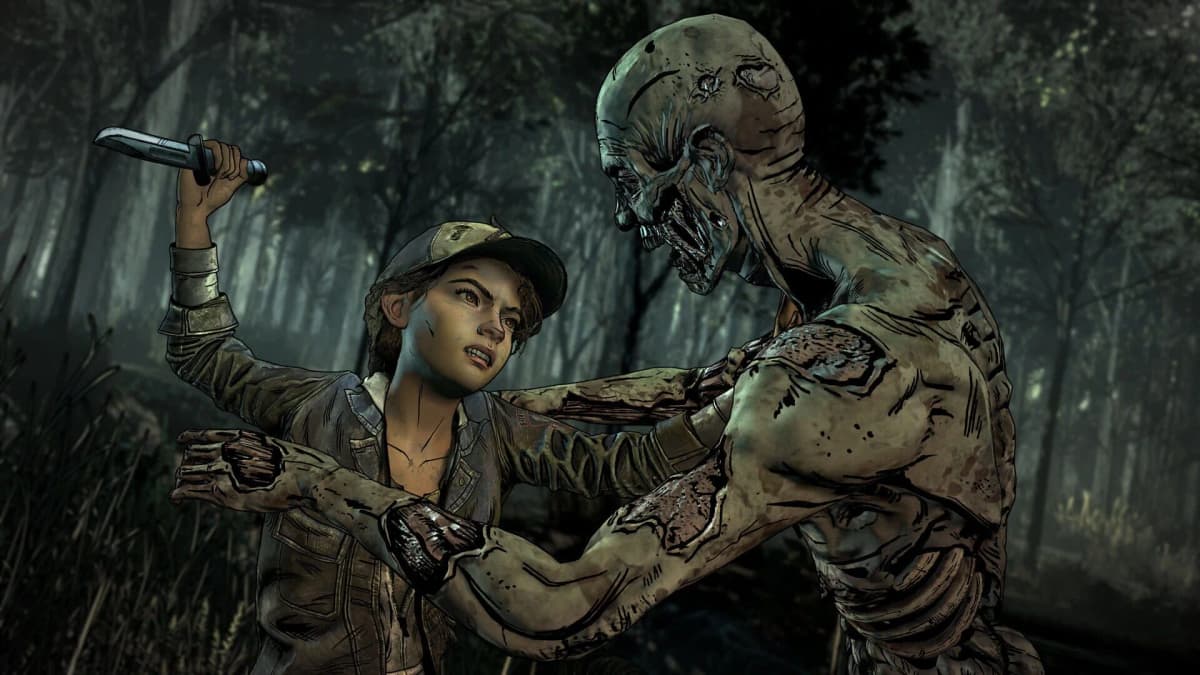
That’s the real “interactive narrative” magic here. People love to complain that Telltale’s choices don’t “really” matter because the big plot beats still happen. And yeah, the bones of the story don’t change. But Lee’s death hits as hard as it does because of all those tiny decisions about how you raised Clementine inside that fixed structure.
Did you lie to her? Did you harden her or protect her innocence as long as possible? Did you show mercy when you didn’t have to? The game remembers, even if the script doesn’t branch into a hundred different universes. More importantly, you remember, when you’re sitting in that final room trying not to sob into your keyboard.
The Bite: When Hope Becomes Cruelty
The turning point is so ordinary, and that’s why it hurts. Episode 4 ends with Lee realizing he’s been bitten. No dramatic slow-motion, no operatic music swell. It just… happens. The apocalypse finally cashes the cheque it’s been writing since minute one.
I remember sitting there, staring at the screen, thinking, “No. No way. They’re not actually going to follow through with this. There’ll be a cure, or a vaccine, or some crazy twist.” Years of power-fantasy gaming had rewired my brain to assume that if I’m in control, the protagonist can’t really die. Not like this. Not permanently.
Then the game does the nastiest, smartest thing it could: it hands you a tiny sliver of hope in the form of that arm amputation choice. Cut it off or leave it. That’s the kind of moment a more cowardly game would use as an escape hatch. “Congratulations, you sacrificed something, so you get to live.” But here? It doesn’t matter. You’ve already lost. The only question is how long you can keep moving before the clock runs out.
From that point on, the whole episode becomes a death march. Lee staggering through a walker-infested city, fueled by pure desperation to get Clementine back. His friends either gone, broken, or unable to really help. His body visibly failing. Every line of dialogue suddenly sounds like a potential last line. His jokes are tinged with dread. Even his posture changes. You feel every step.
This is where Telltale outplayed almost everyone else in the “mature storytelling” space. They didn’t use Lee’s death as a cheap plot twist late in the game. They told you it was coming, then forced you to sit with it, to watch him decompose emotionally and physically in real time. That slow inevitability is far more brutal than any surprise betrayal or end-of-act shock reveal.
The Final Room and the Worst Choice I’ve Ever Had to Make
All of that – the police car, the treehouse, the motel, the farm, the train, the bite – it all funnels into that final, horrible room. Lee, handcuffed to a radiator. Clementine, finally free but emotionally shattered. The gun. The key. The last conversation.
I don’t think I’ve ever been more aware of my own breathing in a game than I was during that scene. Lee is already fading, voice weak, skin grey, every line delivered like it might be the last thing Clementine ever hears from him. And the game, mercilessly, makes you choose the tone of that goodbye.
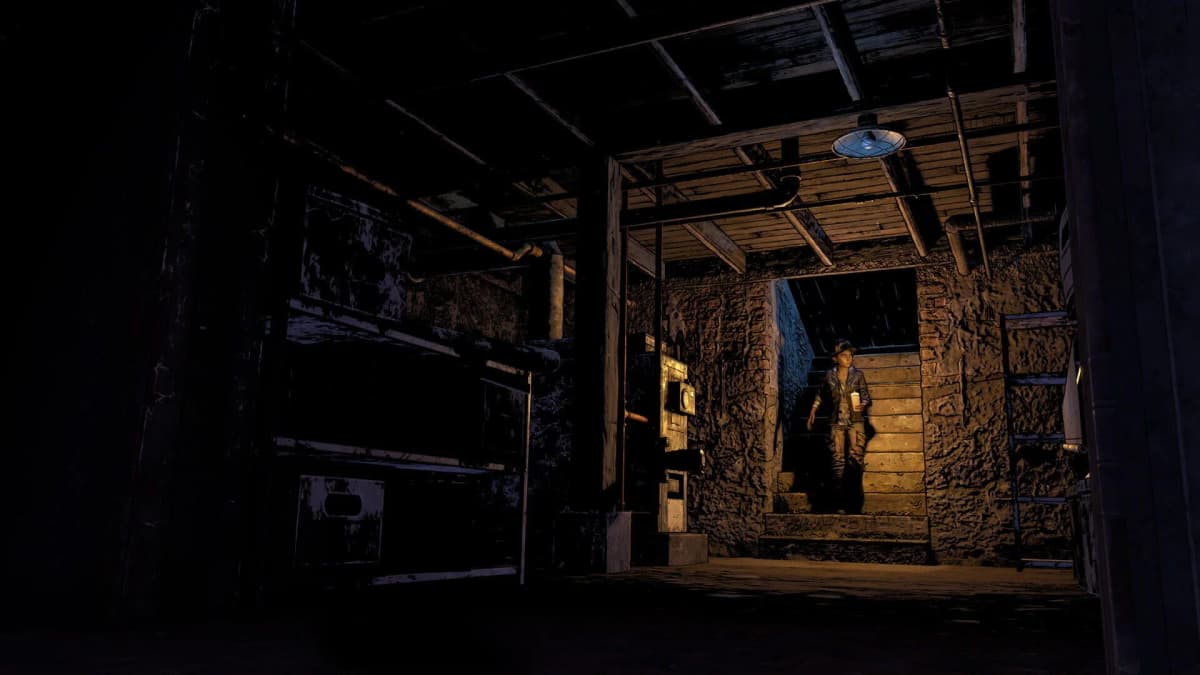
Do you tell her to stay kind, or to harden up? Do you ask her to shoot you, or spare her that trauma and let you turn? There’s no “right” answer. Every option feels like a failure, just a different flavor of it. Either you force a child to kill the only stable adult figure she’s had since the world ended, or you force her to walk away knowing you’ll become the very monster you’ve spent the whole game protecting her from.
What kills me is how restrained it all is. There’s no flashy camera work, no giant orchestral swell drowning everything. Just two characters in a room, talking. You picking dialogue options that feel woefully inadequate to this moment. Little animations – Clementine’s trembling hands, Lee’s head dropping, the way she looks at him, absolutely destroyed.
And then, finally, you lock in your choice. If you ask her to shoot you, you have to watch her steel herself, raise the gun, and do it. If you tell her to leave, you watch her back away, sobbing, as Lee quietly slumps toward the inevitable. The screen cuts to black. No epilogue montage of “Here’s what your choices meant.” Just… lights out.
That’s the part that haunts me the most: how the game refuses to give you emotional closure. You don’t get to see what happens to Clementine next in some reassuring “five years later” montage. You’re just left alone with the consequences of your choice and the people you turned Lee into along the way. It trusts you to sit with that discomfort instead of rushing to comfort you with stats and achievements.
Why Lee’s Death Hits Harder Than Most “Prestige” Game Drama
In the years since The Walking Dead: Season 1, we’ve had no shortage of games trying to traumatize us. Big-budget studios love their “brave” character deaths and “shocking” twists. People get clubbed to death, sacrificed, fridged, blown up – sometimes elegantly, sometimes just for cheap discourse.
I’m not saying none of those moments work. The Last of Us and its sequel absolutely know how to twist the knife. Life is Strange pulls off some powerful gut punches. Tons of indies chase that “emotionally devastating” badge of honor. But so often, these deaths feel like writerly moves – statements, punctuation marks, a way to make sure we all know, “Hey, this game is Serious Art™.”
Lee’s death doesn’t feel like that to me. It doesn’t feel like a stunt. It feels horribly, unfairly earned. There’s no way to dodge it by being clever, no secret ending where he sails off into the sunset with Clementine. The apocalypse doesn’t care how good your choices were. It doesn’t care that you tried. And The Walking Dead, for once, doesn’t blink or pull its punch.
That’s what sets it apart from a lot of modern narrative design, where “player agency” is sometimes treated like a magic shield against genuine tragedy. So many games are terrified to actually follow through, to say, “No, you can’t fix this. You can’t save everyone. In fact, you can’t even save yourself.”
Telltale broke that unspoken contract in 2012, and honestly, the industry still hasn’t fully caught up. We’ve got a sea of choice-driven games now, but very few are willing to make your protagonist’s death both inevitable and deeply personal, then sit you in the mess for a solid ten minutes without a lore dump or twist to soften the blow.
What Modern Narrative Games Forgot About Lee Everett
Replaying The Walking Dead today, you can feel the rough edges. The QTEs are clunky. The illusion of choice is more obvious when you know what’s coming. Telltale’s whole formula got run into the ground in the years afterward. But Lee himself? That character still stands toe-to-toe with anything the so-called “prestige” studios have put out.
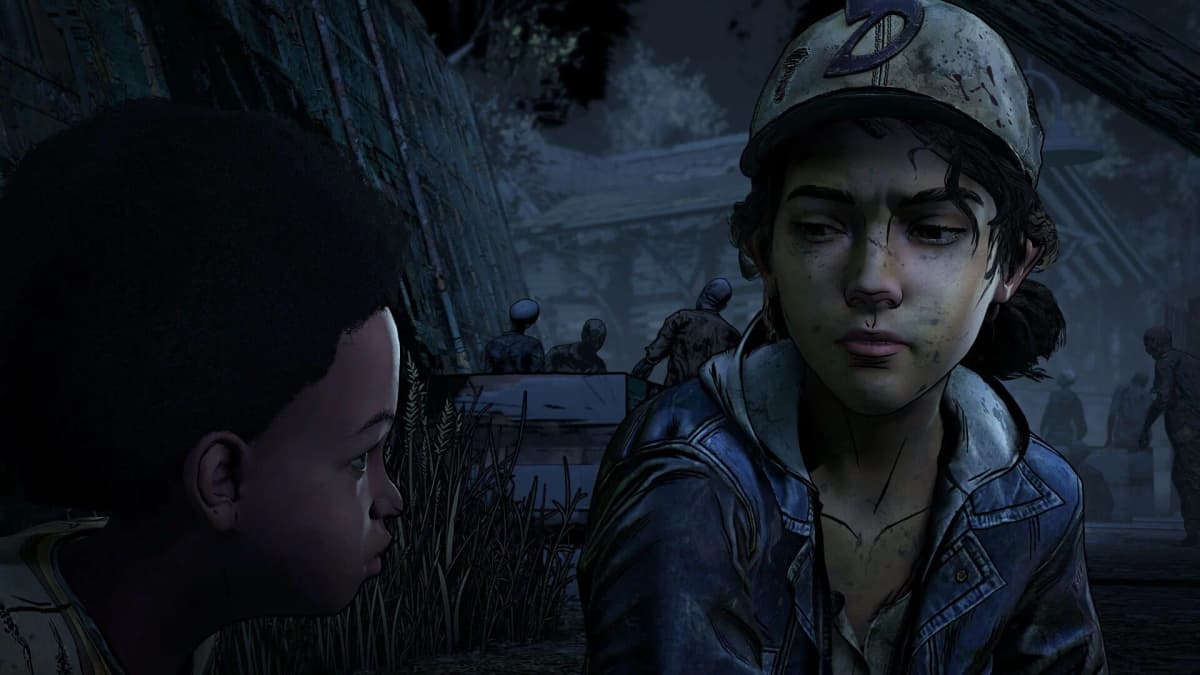
Why? Because Telltale understood something a lot of modern games seem to have forgotten: emotional impact doesn’t come from how many branching paths you code. It comes from how honest you’re willing to be about your characters.
Lee is allowed to be contradictory. He’s a killer who’s gentle with a child. A natural leader who still doubts himself. He can be compassionate one scene and ruthless the next, and the game doesn’t slap you with a red “Renegade” stamp for it. It trusts you to live with those inconsistencies, because that’s what being human actually looks like.
When I look at a lot of newer interactive dramas, I see a fear of that kind of messiness. Characters are molded to fit theme first, humanity second. Choices are color-coded, signposted, engineered for maximum clip-worthy drama. It’s all very polished, very “cinematic”, and often, very hollow.
Lee’s death hits harder precisely because he never stops feeling like a person. There’s no last-minute lore reveal. No secret evil past beyond what you already know. No supernatural twist changing who he is. Just a flawed man who tried to do the right thing when it actually counted… and still lost.
How Lee Changed the Way I Play Story-Driven Games
After The Walking Dead: Season 1, I stopped playing story games like puzzles to be solved and started playing them like relationships to be lived.
Before Lee, I was the kind of player who’d reload saves to see every branch, min-max moral choices, game the system to get the “best” outcome. After Lee, that felt… wrong. Artificial. When a game tells me someone I care about is going to die now, my first instinct isn’t to hunt for the secret survival route. It’s to ask: “Okay, what do their final moments mean, and who do I want to be in them?” That’s straight from sitting in that room with Clementine.
I measure new narrative games against that standard, whether I mean to or not. Are your characters allowed to be as complicated as Lee? Are you willing to take something from me I actually care about, not just a sidekick with a tragic backstory you clearly built to die in Act 2? Are you brave enough to
Most titles don’t clear that bar. A few do, and I treasure them. But Lee Everett is still my reference point – the moment I realized games could hurt me in the same way a great novel or film does, but in a way that’s uniquely interactive. Because I didn’t just watch him die. I helped decide what kind of man he was when he did.
So yeah, more than ten years later, I’m still not over Lee’s death. I don’t really want to be. It’s proof that this medium can cut deep without hiding behind spectacle. It’s a reminder that sometimes the bravest thing a game can do is take away your power and leave you alone in a room with a character you love, one last time, and ask you what you’re going to say.
And if the industry wants to keep telling me they care about “emotional storytelling” and “meaningful choice”, they’re going to have to reckon with the ghost of a man handcuffed to a radiator, whispering goodbye to a girl in a baseball cap. Because Lee Everett already set the standard. Most games still haven’t caught up.
FinalBoss // Gear
Level up your setup
01Top-rated gaming headsetson Amazon→02High-refresh gaming monitorson Amazon→03Gaming chairson Amazon→04Discounted game keyson Kinguin→Affiliate links · As an Amazon Associate, FinalBoss earns from qualifying purchases.
Want to Level Up Your Gaming?
Get access to exclusive strategies, hidden tips, and pro-level insights that we don't share publicly.
Ultimate Gaming Strategy Guide + Weekly Pro Tips