
Table of Contents (8)
Returning to Nosgoth in 2026
I came to Legacy of Kain the way a lot of people my age did: Soul Reaver first, everything else later. Soul Reaver’s Dreamcast/PC era melancholy lodged itself in my brain, but Defiance was always the weird cousin I only half-finished on a wheezing old PC. Too many fixed cameras, too many leaps of faith into pits I couldn’t see. When Crystal Dynamics announced Legacy of Kain: Defiance Remastered, I was excited and a little afraid. I wanted the game my memory promised, but I didn’t want a full remake that sanded off all the jagged early-2000s edges.
I played the remaster on PC with an Xbox controller, over about eleven hours including some backtracking for secrets. From the first cinematic exchange between Kain and Raziel, with Simon Templeman and Michael Bell chewing gothic scenery like it’s a food group, it felt right. The good news: Crystal Dynamics mostly stayed out of their own way. This is still very much the 2003 game, warts and all, just wearing a properly tailored coat instead of that stretched-out PS2 hoodie.
If you’re expecting a radical reinterpretation on the scale of the Resident Evil 2 remake, that’s not what this is. This sits closer to the “preservation-focused” side of remasters: clean it up, modernize the worst pain points, and then let the original design speak. For Legacy of Kain-a series built almost entirely on mood and writing-that approach fits eerily well.
What the Remaster Actually Changes (And What It Wisely Leaves Alone)
Mechanically and structurally, Defiance Remastered is almost identical to the original. You still alternate between Kain and Raziel chapters, still bounce between timelines and spectral realms, still solve block puzzles and batter vampire hunters with elaborate Reaver combos. The plot, cutscene direction, and level layouts are untouched.
The big visible update is the visual layer. Textures have been upscaled across the board: stone walls, tapestry patterns, metal surfaces, skin, cloth, the whole lot. In many places it lands beautifully. Kain’s armor now has sharper etchings, Raziel’s shredded cowl reads as actual torn fabric rather than a blue blob, and murals in Sarafan strongholds finally look like the religious propaganda they always implied in the script.
Every so often, though, the upscaling shows its seams. One of the earliest moments where it pulled me out was a simple corridor in the Sarafan Keep. The bricks on the wall looked almost photoreal compared to the low-poly geometry they were wrapped around, like someone pasted a 4K wallpaper onto a shoebox. It never reaches “PS2 character in a PS5 remake cutscene” levels of mismatch, but that tension between old shapes and new detail never fully disappears.
Lighting sits in a similar place. The remaster leans into more dynamic, modern lighting, which gives Nosgoth’s cathedrals and catacombs some lovely contrast. Torches cast warmer pools of light, and spectral realms feel more otherworldly with stronger color separation. Yet a few scenes lose the oppressive murk that made the original so evocative. One Raziel segment in an outdoor plaza is noticeably brighter than I remember, enough that the mood shifts from eerie to simply old.
Crystal Dynamics clearly anticipated this purist instinct, because the most important toggle in the remaster sits right in the options: you can switch back to “original visuals” at any time. On PC it’s a simple menu choice; on controller you can even bind a button to flip between old and new on the fly. I found myself doing this constantly in the first couple of hours, treating it like a playable before/after slider. More often than not I ended up sticking with the remaster look, but the ability to revert makes every aggressive visual tweak feel less intrusive.
Underneath all of that, the most transformative change is invisible in screenshots: the camera.
The New Third-Person Camera fixes the One Thing that Aged Worst
Original Defiance used mostly fixed or semi-fixed camera angles, in that very early-2000s “cinematic angle first, player convenience second” way. Walking into a new room meant the camera jumping to a pre-placed viewpoint, which worked well for composition but mangled depth perception during platforming and combat. That’s what drove me away back then.
The remaster adds a modern third-person camera that follows behind your character and lets you rotate with the right stick. You can switch between the classic and modern camera at any time with a single button press. I did this a lot in the first hour; after that, the original perspective became more of a novelty I’d toggle for nostalgia before diving back to the free camera.
In practice, this one change makes Defiance feel a generation newer. Lining up jumps with Raziel across spectral platforms suddenly feels fair instead of finicky. One early platforming sequence in the Sarafan dungeon-a set of narrow beams over an abyss that I vividly remember hating—turned into a matter of rotating the camera, judging distance properly, and just… doing the jump. The platforms didn’t change. My ability to see them did.

Combat benefits even more. With the free camera, keeping eyes on a specific threat while juggling others feels natural. Lock-on can still be finicky; the game uses a small ring around your target’s feet and a subtle tug of the camera. Occasionally it stuck to a mook I’d already half-melted with the Reaver instead of the heavy in the back I wanted to stun. But compared to the original’s chaotic angle shifts mid-fight, this is miles saner.
The impressive part is how rarely the new camera breaks level scripting. There are definitely moments where you can spin the view around and see the ugly backside of some geometry that was never meant for player eyes, but I only had one situation where I completely confused the perspective—an indoor staircase where the camera snapped between close and far views as I tried to adjust it. A quick switch back to “classic” got me through that chunk, then I returned to the free camera afterward.
Controls themselves have been gently smoothed. Movements have a slightly less floaty dead zone, and inputs feel more responsive overall. Combos still require deliberate timing, not mindless button mashing, but the window is more forgiving than the PC version I remember. Air juggling a Sarafan knight with Kain’s Reaver, then hurling him into a spike with telekinesis, finally feels as satisfying to perform as it always looked in my head.
Fighting, Shifting, and Platforming in a 2003 Time Capsule
Defiance’s core gameplay loop has always been a strange hybrid: half stylish action, half puzzle-platformer. The remaster does not redesign any of that foundation, and this is where some players will bounce off.
Combat is built around relatively small arenas where waves of enemies spawn, often locking the doors until you clear them. As Kain, you swing the Reaver in arcing combos, fling enemies into hazards with telekinesis, and drink their blood; as Raziel, you lean more on mobility, spectral-mortal shifting, and elemental Reaver powers. Coming straight from modern action games, the move set here feels stiff and limited, but there is a rhythm to it that still clicks.
After a few hours I stopped trying to play it like a modern spectacle fighter and started treating each encounter as a little environmental murder puzzle. Instead of grinding everyone down with raw damage, I’d corral a group toward a fire pit, knock one in, then use the resulting flames with the Fire Reaver to spread chaos. Or I’d stun two humans near a spiked wall and fling them up like morbid darts. The finite number of tricks you have gives the fights a toy-box feel rather than a deep combo lab, but it fits the short runtime.
Platforming and puzzles sit right on that edge between “charming” and “you can tell everyone in 2003 was obligated to include platforming.” Raziel still has the more interesting traversal, with his ability to shift into the spectral realm and reveal ghostly platforms or twist architecture. There is one late-game sequence involving spectral pillars and timed shifts between realms that reminded me exactly why I gave up in my original playthrough: in the classic camera, it is punishingly hard to judge distance and timing. With the third-person camera, I cleared it on my second attempt.
The puzzles themselves are mostly gentle, often revolving around moving blocks, aligning symbols, or routing energy beams with the appropriate Reaver alignment. They lean heavily on the series’ lore—aligning clan symbols, activating ancient machines. Nothing here approaches the obtuse labyrinths of older adventure games, but anyone hoping for brain-burners will be disappointed.
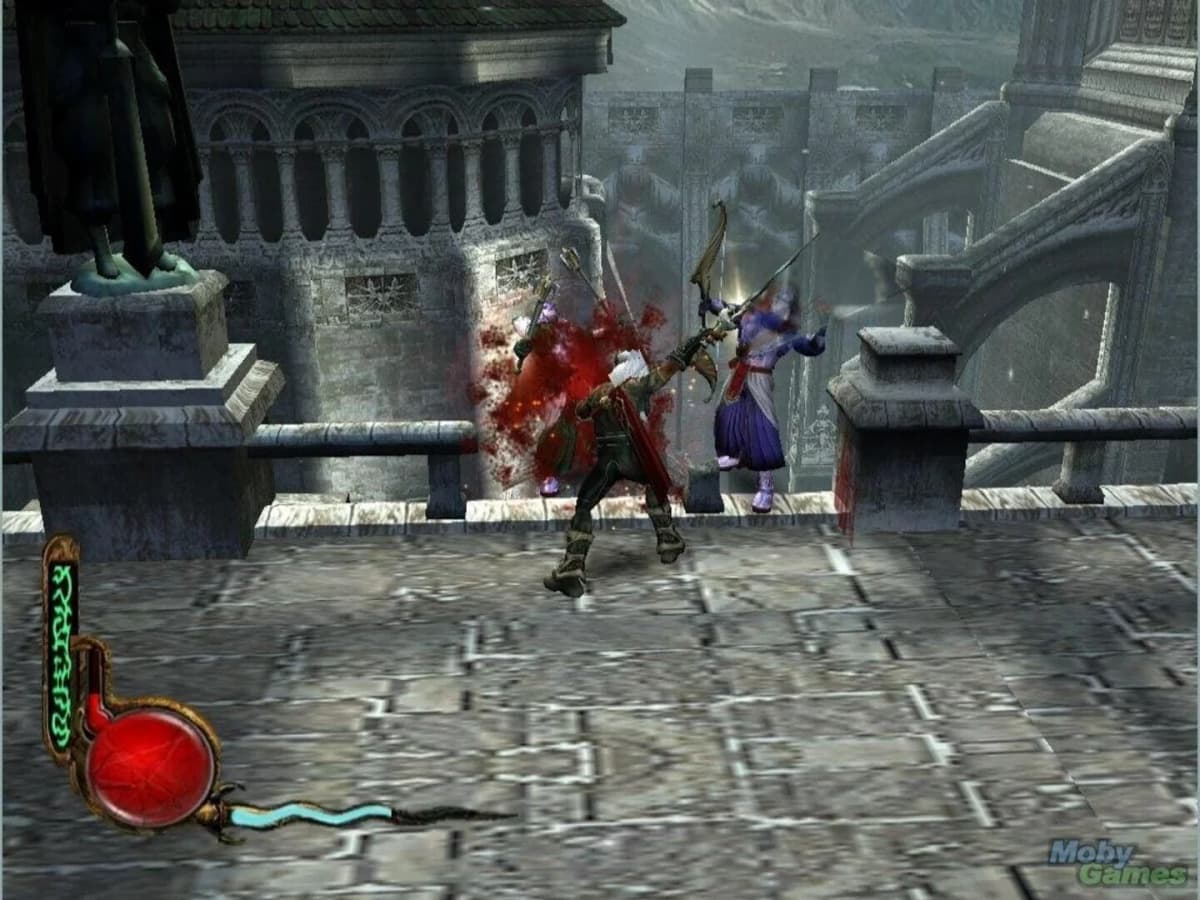
The key thing is that the remaster doesn’t pretend this structure is modern. It doesn’t try to graft in XP systems or skill trees. You get the same ability unlocks, in the same order, with the same bespoke combat arenas and puzzle rooms. The improvements focus on making those things feel as crisp as possible rather than rewriting them wholesale.
Voices, Writing, and That Overwrought Gothic Mood
If Defiance has one element that never needed rescuing, it’s the voice work. Simon Templeman as Kain, Michael Bell as Raziel, Tony Jay’s thunderous narration—the cast is still the entire show. The remaster wisely leaves every line reading intact. From what I can tell, audio is cleaned up a bit, but not dramatically remixed. There’s still that slightly compressed PS2-era quality to some effects, especially in crowded fights, but the dialogue cuts through clearly.
The script is gloriously purple, packed with time paradoxes, fatalism, and monologues that feel like someone mashed Shakespeare into a blender with 90s comic books. That can come off as ridiculous by modern standards, yet the cast leans into it so hard that it loops back around to sincere. Early in the game, Raziel delivers a bitter line about being a puppet of fate while pacing through the ruins of his former empire, and it still lands because Bell sells the exhaustion behind the words.
Playing in 2026, what struck me is how rare this flavor of earnest, lore-dense writing has become in mainstream action games. The remaster lets it stand unedited, which feels like the right call. Even when the plot gets tangled in its own timelines, it remains fascinating as a snapshot of a very specific era of videogame storytelling.
Presentation around that writing benefits from the higher resolution and cleaned-up textures. Facial animation is still limited by the original models, of course, but the additional texture detail helps sell expressions that were previously just vague smudges. The opening confrontation between Kain and Moebius, framed in that tight camera with the new lighting glinting off Kain’s fangs, feels closer to the version my brain always imagined.
Performance, Options, and Little Quality-of-Life Touches
On PC, Defiance Remastered ran smoothly for me at 1440p with everything maxed, holding 60 fps without hitching. This is not a visually heavy game by modern standards, so I’d expect mid-range hardware to handle it easily. I hit one crash while alt-tabbing out during a Raziel chapter, but autosave kept me within a couple of minutes of where I’d been.
Control remapping, separate sensitivity sliders for the camera, and a generous suite of toggles for motion blur and camera assists go a long way toward making the game feel modern to interact with. The original save system remains chapter-based, but checkpointing inside levels is noticeably more forgiving than I remember, especially before boss fights.
There are a few extra niceties beyond the headline features. A simple map screen helps track your general position, something the original sorely lacked. Tooltips explain Reaver abilities more cleanly, which is helpful if you haven’t touched this series in twenty years and can’t remember which flavor of spectral sword does what. I wouldn’t call any of this transformative, yet together these touches help smooth out a lot of low-level friction.
What Still Feels Old (And Why I’m Glad They Didn’t “Fix” It)
Not everything in Defiance holds up. Enemy variety is limited, backtracking through some environments gets repetitive, and a few boss fights feel more like camera-management exercises than true tests of skill. Sound design outside of the voice work remains thin by modern standards; some combat impacts and environmental effects lack punch.
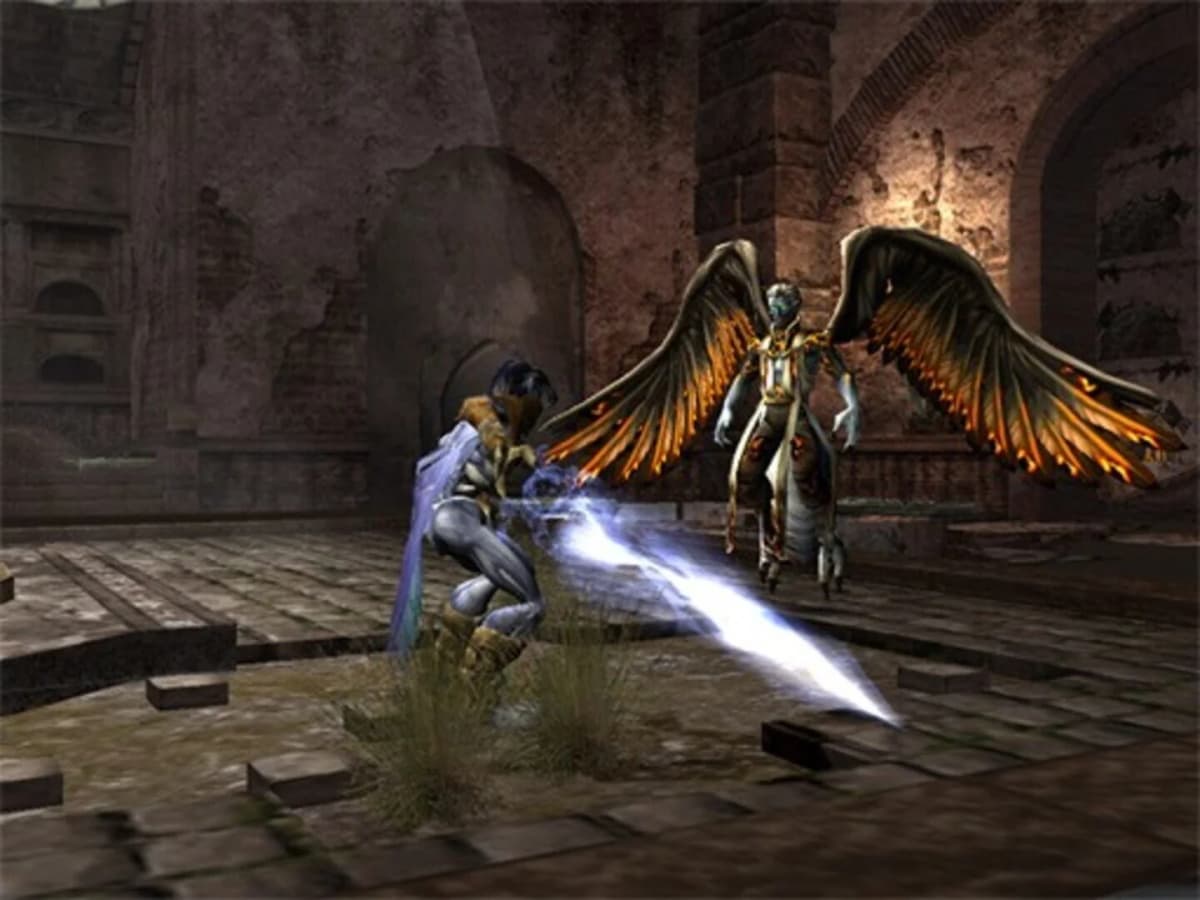
The important part, for me, is that the remaster doesn’t try to pretend otherwise. It doesn’t stretch Defiance into a game it was never built to be. The pacing quirks, the oddly small-scale arenas, the slightly clunky way it gates progress with specific Reaver powers—these are all part of its identity. A heavy-handed remake could smooth those out, but it would also erase the very things that make Legacy of Kain feel like Legacy of Kain.
After finishing the campaign, I appreciated how much restraint Crystal Dynamics showed. The places where they did intervene—camera, controls, stability—directly address the friction that once pushed this game just out of reach for a lot of players. The story, structure, and mood remain intact. For a cult classic that many people only knew through YouTube retrospectives and half-remembered childhood rentals, that feels like the right balance.
Who This Remaster Is For
If you loved Defiance in 2003 and simply want a way to play it comfortably on modern hardware, this remaster is exactly that. The new camera alone makes it hard to ever go back, and the ability to flip to original visuals preserves that rose-tinted memory when you want it.
If you are a Soul Reaver fan who bounced off Defiance’s jank back in the day—especially the camera—this is the first time I can genuinely recommend giving it another shot. The bones of the game are unchanged, but it finally feels like the experience the team was straining toward on hardware that couldn’t quite keep up.
Newcomers with no nostalgia at all should know what they are walking into. This is a short, linear action-adventure from 2003 with all the structural baggage that entails. It is not an open-world sandbox, it is not heavy on side content, and it will not hold up as a pure combat game against modern action titles. What it offers instead is a concentrated hit of gothic weirdness and some of the most distinctive voice work of its era, presented in a way that no longer fights the player at every turn.
FinalBoss // Gear
Level up your setup
01Top-rated gaming headsetson Amazon→02High-refresh gaming monitorson Amazon→03Gaming chairson Amazon→04Discounted game keyson Kinguin→Affiliate links · As an Amazon Associate, FinalBoss earns from qualifying purchases.
Want to Level Up Your Gaming?
Get access to exclusive strategies, hidden tips, and pro-level insights that we don't share publicly.
Ultimate Reviews Strategy Guide + Weekly Pro Tips