
The Lenovo Legion 5i Gen 10 is the stronger RTX 5060 laptop when its price is close to the MSI Katana 15 HX B14W, led by its 15.1-inch OLED and full-power graphics configuration. Its single-channel 16GB memory setup is a real caveat, while the Katana needs a meaningful discount to overcome its hotter CPU behavior and weaker overall proposition.
The line in the sand for the Lenovo Legion 5i Gen 10 is Cyberpunk 2077 at 1440p with ray tracing active and DLSS switched off. Under those settings, this laptop posted an 11 fps average and a 3 fps minimum. That result does not erase everything the machine gets right, but it does put its single-channel 16GB DDR5-4800 memory layout under the harshest possible light. This is the point where the comparison stops being a fight between two RTX 5060 labels and becomes a question of which compromises you can actually live with.
The answer is still Lenovo at close prices. The Legion has the stronger screen, a full 115W RTX 5060 setup, and a more convincing balance of gaming and desk work. MSI’s Katana 15 HX B14W has enough hardware to be tempting, particularly its 16GB dual-channel DDR5 setup, but it needs to be substantially cheaper before its trade-offs become easy to excuse.
Table of Contents (5)
The Legion’s memory is the spec to inspect first
Sixteen gigabytes is still usable for a gaming laptop. The issue here is that this Lenovo Legion 5i Gen 10 OLED model uses one 16GB DDR5 module at 4,800 MT/s rather than a dual-channel arrangement. Memory-sensitive games can lose performance when the processor and graphics system are waiting on bandwidth, and the ray-traced Cyberpunk 2077 result makes that weakness impossible to dismiss as a theoretical concern.
The MSI Katana 15 HX B14W starts in a better position on this specific point. Its 16GB of dual-channel DDR5 avoids the Legion’s one-stick limitation, even though that advantage does not make the MSI the better laptop overall. It does make the exact Legion SKU important. Verify the installed memory layout before paying an OLED premium, because configurations can change by retailer and region.
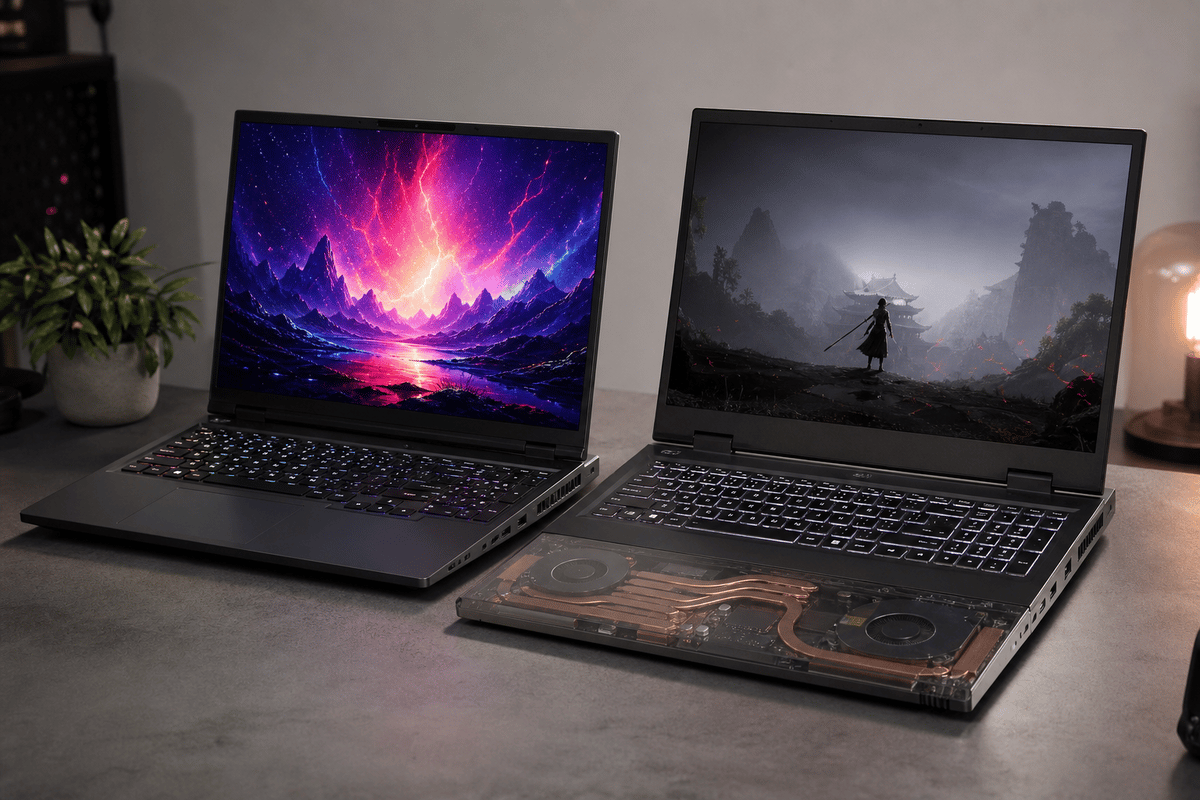
Do not treat a future memory upgrade as part of the purchase justification. The Legion has to make sense in the form it is being sold, especially when the price gap to the Katana is small.
The 15.1-inch OLED changes the value calculation
Lenovo’s 15.1-inch, 2560×1600, 165Hz OLED panel is the reason the Legion can ask for more money and still feel like the smarter buy. The Katana 15 HX B14W also reaches 165Hz with a 2560×1440 display, but resolution and refresh alone do not close the gap created by OLED contrast, deep blacks, color, and the sharper sense that the laptop is built for more than chasing a frame-rate counter.
That matters beyond games. A laptop screen is the component you face through every browser tab, desktop window, video, and spreadsheet, and the Legion’s panel gives the machine a much stronger mixed-use identity than the Katana. The RTX 5060 has the muscle to support it, though 2560×1600 gaming naturally asks more of the GPU than lower-resolution play.
The OLED carries two practical warnings. Prolonged static desktop elements create image-retention and burn-in risk, and battery life remains weak enough that this is still a desk-first machine rather than an all-day travel companion.
Thermals tell a more complicated story than the GPU names
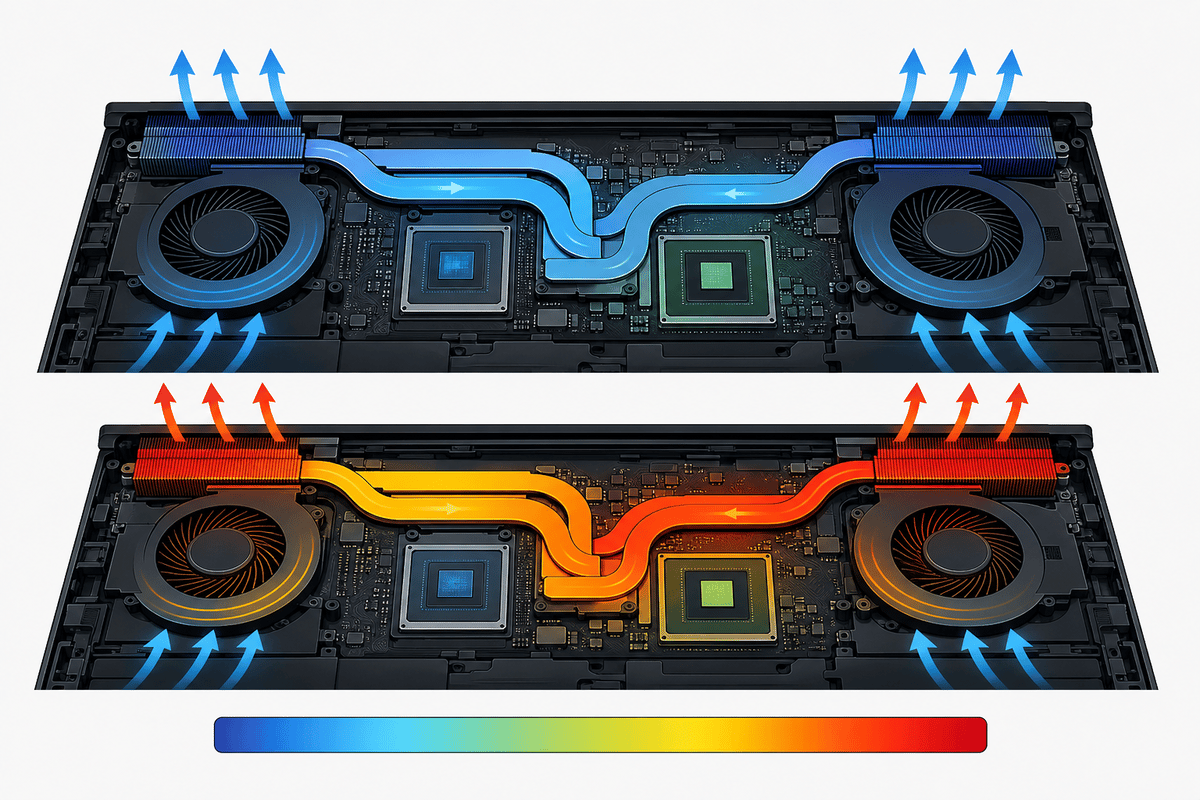
The available temperature figures do not come from one perfectly controlled head-to-head, so the broad pattern matters more than pretending every number belongs on one neat chart. Even so, the comparison is clear enough to be useful.
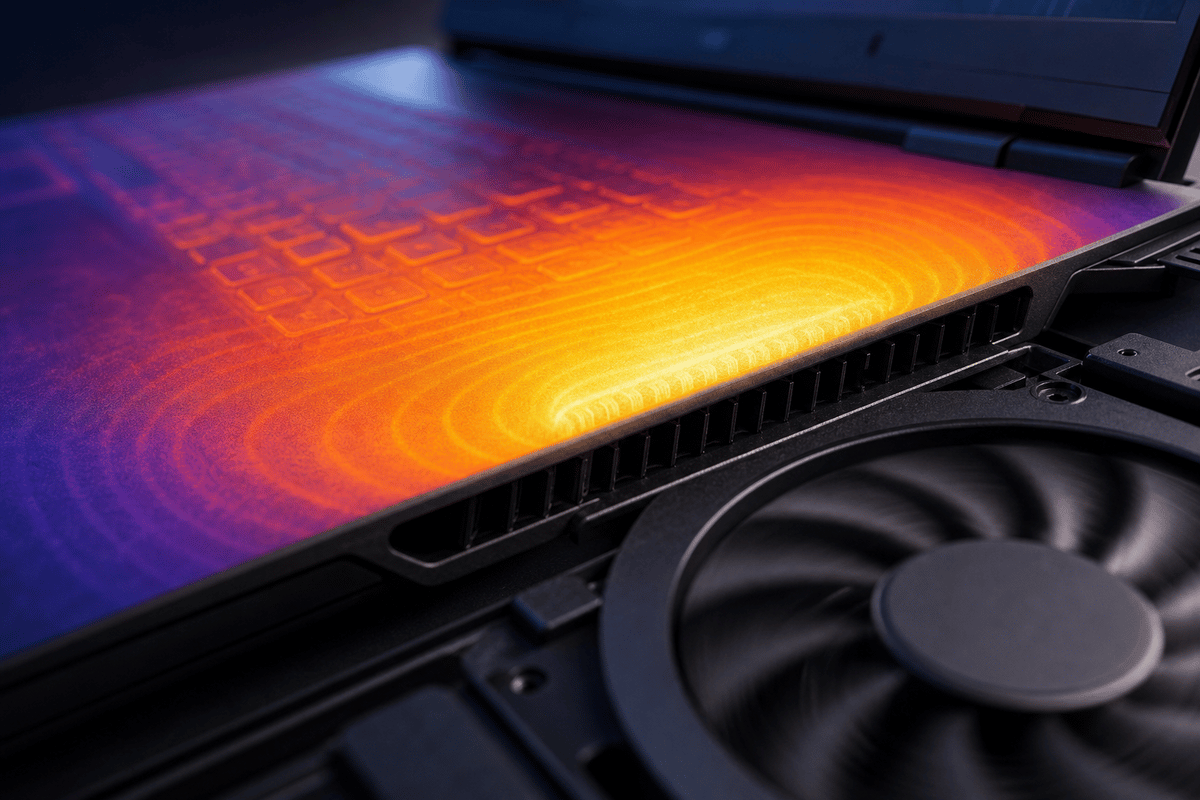
The average temperature figures are close enough to prevent an easy knockout. In gaming, the Legion averaged about 76°C on the CPU and 81°C on the GPU, while the Katana sat at roughly 77°C on the CPU and 77°C on the GPU. Neither laptop earns praise for running cool in an absolute sense.
Peak processor behavior is where the Katana becomes harder to recommend near Lenovo money. Across the available tests, the Legion’s CPU maximums ranged from about 91°C to 99°C in heavier loads, while the Katana’s processor reached roughly 95°C to 100°C. More importantly, one Katana workload showed the RTX 5060 drawing only 68W despite its nominal 115W rating, with CPU bottlenecking concerns and unstable clock behavior getting in the way. A matching wattage label does not guarantee matching real-world behavior.
Lenovo’s more commonly reviewed setup also pairs that full-power RTX 5060 with a Core i7-14700HX, against the Katana’s Core i7-14650HX. The Legion therefore has the stronger foundation for extracting consistent performance across gaming, multitasking, and heavier CPU work, even after accounting for the memory caveat.
DLSS remains central to the Katana’s ray-tracing story. In Cyberpunk 2077 at the laptop’s native resolution with ray tracing set to Ultra, the Katana went from 20 fps at native resolution to 64 fps with a DLSS-enabled mode. That is a dramatic reported uplift, but it underlines the real point: upscaling and frame-generation-style features are part of the expected experience here, not optional extras for buyers chasing demanding visual settings.
The practical buying line
- Choose the Lenovo Legion 5i Gen 10 when it is close in price to a comparably equipped Katana. The OLED, 115W RTX 5060, and stronger Core i7 foundation justify the premium.
- Choose the MSI Katana 15 HX B14W only when it is meaningfully cheaper, especially if the saving matters more than OLED image quality and you value its dual-channel 16GB memory setup.
- Pass on this Legion model if the single 16GB DDR5-4800 stick forces too steep a premium. The memory layout is its one meaningful own-goal.
- Pass on either laptop for long unplugged days. The Legion is a weak battery-life machine, and the Katana is not the purchase to make for battery-first portability.
Bottom line
Lenovo Legion 5i Gen 10 — 8/10. The Legion earns the recommendation when prices are close because the 15.1-inch 2560×1600 OLED and full-power RTX 5060 make it feel like a more complete machine every time the lid opens. Check the exact memory layout before buying, accept that the battery is weak, and keep static desktop use in mind. The MSI Katana 15 HX remains a conditional value purchase, but only when its discount is large enough to pay you back for the screen, thermal, and performance-consistency compromises.
FinalBoss // Gear
Level up your setup
01Top-rated gaming headsetson Amazon→02High-refresh gaming monitorson Amazon→03Gaming chairson Amazon→04Discounted game keyson Kinguin→Affiliate links · As an Amazon Associate, FinalBoss earns from qualifying purchases.
Want to Level Up Your Gaming?
Get access to exclusive strategies, hidden tips, and pro-level insights that we don't share publicly.
Ultimate Reviews Strategy Guide + Weekly Pro Tips