
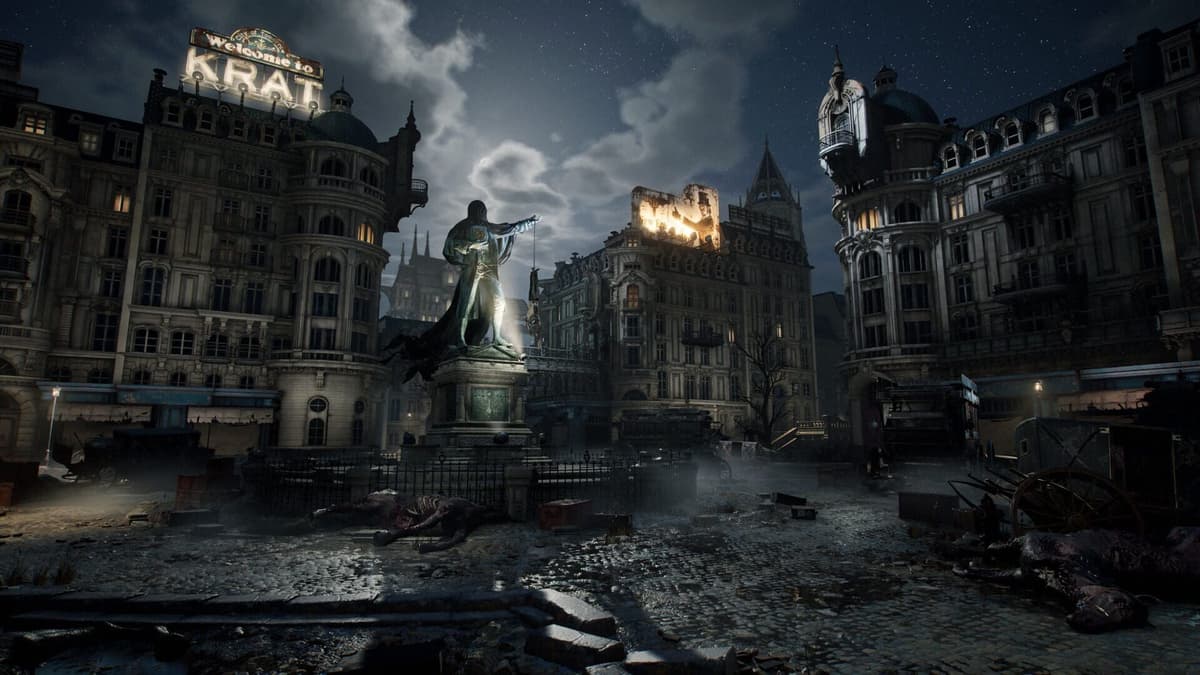
The credits roll, the game seems ready to let you exhale, and then Lies of P drops that Dorothy tease that instantly makes the world feel bigger than Pinocchio alone. That late-game sting is why so many players have treated every scrap of sequel news like a hidden item pickup. If you want the clean answer, here it is: the Lies of P sequel is officially in full-scale development, which is the strongest public sign yet that the project is active. What you should not do is fill in the blanks with rumor. There is still no official title, no confirmed gameplay structure, no release window, and no platform announcement.
This guide sticks to the parts that are actually useful for players: what the sequel currently is, how you “encounter” it in the existing game and franchise, what role it seems designed to play, and what people keep claiming without hard support. There are light ending-related spoilers ahead because the sequel conversation is tied directly to the base game’s final reveal.
Table of Contents (8)
The short version: what is confirmed right now
- The sequel has moved into full-scale development, according to NEOWIZ’s Q1 2026 earnings reporting as summarized in 2026 coverage.
- This does not mean the game is close to launch. “Full production” is a real milestone, but it is not a release-date promise.
- The sequel was already known internally before this update. Earlier comments from director Choi Ji-won had already indicated it had been in development for roughly two and a half years by the time of the newer reporting.
- There is still no official subtitle, no public gameplay deep dive, and no disclosed release window.
- Story speculation heavily points at Dorothy and Oz because of the base game’s ending, but that remains speculation until Round8 or NEOWIZ says more.
How players currently encounter the sequel in Lies of P
Right now, you do not “get” the sequel in any practical sense. There is nothing to unlock, no store page to interpret as a soft reveal, and no confirmed pre-order or platform target to track. The only real way players currently encounter the sequel is through the franchise itself: first through the base game’s ending material, and then through the official development update that confirms the next project exists as a real production.
The most important encounter point is the widely discussed Dorothy post-credits tease. That scene is the reason the sequel has become attached, in the community mind, to an Oz direction or at least to a broader fairy-tale universe beyond Pinocchio. If you are replaying Lies of P specifically to catch sequel setup, the practical move is simply to finish the story and pay attention to the late-game and post-credits material instead of hunting for secret sequel doors that are not there.
The other place the sequel is “encountered” is indirectly, through Lies of P: Overture. Public coverage treats Overture as part of the franchise’s momentum going into deeper sequel production. That matters because it shows NEOWIZ and Round8 are not treating Lies of P like a one-off hit they are done with. It does not automatically make Overture a direct sequel prologue, and that is an important distinction. A lot of players blur those two ideas together.
What “full-scale development” actually means for the sequel
This is the part worth reading carefully, because “in development” can mean almost anything in game coverage. In this case, the reporting indicates the sequel has progressed beyond a loose concept or early prototype phase and into full production. That is the strongest official-style signal so far because it suggests the project cleared internal approval and now has the studio’s larger development machinery behind it.
At the same time, full production and early-stage uncertainty can exist together. That is why some coverage has described the sequel as both “in full production” and still “early” in broader development terms. Those are not automatically contradictory. A game can be officially greenlit for major production and still be far away from the point where a studio is ready to show combat footage, user interface, or final platform targets.
The safest player takeaway is this: treat the sequel as real and active, not imminent. That single mindset will save you from a lot of bad speculation cycles. If someone is talking as though launch timing, world size, or combat systems are already settled, they are moving well beyond what public evidence currently supports.
What role the sequel seems built to play
The strongest read on the sequel’s role is not “bigger map” or “more bosses.” It is “larger franchise story.” Reporting around the project has pointed to Round8 expanding narrative leadership, including promotions tied to scenario-writing talent moving into director-level roles. That does not tell you what the next weapon system looks like, but it does suggest the studio sees story direction as one of the core pillars of the sequel.
That fits the broader shape of Lies of P as a property. The original game did not just borrow the silhouette of Pinocchio; it rebuilt that tale into a darker mythos with room for connected characters, alternate interpretations, and future arcs. The Dorothy tease is why Oz speculation stays loud, but the more important point is the studio’s apparent interest in a continuing fairy-tale universe rather than a single self-contained action RPG.
For players, that means the sequel’s role may be less about replacing the first game and more about expanding what “Lies of P” can be as a setting. If that direction holds, expect story continuity and thematic callbacks to matter at least as much as raw mechanical escalation. That does not confirm any specific plot, but it is a much more grounded expectation than assuming an open-world reboot or a completely disconnected spin-off.
What is still rumor, guesswork, or fan overreach
This is where a lot of sequel coverage goes off the rails. There are several ideas that keep circulating because they sound plausible, but they are not confirmed by the public information currently available. If you are trying to keep your expectations clean, these are the claims to keep at arm’s length.
- An official title: there is no confirmed title beyond people casually calling it “Lies of P 2” or “the sequel.”
- A release year: earlier creator commentary and rumor discussions floated windows like 2026, but current official-style reporting does not attach a date. Treat old windows as outdated or speculative.
- An open-world structure: this comes up often in commentary, but there is no public confirmation.
- A locked-in Oz setting: Dorothy speculation makes sense, but the ending tease is not the same as a full setting breakdown.
- Platform assumptions: until NEOWIZ or Round8 says otherwise, do not make hardware-buying decisions based on rumor threads.
The reason this matters is simple: fan theory is useful when you are talking lore, but it becomes noise when it gets mistaken for product information. Lies of P players have enough real sequel news now that you do not need to pad it out with invented certainty.
How the sequel is “performing” right now
Because the sequel is unreleased, there is no honest way to judge gameplay performance, frame rate, build quality, or even encounter design. Nobody can responsibly tell you how it plays, how fast it feels, or whether it keeps the same parry rhythm as the original. If you see those kinds of claims presented as settled fact, ignore them.
What you can judge is project performance in a broader sense. The sequel has advanced far enough internally to reach full-scale development, which means it is performing well enough as a project to keep receiving major investment. Coverage also ties this momentum to the broader health of the franchise around the base game and Overture. Public reports vary on exact sales numbers, so the careful reading is not “the franchise hit one precise milestone,” but rather “the franchise performed strongly enough to justify a deeper long-term push.”
That is also why Overture matters even if you only care about the sequel. DLC reception and continued franchise activity help explain why NEOWIZ and Round8 appear to be positioning Lies of P as an ongoing narrative IP instead of a single successful experiment. From a player perspective, that is the best current indicator of the sequel’s role and health.
What Lies of P players should watch for next
If you want to track the sequel intelligently, there are only a few signals that really matter. Everything else is filler until those appear.
- An official teaser or title reveal: this is the next moment when speculation will start turning into concrete information.
- Future earnings-call remarks: these are the most likely place for development status to get narrowed before a full marketing campaign starts.
- Story confirmation around Dorothy or another fairy-tale arc: one clear narrative signal would immediately reshape player expectations.
- Platform or trademark filings: these can clarify scope and target systems before gameplay is fully shown.
Until one of those drops, the best way to approach the sequel is to separate franchise setup from fantasy booking. Finish the base game, pay attention to the ending tease, treat Overture as meaningful context, and keep your expectations tied to official development updates rather than rumor videos trying to describe a game that has not been shown.
Bottom line
The Lies of P sequel is no longer a vague “maybe someday” project. It is in full-scale development, which makes it real in the only sense that matters right now. But the useful discipline for players is knowing where confirmed information stops. The sequel has a strong story-facing role in the franchise, the Dorothy tease remains the clearest encounter point inside the existing game, and Overture helps show the series still has momentum. Beyond that, patience is the smart play. Treat the sequel as active, not readable in detail yet, and you will avoid most of the noise surrounding it.
FinalBoss // Gear
Level up your setup
01Top-rated gaming headsetson Amazon→02High-refresh gaming monitorson Amazon→03Gaming chairson Amazon→04Discounted game keyson Kinguin→
Affiliate links · As an Amazon Associate, FinalBoss earns from qualifying purchases.
Want to Level Up Your Gaming?
Get access to exclusive strategies, hidden tips, and pro-level insights that we don't share publicly.
Ultimate Guide Strategy Guide + Weekly Pro Tips