
Table of Contents (6)
Logitech Pro X2 Superstrike – the first mainstream mouse to go switchless
This caught my attention because Logitech is trying something few peripheral makers have: remove the mechanical switch entirely and replace it with inductive sensors and haptic feedback. It’s the kind of hardware move that could be a genuine step-change – or an iterative novelty that mostly benefits headline spec sheets. I got a short hands-on with an early Superstrike sample and felt the responsiveness immediately; now the pre-orders are live ahead of a Feb. 11 ship date, and it’s time to parse what actually matters here.
- Key innovation: Haptic Inductive Trigger System replaces mechanical switches with pressure-sensing inductive sensors and haptic feedback.
- Performance claims: Logitech says click latency falls by roughly 9-30 ms versus traditional switches; actuation is adjustable and gives a tactile haptic “click.”
- Core specs: HERO 2 sensor (100-44,000 DPI, 88G, 888 IPS), 8kHz wireless polling, 61g weight, up to 90 hours battery life; no Bluetooth announced.
- Price & availability: $179.99, pre-orders now, ships Feb. 11.
{{INFO_TABLE_START}}
Publisher|Logitech
Release Date|February 11, 2026
Category|Gaming mouse / Peripheral
Platform|PC (wireless)
{{INFO_TABLE_END}}
What the Superstrike actually does
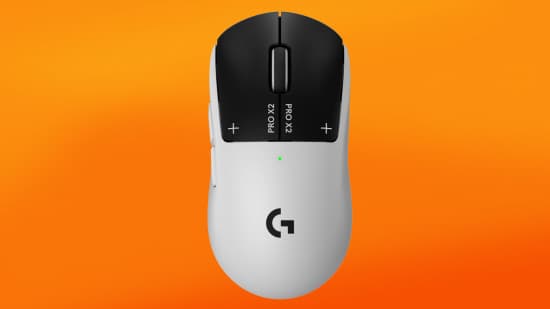
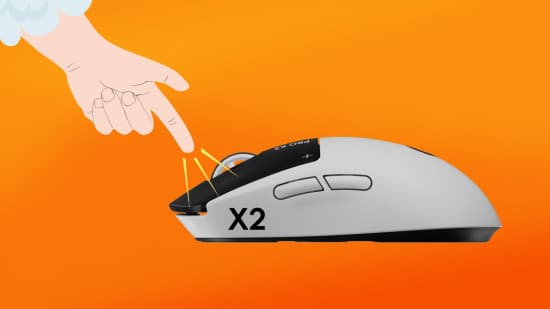
Instead of relying on a physical metal contact or an optical beam break to register a click, the Superstrike uses inductive sensors that detect the pressure of your finger and then deliver a haptic pulse to simulate the feel of a click. The big practical claims are twofold: lower latency because sensing starts the instant your finger moves, and adjustable actuation so you can tune how much pressure is required before the haptic click and signal are sent.
I tried an early unit briefly and the buttons feel distinct from mechanical and optical switches – faster to respond and less “travel” dependent. That said, the real question is how often that raw sensor advantage translates into meaningful gains during an actual match, where network, server, and game input handling also matter. I’ll be testing this thoroughly for a full review, but my initial read is that competitive players who chase every millisecond should pay attention.

Specs that matter — and the trade-offs
- Sensor: HERO 2, 100-44,000 DPI; claimed 88G acceleration and 888 IPS — top-tier tracking potential.
- Polling: Up to 8kHz over Logitech’s wireless; USB wired drops to 1kHz — useful for micro-adjustments in input sampling.
- Form & buttons: Symmetrical shell but side buttons only on one side; five main buttons total.
- Weight & battery: 61g and up to 90 hours battery life depending on polling — solid endurance but not the lightest in its class.
- Connectivity: No Bluetooth mention; likely focused on Lightspeed wireless for low latency.
- Price: $179.99 — premium pricing for new input tech.
Logitech positions the X2 Superstrike as the next step after the G Pro line (G Pro Wireless, G Pro X Superlight). It keeps the clean, competition-focused shape and prioritizes tracking and latency over extra features. The price is notably high: $179.99 puts it in premium territory, which makes sense for first-generation tech but raises expectations for reliability and long-term benefits.
Why this might matter — and where to be skeptical
Why it matters: input latency is a real competitive factor. Removing physical switch travel and debounce time can shave milliseconds, and adjustable actuation lets players tune the mouse for specific games or playstyles. Haptic feedback that reliably mimics a click also reduces the psychological need for a mechanical throw while keeping tactile confirmation.
Why to be cautious: the advertised 9–30 ms improvement depends a lot on what you’re comparing against, polling rate, firmware debounce, and how the game registers input. Many players won’t feel a dramatic difference in day-to-day play; the gains are likely most relevant to high-level FPS players and streamers optimizing every variable. There’s also the usual first-gen caveat: long-term durability, firmware polish, and how configurable the haptics and actuation truly are will determine if this becomes a new standard or a niche offering.
What this means for readers
If you’re a competitive player who updates hardware for incremental performance, the Superstrike is worth watching — and potentially buying if you want the latest input tech and don’t mind the price. If you prioritize ultralight weight, extreme battery life, or budget value, there are other mice that will still be better fits. For most players, this is an interesting innovation with potential, not an automatic must-upgrade.
TL;DR
Logitech’s Pro X2 Superstrike introduces a genuinely different approach to mouse clicks with inductive sensors plus haptic feedback. Early impressions are positive for raw responsiveness, but real-world gains will depend on use case and tuning. Priced at $179.99 and shipping Feb. 11, it’s a premium, first-generation product that competitive players should take seriously — everyone else can wait for reviews and follow-up models.
FinalBoss // Gear
Level up your setup
01Top-rated gaming headsetson Amazon→02High-refresh gaming monitorson Amazon→03Gaming chairson Amazon→04Discounted game keyson Kinguin→
Affiliate links · As an Amazon Associate, FinalBoss earns from qualifying purchases.
Want to Level Up Your Gaming?
Get access to exclusive strategies, hidden tips, and pro-level insights that we don't share publicly.
Ultimate Gaming Strategy Guide + Weekly Pro Tips