
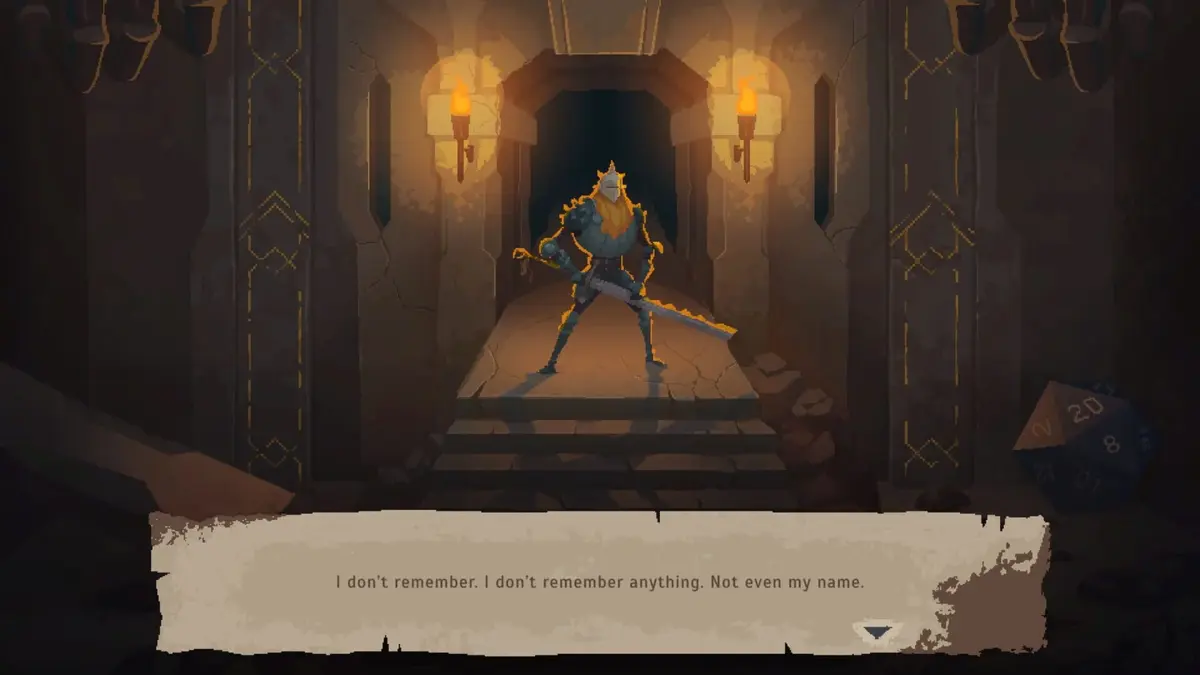
After a combat victory, I was not thinking about a bigger damage number. I was staring at a single loot choice and the cramped backpack grid waiting behind it, measuring whether one odd-shaped item could strengthen several others or wreck an arrangement that had finally begun to work. That is Lootbound at its best: a roguelite where the quiet moment after the fight carries as much tension as the fight itself.
The game takes a familiar Diablo-flavored hunger for drops and makes every piece of gear a spatial problem. Equipment has no conventional set of fixed slots to solve. Instead, weapons, armor, and magical support pieces occupy cells in a backpack, can be rotated, and can change value entirely according to their neighbours. Lootbound makes inventory management the run rather than the administrative chore that interrupts one.
ArtDock developed Lootbound, while Dreland Enterprises published it. It released on 14 August 2026 for Windows through Steam at a launch price of $9.74 / €9.74, discounted by 35% from $14.99 / €14.99. For that price, its central idea carries enough tactical weight to stand on far more than novelty.
Table of Contents (6)
The backpack is the real character sheet
Traditional action RPG loot often produces a depressing rhythm: inspect a drop, notice that one number is marginally higher, equip it, discard the old item, and continue. Lootbound refuses that simple hierarchy. A lower-stat item can earn its place because its shape fits the grid better, because it makes room for an aura, or because it supports the surrounding pieces that actually define the build.
Magic items project auras onto nearby gear, and those effects have real placement rules. An aura can care about the kind of equipment beside it, the side from which it reaches that equipment, and the number of pieces it affects. Shifting one item by a single cell can so alter several stats at once. With proper positioning, one aura item can enhance up to four weapons. That is the whole game’s argument in miniature: a humble support item can matter more than the supposedly glamorous drop competing for the same space.
The system also understands that shape is a stat. Legendary gear is not automatically efficient when its silhouette blocks several aura connections. I like that Lootbound is willing to make a prized item lose an argument to a modest, better-fitting alternative. The strongest backpack is not assembled by chasing rarity alone. It is engineered through adjacency, space, and a willingness to destroy an arrangement that no longer serves the run.
Rotation makes this satisfying rather than needlessly fussy. A piece can be turned to reclaim dead space, connect a weapon to a magical bonus, or open a route for another item’s aura. Each hero has an inventory to maintain, so the decision is not merely “does this item look good?” The better question is whether it fits the role, abilities, and existing equipment of the character who will carry it.
Lootbound does not have automatic sorting, and that omission is important. The game refuses to flatten its own best idea into a convenience button. Sorting is where the build takes shape, which means the backpack never becomes a junk drawer. It remains a tactical board, even when the process gets crowded and forces hard choices about what to discard.
Combat gives every placement decision teeth
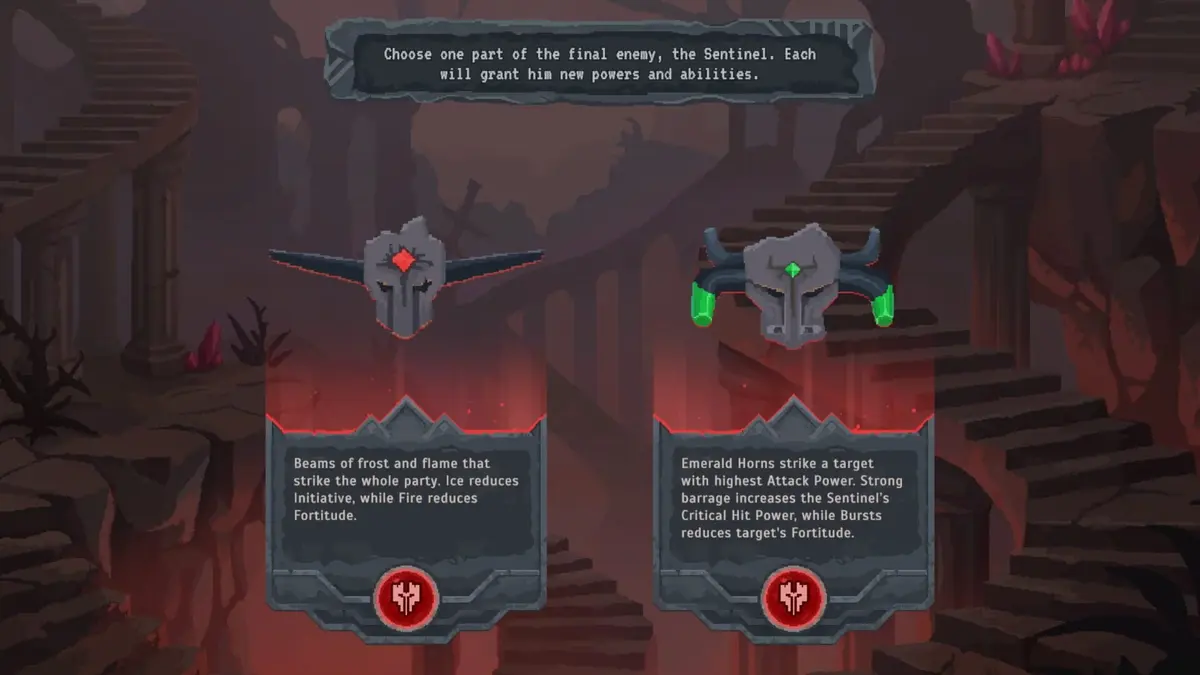
The inventory game would be clever but hollow without combat that can expose weak planning. Lootbound uses tactical, turn-based rounds governed by Initiative. Every character acts once per round, and faster characters move before slower ones. Initiative therefore works as more than a tempo stat: acting first can prevent an enemy from getting the turn that would have made the rest of the round ugly.
Only the selected hero is directly player-controlled. Two companions act automatically and choose their own actions, which puts more pressure on preparation than on moment-to-moment command. I cannot micromanage every response when the board turns hostile, so companion inventories matter. A companion’s gear must suit their particular abilities and role before combat begins, because the backpack is where that tactical intent is expressed.
Survivability is split cleanly between renewable Armor and persistent Health. Armor replenishes after combat, while damage to Health remains until healing restores it. Mana only partially returns after a battle, and abilities consume it while basic attacks do not. Those rules make every encounter part of a longer expedition calculation. Burning Mana to secure a clean victory can be correct; spending it carelessly can leave a build underpowered before the next difficult fight.
The damage system creates useful jobs for different builds. Crush Damage is built to remove armor, then Slash Damage can punish targets once that protection is gone. Acid Damage bypasses armor and hits Health directly, making it valuable against enemies protected by strong defensive abilities. Base Damage rounds out the four main damage types, while Order strengthens beneficial effects such as healing and armor repair and Chaos improves negative status effects.
Resistance is the dependable defensive stat because it consistently reduces damage taken. Dodge can make attacks miss, but its inconsistency makes it a supporting layer rather than the foundation of a survival plan. That distinction gives the backpack more meaningful trade-offs: I can pursue a flashier offensive arrangement, but a run still needs resistance, healing capability, Armor, and intelligent positioning to survive rising opponent damage.
A run keeps asking for one more rearrangement
Lootbound understands the value of a compact loop. A biome begins with route selection on an overview map, then moves through fights, loot picks, inventory sorting, equipment upgrades, companion crafting, build improvement, and a boss encounter to finish the biome. The branching route structure recalls Slay the Spire’s map, but Lootbound is not a deckbuilder. Its buildcraft lives in physical placement and equipment relationships rather than cards.
That structure keeps the backpack from becoming an isolated puzzle screen. Every victory grants one loot choice, then asks for a decision with immediate and long-term consequences. A new item may solve the next battle. It may also demand a full rebuild, displace a reliable aura piece, or make another character’s inventory less coherent. The best runs create a chain of decisions where an early compromise becomes the foundation for a later power spike.
Roguelite progression adds another layer by making the player stronger across runs and opening additional difficulty levels. The appeal lies less in raw accumulation than in learning what a good arrangement actually looks like. A player who understands why a regular item improves four neighbours has a stronger foundation than one who simply grabs the rarest object available.
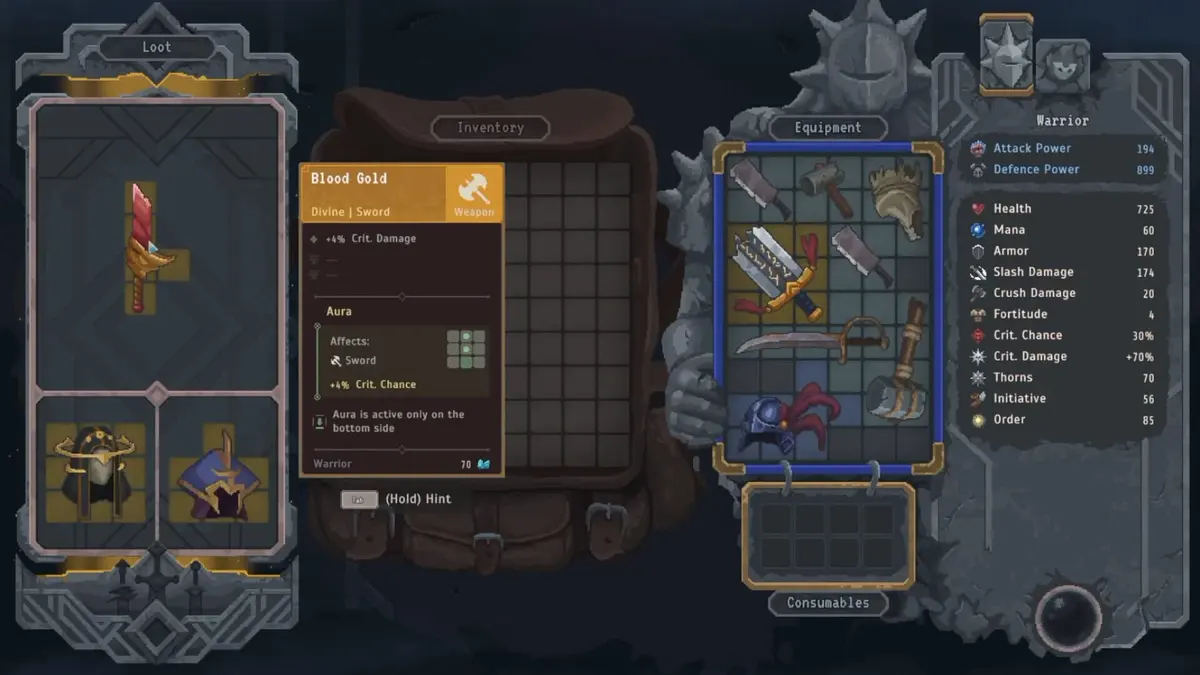
Warrior, Paladin, Witch, and Jester companions bring different stat priorities and playstyle roles to that learning process. The Witch, for example, has a natural interest in Acid Damage, while a more protective setup may value Order, Resistance, Armor repair, and healing. Lootbound rewards reading those roles through equipment choices rather than treating every item as universally useful.
The friction is better, not gone
Lootbound fixes the worst kind of inventory pain: the kind where an exciting drop becomes a menu interruption. Here, the menu is the battlefield before the battlefield. Still, a system built around limited space and manual arrangement cannot be frictionless. The absence of auto-sorting is a principled choice, but it also means every new piece demands attention. Players who want loot to resolve itself into a clean, obvious upgrade will find the game deliberately resistant to that comfort.
The automatic companions create a second limit. Their separate inventories and different roles give party building more texture, yet direct control remains focused on the selected hero. Preparation becomes essential because I cannot personally dictate the companions’ choices in combat. That trade is coherent with Lootbound’s emphasis on planning, but it reduces the feeling of commanding a fully manual tactical party.
Neither issue breaks the game’s central loop. In fact, the manual labor is often why a successful setup feels earned. A backpack grid only works when the player owns the consequences of its disorder. Lootbound has the confidence to make those consequences matter.
Who should play Lootbound
Lootbound is for players who enjoy tactical roguelites, deliberate turn order, and buildcraft that values arrangement as much as raw stats. It is especially strong for anyone tired of treating inventory screens as a landfill between fights. The game makes each item a potential weapon, shield, aura source, spatial obstacle, or sacrifice for a cleaner plan.
Players who want constant direct control over every party member should be more cautious. The selected hero receives the commands, while the two companions act automatically. Likewise, anyone who dislikes rotating gear, managing capacity, and repeatedly revisiting a grid will meet Lootbound’s defining mechanic as resistance rather than relief.
Bottom line
Lootbound earns an 8/10. Its backpack system turns loot from disposable reward noise into a living tactical language, and its aura-driven placement creates the rare inventory screen that I actively want to revisit after every fight. Automatic companions and the intentionally manual management keep it from being universally welcoming, but the core idea is too sharp to dismiss as a gimmick. Lootbound makes every square of the backpack count, and that is exactly why its runs stick.
FinalBoss // Gear
Level up your setup
01Top-rated gaming headsetson Amazon→02High-refresh gaming monitorson Amazon→03Gaming chairson Amazon→04Discounted game keyson Kinguin→
Affiliate links · As an Amazon Associate, FinalBoss earns from qualifying purchases.
Want to Level Up Your Gaming?
Get access to exclusive strategies, hidden tips, and pro-level insights that we don't share publicly.
Ultimate Reviews Strategy Guide + Weekly Pro Tips