
Table of Contents (11)
A Week With Lumines Arise: From Skeptic to Sucker for Synesthesia
I went into Lumines Arise expecting a charming remix of a classic I loved on PSP, maybe a comfort-food spin on Tetris Effect’s “feel every beat” philosophy. I didn’t expect a puzzle game to make me pause and breathe during a late-night VR session because a jet screamed overhead and the board pulsed to my heartbeat. That was hour nine. Hour one? It was fireworks, missed drops, and the loud reminder that reading a busy field is a skill you rebuild every time Lumines returns from hibernation.
For context: I played on PS5 (DualSense, LG OLED C2, PSVR2) and on a PC at 144Hz with a mechanical keyboard. Across six evenings, I logged just over 20 hours-most of it in Journey mode, plus a string of Burst Battle matches, a Survival run that humbled me, and a surprising weekend event that filled my hub with dancing little beings called Loomii. The short version is that Arise understands the series’ core loop and supercharges it with tech to sell emotion, not just spectacle. The long version starts with me fumbling the timeline.
My First 30 Minutes: Fireworks, Missed Drops, and the Timeline I Didn’t Respect
Lumines is still the cleanest “make squares, beat the sweep” game in town. Two colors, 2×2 pieces, and a vertical timeline marching left-to-right to clear whatever single-colored clusters you’ve stitched together. In Arise, that old heartbeat returns, but the stage around it never stops breathing: dancers flicker behind the grid, paper lanterns unspool down the sides, and geometric storms bloom in time with a kick drum. It’s intoxicating-and briefly overwhelming.
On a flat screen, my first 40 minutes were a tug-of-war between inputs and instincts. I built squares too cautiously, then watched the sweep cut through before I chained them larger. I also ran into a couple of “this looks amazing, but where the hell are my edges?” moments when a stage’s effect surged-think a rising visual layer near the bottom third of the board that looks gorgeous, but muddies your immediate decisions. I paused, dove into the options, and yanked the background opacity down. Instant relief.
When It Clicked: Burst Turns Panic Into Planning
The new trick in Arise is Burst, and it’s what changed how I play. You fill a meter by, well, playing well—making squares, chaining, surviving. At 50% or more, you can lock one selected square in place for a few sweeps, giving you time to fatten it up while shoving the opposite color upward. I didn’t get it at first. I hoarded Burst, popped it too late, or misplaced it on a flimsy 2×2. But after a handful of failures—one truly spectacular choke at 89% sweep while sitting on a 10×10 in the middle—I started thinking in crescendos.
Now I use Burst the way you save a bomb in a shmup: not just a panic button, but a momentum engine. I’ll set a lock early on a promising mid-field cluster, build it methodically, and let the timeline snip the ribbon while everything above cascades into fresh space. The first time I broke 200 blocks in a single square, I laughed like I’d pulled off a boss parry in Sekiro. It’s not just points; it’s breathing room. In Journey’s tougher tiers, Burst is the thin thread between flow and wipeout—and it feels earned, not cheap.
Journey Mode Is 30+ Little Concerts You Want to Revisit
Arise’s Journey mode is the spine. Over 30 stages, each with its own visual identity and rhythm shifts, feed you that “one more track” impulse. The game doesn’t preview much beyond a thumbnail, and that mystery works. I’d beat a neon club track, pulse still high, then blink into something tender with floating koi and a tempo that felt like a long exhale. Then a tune would yank me into a brisk hip-hop cadence, or a nervous techno sprint that demanded quick rotations and faster commitments.
Some of the creative swings caught me off guard. One stage dresses blocks as fruit (goofy in a fun way), then flips the motif mid-run and makes you grin at your own muscle memory as it readjusts. Another has tiny eggs that crack into little creatures scuttling across what were, five seconds ago, just squares. My favorite showpiece moment is a long, straight road where a plane occasionally rips across the skyline. In VR especially, when that plane broadslides overhead, it turns a nice track into a full-body moment. It’s the exact kind of “tech for feeling” choice that Enhance thrives on.
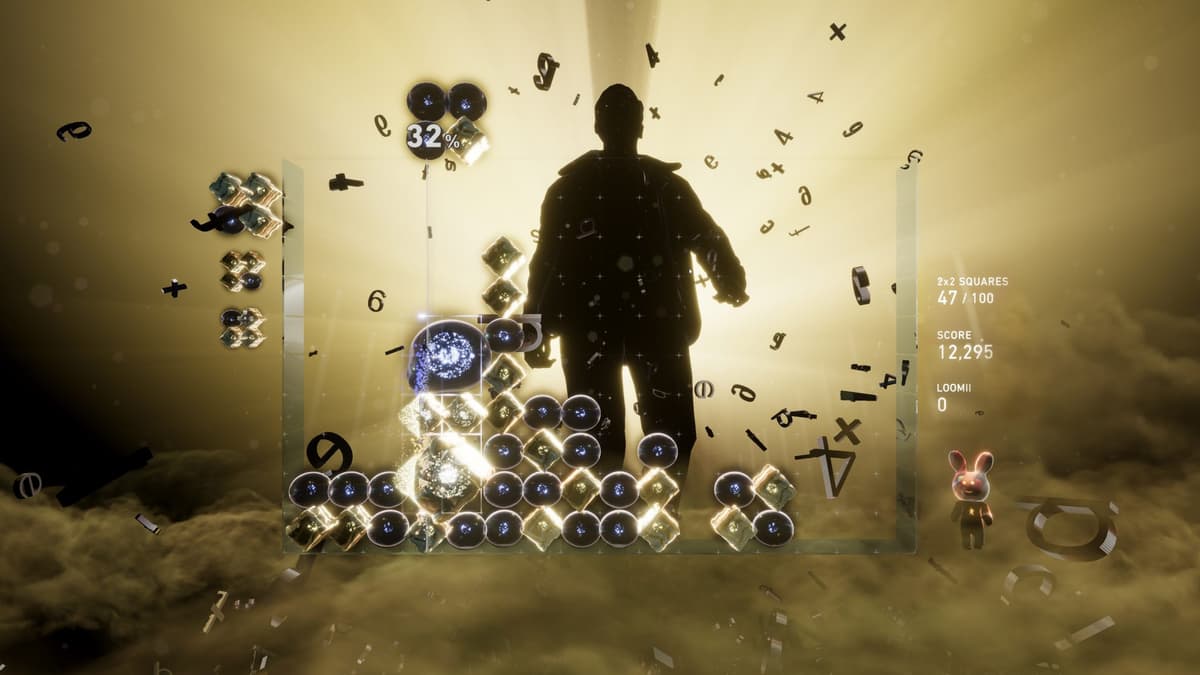
The difficulty options matter. On the lowest setting, the square requirement to clear a stage is merciful and the drop speed forgiving; crank it up and you’ll find your planning window tightening. I hit multiple roadblocks the further I went, but rather than frustration, I felt that old arcade hunger to shave seconds and beat my own grade. One evening I replayed the same mid-tier stage a dozen times, purely to nail a clean A without leaning on Burst as a crutch. I finally did, because the speed and score goals feel aligned with the music—less like a requirement, more like a rhythm you’re learning to ride.
Flat vs VR: The Clarity Gap Is Real (and VR Wins)
On a TV or monitor, Arise is beautiful and busy. That tension never completely goes away, though the accessibility sliders are a godsend. I turned the playfield background translucency up and down per stage, nudged the zoom, and kept particle intensity modest during long sessions. It’s flexible enough that I always found a sweet spot. Still, when I strapped on PSVR2, the fuss evaporated. The board sits closer, your peripheral catches the rhythm rather than the noise, and the scale makes sense of the spectacle.
In VR, the DualSense haptics sync with triggers and palms to the beat, and when you trigger Burst, the headset buzz adds a physical exclamation point. The stage occasionally zooms in or out, and in a headset that change feels playful rather than disorienting—like the game nudging you to lean in on a drop. I didn’t experience motion sickness; the board is stationary, you’re stationary, and the movement is more theatrical than locomotion. After two nights of switching back and forth, I started saving the “premiere” of new stages for VR and using flat mode to grind scores. That says a lot.
Sound, Haptics, and Why This Feels More Than It Looks
I’ve seen people say the soundtrack here is more functional than transcendent, and I get it. Some vocal tracks are corny in that “we wrote the hook first” way, and a few mixes trip over their own lyrics, smudging the tempo. But when Arise leans into variety—a grimey bass pattern here, a zen pad there, a back-half crescendo where everything around the board breathes with you—it lands. I had a couple of tracks that didn’t stick, but I also had two that sent me to bed humming their sweeps.
The haptics elevate it. I started noticing micro-feedback on rotations, soft thumps on the timeline, and that satisfying pulse when a huge square detonates your backlog. It’s not overdone; the controller gives you a tactile metronome you don’t realize you’re relying on until you swap to a keyboard. On PC, I missed that heartbeat, even at 144Hz. Back on DualSense, it felt like the game and I were literally on the same wavelength.

Modes Beyond the Journey: Burst Battle, Survival, and the Loomii Crowd
Journey mode is where you’ll fall in love, but the side dishes keep you at the table. Burst Battle is a one-on-one, best-of-three duel that turns your clears into pressure. Build big, and junk creeps in on your opponent’s sides. I lost my first ranked set 0-2 by panicking the moment my field narrowed; by match three, I learned to Bust (and Burst) out, lock a mid-field core, and force a counter. The average match lasts just long enough to feel strategic without dragging, and the metagame is already spicy: bait the lock, punish the greed.
There are time attack leaderboards and a Survival option that strings Journey into a marathon. Survival made me respect how carefully the stage order ebbs and flows—when the game wants to give you water, and when it wants you to drown. Missions and challenges are fine as teaching tools, if less sticky than the main setpieces. The most surprising thread is the social layer: you “free” little avatars called Loomii every time you Burst, tagged with other players’ usernames. They gather around your menus, fill your stage select, and eventually crowd your playfield like a cheering section.
During a weekend event, the multiplayer hub transformed with shared, time-limited goals. Everyone’s points contributed to unlock cosmetics, and—this is small, but perfect—leaving your Loomii idle made them dance to the track. I’m allergic to live-service busywork, but this felt playful rather than demanding. If the events keep that tone—light, communal, and surprising—I see myself popping in on weekends even when I’m mostly playing solo.
Difficulty, Readability, and the Satisfaction of Getting Better
The steepness is front-loaded. If you haven’t touched a Lumines in years (hi), your first hours will be you and the timeline disagreeing on what “soon” means. You’ll overbuild during a slow sweep and underbuild when a track speeds up. The moment it clicks is when you stop treating the timeline like a thief and start treating it like a rhythm partner. You’re not racing the sweep—you’re choreographing with it. That reframing, plus Burst, turns frustration into strategy.
Clarity is the other hurdle. Arise gives you real tools: background opacity sliders per stage theme, zoom adjustments, reduced intensity on reactive elements. I set presets for “showpiece” vs “grind” and swapped as needed. I’d still recommend VR if you own a PSVR2; it’s the cleanest read and the most coherent version of the show. But I never hit a wall on flat once I dialed in settings. The key is to treat the options menu like a difficulty dial, not a shame button.
Performance and Tech: PS5, PSVR2, and PC
On PS5, load times are near-instant, and the game locked to a smooth frame rate in my sessions. DualSense haptics are best-in-class for this genre; they communicate certainty without numbing your hands. PSVR2 is the star—the resolution and HDR pop make those reactive backgrounds sing, and the headset rumble on Burst is such a silly, brilliant cherry on top. I never felt queasy, and the stage zooms are more flourish than full camera moves, so they read as musical.
On PC, my 144Hz monitor smoothed the timeline nicely, and keyboard controls were precise, if a bit sterile after the DualSense. Input response was snappy across both platforms. The only technical complaint I can put my finger on is that some high-contrast stages got a touch too “busy” on my OLED until I used the in-game opacity tools. No crashes, no audio desync, no “why is this stuttering during a huge clear?” moments. It’s a polished build that respects the vibe it’s trying to create.
What Doesn’t Work (For Me)
Three nitpicks stuck with me across the week. First, a handful of vocal tracks just don’t match the mechanical cadence. The lyrics feel stapled on, and they knock the groove out of alignment rather than elevating it. Second, a couple of showpiece stages on flat displays cross the line from “thrilling” to “hard to parse,” even after tweaks—rare, but noticeable. Third, the missions and challenges are more checklist than creative remix; they teach efficiently, but I never felt drawn back to them after learning the trick.
Who Should Play Lumines Arise
If Tetris Effect lives rent-free in your skull and you have any affection for Q Entertainment’s original Lumines, Arise will feel like a homecoming party thrown with modern tech. If you own PSVR2, it’s a near-essential purchase—the clarity, the scale, and the head-buzz Burst punctuations make it feel tailored to the headset. If you only play flat and crave clean readability, you’ll want to heavily lean on the accessibility settings; I still recommend it, but you should know going in that the “show” is as important as the “solve.”
Competitive puzzle heads will find a surprisingly sharp 1v1 mode in Burst Battle, with room to grow a meta. Score chasers get time attacks and a Survival gauntlet that respects your newfound muscle memory. And if you chase feelings as much as numbers, Arise isn’t embarrassed about its emotional ambitions. Neither am I.
FinalBoss // Gear
Level up your setup
01Meta Quest 3on Amazon→02PSVR2 accessorieson Amazon→03Gaming chairson Amazon→Affiliate links · As an Amazon Associate, FinalBoss earns from qualifying purchases.
Want to Level Up Your Gaming?
Get access to exclusive strategies, hidden tips, and pro-level insights that we don't share publicly.
Ultimate Reviews Strategy Guide + Weekly Pro Tips