
Table of Contents (14)
The moment the Manor Lords fantasy broke
Manor Lords was the game I quietly pinned a whole chunk of my gaming hopes on. Not “this looks neat, I’ll wishlist it” hopes. I mean the kind of long, simmering obsession where you watch every devlog, rewatch GIFs of peasants placing individual logs, and tell your friends, “If this lands, it’s going to be the Banished successor we’ve been waiting for.”
For years, Manor Lords lived rent-free in my head as this almost-mythical medieval city-builder that would finally nail grounded realism, organic settlement growth, and large-scale battles in one package. A solo dev, absurd attention to detail, a Steam Next Fest demo everyone called “polished beyond expectations” – what could possibly go wrong?
Then I finally got to sit down with the early access version. And the dream didn’t just wobble; it cracked. The game is not a disaster. It’s not a scam. But the gap between what I’d built in my head and what actually exists on my SSD is big enough that I have to be honest: my Manor Lords fantasy is over, at least for now.
How Manor Lords became the chosen one for Banished fans
I’ve been chasing the high of Banished for years. Not the prettiest, not the deepest, but that feeling of coaxing a harsh, fragile settlement into something self-sustaining and alive. Most “Banished-likes” either bloat themselves with systems they can’t support or lean into gimmicks instead of atmosphere.
Manor Lords looked different from the start. Those early teasers of a 14th-century, Franconia-inspired landscape, peasants physically carrying beams and thatching roofs by hand, roads snapping organically to where people actually walk – it wasn’t selling me numbers and tech trees. It was selling the process of medieval life.
Then came Steam Next Fest, October 3-10, 2022. The demo drops, and overnight Manor Lords shoots to the top of Steam’s most-wishlisted games. Coverage is breathless: “heart and soul poured in,” “polished beyond expectations,” people openly doubting that a solo dev could have made this without a hidden team of 100 behind him. I wasn’t just impressed; I was convinced. This was it. This was the one.
I played that demo and did what a lot of people did: I stopped treating Manor Lords like a curiosity and started treating it like a future classic. I followed my villagers around, watched them go about their routines, lost stupid amounts of time just observing the changing weather and mud build-up on roads. The thing felt alive.
The demo sold a dream the game couldn’t fully back up
Here’s the important part: that demo was mostly early game. A small settlement, limited buildings, zero late-game scale, and no real test of performance with hundreds of people or large armies. Nobody cared. The detail was so good we mentally filled in the rest.
We saw a polished slice and collectively decided the rest would match it. Of course the battles would be as grounded and tactical as the village life. Of course city-scale settlements would work just as well as tiny hamlets. Of course the economy, trade, and production chains would deepen naturally as the project matured.
In hindsight, that was the first red flag – not anything in the demo itself, but the absence of stress tests. No big towns, no large-scale combat, no late-game complexity. It felt like a vertical slice designed to silence any doubts. And for a while, it did exactly that.
Years of watching from the sidelines
After the demo, Manor Lords basically moved from “intriguing prototype” to “emotional investment” status for me. I kept up with devlogs, patch notes, community chatter. I watched the wishlist numbers climb. I watched people build up this narrative of a lone genius outclassing whole AAA teams.
At the same time, some unease started creeping in. Performance concerns popped up in YouTube tests and discussions: talk of crashes and stutter as settlements pushed towards four digits in population, tests where cities around 1,000+ inhabitants started to buckle. For a game selling itself on immersion and scale, engine limits are not a small problem.
There was also the communication side. I’m not going to blast a solo dev for not answering every email, but the responses to access requests – mine included – had a certain coldness to them. Not rude, just strictly transactional. No “here’s where we’re at, here’s what I’m worried about,” just a tight, closed shop.
Combined with the fact that the public demo never returned in an updated form, it created this weird tension. On the one hand, Manor Lords was now one of Steam’s most visible indies. On the other, we were basically stuck with a single, incredibly polished early-game slice as our only hands-on reference for years.
Finally getting my hands on Early Access
When I finally dove into the early access build, I did it with a mix of excitement and dread. Excitement because I’d been living in the Manor Lords fantasy for far too long. Dread because by that point, I’d seen enough hints that this might not be the fully-formed masterpiece people were talking about.
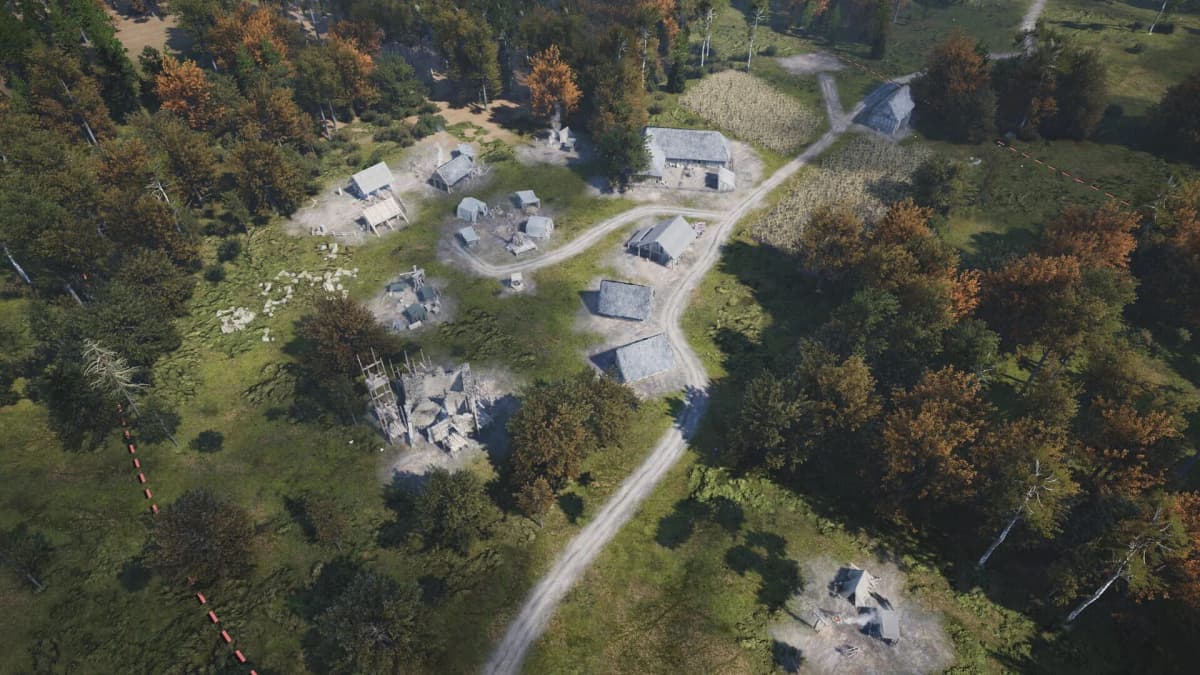
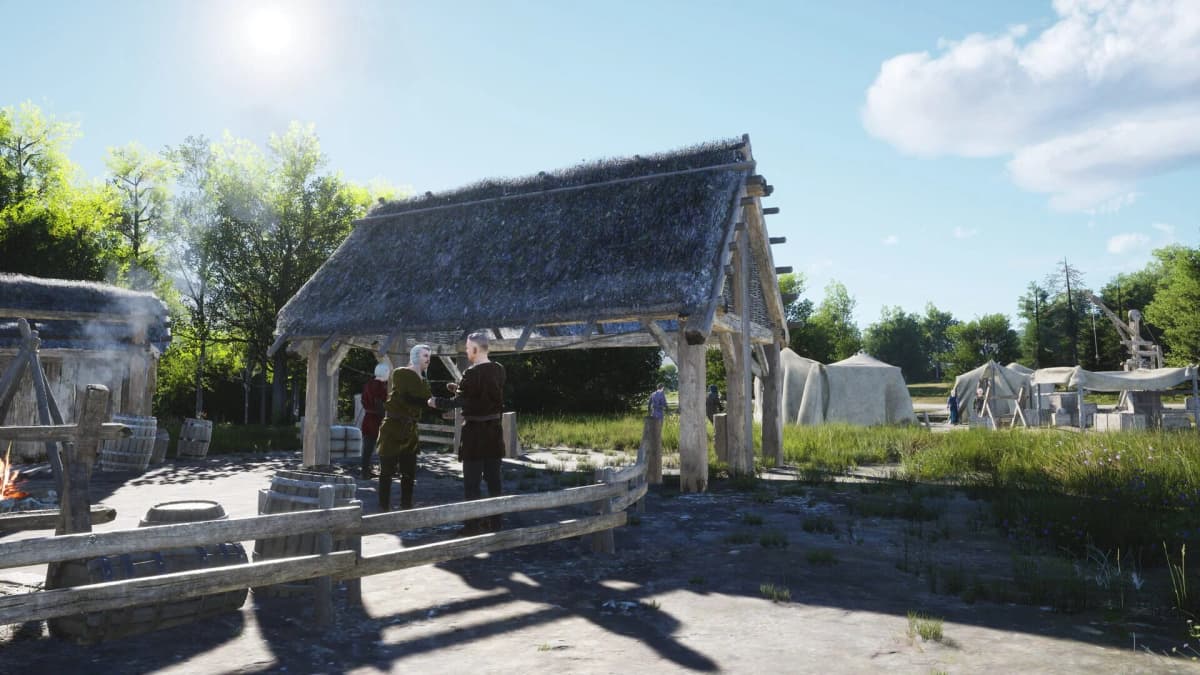
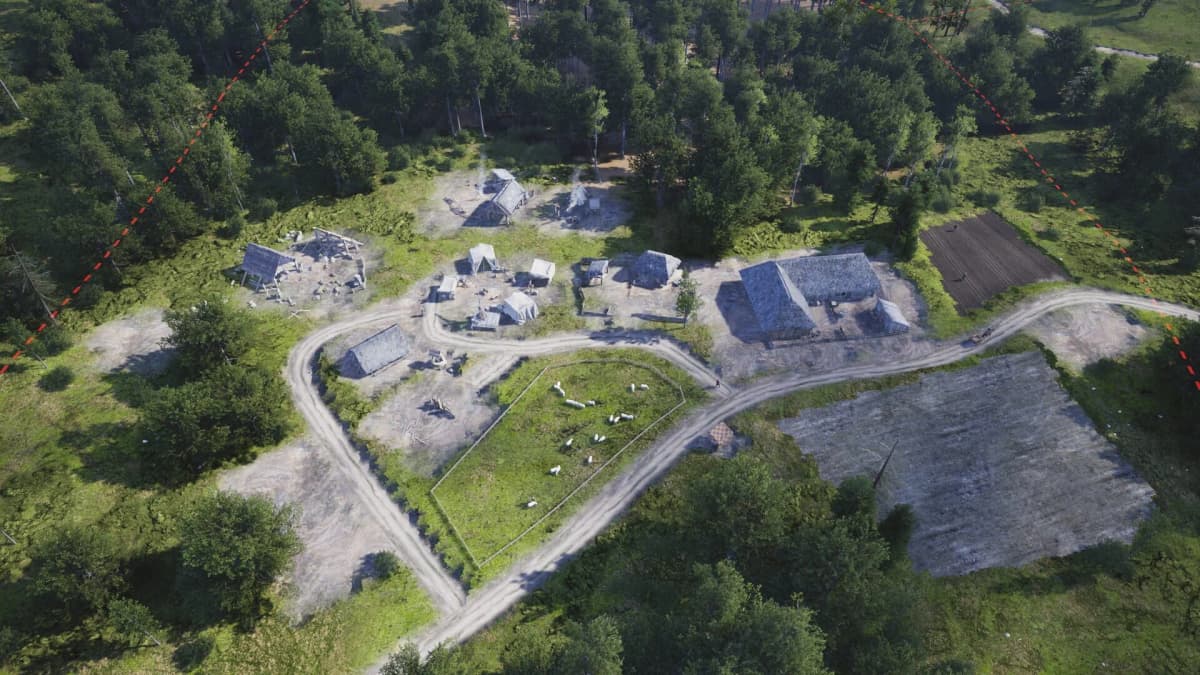
My first few hours were exactly what I’d hoped for. The atmosphere is still on another level. The way villagers actually build structures step by step, the way settlements sprawl organically along roads instead of on a sterile grid, the way the world feels like a place rather than a board – that stuff is still incredible.
But once I pushed past the honeymoon phase and into actual growth, the cracks started to show.
Systems that look deep but don’t quite land
The production chains and economy, for example, feel like they should be complex and fragile. You’ve got multiple food sources, clothing, trade, regional specialization – on paper it’s the kind of stuff I live for in a city-builder.
In practice, it often feels half-communicated and half-implemented. The UI does a mediocre job of surfacing what’s actually happening under the hood. Feedback on shortages, bottlenecks, and citizen behaviour can be murky. You end up with moments where something is clearly wrong – people starving, production stalling – but the tools to diagnose and fix it feel blunt.
In practice, it often feels half-communicated and half-implemented. The UI does a mediocre job of surfacing what’s actually happening under the hood. Feedback on shortages, bottlenecks, and citizen behaviour can be murky. You end up with moments where something is clearly wrong – people starving, production stalling – but the tools to diagnose and fix it feel blunt.
🎮 Get This Game at the Best Price
Compare prices instantly and save up to 80% on Steam keys with Kinguin — trusted by 15+ million gamers worldwide.
*Affiliate link — supports our independent coverage at no extra cost to you
Battles that promise realism but play like an afterthought
Then there are the battles. One of the big selling points of Manor Lords was always that it wasn’t just a city-builder, it was also an RTS with fatigue-aware, grounded combat. Weather, morale, positioning – the works.
What I got was more like a slightly clunky side mode stapled onto the city-building. Positioning matters, sure. Fatigue exists, technically. But it doesn’t feel like a fully-realized system. It feels like a lightweight Total War homage that doesn’t quite have the responsiveness, AI, or depth to support the weight the marketing put on it.
Performance and scaling: the elephant in the village square
And then there’s performance. On a modern PC that has no business struggling with a city-builder, Manor Lords ran well initially. Small villages, a couple dozen households, a few production buildings – fine. But as my population grew, the slowdown crept in. Camera hitches, simulation stutter, and that subtle sense that the engine was grinding its teeth.
I never hit a hard crash in my own sessions, but knowing that others have reported instability and issues once they push their cities beyond the 1,000+ population mark makes it hard to ignore the feeling of an invisible ceiling. For a game that sold the fantasy of evolving from a tiny settlement into a bustling medieval town, that ceiling feels like a betrayal of the premise.
When enthusiasm turns into resentment
The technical issues and design rough edges are one thing. It’s early access; you expect growing pains. What really got under my skin was the psychological whiplash: going from “this is my dream game” to “this might never become what I imagined” in the space of a week.
Part of that is on me. I bought into the legend of the solo dev underdog too hard. I treated every devlog as a promise and every gorgeous GIF as evidence that the rest of the game must be equally brilliant. I let the Steam Next Fest demo convince me that scale and long-term play would be just as polished as that handcrafted opening.
But part of it is on how Manor Lords was framed, too. When you put out a demo that’s that slick, let it catapult you to the top of the wishlist charts, and then go largely quiet with updated public builds, you’re effectively locking people’s expectations to that idealized state. Years later, when they finally get in and see the messy underbelly, it’s always going to feel like a bait-and-switch even if that wasn’t the intent.
The communication problem nobody wants to talk about
I don’t think Slavic Magic is malicious. I think he’s a developer who got swept up in a monstrous wave of hype he couldn’t fully control. But the way communication has been handled hasn’t helped.
Access is tight, responses are clipped, and there’s a noticeable reluctance to talk openly about limitations – especially around performance and scaling. Instead, we get a mix of patch notes, feature highlights, and the kind of cautiously optimistic language that keeps the dream alive without really confronting the hard questions.
Meanwhile, updates like the recent Update 6, which significantly reworked housing and added a new Twin Lakes map, show that there is genuine progress. Fan wishes are being implemented. Core systems are being revised. It’s not like the game is abandoned. But there’s a difference between “we’re adding requested features” and “we’re structurally addressing the things that might cap this game’s potential forever.”
Early access isn’t a magic shield
Every time someone criticises Manor Lords, there’s a predictable response: “It’s early access, relax.” And yes, that matters. Bugs are expected. Balance will change. Systems will expand. You don’t judge a building halfway through construction as if it were finished.
But early access also isn’t a blank cheque. If you charge money, set expectations with polished marketing, and bask in years of being “the most wishlisted game on Steam,” you don’t get to be treated like a tiny passion project nobody’s heard of. You’re playing in the big leagues whether you wanted to or not.
Games like Going Medieval quietly spent years in early access, openly iterating, letting people see the ugly middle stages. By the time they left early access, the love was earned over time, not concentrated in a single magical demo. Manor Lords did the opposite: it front-loaded the magic and is now hoping people will stick around for the messy reality.
What Manor Lords still gets right
Despite all of this, I’m not uninstalling Manor Lords and declaring it a lost cause. Underneath the frustration, there’s still something special here.
The atmosphere remains unmatched in its niche. Few city-builders make me care this much about individual animations, about where roads naturally want to go, about how fields sit in the landscape. The choice to prioritize historical plausibility over flashy fantasy tropes gives the whole thing a grounded weight most games would kill for.
And updates like the housing overhaul in Update 6 show that the developer is willing to revisit core systems, not just tack on more content. That matters. It suggests Manor Lords could, over time, grow into something that better matches the fantasy we all built up around it.
Where I draw the line as a player
For me personally, this is where I have to step back. I’ve put in enough hours to know that Manor Lords, as it exists right now, is not the game I’d been waiting for all these years. It’s a promising, often beautiful, occasionally infuriating early access title with serious questions hanging over its scalability and long-term design.
I’m not going to keep treating devlogs and patch notes like gospel. I’m not going to keep projecting my ideal “Banished but better” fantasy onto a project that clearly has its own limits. I’ll check back in when there’s concrete evidence that performance at scale is stable, that battles have real tactical depth, and that the simulation is better surfaced and explained to the player.
Until then, Manor Lords moves from “dream game” to “interesting work in progress” in my personal hierarchy. That’s not a tragedy. That’s just me finally aligning my expectations with reality instead of clinging to a demo from 2022 and a story I told myself about what this game was going to be.
FinalBoss // Gear
Level up your setup
01Top-rated gaming headsetson Amazon→02High-refresh gaming monitorson Amazon→03Gaming chairson Amazon→04Discounted game keyson Kinguin→Affiliate links · As an Amazon Associate, FinalBoss earns from qualifying purchases.
Want to Level Up Your Gaming?
Get access to exclusive strategies, hidden tips, and pro-level insights that we don't share publicly.
Ultimate Gaming Strategy Guide + Weekly Pro Tips