
I’ve spent most of my gaming life trusting Bungie to do one thing better than almost anyone else: make shooters that feel like they have a soul. Halo LANs, late-night Destiny 1 raids, the “just one more strike” spiral in Destiny 2-those games weren’t just mechanically sharp, they had this weird alchemy of gunfeel, worldbuilding, and personality that made them unmistakably Bungie.
So when they announced Marathon was coming back as a PvP extraction shooter? My gut sank. I grew up poking around the old Marathon trilogy via Aleph One ports, reading deranged AI logs at 3am. I didn’t want “Bungie’s Tarkov.” I wanted that strange, cerebral sci-fi fever dream again.
Fast forward: I’ve played two closed alphas and sunk a chunk of time into the recent Server Slam open beta, just days before the full launch. I’m no drive-by tourist at this point. And here’s where I’ve landed:
Marathon is good. It’s polished. Gunplay is exactly the kind of tight, punchy stuff you’d expect with Bungie’s logo on the box. The art direction and atmosphere are strong. I enjoyed my time with it.
But it doesn’t feel Bungie special yet. It feels like a very competent, very modern extraction shooter with Bungie’s aim and audio magic layered on top-rather than the next evolution of that weird, unmistakable Bungie identity that defined Halo and Destiny.
Table of Contents (7)
The “Bungie factor” Is There… But Turned Way Down
Let’s start with the praise, because there’s a lot of it. Moment to moment, Marathon’s combat is genuinely satisfying. The weapons kick hard, the hit feedback is crisp, and time-to-kill feels tuned for those brutal, heart-in-throat exchanges that extraction shooters live and die on. People comparing the gunfeel to Destiny 2 aren’t exaggerating-that DNA is obvious the second you squeeze off a burst.
It’s just wrapped in a pacing that feels… strangely restrained for Bungie.
Compared to Destiny 2, Marathon is slower and far more methodical. Sprint is limited, slides are shorter and less expressive, jumps feel safer and more grounded. Every peek around a corner feels like a real commitment. In an extraction context, that makes sense: mistakes have teeth here. Lose a fight, lose your gear. The beta absolutely nails that creeping dread of knowing another crew is shadowing your path to extraction, just outside your field of view.
But it also means a lot of the bombastic “Bungie chaos” is gone. Halo’s physics-driven sandbox—grenade jumps, Warthog flips, emergent nonsense—that’s not here. Destiny’s wild ability juggling, room-filling supers, and storms of particle effects? Also not here. Even the much-memed Space Magic is toned down into more grounded utility.
The runner “shells” you pick—essentially body frames with unique abilities—are where Bungie lets things breathe a little. The wallhack-style scanner shell that outlines enemies through walls for a moment, the grappling hook that’s basically a Strand echo, the consumable drones you can toss to teammates—clear Destiny echoes, and they’re fun tools. They just coexist inside a conservative, extraction-first framework. Strong ingredients, careful recipe.
That’s what gnaws at me. Destiny and Halo both felt like Bungie making the genre orbit them. Marathon, at least in its current state, feels like Bungie politely slotting itself into the existing extraction meta. Technically excellent, but less unmistakable.
Extraction Loops: Tense, Slick… and Weirdly Familiar
The core loop is exactly what the marketing promised. Drop into a hostile zone with a crew (or solo as a Rook), loot caches and bodies, complete faction contracts, then extract before the zone collapses or another team wipes you. It’s that same “brigade loot-or-die” rhythm popularized by Escape from Tarkov and echoed in games like Hunt: Showdown.
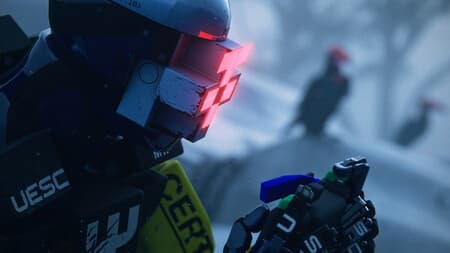
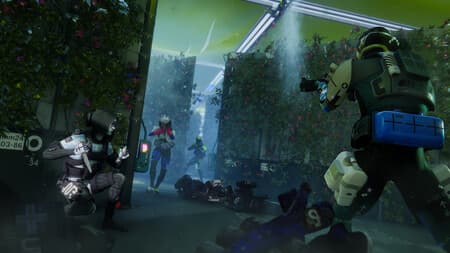
In practice, it works. One Server Slam match burned itself into my brain: rain hammering down on this swampy UESC facility, our trio pinned in a narrow corridor. I could hear another crew above us through the metal grating, footsteps syncing with my own heartbeat. We popped a scanner ability, caught silhouettes through the floor, pre-fired the exit as they tried to drop in. Thirty seconds of chaos, one of those glorious Bungie gunfights where everyone’s yelling, and when the dust settled I realized I’d actually been holding my breath.
That kind of emergent tension is fun. IGN and other early previews calling the loop “addictive” aren’t blowing smoke—stringing a few successful extractions together, watching the stash fill out, is a solid dopamine hit. The Season 1 roadmap Bungie’s already outlined—more maps like Outpost and Cryoarchive, a new faction (Sekiguchi Genetics), competitive-focused modes—suggests they’re committed to iterating on that core.
But strip away the art and gunfeel, and the blueprint underneath is extremely familiar. Mercs running jobs for megacorps in a dystopian sci-fi hellscape? Standard. Ladder of risk versus reward with zones pushing you deeper for better loot? Standard. Seasonal drip of maps and factions to keep the treadmill spinning? Very standard.
Marathon never feels like a shameless clone—Bungie’s execution is too polished for that—but it does feel like a game built to satisfy a PowerPoint slide about “live-service audience overlap” first, and a game built to scream its own identity second.
Art, Atmosphere, and That Incredible Sense of Place
Here’s where I’m way more upbeat: the world Bungie is sketching out is legitimately compelling. The UESC structures rising out of fog-choked swamps, the stark interiors full of harsh lighting and industrial clutter, the way the rain and wind batter you as you step outside—it all sells the idea that you’re a disposable asset scraping around the edges of something much bigger and scarier.
In older Marathons, lore lived in chunky walls of text hidden in terminals. Now, I get more of the setting in a few hours of Server Slam than I did in entire campaigns back then. Faction handlers chatting in my ear, off-hand mentions of deeper conflicts, codex entries hinting at alien civilizations and rampant AIs lurking deeper inside the UESC Marathon itself. A lot of that stuff is gated behind an “endgame” map we won’t touch until later in March, but the tone is unmistakable: this universe is dark, weird, and worth digging into.
The audio work helps a ton. Distant gunfire echoing through structures, the muffled thud of someone landing on a floor above, the anxiety spiral of proximity chat when strangers are debating whether to third-party your firefight. Bungie’s always been elite at making spaces feel lived-in and dangerous, and Marathon continues that tradition.
But—and this is becoming a pattern—clarity suffers. Several write-ups from the Server Slam called this out bluntly, and I’m right there with them. The HUD is busy. The iconography takes too long to parse. AI militia and player characters can blur together at a glance, especially in the visual noise of certain interiors. Combine that with rain, muzzle flashes, ability effects, and it’s often more overwhelming than thrilling.
On PC, the system requirements are refreshingly reasonable for 2026: an old i5-6600K and GTX 1060 will at least get you in the door, with recommended specs hovering around an i7-10700K and RTX 2080 Super. That’s good news—lots of people will actually be able to run this thing. But if what they see is a kaleidoscope of neon UI elements and samey silhouettes, a chunk of them are just going to bounce off.
The UI and Item Clarity Problem No One Should Be Okay With
This is where Bungie, frankly, needs to get its act together.
I’ve played a stupid number of looter-shooters and MMOs. I’ve stared at Destiny’s convoluted mod tooltips for years. I live inside sprawling inventory screens for a living. And even I found myself squinting at Marathon’s menus, trying to decode what half the items did.
Part of it is a sci-fi problem. In fantasy, a “health potion” tells a story instantly. In sci-fi, you get nonsense like “VX-7 Positron Battery” or “Phase-Conductive Mesh” (example names, but you get the idea). Without clean iconography and aggressive tooltips, everything blurs into the same blob of low-context tech junk.
Marathon leans into that aesthetic a little too hard. The inventory screen is busy and low on immediate legibility. Some core consumables and attachments are introduced with minimal explanation. Contract text can feel vague. If someone like me—who willingly lives inside this stuff—has to stop and really study each item, how is a more casual player supposed to feel anything but lost?
GameStar’s preview called the loot readability and interface “tragic” despite admitting the game itself is fun. Destructoid’s impressions hammered on clarity problems too, suggesting everything from better color-coding to more distinct silhouettes. They’re not wrong. This is low-hanging fruit that needs to be fixed fast if Marathon’s going to survive past the honeymoon phase.
The irony is painful: Bungie has one of the clearest feeling shooters on the market in Destiny 2, but somehow let fundamental clarity issues ship into a brand-new flagship project. That’s not just a small oversight, that’s a red flag about priorities. Style should never be winning this hard over usability in a game built around high-stakes decision-making.
Is This Really Marathon, or Just Bungie Chasing the Meta?
Here’s where the longtime fan in me gets conflicted.
On paper, turning Marathon into a PvP extraction shooter sounds like heresy. The old games were single-player (or co-op) corridor shooters full of labyrinthine maps and dense terminal lore. Fans imagining a 2016 DOOM-style reboot—a fast, aggressive, story-infused solo campaign—weren’t delusional. Bungie absolutely could have gone that route.
But they didn’t, and if I’m being fair, a straight 1:1 modern Marathon in 2026 would have had to be radically experimental anyway. The original formula—maze levels plus text logs and little else—doesn’t fly now. Bungie’s stated vision for this reboot is a “PvP extraction homage” to 1994 Marathon, with story told through players, factions, and the evolving world rather than a scripted campaign. No solo story mode, no traditional “finish the campaign, roll credits” path.
Conceptually, that isn’t bullshit. It syncs with what made the old games unique: the feeling that you were just one tiny pawn inside a massive, uncaring machine of AIs, aliens, and megacorps. Being a mercenary runner for rival factions, listening in on their conflicts from the periphery, fits that theme.
The problem is that right now, in the beta slice we have, most of what actually happens in a given match boils down to generic firefights with humanoid militias and other players. Pfhor? S’pht? Rampant AIs gone off the rails? Those icons of Marathon’s identity are barely present, and apparently being held back for later “endgame” content deeper inside the UESC Marathon.
As a 90s Marathon nerd, that’s both clever and frustrating. It’s clever because it builds anticipation: the idea that the zone maps we’re running now are just the outskirts of something much more dangerous is cool as hell. But it’s frustrating because Bungie is asking players to invest in a live-service framework first and promising the really distinctive, lore-heavy stuff later.
With Season 1 already plotted and a three-month seasonal cadence planned, it’s obvious Marathon is designed to be a long burn. The question is whether it will earn enough goodwill in these early months to justify that patience.
Bungie Has Changed—and Marathon Shows It
One easy narrative I’ve seen is that Marathon feels different because the “old Bungie” is gone. That’s not entirely true. Veterans like Lars Bakken, Dan Miller, and Steve Cotton are still in the building. The studio hasn’t been body-snatched.
What has changed is scale and pressure. Bungie in the Halo days was a smaller, scrappier outfit. Today, after Destiny’s decade-long live-service marathon (no pun intended), a painful round of layoffs, and Sony breathing down their neck as their big “live-service experts,” Marathon isn’t just a passion project. It’s a product that absolutely has to perform.
You can feel that in the design. Hiring someone like former Riot dev Joe Ziegler to direct Marathon makes sense from a “we want a sustainable, competitive ecosystem” angle. But it also means the game leans hard into safe, business-approved structures: seasonal content, battle pass hooks, live ops events, meta shifts. The stuff that keeps engagement graphs looking healthy.
That doesn’t make Marathon evil. But it does make it feel, at times, like a game designed by committee to hit genre benchmarks, with Bungie’s personality injected gingerly around the edges instead of exploding out of the center.
In Halo, the weirdness was the product. Giant alien ringworlds, religious war cults, bouncing grenades off Grunts’ faces for fun. In Destiny, the weirdness was inside the guns, the raids, the lore cards about space necromancers. In Marathon, at least for now, the weirdness is mostly hinted at in audio logs and codex entries while the actual moment-to-moment looks a lot like what every investor deck has decided “players want” in 2026.
So Where Does That Leave Me Days Before Launch?
After the alphas and the Server Slam, I’m in this awkward middle camp. Marathon is nowhere near the disaster some doomsayers painted it as. It’s absolutely not “the next Concord.” It’s fun, it’s tense, it’s polished. The cross-play and cross-save work, the netcode held up well in my matches, and the progression during the beta (hitting level 10, unlocking green gear and weapons) felt generous enough without spilling into instant power creep.
I’m planning to play at launch. I want to see what happens when that “Rook” solo mode is fully fleshed out, when more maps and factions roll in, when the community actually starts to battle over extraction routes and high-value zones. I want to finally step onto the UESC Marathon itself and see if Bungie lets the old ghosts out of the machine.
But I’m also wary. Right now, Marathon feels like a game that does a lot of things well and almost nothing distinctively well, beyond Bungie’s evergreen gunplay. The pacing is solid but conventional. The extraction loop is satisfying but genre-standard. The art is striking but sometimes at war with clarity. The lore is intriguing but held at arm’s length.
My fear isn’t that Marathon will be bad. It’s that it will be fine—and for a studio that once redefined how console shooters felt, “fine” is honestly more depressing than a spectacular failure.
For Marathon to earn a long-term place in my rotation alongside Destiny, Apex, and whatever indie obsession I’m spiraling into that month, it needs to lean harder into the things only Bungie can do: surreal sci-fi imagery, bold mechanical expression, and worlds that feel less like a service and more like a place. It needs cleaner UI and item language so the average player isn’t fighting the interface just to understand basic tools. It needs to prove that the slow-burn narrative about the factions and the ship itself is actually going somewhere, not just background dressing for another battle pass season.
If we’re still waiting for that spark after the first season wraps and the mythical “deep Marathon endgame” is just another flavor of mil-spec corridor with better loot, I’ll probably quietly drift away. Life’s too short, and there are too many games that are already more confident in their own weirdness.
For now, though? Marathon has earned something Bungie hasn’t automatically gotten from me in a long time: a cautious, conditional chance. The pieces are there. The question is whether Bungie’s willing—and allowed—to stop chasing the market long enough to let this thing grow into an identity that feels truly, undeniably theirs.
FinalBoss // Gear
Level up your setup
01Top-rated gaming headsetson Amazon→02High-refresh gaming monitorson Amazon→03Gaming chairson Amazon→04Discounted game keyson Kinguin→Affiliate links · As an Amazon Associate, FinalBoss earns from qualifying purchases.
Want to Level Up Your Gaming?
Get access to exclusive strategies, hidden tips, and pro-level insights that we don't share publicly.
Ultimate Gaming Strategy Guide + Weekly Pro Tips