
Table of Contents (9)
The Marvel Brawler I Dreamed Of, 25 Years Too Late
Within the first 10 minutes of Marvel Cosmic Invasion, I had Wolverine and Iron Man juggling a swarm of bug monsters in mid-air, tagging in Venom mid-combo just to finish with an over-the-top super beam. It felt like someone ripped my hazy memories of 90s arcade cabinets-X-Men, the Capcom Marvel fighters-straight out of my head and stitched them into a modern beat-’em-up.
I played Cosmic Invasion on PC with an Xbox controller over about 11 hours: one full Campaign clear on Normal, multiple Arcade runs, and a few nights of online co-op with friends. Across all that time, one thing never changed: the actual fighting is fantastic. Punching through waves of enemies, swapping heroes on the fly, and chasing absurd tag combos never got old.
What did get old, unfortunately, was everything around that combat: stages that start to blend together, recycled enemy setups, and a progression system that feels more like a checklist than a meaningful set of choices. It’s a weird game to score because the stuff it does well, it does really well.
Quick Take: Who Should Actually Care?
- If you grew up on X-Men: The Arcade Game or Marvel vs. Capcom, this will hit your nostalgia nerves hard.
- If you want a deep, replayable beat-’em-up like Streets of Rage 4, the combat’s there-but the levels will drag.
- If you’re just here for Marvel fanservice, the roster and deep cuts are great, even if the story is simple.
- Solo play is fun, but this shines brightest in 2-4 player co-op runs.
My First Night: A Three-Hour Marvel Mash-Up
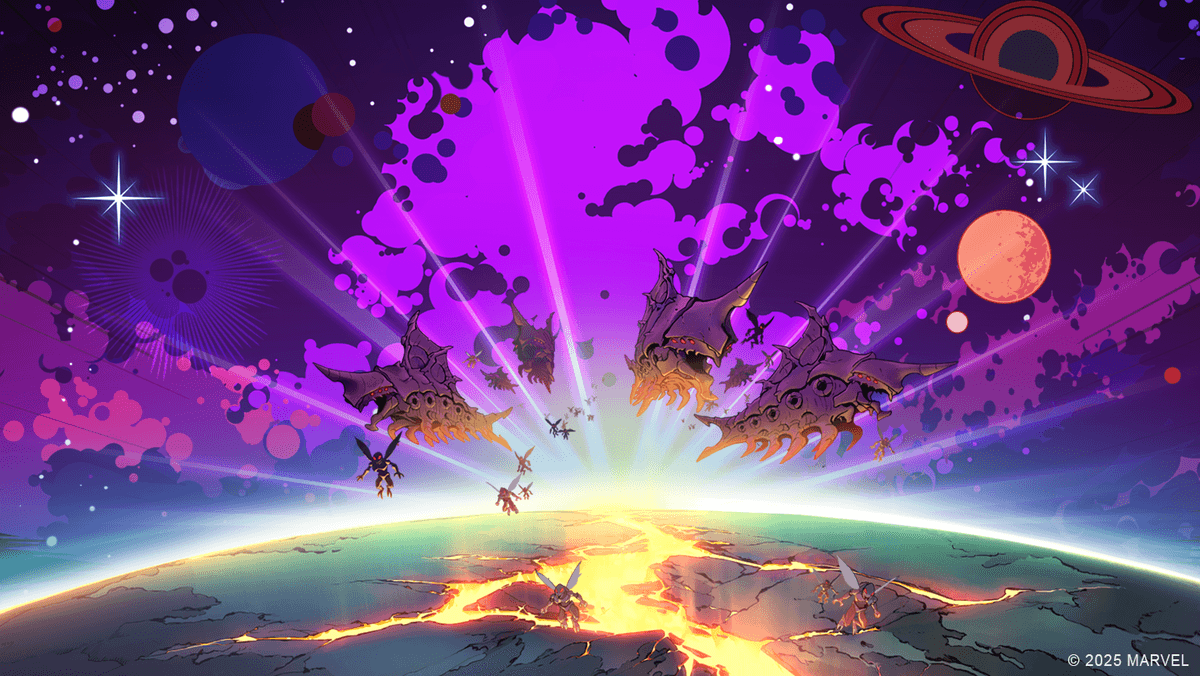
The first session, I sat down “just to try the tutorial” and ended up finishing almost half the 16-stage Campaign in one go. Tribute Games doesn’t waste time: you’re tossed straight into a multiversal crisis where Annihilus is invading with an army of parasitic bugs, and within minutes you’re in the Savage Land knocking aliens off cliffs with Captain America’s shield.
That first night was a rapid-fire tour of Marvel tourism spots: Genosha’s ruined streets, Wakanda’s high-tech jungles, some weird floating cosmic nightmare I later learned was called Destromundo. The story itself is very “Saturday morning cartoon”: heroes band together, quip at each other, punch through recognizable villains until you reach the big bad. It’s fine, nothing more. The dialogue exists mostly to justify why Ghost Rider is hanging out with Black Panther and Beta Ray Bill in the same room.
But the moment the game clicks is when you figure out how the tag system works. Midway through stage two, I accidentally tagged in Spider-Man in the middle of a basic combo, and he just kept going, juggling the poor bug like it had personally offended him. That’s when I realized this isn’t just a “walk right and mash attack” throwback. It’s quietly borrowing a bunch of DNA from Marvel vs. Capcom, and that’s where it gets interesting.
Combat: A Marvel vs. Capcom Brain in a Retro Beat-’Em-Up Body
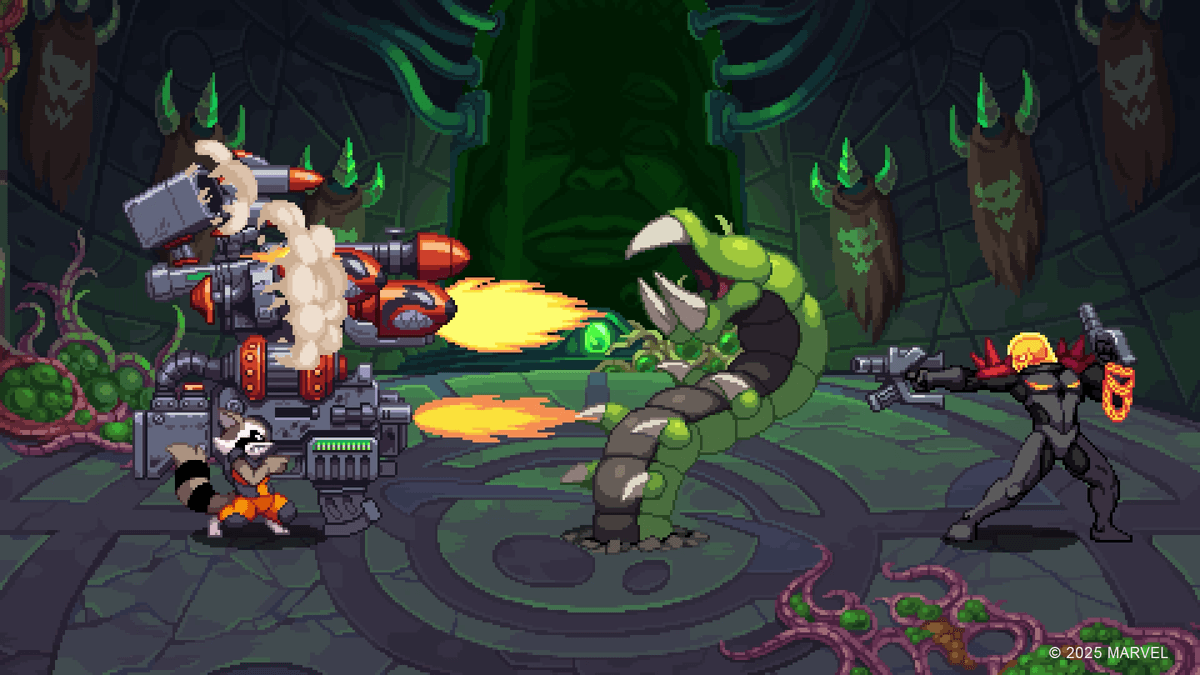
Marvel Cosmic Invasion’s best idea is also its simplest: you always bring two heroes into a stage, and you can tag between them at basically any time. Hit an enemy, tag, keep the combo going. Knock a guy into the air, tag, juggle. Dodge an attack, tag, punish. It feels a lot like someone tried to adapt Marvel vs. Capcom Infinite’s Active Tag system into a side-scroller—and shockingly, it works.
Each hero has a light, heavy, and special attack, plus a super move that burns a Focus meter. There’s a dedicated dodge (with generous invincibility frames) and a parry that, once you get a feel for enemy timing, lets you maintain disgustingly long combo strings. After about four hours, I stopped playing it like a cautious brawler and started treating it like a lab: “How long can I keep this one poor Sentinel in the air without him touching the ground?”
A couple of my favorite team-ups from my runs:
- Iron Man + She-Hulk – Iron Man launches enemies from range, She-Hulk rushes in with throw-heavy follow-ups. Great crowd control, feels stylish as hell.
- Spider-Man + Venom – Webs to lock enemies down, then Venom barrels in with brutal, chunky hits. The animations sell their rivalry/partnership really well.
- Black Panther + Cosmic Ghost Rider – Panther handles mobility and stuns, while Cosmic Ghost Rider zaps whole clusters from a distance.
What surprised me is how distinct each character feels despite sharing a basic move template. Wolverine is a close-range blender who dares you to stay in people’s faces. Iron Man is more about spacing and controlling lanes. Spider-Man feels almost like a pseudo-air-combo specialist. Tribute Games went out of its way to reference classic Capcom move sets too: Iron Man’s giant beam super is basically Proton Cannon with the serial numbers filed off. It’s fanservice, but it’s smart fanservice.
The only real downside is that, once you dial in, the Normal difficulty borderlines on too easy. With good tagging and a decent handle on dodges, I only died a handful of times during the entire Campaign. Arcade mode’s modifiers (like supers costing health or buffed enemy stats) help a bit, but if you’re a veteran of beat-’em-ups, jump straight into the harder settings.
Roster & Deep Cuts: Marvel Nerd Bait Done Right
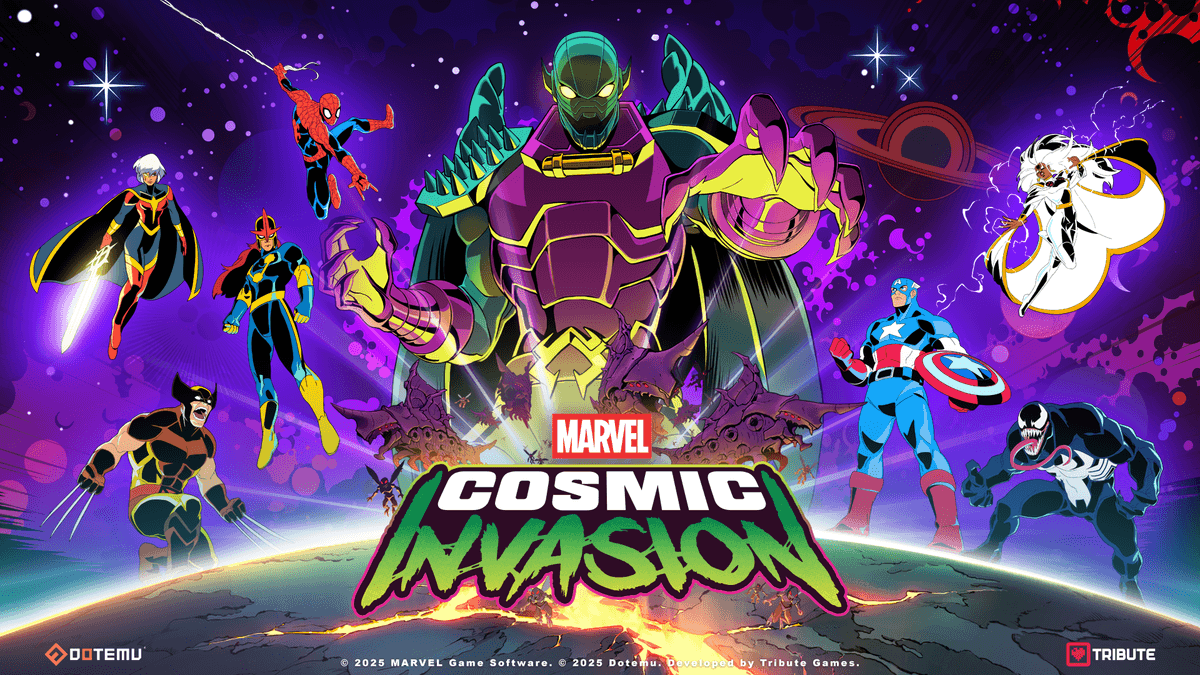
Cosmic Invasion starts you with 11 heroes and eventually grows to 15 once you unlock everyone. You get the usual suspects—Captain America, Spider-Man, Black Panther, etc.—but Tribute wisely digs deeper into Marvel’s toy box. Beta Ray Bill shows up looking like a horse-headed Thor cosplayer. You’ve got Cosmic Ghost Rider instead of the “normal” version, which made me hit pause and Google what his actual deal is. (The answer was way wilder than I expected.)
I grew up more with the 90s X-Men cartoon and arcades than with actual comics, so I love when a game nudges me toward characters I only vaguely recognize. Cosmic Invasion feels like those old Capcom fighters that quietly taught you Marvel lore by osmosis—“okay, I don’t know who this guy is, but he slaps, so I guess I like him now.” That spirit is here in full force.
What I appreciated most is that the “big movie names” don’t completely overshadow the others. Yes, Spider-Man is great, but so is She-Hulk, and the game clearly expects you to experiment. Every time I unlocked a new hero, I felt this little itch to rerun a stage just to see what nonsense combos I could create. Even after beating the Campaign, I found myself launching an Arcade run because I’d just unlocked a new character and wanted to lab them in a live environment.
Stages & Progression: The Fun Starts Repeating Itself
Here’s where the shine starts to come off.
The Campaign is 16 stages long; a full clear took me about three hours on Normal. In isolation, most stages are fine: you side-scroll through themed environments (Wakanda labs, ruined cities, alien strongholds), punch a ton of bugs and robots, and cap each one off with a boss fight. A few levels throw in some light gimmicks—vertical climbing segments, environmental hazards, that kind of thing—but nothing too wild.
The problem is that the deeper you go, the more the formula starts to blur. Same enemy mobs in slightly different skins. Same “walk into a new room, doors lock, fight wave one, wave two, wave three” structure. The voice lines repeat. The layouts feel like remixes of what you just did two levels ago. By the time I returned to a couple locations in Arcade mode’s streamlined 12-stage path, I was mostly there because I liked my team, not because I cared about the space I was fighting in.
Every stage has optional collectibles and mini-challenges—things like “finish without losing a life” or “smash X environmental objects”—and those do extend the life of the game if you’re a completionist. They’re a nice way to justify trying weird team combos. But the fundamental level structure never changes, and there’s only so many times you can clear a slightly different corridor full of similar aliens before it starts to feel like a routine.
The light RPG layer doesn’t help much either. Characters level up as you play, and each new level automatically hands out a predetermined buff: some HP here, some Focus there, a passive trait or a new color palette. It’s better than nothing, but it’s also not a system you think about. After a couple hours, I stopped caring about levels entirely. You don’t pick builds, you don’t meaningfully specialize a hero; you just slowly get stronger in the background.
Imagine if you could lean harder into certain strengths—turn Spider-Man into a dedicated air-juggle monster, or make She-Hulk even more of a grappler with extra throw damage. Right now the progression feels like the game is saying, “You’re leveling up because games do that now,” instead of actually using it to change how you play.
Co-op: Where the Game Really Wakes Up
Marvel Cosmic Invasion is totally playable solo, and I enjoyed most of my single-player time. But the moment I hopped into online co-op with two friends, it felt like the game suddenly snapped into the form it was meant to take.
One night, we ran an Arcade mode session with a team of She-Hulk, Venom, and Beta Ray Bill. At one point, my friend playing She-Hulk grabbed an enemy and literally pitched them across the screen. I happened to be mid-combo as Venom on the other side, caught the poor guy in mid-air, and our third player tagged in Bill to finish with a screen-filling lightning explosion. None of that was planned; the systems just allow that kind of teamwork chaos to emerge.
Netcode-wise, my experience was mostly smooth. I had a couple of brief stutters in busy scenes, but timing basic combos and tags was almost never an issue. This isn’t some super hardcore frame-perfect fighter where one dropped input ruins everything, so the occasional hiccup didn’t bother me much.
The only sad part is that the level repetition problem doesn’t magically vanish with friends. It’s just easier to ignore when you’re too busy yelling “Tag me in, tag me in!” across voice chat and arguing about who gets to play Spider-Man this run.
Presentation & Performance: Nostalgia Dialed In, But Safe
Visually, Cosmic Invasion sits in that modern retro sweet spot Tribute Games already nailed with Teenage Mutant Ninja Turtles: Shredder’s Revenge. Sprites are chunky and expressive, colors pop, and supers look big and loud without turning into visual soup. It’s not chasing realism at all—and it shouldn’t. This is very clearly aimed at your inner arcade rat.
Animations do a lot of work selling each hero’s personality. Spider-Man’s acrobatics, Black Panther’s sharp, precise strikes, She-Hulk’s wrestling-inspired throws—everyone feels like they’ve been tuned by people who actually care how these characters should move. Enemies are a little more generic (robots, bugs, and variants of both), which doesn’t help the repetition, but bosses at least bring some visual flair.
On PC, performance was basically a non-issue. Locked 60 FPS on my mid-range rig, even with supers flying everywhere and three players in co-op. The only technical hiccups I ran into were those rare online stutters and a couple of brief loading pauses between stages that felt a hair too long for a game with relatively small levels.
Sound-wise, the soundtrack is energetic but not terribly memorable—lots of rock and synth that fits the action but didn’t stick in my head after I closed the game. The voice work is also very “Saturday morning cartoon,” which fits the tone even if some lines loop a bit too often. I did find myself wishing for one or two iconic callbacks from older Marvel arcade games as a wink, but that’s pure nostalgia talking.
Who Is Marvel Cosmic Invasion Actually For?
If you come into this expecting a giant, endlessly replayable modern live-service thing, you’re going to be disappointed. This is closer in spirit to a really well-made 90s arcade brawler that accidentally wandered into 2025.
- Beat-’em-up fans who loved Streets of Rage 4 or Shredder’s Revenge will probably enjoy the combat here, though they might bounce off the repetitive level design faster.
- Marvel diehards will have a blast messing with the roster, spotting deep cuts, and appreciating the Capcom-inspired move sets.
- Casual players or families who just want to smash stuff together for a weekend will absolutely get their money’s worth, especially in co-op.
- People who need long-term progression systems, skill trees, or roguelike randomness to stay engaged might feel done after one or two full clears.
FinalBoss // Gear
Level up your setup
01Top-rated gaming headsetson Amazon→02High-refresh gaming monitorson Amazon→03Gaming chairson Amazon→04Discounted game keyson Kinguin→Affiliate links · As an Amazon Associate, FinalBoss earns from qualifying purchases.
Want to Level Up Your Gaming?
Get access to exclusive strategies, hidden tips, and pro-level insights that we don't share publicly.
Ultimate Reviews Strategy Guide + Weekly Pro Tips