
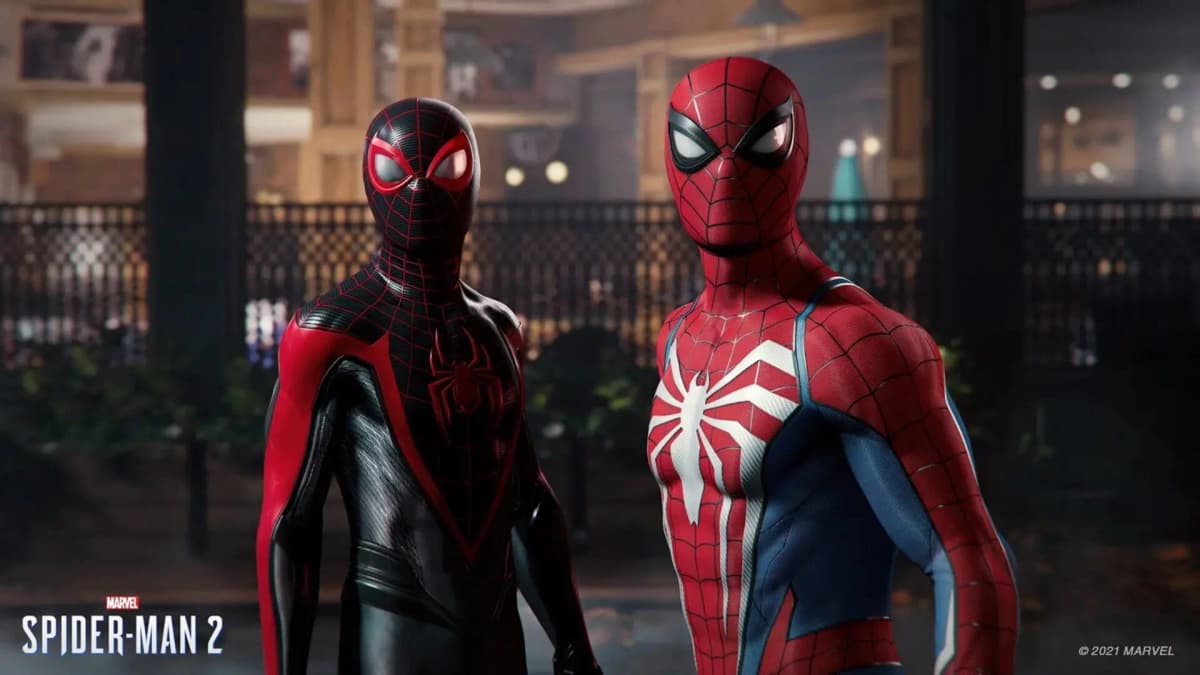
Marvel’s Spider-Man 2 arrived on PlayStation 5 in October 2023 under a familiar PlayStation promise: buy the game in a box, keep the disc, play it on your own terms, and decide later whether it stays on your shelf, goes to a friend, or gets traded toward the next purchase. That arrangement is headed for extinction. On July 1, 2026, Sony announced that it will stop producing physical discs for every new game releasing on PlayStation consoles from January 2028 onward.
I think that is a rotten decision, and Marvel’s Spider-Man 2 makes the case against it better than any corporate slide deck ever could. Sony is still supporting the game three years after launch. Its July 28, 2026 update, version 1.005.000 on PS5 and version 2.727.0.0 on PC, added the Fresh Start and Marvel Tokon suits while improving PSSR support on PS5 Pro. That is useful post-launch support. It is also a reminder that modern games live across patches, storefronts, accounts, console upgrades, and technical standards that players do not control.
Physical discs give players one meaningful piece of control back. Sony’s 2028 policy takes that piece away from every future PlayStation release in one clean, platform-wide sweep. The company is calling the move practical. Players should call it what it is: a tighter grip on how games are sold, accessed, circulated, and remembered.
Table of Contents (6)
Marvel’s Spider-Man 2 exposes the contradiction
There is a particular irony in using a game as large and polished as Marvel’s Spider-Man 2 to sell players on an all-digital future. The game has needed continued work across platforms. Its February 2025 PC update addressed crashes and stability problems. A March 2025 patch improved stability again and fixed AMD FSR frame-generation issues. Then the July 2026 update delivered feature parity between PS5 and the PC versions on Steam and Epic Games Store.
That ongoing support is welcome. I want developers to fix their games, improve performance, and keep adding meaningful touches after launch. The two free suits and enhanced PSSR support are the kind of low-drama maintenance that makes an expensive game feel respected rather than abandoned.
Yet patches also reveal why total platform control should make players uneasy. A game update arrives through Sony’s normal console flow, Steam, or Epic’s launcher. Players need the platform holder’s infrastructure, account systems, and policies to cooperate. A physical disc cannot preserve every future patch by itself, but it remains an independently transferable copy of the game’s original release. It can be loaned, traded, collected, and sold without asking a platform account for permission.
Sony is building a future where the first part of that bargain disappears. Future PlayStation buyers will still get downloads and retailer-issued digital codes, but a code is a checkout method. Once redeemed, it becomes an account entry. It cannot be handed to a friend next year, sold to a used-game shop, or discovered in a bargain bin by someone who missed launch week.
A 35% physical share is not a dying fringe
The numbers around Marvel’s Spider-Man 2 make Sony’s blanket cutoff look even worse. Alinea Analytics estimates that the game generated $1.2 billion in gross revenue, with physical copies accounting for 35% of its unit sales. That is more than one out of every three buyers choosing a disc for one of PlayStation’s biggest PS5 releases.
PlayStation chief financial officer Lin Tao has pointed to data showing that 82% of PlayStation sales are digital. Fine. Digital sales clearly dominate the platform’s wider business. That figure still fails as an argument for erasing physical releases altogether. A platform-wide digital share and a title-specific physical-unit share answer different questions. Marvel’s Spider-Man 2 shows that a huge audience still makes a deliberate choice to buy a disc when Sony gives it the option.

Thirty-five percent is not an edge case. It is not a collector-only curiosity. It is a massive group of players who value ownership, resale, borrowing, local retail availability, and the simple ability to avoid paying whatever price a single digital ecosystem presents on a given day. Sony sees a shrinking format. I see a third of the audience choosing a consumer right that the company is preparing to revoke for future games.
Physical buyers also keep pressure on pricing. A disc can sit on a shelf until a retailer discounts it. It can enter the used market. It can move between households. A digital listing can be convenient, but convenience with no meaningful alternative turns into dependence fast. Players who wait for a sale, share games within a family, or trade in completed releases understand this already because they feel the difference in their wallets.
January 2028 creates a hard ownership line
Sony’s announcement contains an important limit. Existing PlayStation discs remain supported, disc-enabled hardware continues to read them, and games released on disc before January 2028 are outside the new production cutoff. Nobody is losing their current copy of Marvel’s Spider-Man 2 because of this announcement.
That protection for existing libraries is good, but it does not soften the central problem. Every new PlayStation game released after the cutoff will begin life without a physical edition. There will be no ordinary boxed copy to preserve, lend, resell, or buy second-hand later. The format is not being allowed to fade according to what players, publishers, and retailers choose. Sony is ending it by policy.
That distinction matters. Markets change when players migrate. Control changes when a platform owner shuts the door behind them.
The player consequence is brutally simple. Someone buying a PlayStation game in 2027 can choose a disc or a download. Someone buying the next major release in 2028 gets the download route and whatever retail code arrangement Sony permits. The second player has fewer exits if prices rise, a store listing changes, an account issue appears, or they simply want to pass the game on after finishing it.
Sony is confusing efficiency with trust
I understand why Sony wants this. Digital distribution is cleaner to manage. It creates one predictable delivery system for updates, expansions, PS5 Pro features, and future console transitions. It reduces the logistical mess of manufacturing and shipping discs. From an executive perspective, it probably looks inevitable.
Players do not buy PlayStation hardware to make Sony’s logistics cleaner. They buy it to play games with a degree of confidence that their purchase will remain theirs in a useful sense. That confidence gets weaker when the platform owns the storefront, the account system, the update channel, and the only officially supported method for obtaining future releases.

Marvel’s Spider-Man 2 is proof that Sony understands the value of giving players choices across systems. The game launched on PS5, reached PC in January 2025, and received the same July 2026 content on PS5 and PC. Sony found room for Steam and Epic Games Store because more ways to play a major release expands its reach. The company should apply that same logic to physical ownership rather than treating a plastic disc as a stubborn relic.
A healthy platform can support digital delivery without killing the ownership model that still serves a huge part of its audience. Sony has chosen the more controlling path because it can. That is the entire issue.
What Sony should do before the cutoff arrives
If Sony wants players to trust this strategy, it needs to offer more than assurances that existing discs will keep working. The company needs binding, player-facing commitments that address what disappears after January 2028.
- Reverse the blanket ban on new disc production. Sony should allow publishers, retailers, and first-party studios to produce physical editions when demand supports them, including limited runs for games that would otherwise become download-only.
- Guarantee redownload access in plain language. Buyers deserve a clear policy explaining how they can retrieve purchased PlayStation games across future console generations and storefront changes.
- Create a preservation standard for final builds and patches. Sony should commit to maintaining downloadable versions of completed games and their essential updates for owners instead of treating a delisting as the end of the conversation.
- Give retail codes real consumer value. A box containing a one-time redemption code is weaker than a disc. Sony should stop pretending those products offer equal ownership and price them accordingly.
The first point is the one that matters most. No policy language about cloud libraries or account history can fully replace the freedom of a disc. A player who owns a physical copy possesses something the platform cannot convert into an account-only entitlement. Sony knows that difference. That is why its decision to close off new-disc production carries so much weight.
Sony should reverse course
The July 2026 Marvel’s Spider-Man 2 patch is a small but revealing example of PlayStation at its best: a major game receives free additions, meaningful technical work, and matching support across PS5 and PC. That is the Sony I want to see more often, a company improving games after release while giving players more ways to enjoy them.
The January 2028 disc cutoff points in the opposite direction. It says future PlayStation players can have polished updates and modern storefront convenience, provided they accept a narrower definition of ownership. That deal may suit Sony’s balance sheet. It does not suit players who buy slowly, share games, collect releases, hunt for used copies, or care whether a purchase survives beyond an account dashboard.
My verdict is simple: Sony should reverse the all-new-disc cutoff or, at minimum, permit publisher-funded physical runs for every future PlayStation release. Marvel’s Spider-Man 2 demonstrated that discs remain a real choice for a major audience. Removing that choice is not progress. It is corporate control dressed up as inevitability.
FinalBoss // Gear
Level up your setup
01Best-selling PS5 gameson Amazon→02DualSense controllerson Amazon→03PS5 SSD upgrades (M.2 NVMe)on Amazon→04Discounted game keyson Kinguin→Affiliate links · As an Amazon Associate, FinalBoss earns from qualifying purchases.
Want to Level Up Your Gaming?
Get access to exclusive strategies, hidden tips, and pro-level insights that we don't share publicly.
Ultimate Gaming Strategy Guide + Weekly Pro Tips